Kapitel 1
The Art of Truly Seeing Others
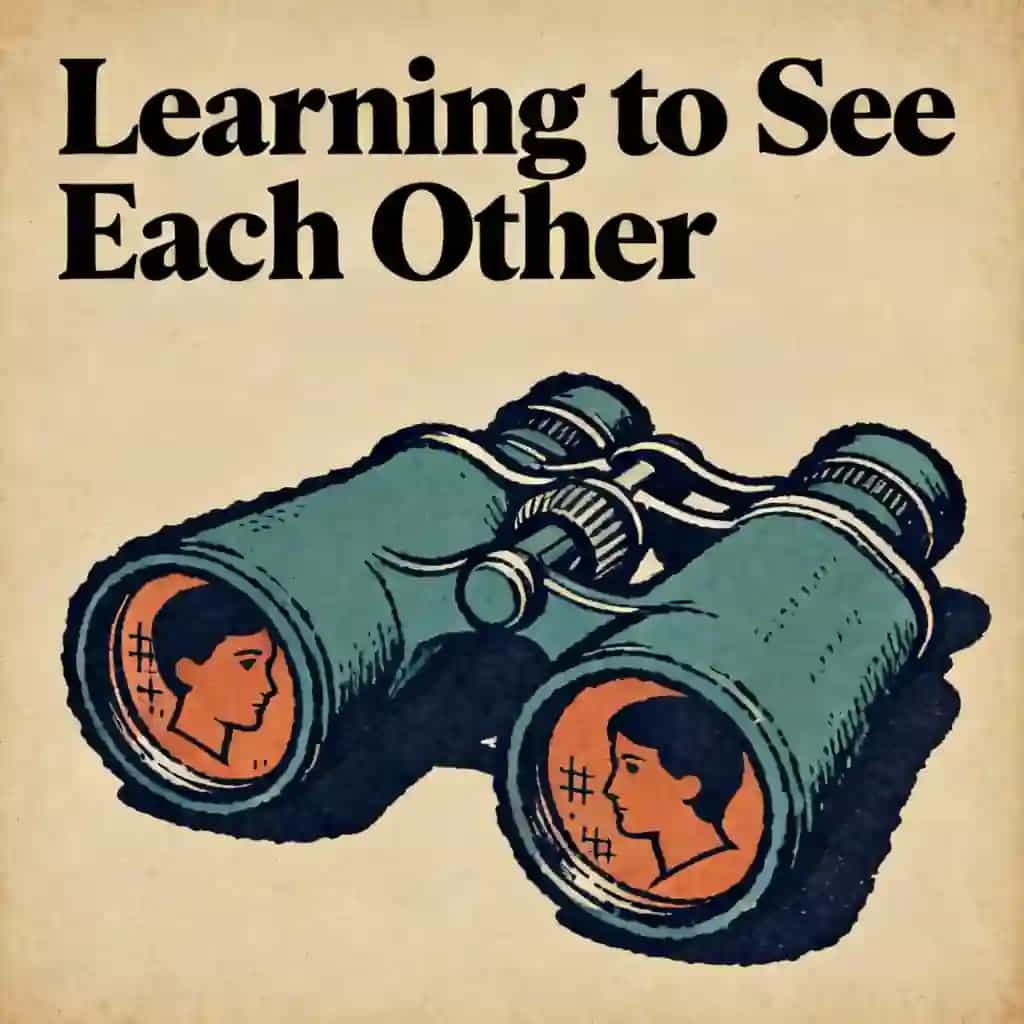
In a world increasingly dominated by shallow interactions and digital distractions, David Brooks' "How to Know a Person" arrives as a timely manifesto for deeper human connection. The book has struck a chord with readers seeking authentic relationships in our disconnected age, climbing bestseller lists and earning praise from figures ranging from Oprah Winfrey to Adam Grant. Brooks, known for his cultural commentary in The New York Times, reveals this work as his most personal yet-emerging from his own journey from emotional detachment to vulnerability. What makes this book particularly compelling is how it transforms the abstract concept of "seeing others" into concrete skills anyone can develop. As one reader noted, "It's like having a manual for the most important thing we do every day but never learned how to do well." In an era when loneliness has been declared a public health crisis, Brooks offers not just analysis but practical wisdom for the essential human task of truly knowing one another.
Kapitel 2
The Power of Being Truly Seen
At the core of human connection lies a fundamental truth: we all desperately want to be seen for who we truly are. Brooks opens by sharing his personal journey from emotional repression to vulnerability. As a young man, he couldn't even express excitement when catching a broken bat at a baseball game, sitting "still-faced" while everyone around him celebrated. His emotional restraint extended beyond public spaces into his personal relationships, creating invisible barriers between himself and others. Life gradually "tenderized" him through fatherhood, watching his children's uninhibited joy, and personal hardships that cracked his stoic facade.
A pivotal turning point came during a panel at the Public Theater, where he witnessed the emotional openness of theater people, contrasting sharply with his Washington think-tank world. These artists spoke freely about their fears, dreams, and inner struggles, while his colleagues typically maintained professional distance. This experience helped him realize his detached way of living was "a withdrawal from life," a defense mechanism that protected him from vulnerability but also prevented genuine connection.
Human beings need recognition as much as food and water - it's not just a psychological luxury but a fundamental need. When someone truly sees us-acknowledging our full humanity with all its complexities-something profound happens. We feel validated, understood, and connected. This recognition manifests in small moments: a friend remembering specific details about our lives, a colleague noticing our unspoken struggle, or a partner understanding our needs without explanation. These instances of being truly seen create neural pathways of trust and security, fostering deeper relationships and emotional well-being.
In our "age of creeping dehumanization," where people are increasingly reduced to data points, political labels, or social media profiles, the skill of seeing others deeply becomes even more crucial. Modern life's pace and digital intermediaries make genuine connection harder to achieve. Brooks contrasts "Diminishers" who make people feel small - through dismissiveness, prejudgment, or casual cruelty - with "Illuminators" who shine care on others, making them feel valued and understood through active listening, empathy, and genuine curiosity about their lives.
Most of us are worse at reading others than we think, often projecting our own experiences and biases onto others' situations. Even married couples, despite years of intimacy, often miss what's happening in their partner's heart. Research shows that we typically overestimate our ability to understand others' emotions by 20-30%. The foundational skill for meaningful connection isn't just being open-hearted-though that matters-but developing specific social skills that help us truly see and understand others. These crucial skills, like listening without judgment, asking thoughtful questions, and sitting with someone who's suffering without trying to fix their pain, aren't taught in schools. This skills gap contributes to widespread loneliness and disconnection, making the art of truly seeing others both rare and increasingly valuable in our modern world.
Kapitel 3
Barriers That Blind Us to Others
Why is truly seeing others so difficult? Brooks identifies several barriers that prevent deeper connection. He opens with a scene in a Washington, D.C. bar where everyone-including himself-fails to truly see others. People are engrossed in phones, a man monologues on a date while ignoring his companion, political types discuss elections as abstract chess moves rather than matters affecting real lives.
"Egotism" keeps us self-centered and uncurious about others. We become so preoccupied with our own thoughts, needs, and perspectives that we fail to make space for others. "Anxiety" creates mental noise that blocks our ability to listen-when we're worried about how we're coming across or what we'll say next, we can't fully attend to the person before us.
"Naive realism" assumes everyone shares our perspective, leading us to misinterpret others' actions based on our own worldview. The "lesser-minds problem" makes us believe we're more complex than others, attributing depth to our own motivations while seeing others as simpler and more predictable.
"Objectivism" treats people as data points rather than subjective beings with unique inner worlds. "Essentialism" relies on stereotypes and group generalizations rather than seeing individuals in their uniqueness. The "static mindset" fails to update our understanding as people change and grow.
Brooks illustrates these barriers through Vivian Gornick's memoir about her complex relationship with her grief-consumed mother. Despite their lifelong connection, these two intelligent women never truly see each other. Bess is so consumed by her own drama she never notices her effect on her daughter, while Vivian is too busy trying to break free to understand her mother's perspective. The chapter ends with Vivian's haunting phrase-"She doesn't even know I'm there"-capturing the profound loneliness of not being truly seen.
Kapitel 4
Becoming an Illuminator
What does it mean to truly see others? Brooks introduces the concept of being an "Illuminator"-someone who sees others in their fullness-through his encounter with LaRue Dorsey, who demonstrated remarkable perceptiveness about his character. During their first meeting, Dorsey's penetrating insights revealed aspects of Brooks' personality that even he hadn't fully recognized, demonstrating the transformative power of being truly seen. The "Illuminator's gaze" combines several essential qualities: Tenderness in approaching others' vulnerabilities, Receptivity to their unique story, Active Curiosity that seeks to understand rather than judge, Affection that creates safety, and Generosity that assumes the best in people.
Dr. Ludwig Guttmann's work with paraplegic patients in post-war Britain exemplifies this illuminating perspective. When the medical establishment dismissed injured veterans as "moribund cripples" destined for hospice care, Guttmann saw them as "the best of men" capable of extraordinary achievement. He introduced competitive sports as therapy, believing in their potential for full lives. This radical vision not only transformed rehabilitation medicine but led to the creation of the Paralympic Games in 1960, demonstrating how seeing potential in others can literally change the world. His approach wasn't just medical treatment; it was a fundamental reframing of human capability.
As Parker Palmer astutely observes, "Every epistemology becomes an ethic"-our way of knowing shapes our way of being. This philosophical insight has practical implications: how we choose to see and attend to others directly influences who we become as moral beings. Iris Murdoch extends this idea, arguing that morality isn't primarily about following abstract principles but about developing the capacity for "just and loving attention." The fundamental immoral act, in this view, isn't breaking rules but failing to see people in their full humanity. Conversely, the essential moral achievement is overcoming our natural self-absorption to truly witness others.
Therapist Mary Pipher embodies this approach in her clinical practice, viewing therapy as "a way of paying attention, which is the purest form of love." She deliberately cultivates what she calls a "charitable viewpoint," looking for the good in troubled families while acknowledging their struggles. In sessions, she might notice how a frustrated parent still shows up consistently, or how a rebellious teenager harbors deep loyalty to their family. Through this lens, Pipher creates moments of illumination where family members begin to see each other differently. Her mantra that "all families are a little crazy" combines realism with compassion, while her conviction that most parents are doing their best with available resources helps families move beyond blame to understanding.
Becoming an Illuminator isn't about mastering techniques or following prescribed steps. Instead, it requires developing a holistic attitude that resists the modern tendency toward oversimplification and quick judgments. It means seeing people as Tolstoy described them-like rivers, constantly changing yet maintaining their essential nature. This perspective honors both human complexity and dignity, creating space for growth while acknowledging unchanging core attributes. True illuminators understand that people contain multitudes: they are both their current struggles and their highest possibilities, both their wounds and their potential for healing.
Kapitel 5
The Art of Accompaniment
After illumination comes accompaniment-the practice of being alongside someone rather than merely observing them. Brooks opens with naturalist Loren Eiseley's transformative experience floating in Nebraska's Platte River. Despite his fear of water, Eiseley surrendered to the current, experiencing a profound merging with the river-"wearing down the face of time" and feeling connected to all of nature. This experience serves as a metaphor for accompaniment, where we flow alongside others in their journey, neither leading nor following, but moving in harmony with their pace and direction.
Ninety percent of life happens in ordinary moments-meetings, errands, small talk-where we're not face-to-face but side by side. These seemingly insignificant interactions form the bedrock of human connection. Rather than immediately trying to peer into someone's soul with profound questions, it's better to look at something together, discussing mundane topics like weather, television shows, or local events. Through these apparently superficial interactions, our unconscious minds attune to each other's rhythms, energies, and temperaments, creating comfort and safety-prerequisites for deeper connection. Brooks notes how even therapy sessions often begin with casual conversation about traffic or the weather, allowing participants to settle into a shared space.
Small talk is vastly underappreciated; sometimes watching how someone treats a waiter, handles a minor setback, or responds to an unexpected delay reveals more than asking profound questions. These moments offer glimpses into character, values, and emotional patterns. Even in established relationships, discussing small things regularly-sharing observations about daily life, exchanging opinions about books or movies, or noting changes in the neighborhood-makes it possible to address bigger issues when they arise. These routine exchanges build a foundation of trust and understanding.
Accompaniment requires several key qualities that Brooks explores in depth. Patience means allowing trust to build slowly through "negative effort"-resisting the urge to fix, advise, or control. Playfulness creates spontaneous connection through shared enjoyment, whether it's laughing at the same joke or engaging in friendly competition. Other-centeredness involves supporting someone's journey without controlling it, recognizing that each person must find their own path. Presence means simply showing up, especially during difficult times, offering silent support when words fall short.
Through vivid examples ranging from coaching baseball to supporting grieving friends, Brooks illustrates how accompaniment involves surrendering power and honoring others' autonomy. He describes coaches who step back to let players learn from their mistakes, friends who sit quietly with those in mourning, and mentors who resist giving direct advice in favor of asking gentle questions. As poet David Whyte wrote, the ultimate touchstone of friendship is witness-"the privilege of having been seen by someone" and accompanying them on a journey impossible to accomplish alone. This act of witnessing, Brooks argues, is both a gift and a responsibility, requiring us to be fully present while respecting the mystery and dignity of another's personal journey.
Kapitel 6
Understanding How Others Construct Reality
To truly know someone, we must grasp how they uniquely construct their reality. Brooks illustrates this through French writer Emmanuel Carrere's experience during the 2004 Sri Lankan tsunami. The disaster devastated the area, and Carrere witnessed the tragedy of a French family he'd met days earlier-Jerome and Delphine lost their four-year-old daughter Juliette. Through the ensuing days of grief, searching for bodies, and comforting survivors, Carrere observed how differently each person processed the same tragedy. Jerome focused solely on saving his wife from despair. Helene sprang into action helping survivors. Carrere, initially feeling useless, found himself transformed by witnessing others' suffering.
This story illustrates Brooks' central point: a person is a point of view. Each human constructs their own unique subjective reality based on their experiences, memories, and interpretations. Perception is "a generative, creative act"-our brains actively construct reality rather than passively receiving it. Our visual system takes limited sensory input and creates a rich mental model, predicting what we expect to see.
The mind's constructive work extends beyond physical perception to how we build our identities, life stories, and belief systems. To truly see another person means glimpsing how they uniquely construct their reality. After the tsunami, Carrere was transformed by entering into others' experiences of suffering, which widened his perspective and allowed him to see both others and himself differently.
Research by Dennis Proffitt shows that perception is shaped by physical abilities and emotional states-athletes see hills as less steep, sad people see them as steeper. We don't see the world as it is but "as it is for us," looking for "affordances" based on what actions are available to us. Understanding these perceptual differences helps us recognize why others might respond to situations differently than we would.
Kapitel 7
The Art of Meaningful Conversation
Truly knowing another person requires conversation-not just seeing but hearing them deeply. While being a mediocre conversationalist is easy, becoming a good one is challenging. Many mistakenly think good conversationalists are simply storytellers or lecturers, but Brooks argues they're actually masters of fostering meaningful two-way exchanges.
He cites British statesman Arthur Balfour as exemplary-not for brilliant monologues but for his ability to "quicken and elevate" discussions by drawing out the best in others. Balfour would take someone's hesitant remark, discover its possibilities, and help the speaker feel they'd contributed something valuable. Good conversation is joint exploration, not just trading statements.
Brooks offers practical advice: treat attention as an "on/off switch" rather than a dimmer (giving 100% focus), be a "loud listener" with active responses, and approach listening as a host would treat dinner guests-with warmth and hospitality that draws people out. He recommends favoring familiar topics over novel ones, making people "authors not witnesses" by asking specific questions, embracing pauses for reflection, "looping" to confirm understanding, adopting a "midwife model" when helping others through decisions, keeping "gem statements" at the center during conflicts, finding deeper values beneath disagreements, and avoiding the "topper" tendency of redirecting conversations to yourself.
The art of questioning is particularly important. While children naturally ask thousands of questions between ages two and five, many adults lose this curiosity. Good questions are open-ended ("How did you..."), not evaluative or closed. At gatherings, "Illuminators" probe for commonalities with questions like "Where did you grow up?" or ask big questions that interrupt daily routines: "What crossroads are you at?" or "What would you do if you weren't afraid?"
Despite concerns about privacy, Brooks finds people are eager for deep conversations, as most have never truly been listened to before. The goal is to make the rare experience of being truly heard much more common.
Kapitel 8
Supporting Others Through Darkness
How do we accompany those suffering from depression, struggle, and grief? Brooks shares his painful experience with his oldest friend Peter Marks, who despite outward success and decades of joyful friendship, suffered from severe depression that ultimately led to his suicide in April 2022. Brooks describes their friendship that began at age eleven, built around play and lasting five decades, with Pete being "a rare combo of normal and extraordinary"-strong yet gentle, devoted as a father and husband.
Brooks admits his initial failure to grasp the severity of his friend's depression, partly from his own tendency to "bright-icize" and partly from his inability to reconcile this illness with the Pete he knew. He learned that depression isn't merely sadness but an altered state of consciousness that distorts perceptions of time, space, and self. Drawing on insights from philosophers and writers like Sally Brampton and William Styron, Brooks describes depression as "an unimagined abyss," "a landscape that is cold and black and empty," and "a storm of murk" with "psychic energy throttled back close to zero."
His early attempts to help-offering advice and "positive reframing" by reminding Pete of his blessings-only revealed his fundamental misunderstanding of the illness. Brooks gradually realized that a friend's role isn't to cheer up the sufferer but to acknowledge reality, listen respectfully, and demonstrate unwavering presence.
Throughout Pete's three-year struggle with depression, Brooks confronted the futility of words to provide meaningful help. Eventually, he simply tried to be normal, the easygoing friend he'd always been, hoping this might slightly ease Pete's isolation. Brooks learned the power of just staying present, sharing a video of Mike Gerson's sermon about depression that resonated with Pete.
Despite Pete's extraordinary courage fighting his illness for over a thousand days, driven by love for his family, he ultimately took his life. Brooks believes Pete erroneously convinced himself he was helping his family, when in reality, his death left devastation. Brooks feels sorrow but not guilt, recognizing that despite world-class experts and loving family support, "the beast was bigger than Pete."
Kapitel 9
The Skill of Empathy
Being truly seen is a fundamental human need, beginning from infancy. When babies aren't acknowledged by caregivers, they experience existential distress that can cause lasting damage. Our earliest experiences shape our understanding of safety, love, and self-worth, with childhood wounds often unconsciously passing through generations.
The famous Grant Study revealed that childhood relationship quality was the strongest predictor of later success and well-being-more than intelligence or socioeconomic background. Men from warm homes thrived while those from cold environments suffered more health problems and psychiatric issues. Men with good father relationships enjoyed vacations more, used humor effectively as a coping mechanism, and found more contentment in retirement. Conversely, men with poor maternal relationships faced higher rates of dementia, took more prescription medications, and spent five times longer in psychiatric hospitals.
These early experiences create defensive architectures-conscious or unconscious patterns that persist into adulthood and shape how we navigate relationships throughout life. These include avoidance (minimizing emotions and relationships out of fear), deprivation (feeling fundamentally unworthy due to unmet childhood needs), overreactivity (maintaining a hyperactive threat-detection system from past abuse), and passive aggression (indirectly expressing anger due to fear of conflict).
Though we might believe we can repair ourselves through introspection alone, research shows this approach is overrated. Real healing comes through communication-friends who provide an outside perspective, remind us of our worth, and practice genuine empathy.
Empathy isn't just an automatic emotional response but a sophisticated set of social and emotional skills that can be developed through practice. Mirroring-accurately catching another person's emotions-is the first essential empathy skill. People with high emotional granularity can distinguish between similar emotions like anger, frustration, and anxiety, experiencing the world in richer, more nuanced ways. The second skill is mentalizing-going beyond mirroring to understand why someone feels as they do by drawing on our own experiences. The third skill is caring-moving beyond understanding to effective action.
People vary widely in their empathic abilities. Low empaths, like Carol with borderline personality disorder, can be trapped in a desperate vortex of want-unable to understand their effect on others and interpreting even silence as aggression. High empaths enjoy deeper relationships, exhibit more charitable behavior, and possess exceptional social skills, though their sensitivity can sometimes be exhausting.
Kapitel 10
The Wisdom of Seeing Others
My understanding of wisdom has transformed while researching this book. I once viewed wisdom as the sage-like dispensing of life-altering advice-the Yoda or Dumbledore model. Now I see that truly wise people don't tell us what to do; they witness our stories. They see us in noble struggles, navigating life's dialectics like intimacy versus independence.
The essential gift of wise people is receptivity-not passive listening but creating an atmosphere of hospitality where people can set aside their fear of showing weakness. The resulting knowledge is personal and contextual, not generalizable maxims. Wise people help you see yourself, your past, and your relationships differently, often focusing on the in-between spaces we easily overlook. They see your gifts and potential, even those you don't recognize.
Wisdom isn't merely an individual trait but a social skill practiced within relationships. Wisdom emerges in what Parker Palmer called a "community of truth"-whether a classroom, two people at a coffee shop, the scientific enterprise, or a reader engaging with an author's mind. These communities form when people genuinely explore together without manipulation or immediate judgment.
In long-standing communities like book clubs, individual ideas merge into a collective voice greater than any single member. Two types of knowledge emerge: understanding of the subject matter and a subtle awareness of the group's dynamics. This awareness involves knowing when to speak, when to listen, and how to call forth each member's gifts-skills developed through deep practice of seeing others.
Despite years spent studying how to see others deeply, I still struggle with mastering these skills in daily life. I miss crucial conversational moments, letting my ego take control by telling smart things or funny stories rather than truly listening. Yet there's been a comprehensive shift in my posture-I'm more vulnerable, open, and approachable, with a warmer gaze and personal lens.
This wisdom provides moral purpose: to cast the "just and loving attention" Iris Murdoch described. An Illuminator brings compassionate awareness of human frailty and gracious acceptance of human folly. Those who look inward find only chaos, those who judge outwardly see only flaws, but those who look with compassion see complex souls navigating life as best they can. Character isn't defined by epic heroism but by everyday encounters-the capacity to make others feel seen and understood.