Überblick über Der Ekel
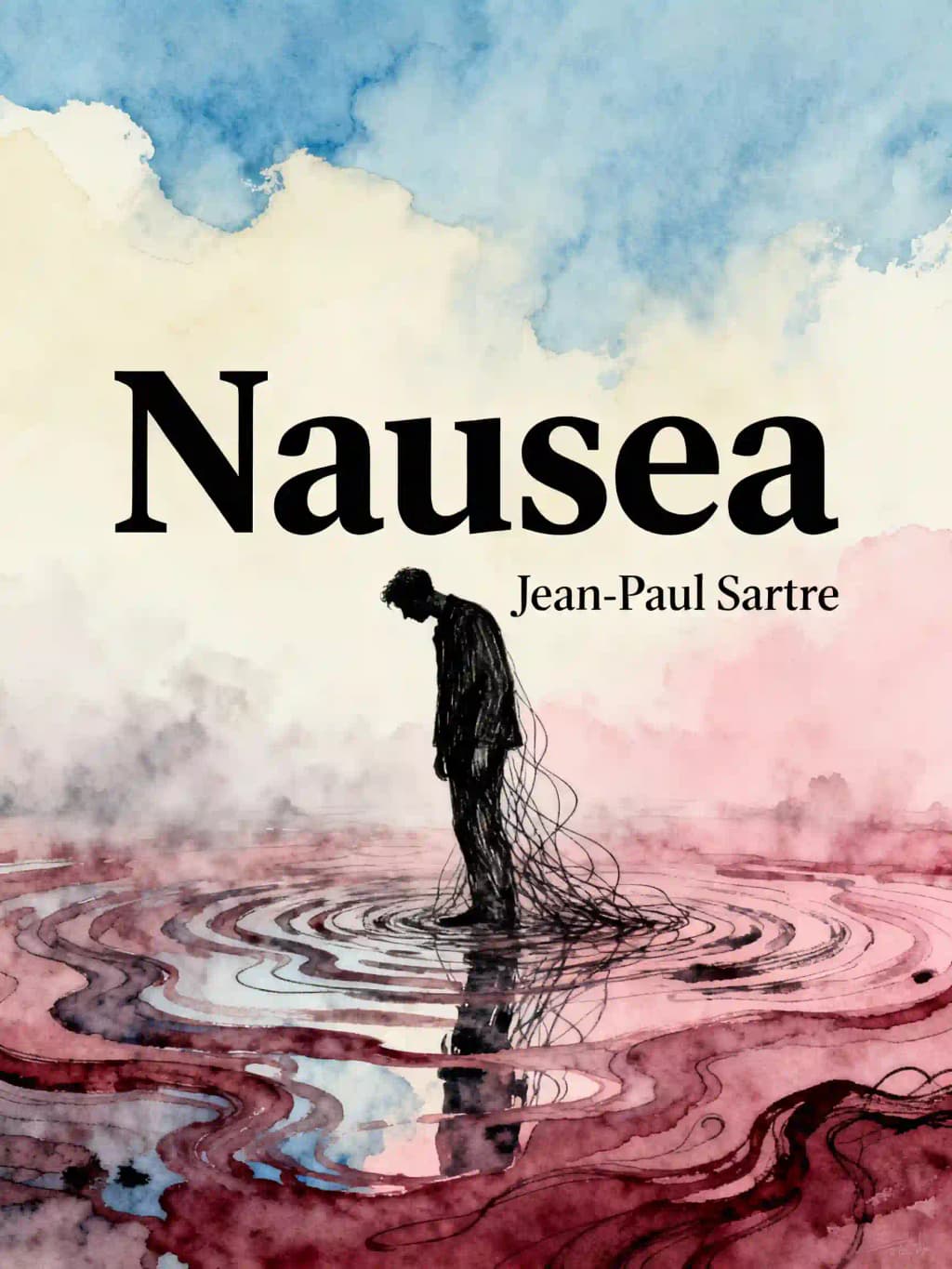
Sartres „Der Ekel“ – das existentialistische Meisterwerk von 1938, das die Leser durch Antoine Roquentins Krise in eine tiefe Entfremdung stürzt. Was wäre, wenn die Sinnlosigkeit selbst physisch spürbar würde? Dieser Grundstein der Philosophie beeinflusste Generationen, wobei Simone de Beauvoir es als Sartres ersten robusten Ausdruck von Kontingenz und Existenz bezeichnete.
Kernthemen in Der Ekel
- existential dread
- radical freedom
- ontological contingency
- absurdity of existence
- subjective consciousness
Zitate aus Der Ekel
I am, I exist, I think, therefore I am; I am because I think, why do I think? I don't want to think any more, I am because I think that I don't want to think.
I wanted to leave, to go somewhere where I should be really in my place, where I should fit in… but my place was nowhere; I was unwanted.
I exist. It is sweet, so sweet, so slow. And heavy: it never stops.
Every existing thing is born without reason, prolongs itself out of weakness, and dies by chance.
Personen in Der Ekel
- Antoine RoquentinA historian and the protagonist facing nausea
- Marquis de RollebonAn obscure aristocrat and Roquentin's research subject
- AnnyRoquentin's former lover living in Paris
- The Self-Taught ManA lonely acquaintance of Roquentin in Bouville
Zusammenfassung von Der Ekel herunterladen
Erhalten Sie die Der Ekel-Zusammenfassung als kostenloses PDF oder EPUB. Drucken Sie es aus oder lesen Sie es jederzeit offline.