Kropotkin's revolutionary 1902 masterpiece challenges Darwin by proving cooperation, not competition, drives evolution. Rediscovered during COVID-19 when mutual aid networks flourished worldwide, this scientific rebellion against Social Darwinism reveals why solidarity - not individualism - is humanity's natural state.
Pyotr Alexeyevich Kropotkin (1842–1921) was a Russian geographer, evolutionary theorist, and anarchist philosopher who authored Mutual Aid: A Factor of Evolution, a groundbreaking work challenging Social Darwinism by arguing that cooperation, not competition, drives evolution and human progress.
Born into Russian aristocracy and trained at the elite Page Corps, Kropotkin served as an officer in Siberia, where his geological expeditions earned him recognition and election to leadership in the Russian Geographical Society. His scientific observations on animal cooperation and mutual assistance directly informed this book's genre-defining blend of biology, sociology, and political philosophy.
After his arrest for revolutionary activities in 1874, Kropotkin escaped and spent 41 years in European exile, producing influential anarchist works including The Conquest of Bread (1892) and Fields, Factories, and Workshops (1899). He contributed the anarchism entry to the Encyclopædia Britannica's 11th edition and was admired across political lines for his ethical integrity—Oscar Wilde called him one of the happiest men he'd known. When Kropotkin died in 1921, tens of thousands attended his funeral, the last time anarchism's black flag was publicly displayed in Soviet Russia.
Mutual Aid: A Factor of Evolution by Pyotr Kropotkin is a scientific treatise arguing that cooperation and mutual support are as fundamental to evolution as competition. Published in 1902, Kropotkin challenges Social Darwinism by demonstrating through extensive examples from the animal kingdom, indigenous societies, medieval guilds, and modern institutions that species thrive through collaboration rather than solely through individual struggle for survival.
Pyotr Kropotkin was a Russian anarchist philosopher and scientist often called "the anarchist prince" due to his aristocratic background. He wrote Mutual Aid to counter the prevailing Social Darwinist interpretation of evolution that justified competitive capitalism and individualism. Kropotkin sought to demonstrate scientifically that cooperation, not ruthless competition, drives both natural and social progress, providing a biological foundation for his vision of a stateless, cooperative society.
Mutual Aid remains profoundly relevant for anyone interested in evolutionary theory, social cooperation, and alternative economic models. The book offers a powerful counterpoint to competitive individualism by demonstrating how mutual support has shaped human civilization from ancient times through modern labor unions and voluntary associations. Stephen Jay Gould affirmed that Kropotkin's basic argument is correct, noting that while Kropotkin emphasized mutual aid, most Western Darwinians had exaggerated competition just as strongly.
Mutual Aid appeals to social activists, evolutionary biologists, political theorists, and anyone questioning hyper-competitive social structures. The book is essential for understanding alternatives to Social Darwinism and provides historical evidence for community organizers building cooperative movements. Readers interested in anarchist philosophy, socialism, anthropology, or the scientific basis for solidarity and social movements will find Kropotkin's extensive research compelling and actionable.
Kropotkin's central thesis is that mutual aid is as much a law of nature as competition, and likely has greater importance for evolutionary success. He argues that cooperation within species—from ants sharing food to medieval craft guilds to modern labor unions—has played the leading role in human evolution, not individual struggle. The Darwinian struggle for survival occurs primarily with the environment, not among members of the same species, making sociability and solidarity essential survival strategies.
Kropotkin provides extensive evidence from the animal kingdom to demonstrate cooperation as a survival strategy. He documents how ants share food and work in complex societies, birds form hunting and nesting associations, mammals migrate in herds for protection, hyenas hunt in packs, and beavers work communally. These examples, spanning from beetles to baboons, show that mutual aid within species is the rule rather than the exception, particularly among smaller or more vulnerable animals where cooperation is absolutely necessary for survival.
Kropotkin dedicates significant attention to medieval free cities and craft guilds as exemplars of voluntary cooperation and mutual support. He portrays these fraternities and companies as stateless organizations that empowered people through freely-signed associations, providing mutual protection and facilitating communal building projects. Kropotkin argues these medieval institutions represented a libertarian promise of self-governance and cooperation, which was systematically destroyed by the combined forces of absolutist state power and centralized religious authority.
According to Kropotkin, centralized states systematically destroyed mutual aid institutions over three centuries to consolidate power. Village communities were stripped of autonomy and land, guilds were suppressed and their properties seized, and cities lost self-governance to state officials. This destruction was accompanied by promoting an ideology of individualism emphasizing personal gain over collective well-being, with the State becoming the sole source of authority and replacing organic social organization with bureaucratic structures.
Despite state suppression, Kropotkin documents numerous voluntary associations demonstrating mutual aid's persistence in modern society.
He identifies:
These associations, emerging in response to people's needs, prove the enduring human requirement for connection and support, offering ways to overcome individualism's limitations.
Kropotkin argues that mutual aid provides the positive and undoubted origin of our ethical conceptions. He suggests humanity's sense of right and wrong is rooted in experiences of cooperation and solidarity, not individual competition. The highest morality, in Kropotkin's view, is based on willingness to give more than one expects to receive—a principle of generosity and selflessness essential for building a humane society. Mutual support, not mutual struggle, has played the leading role in ethical progress throughout human evolution.
Kropotkin directly confronts Hobbes's view of human nature as inherently warlike and competitive. He argues that at no period was war humanity's normal state, and primitive peoples always preferred peace to war, with migration rather than aggression driving conflicts. Against Social Darwinists who used evolution to justify competitive capitalism, Kropotkin demonstrates scientifically that nature operates on cooperation principles within species. He rejects both Hobbes's and Rousseau's speculative frameworks in favor of empirical evidence showing humans are inherently cooperative toward their fellows.
Kropotkin envisions an anti-statist, anti-capitalist society based on free association centering individual needs. His biological theory supports cooperative enterprises as the most efficient way to achieve material needs, leading him to distrust the state and reject revolutionary political parties favored by Marxist-Leninists. Instead, he imagined mass action through radical trade unionism known as syndicalism, starting from free individuals to reach a free society rather than beginning with the state. This vision posits that cooperation and solidarity will ultimately triumph over competition and individualism, creating a more just and harmonious world.
Erlebe das Buch durch die Stimme des Autors
Verwandle Wissen in fesselnde, beispielreiche Erkenntnisse
Erfasse Schlüsselideen blitzschnell für effektives Lernen
Genieße das Buch auf unterhaltsame und ansprechende Weise
Don't compete! — competition is always injurious to the species, and you have plenty of resources to avoid it!
Practice mutual aid! That is the surest means for giving to each and all the greatest safety, the best guarantee of existence and progress, bodily, intellectual, and moral.
Sociability is as much a law of nature as mutual struggle.
In short, neither the crushing domination of the State, nor the teachings of mutual hatred and pitiless struggle which came, adorned with the attributes of science, from obliging philosophers, could weed out the feeling of human solidarity, slowly elaborated among men and in close touch with nature.
Zerlegen Sie die Kernideen von Mutual aid in leicht verständliche Punkte, um zu verstehen, wie innovative Teams kreieren, zusammenarbeiten und wachsen.
Erleben Sie Mutual aid durch lebhafte Erzählungen, die Innovationslektionen in unvergessliche und anwendbare Momente verwandeln.
Fragen Sie alles, wählen Sie Ihren Lernstil und gestalten Sie Erkenntnisse, die wirklich zu Ihnen passen.

Von Columbia University Alumni in San Francisco entwickelt
"Instead of endless scrolling, I just hit play on BeFreed. It saves me so much time."
"I never knew where to start with nonfiction—BeFreed’s book lists turned into podcasts gave me a clear path."
"Perfect balance between learning and entertainment. Finished ‘Thinking, Fast and Slow’ on my commute this week."
"Crazy how much I learned while walking the dog. BeFreed = small habits → big gains."
"Reading used to feel like a chore. Now it’s just part of my lifestyle."
"Feels effortless compared to reading. I’ve finished 6 books this month already."
"BeFreed turned my guilty doomscrolling into something that feels productive and inspiring."
"BeFreed turned my commute into learning time. 20-min podcasts are perfect for finishing books I never had time for."
"BeFreed replaced my podcast queue. Imagine Spotify for books — that’s it. 🙌"
"It is great for me to learn something from the book without reading it."
"The themed book list podcasts help me connect ideas across authors—like a guided audio journey."
"Makes me feel smarter every time before going to work"
Von Columbia University Alumni in San Francisco entwickelt

Erhalten Sie die Mutual aid-Zusammenfassung als kostenloses PDF oder EPUB. Drucken Sie es aus oder lesen Sie es jederzeit offline.
When Charles Darwin published his groundbreaking work on evolution, many seized upon "survival of the fittest" as proof that nature rewards ruthless competition. This distortion justified everything from unfettered capitalism to colonial expansion. Yet in the shadow of the Great War, Russian naturalist Pyotr Kropotkin offered a radical alternative view. During his expeditions across Siberia's harsh wilderness, he witnessed something profound: when facing nature's cruelest challenges, animals don't fight each other-they band together. Herds of deer unite against predators, birds form protective associations, and small mammals huddle for warmth. The conventional understanding of Darwin's "struggle for existence" had been tragically narrowed, ignoring Darwin's own warnings against such a limited view. What if cooperation, not competition, is the true driving force of evolution and human progress? What if the fittest aren't the strongest or most cunning, but those who combine for mutual support? This insight would form the foundation of a revolutionary perspective on evolution, human society, and the path toward a more just world.
Far from being exceptions to nature's rule of cooperation, early humans-physically vulnerable and defenseless at their beginnings-found both protection and evolutionary progress through mutual aid. The earliest human societies weren't collections of isolated nuclear families but intricate clan structures built on complex webs of mutual obligations. These social structures left lasting imprints visible in numerous customs across diverse cultures: the classificatory system where individuals address others as if they were direct family members, strict exogamy customs preventing marriage within certain social groups, blood covenants establishing artificial kinship, and communal child-rearing practices. The foundational virtue in these early societies was the complete identification of personal existence with tribal welfare-a stark contrast to modern individualism. Within the tribe, resources were shared completely and unconditionally-exemplified by customs like the hunter's call, where even a lone hunter would call out three times before eating, inviting any who might hear to share their meal. This "each for all" principle applied powerfully within the tribe, creating bonds that enabled survival in environments where individuals alone would surely perish. Imagine facing a harsh winter or predator-filled landscape without the protection of your community-the choice between cooperation and competition wasn't philosophical but existential.
As societies evolved beyond clan structures, they formed village communities and medieval cities-mutual aid's greatest historical achievement. These cities emerged as a double federation of territorial units and professional guilds, prioritizing liberty, self-administration, and peace. Medieval cities actively prevented starvation. Civic officials purchased and distributed food "in the name of the town." Venice controlled corn trade for fair distribution, Amiens provided affordable salt, and many French towns maintained municipal depots for essentials. The guild system elevated manual labor to a position of dignity. Workers weren't mere hirelings but respected craftsmen performing social duties. Work conditions were progressive-eight-hour workdays in mining "as it used to be of old," Saturday half-holidays, and Wednesday afternoon bathing time. Europe's transformation through city life was remarkable. In just 350 years, clusters of miserable huts evolved into magnificent cities with artistic gates and immense walls. Cathedrals rose skyward, crafts reached near-perfection, prosperity replaced misery, and learning flourished. All this emerged not from competition but from cooperation-communities working together toward common goals.
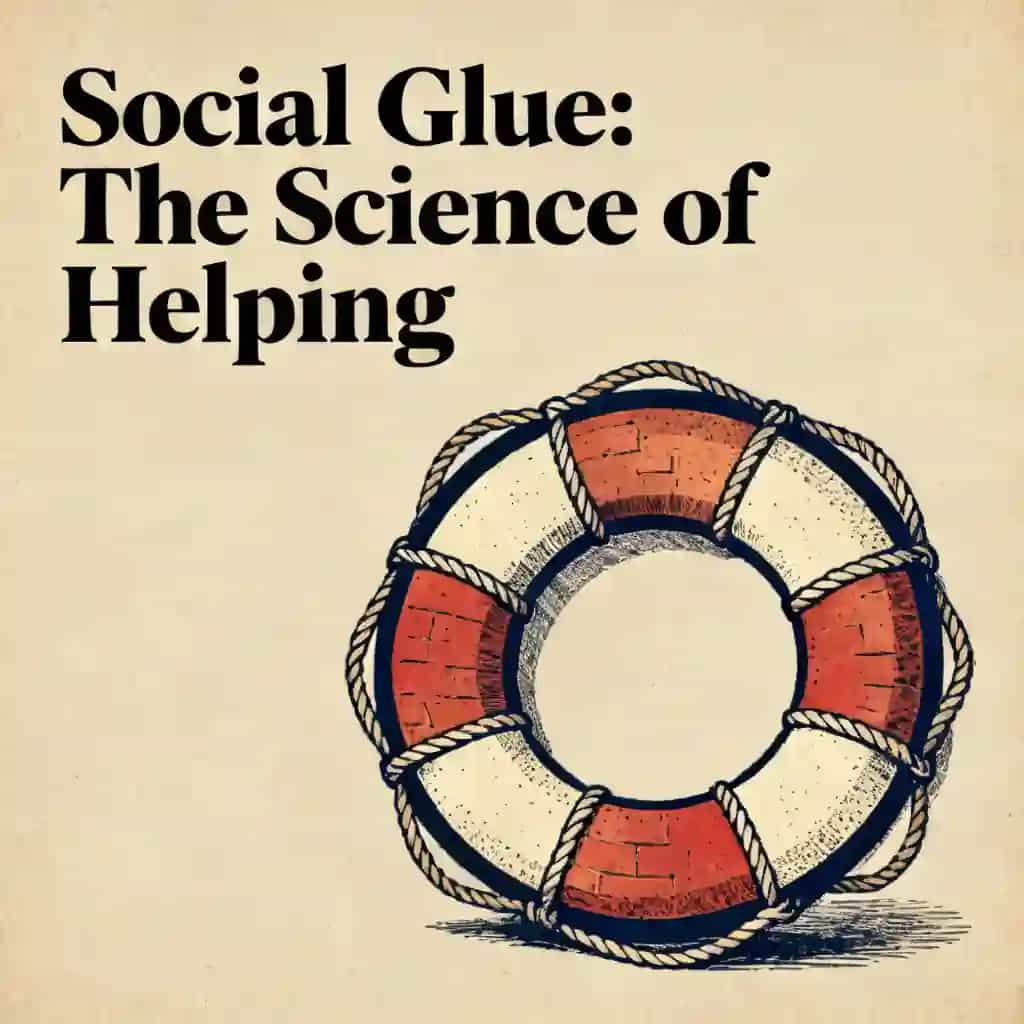
Medieval cities declined as powerful centralized states emerged. Feudal lords built royal cities like Paris and Moscow, attracting warriors with glory and merchants with patronage. Roman-trained lawyers provided intellectual justification for centralization, while the Church legitimized monarchs as divine representatives. Cities hastened their own decline by establishing rigid social hierarchies, creating divisions between established families and newcomers, and neglecting agriculture for commerce. The Reformation attempted to revive mutual aid principles, but emerging States brutally suppressed this movement. Despite systematic suppression by state and capital, the mutual-aid tendency persists through history's darkest periods. Workers formed unions despite prohibitions. The Lifeboat Association exemplifies this spirit - volunteers risking their lives to rescue strangers from dangerous waters, driven by moral impulse rather than self-interest. In working-class neighborhoods, mutual aid thrives through support networks: mothers caring for sick neighbors, families sharing resources, and workers showing remarkable solidarity during crises.
Mutual aid represents a fundamental evolutionary force shaping survival and development in both human society and the animal world. Species that minimize individual struggle and maximize cooperation consistently prove the most numerous and prosperous-from ant colonies to wolf packs to primate groups. Industrial progress commonly attributed to competition actually stems more from cooperation and collective knowledge sharing. Even the steam engine required generations of artisans with specialized skills fostered in collaborative medieval workshops, sharing techniques across regions and generations. Today's technologies-the internet, smartphones, medical treatments-emerged from complex collaborative webs spanning institutions, countries, and generations. In ethics, mutual aid forms the foundation of our moral conceptions, traceable to early animal evolution where cooperative behaviors first emerged. New religions consistently reaffirmed this principle when it decayed, extending it from clan to tribe to nation and ultimately to all humanity. These principles reflect deep-seated cooperative instincts that enabled human survival and flourishing throughout history.
Kropotkin's work fundamentally challenges the Hobbesian myth that has dominated Western political thought-the idea that humans are naturally selfish and competitive, requiring strong central authority to prevent chaos. This perspective has gained renewed relevance in our contemporary context. As we face unprecedented global challenges-climate change, wealth inequality, resource depletion, biodiversity loss-the limitations of competitive individualism become increasingly apparent. Recent history provides numerous examples of spontaneous cooperation emerging precisely when traditional institutions fail. During Hurricane Katrina, local communities organized rescue operations and established mutual support networks while official responses faltered. Similarly, the COVID-19 pandemic saw the rapid emergence of neighborhood mutual aid groups and grassroots support systems across the globe. The digital age has enabled new forms of cooperation that Kropotkin could never have imagined. Open-source software development, Wikipedia, citizen science projects, and collaborative disaster response platforms demonstrate how voluntary cooperation can create sophisticated systems without centralized control. These modern examples vindicate Kropotkin's core insight that humans possess an innate capacity for complex cooperation.
Next time you hear "survival of the fittest" used to justify cutthroat competition or inequality, recall Kropotkin's Siberian observations. The most successful species aren't lone predators but those with sophisticated mutual support systems. Our greatest human achievements-from cathedrals to space exploration-emerged not from isolated genius but from collective effort and shared purpose. The path forward lies in rediscovering our cooperative heritage. We can design economic systems rewarding collaboration over exploitation, political structures empowering communities rather than dividing them, and institutions nurturing our innate tendency toward mutual aid. Facing existential challenges, our survival depends on this truth: we aren't merely self-interested competitors, but social beings wired for cooperation. Our greatest strength has always been working together, sharing resources and knowledge, and supporting each other through hardship. The future belongs not to aggressive competitors but to those who master cooperation. Kropotkin offers not just historical analysis but a roadmap for human flourishing in challenging times ahead.