Kapitel 1
The Art of Self-Invention: Trump's Billion-Dollar Illusion
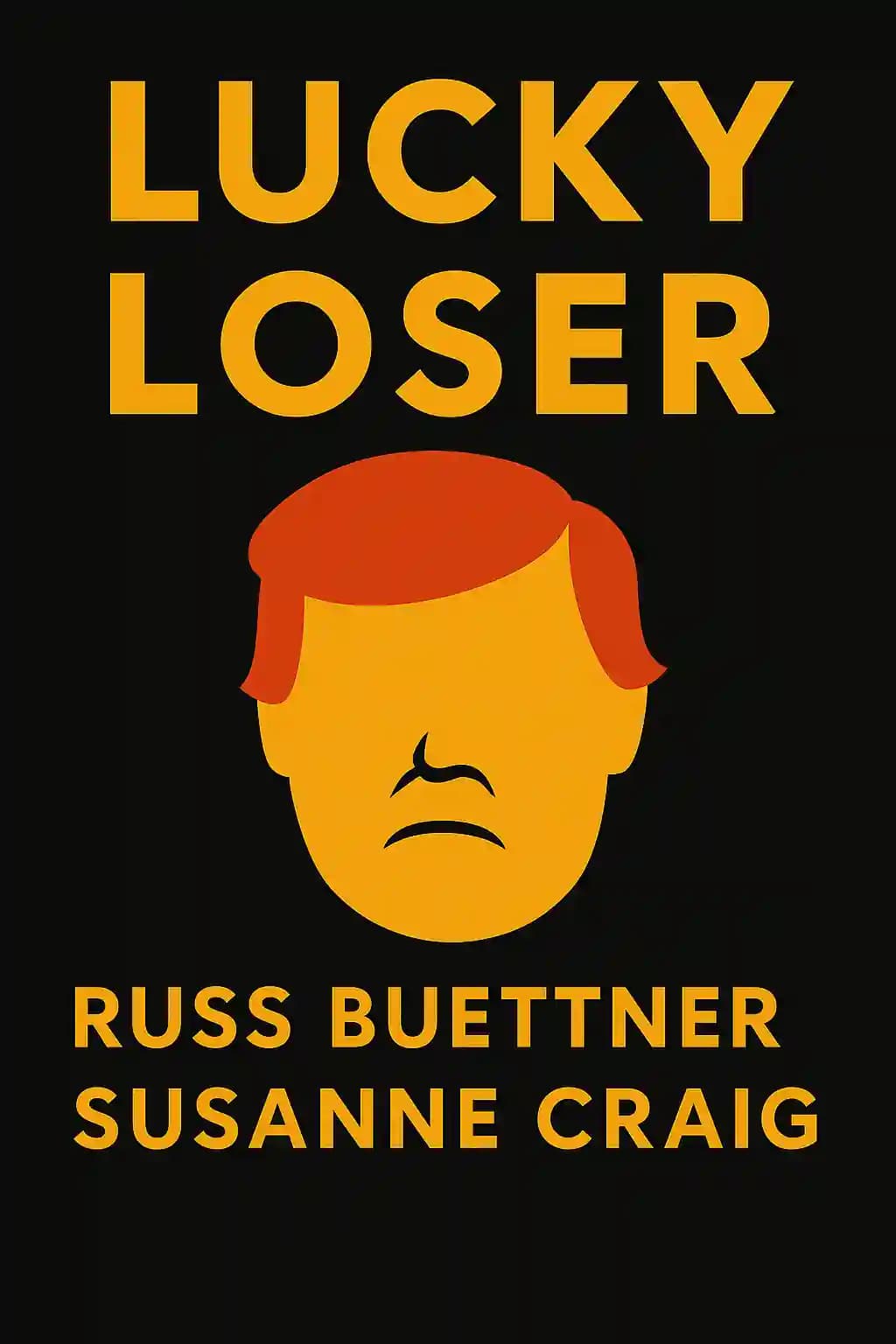
Have you ever wondered how a man with a string of bankruptcies, failed ventures, and minimal real estate development experience convinced the world he was a self-made business genius? Donald Trump's transformation from a privileged heir to the perceived embodiment of American success represents perhaps the greatest feat of personal mythology in modern history. Oprah Winfrey once named "The Art of the Deal" as one of her favorite books. Even Warren Buffett admitted to being fascinated by Trump's ability to rebound from financial disasters that would have destroyed most careers. The Trump brand became so powerful that by 2004, 54% of Americans believed Trump was "self-made" despite inheriting the equivalent of $413 million from his father. This cultural sleight-of-hand - convincing America that inherited wealth represented bootstrap success - would eventually propel Trump beyond business celebrity to the presidency itself. Russ Buettner's "Lucky Loser" meticulously dismantles this carefully constructed illusion, revealing how Trump's greatest talent wasn't building businesses but building the perception of success.
Kapitel 2
The Father's Empire: How Fred Trump Built the Foundation
When examining Donald Trump's business career, we must first understand the extraordinary foundation his father created. Unlike his son who announced projects before securing financing, Fred Trump was methodical, calculating expenses to the dollar and announcing developments only when everything was in place. Fred built his fortune through government housing programs designed after the Great Depression and World War II, becoming one of America's most prolific home builders.
Fred's work ethic was legendary - twelve-hour days on construction sites, financial records kept in his pocket, obsessive cost control (even collecting bent nails from construction sites), and an assembly-line approach that earned him the nickname "Henry Ford of the building industry." His breakthrough came when the Federal Housing Administration began guaranteeing mortgages, allowing longer terms and higher loan-to-value ratios. Though the FHA notoriously discriminated against Black families, Fred saw an opportunity to profitably build modest homes for white Americans.
When World War II created severe housing shortages near military installations, Fred pivoted again. The Hampton Roads area of Virginia, with its strategic naval facilities, saw its military population explode from 10,000 in 1939 to 168,500 by 1943. Fred secured government-backed loans covering 90% of estimated construction costs for rental apartments near military bases. Crucially, developers weren't required to document actual expenses or return unspent mortgage funds-creating a windfall for cost-cutting builders.
By 1946, Fred was positioned to capitalize on another housing crisis as troops returned home. He designed Shore Haven - ten six-story elevator buildings with 1,344 apartments - and received a $9.125 million federally insured mortgage. He followed with Beach Haven, an even larger complex with 1,860 apartments backed by nearly $16 million in mortgage guarantees. Through clever cost-cutting and manipulation of the system, Fred kept $5.5 million from mortgage funds above his actual costs, making the Trump family extraordinarily wealthy before the buildings even began generating rental income.
What's fascinating is how Fred's political connections protected him when investigations revealed his practices. When the "FHA Scandal" erupted in 1954, Fred was portrayed in newspapers nationwide as pocketing a $4,047,900 windfall. Yet despite the Department of Justice considering his cost estimates "false" and "lies," they couldn't prosecute because the FHA claimed it didn't rely on those estimates. As Assistant Attorney General Warren Olney explained: "They are in the position of saying that they weren't deceived or defrauded. They were just giving this stuff away."
Kapitel 3
The Heir Apparent: Donald's Early Years and Education
By the 1950s, the Trump family's wealth was conspicuous even in affluent Jamaica Estates. They owned the biggest house on the best street, employed full-time help, drove expensive new cars annually, and enjoyed numerous luxuries. Fred Trump, now fifty years old, began eyeing a successor for his empire, and his focus landed squarely on Donald despite having four other children.
The stark difference in how Fred treated his daughters versus his sons became increasingly apparent. While both daughters remained at the small Kew-Forest School throughout high school, he transferred all three sons to other schools. Fred's eldest child, Maryanne, recognized early that she wasn't in consideration despite being the family's strongest student. When she graduated, her parents showed little interest in her higher education, viewing a woman's path as inevitably leading to marriage and motherhood.
By age ten, Donald had become the dominant personality among the Trump children still at home. Unlike his siblings, young Donald developed a reputation for misbehavior. A neighbor reported he once threw a large rock through her window. At the Atlantic Beach Club, Donald would wait by the pool for arriving families and soak them with cannonball dives, then blame others. He treated his younger brother Robert "as if he were mentally deficient."
At thirteen, Donald was sent to New York Military Academy after his behavior became unmanageable. Life there was governed by rigid schedules and strict discipline - reveille at 6:00 a.m., communal bathroom time, uniform inspection, marching to meals, classes, rifle cleaning, and more marching. "New Guy Rules" required younger cadets to slam against walls when upperclassmen passed, shouting "Sorry to be in your way, sir!" Physical punishment was common, with broomstick whacks and kicks to the groin used to maintain control.
Despite this harsh environment, Donald thrived within the academy's hierarchical structure. In his senior year, he was promoted to captain of Company A, one of the top leadership positions. His leadership style proved detached - he would lock himself in his room after dinner, leaving discipline to subordinates. Fellow cadets believed Fred Trump's wealth influenced academy decisions, particularly when Donald was unexpectedly placed at the front during the Columbus Day Parade, leading the march down Fifth Avenue.
The military academy experience taught Trump how to command attention and project confidence while maintaining a carefully crafted persona - skills that would define his later business and public life. His pattern of exaggerating accomplishments began here, as evidenced by borrowing medals for his yearbook photo and later claiming athletic prowess despite poor statistical records.
Kapitel 4
The Apprentice Son: Learning Fred Trump's Business
At twenty-two, Donald Trump lived in his parents' home while commuting to his father's modest Avenue Z office. Despite impressive titles and a $100,000 salary, Donald found the rental management business tedious. Restless in Brooklyn, Donald made his first independent venture in 1969, investing $70,000 of his father's money to co-produce a Broadway play called "Paris Is Out!" with Tony Award-winning producer David Black. The old-fashioned comedy opened across from the groundbreaking "Hair" and closed after just 100 performances following scathing reviews. Donald lost all his investment.
After this failure, Donald moved from Jamaica Estates to a small apartment on Manhattan's Upper East Side, making a daily reverse commute to Brooklyn. He began rebranding the company from "the Fred Trump Organization" to simply "The Trump Organization," placing himself at the center while erasing his father from the public profile. Though Donald sought the spotlight, Fred still controlled the business direction, focusing more on protecting wealth than expanding it.
Fred began showing financial favoritism toward Donald, giving him 25 percent ownership in a new low-income senior housing project in East Orange, New Jersey - a stake his siblings didn't receive. Fred paid Donald's company about $48,000 annually to "manage" the building, though Fred's employees did the actual work. Donald also kept profits from air conditioner rentals to tenants, creating a steady income stream.
In January 1973, Donald emerged as the public face of the Trump organization in a New York Times profile that presented him as president of his father's company. The article contained numerous falsehoods - claiming Donald graduated first in his class at Wharton (he hadn't), that the company was buying Manhattan property (it wasn't), and that Donald was the only Trump child interested in real estate (Freddy had been pushed aside, and Robert would soon join). Unlike Fred, who rarely made claims that weren't true despite being immodest about his projects, Donald was establishing a new pattern of embellishment for the Trump name.
Kapitel 5
Fighting Everything: The Discrimination Lawsuit and Roy Cohn
In October 1973, the U.S. Department of Justice filed a civil lawsuit against Donald and Fred Trump for discriminating against Black tenants. The investigation had begun after the New York Urban League sent white and Black testers to Trump buildings, finding that Black applicants were told no vacancies existed or were steered to Patio Gardens in Brooklyn, while white applicants were offered apartments.
Fred's longtime friend and fixer, Abraham "Bunny" Lindenbaum, advised them to settle quickly without admitting fault, as Samuel LeFrak had done. Initially, the Trumps appeared ready to follow this advice. But when Donald complained about the discrimination lawsuit at Le Club, an exclusive Manhattan discotheque, he met Roy M. Cohn, the notorious former McCarthy counsel. Cohn advised fighting rather than settling: "Tell them to go to hell and fight the thing in court."
Despite this being a departure from Fred's usual approach of quietly resolving problems, Fred allowed Donald to hire Cohn, who quickly filed a motion to dismiss the lawsuit and a $100 million countersuit against the government. Donald held a press conference falsely claiming the government was trying to force welfare recipients into Trump buildings - a claim prosecutors called "barristerial shadow boxing."
After a year of failed tactics, the Trumps returned to settlement negotiations. The final settlement required no admission of guilt but mandated equal housing opportunity advertisements and sending vacancy lists to civil rights groups. Donald declared "full satisfaction" because it didn't require accepting welfare recipients - "declaring victory over an enemy that did not exist."
The lawsuit marked the transition of power from Fred to Donald, establishing Donald's lifelong pattern of pursuing litigation regardless of chances or costs, and reframing losses as victories by inventing phony enemies. As Donald told the Daily News: "To make it in this city as a landlord, you've got to fight everything that's done, practically. This isn't the real estate business. This is combat. It's like being in the infantry."
Kapitel 6
Manhattan Gambles: The Commodore and Trump Tower
Donald Trump's move into Manhattan real estate came at a pivotal moment. As New York City faced financial crisis in the mid-1970s, Trump saw opportunity in the city's desperation. His first major target was the decrepit Commodore Hotel near Grand Central Terminal. Once a grand establishment with over two thousand rooms that could serve ten thousand meals daily, by the mid-1970s it had fallen into severe disrepair, with homeless people, rats, squatters, and prostitutes occupying various spaces.
Trump's approach to the Commodore revealed his genius for leveraging political connections and negotiating favorable terms. Despite having no formal agreement with Penn Central (the hotel's owner), he bluffed his way into meetings with city officials, often arriving with experienced attorney Sandy Lindenbaum (son of Bunny Lindenbaum). Though some officials dismissed Donald as a "twerp" who would "never build anything," his connections with Mayor Beame's administration gave him access.
Trump boldly requested the city eliminate property taxes on the hotel to make the project viable. Despite opposition from hotel owners who complained about competitive disadvantage, Beame framed the tax abatement as the first in a broader program. Instead of paying $4 million annually in property taxes, Trump would pay "rent" starting at $250,000 and slowly increasing to $2.775 million over forty years, plus a share of profits-what The Wall Street Journal called "the tax deal of the century."
For Trump Tower, Donald acquired air rights from neighboring Tiffany's for $5 million through a handshake deal between Fred Trump and Walter Hoving. The final piece of the business model was a property tax abatement originally intended for middle-class housing but first used for luxury development by Olympic Tower. When Housing Commissioner Anthony Gliedman rejected his application because the Bonwit Teller building wasn't "functionally obsolete," Donald erupted, threatening Gliedman and suing the city through Roy Cohn.
Trump Tower officially opened on Valentine's Day 1983 with doormen in tall black fur grenadier caps and red uniforms reminiscent of Buckingham Palace. The atrium featured pianists and violinists, brass Trump insignias, highly polished escalators, mirrors, and rose-and-peach marble creating endless reflections. Donald had relentlessly promoted the building, even planting fake stories using his "John Baron" pseudonym that Prince Charles and Lady Diana would live there.
Kapitel 7
The Illusion of Success: Atlantic City's House of Cards
Trump's entry into the Atlantic City casino market demonstrated both his talent for self-promotion and his reckless approach to financing. After partnering with Holiday Corporation (Harrah's parent company) to open Trump Plaza Hotel and Casino, Trump quickly became dissatisfied with the arrangement, complaining about everything from slot machine placement to carpet colors. When Hilton Corporation failed to obtain a gaming license for their nearly-completed Atlantic City casino in February 1985, Trump seized the opportunity, negotiating a $320 million deal in just ten days.
He funded the purchase entirely with $351.8 million in bonds at 13.75% interest and a $50 million bank loan, putting everything he owned up as collateral. Despite assuring his Harrah's partner he wouldn't violate their partnership agreement, Trump announced the new property would be called Trump Castle, prompting Harrah's to sue him for breaching their non-compete clause.
Trump's ambitions grew when he acquired control of Resorts International and its unfinished Taj Mahal project. Despite telling casino commissioners that "banks would have never loaned the money to Resorts as Resorts" and disparaging junk bonds as making companies "junk" through high interest rates, Trump then issued $675 million in junk bonds at 14% interest to complete the Taj Mahal, committing to nearly $100 million in annual interest payments.
As the Taj Mahal prepared to open, Trump orchestrated a spectacular staff rally featuring a motivational speaker who called himself "Fabu the Fabulous." Trump boasted to employees that when he initially proposed building the Taj, people said it couldn't be done, yet here they stood in what he claimed was "the most incredible building in the history of hotels."
Behind this bravado, financial trouble loomed. A $47 million interest payment was due, and Wall Street publications were predicting problems. When Fortune magazine questioned his liquidity, Trump dismissed concerns, claiming "I don't need a lot of cash." Despite publicly projecting confidence, the Taj Mahal was fundamentally overleveraged. As one analyst later observed, "It was doomed as soon as the ink was dry on the purchase."
Within months, Trump's casino empire began crumbling under unsustainable debt. By June 1990, Trump owed $3.4 billion to banks and bondholders, with his casinos alone struggling under $1.3 billion in high-interest debt. After missing $73 million in interest payments, he struck a deal with banks that suspended some payments and provided another $65 million loan to cover upcoming interest. The banks required Trump to hire a CFO, stick to a business plan, and placed him on a $450,000 monthly personal allowance.
Kapitel 8
The Father's Final Rescue: Fred's Hidden Support
Despite Trump's public denials of financial trouble, his situation had become desperate. Facing an $18.4 million bond payment on the Castle casino, Trump executed a clandestine plan to tap his father's wealth. Fred Trump's attorney Howard Snyder walked into the Castle with a $3.35 million certified check, opened an account in Fred's name, converted the entire amount to 670 high-value chips, and walked out without placing a single bet. He returned the next day with another $150,000 check from Fred.
Donald publicly boasted he had made the payment without outside help, claiming "We don't need an outside infusion" and "It's in the genes, I really believe that." Casino regulators, who had captured the entire scheme on security cameras, quietly opened an investigation.
When reporter Neil Barsky revealed Trump was considering borrowing money from his father to avoid casino bankruptcy, Trump erupted, calling the article "evil, vicious, false and misleading" and claiming he had "no intention to ask" his father for help. The reality was that Fred had been funneling money to Donald for years through unrepaid loans, trust funds, and paper-only interest payments.
They converted a $15 million unpaid loan into an investment in Trump Palace, which Fred later wrote off as a total loss for tax purposes-effectively disguising a gift that should have been taxed at 55%. Fred's trusts generated $220,000 annually for each child, while condominium conversions brought Donald another $1 million yearly. In 1990, Fred mysteriously reported $50 million in taxable income-five times his normal amount-and paid $18 million in taxes, suggesting a massive cash distribution while Donald reported business losses of $263.7 million that same year.
As Fred and Mary Trump's health deteriorated, the family created "All County Building Supply and Maintenance" and "Apartment Management Associates," sham companies designed to funnel Fred's cash to his children while evading gift and estate taxes. The scheme marked up purchases for Fred's buildings by 10-20%, with the difference split between the four Trump children and their cousin. Within a few years, Donald and his siblings were each receiving more than $2 million annually from these schemes.
Kapitel 9
The Television Savior: Mark Burnett and The Apprentice
In spring 2002, Mark Burnett rented Trump's Wollman skating rink in Central Park for a "Survivor" finale. When he noticed Trump in the front row, Burnett flattered him by repeatedly using his name and praising "The Art of the Deal." Trump told Burnett he was a genius and expressed interest in working together. By 2003, after six seasons of "Survivor," Burnett conceived a city-based business competition show.
In February 2003, expecting to reach a secretary, Burnett called Trump but was surprised when Trump himself answered. Though unprepared, Burnett pitched his concept on the spot: "Survivor, only the jungle is Manhattan" - a job competition to win an apprenticeship with Trump. Trump immediately agreed, accepting Burnett's "fifty-fifty" profit-sharing proposal with a handshake.
When Burnett's production team arrived at Trump Tower in summer 2003, they were shocked by what they found. Instead of a billionaire's headquarters, they discovered musty, moldy carpets, chipped furniture, and a small operation of fewer than fifty people occupying just one floor. Trump's desk contained no work materials - only newspaper and magazine clippings about himself.
Burnett's team understood their mission wasn't documentary filmmaking but entertainment. "Our job was to make him look legitimate," recalled producer Jonathon Braun. They rented space on Trump Tower's fourth floor to build two sets: a 6,500-square-foot windowless "suite" for contestants and a 1,520-square-foot boardroom designed to evoke a Harvard library.
The "Meet the Billionaire" opening segment deployed all of Burnett's production mastery - breathtaking helicopter shots of Manhattan, artful storytelling, and original music - to transform Trump's image. The carefully scripted three-minute masterpiece portrayed Trump as a business genius who had "fought back" from being "billions in debt" to create "the highest-quality brand." The segment showed Trump-branded properties, many of which he merely licensed his name to rather than owned. "We were making him out to be royalty," admitted producer Bill Pruitt.
The Apprentice became a ratings phenomenon, averaging 20.7 million viewers in its first season. Trump's fame skyrocketed - he hosted Saturday Night Live and was featured in VH1's "The Fabulous Life of Donald Trump." The show served as a weekly promotional tour of Trump's properties, with contestants providing fawning approval of his "really, really rich" apartment and "amazing" Taj Mahal casino.
Kapitel 10
The Licensing Empire: Selling the Trump Name
The Apprentice's success created an entirely new business model for Trump: licensing his name to projects developed and financed by others. From 2004-2010, licensing generated $103.2 million in pure profit, while The Apprentice added another $135.2 million. However, his management approach ensured this revenue stream would eventually shrink, as forty announced real estate licensing deals were never completed.
Trump's licensing deals expanded dramatically as his celebrity grew. The Trump Tower Tampa project still lacked financing a year after launch, with developers sending Apprentice winner Kendra Todd to a ceremonial groundbreaking while Trump claimed he couldn't attend due to Melania's pregnancy - though he appeared at an Apprentice audition days later.
2006 became Trump's most frantic year, announcing licensing deals for projects across America and internationally in Panama, Mexico, and Israel while typically obscuring that he wasn't the actual developer. Beyond real estate, he launched furniture lines, vitamins, a travel agency, and a mortgage brokerage while publishing two books and filming two Apprentice seasons.
Trump's most lucrative endorsements came from multilevel marketing companies. ACN paid him at least $2 million to endorse their nearly obsolete video phones, with Trump claiming "I simply can't imagine anybody using this phone and not loving it." Despite collecting $8.8 million from ACN over years, when later questioned, Trump claimed, "I do not know the company." Similarly, the struggling vitamin company Ideal Health rebranded as Trump Network, paying him $2.6 million before collapsing and devastating thousands of salespeople.
One rare investment came when Michael Wang Sexton pitched what became Trump University. After initially discussing a licensing deal, Trump decided to own the business, providing Sexton $3 million for startup costs in exchange for 93% ownership. Despite immediate warnings from New York officials that calling it a "university" required state licensing, Trump ignored the directive.
The business model shifted entirely to seminars where attendees faced hard sells to purchase packages ranging from $1,495 to $34,995. Marketing materials leveraged The Apprentice brand, with Trump asking "Are you my next apprentice?" Despite promotional claims that Trump "handpicked" instructors, he never reviewed materials or met the instructors. Many had histories of financial problems and at least four had felony convictions.
Kapitel 11
The Final Accounting: A Legacy of Illusion
Donald Trump's business approach diverged dramatically from his father's methods. Where Fred Trump precisely calculated revenue, controlled costs, and closely monitored projects, Donald's career was marked by grandiose announcements, abandoned projects, and financial rescues.
While Trump was filming The Apprentice in 2004, he made a momentous personal financial decision. During a confidential family meeting about the Trump siblings' trust funds from their father's empire, Donald abruptly announced, "I think now is a good time to sell." Despite Fred Trump's explicit wishes that his empire remain intact within the family, Donald directed his brother Robert to quietly solicit private bids. Rubie Schron won with an offer of $705.6 million, with additional properties selling for $32.3 million. Each sibling would receive $177.3 million. However, the buyers' mortgages revealed the banks valued the properties at about $975 million - meaning Trump, the self-proclaimed greatest dealmaker, had sold his father's empire for nearly $250 million below its worth.
By 2015, Trump's entertainment income had plummeted from $51 million in 2011 to $22 million, forcing him to sell off stocks and bonds to maintain liquidity-$98 million in January 2014 alone, followed by $54 million in 2015 and $68.2 million in 2016. Deutsche Bank noted he had reported negative cash flow for four of the previous five years, and his businesses' cash reserves fell 40% during this period.
Trump's financial story ultimately reveals a man who received the equivalent of $1.5 billion through three strokes of luck: his birth, being discovered by a television producer, and being forced into an investment against his will. Despite this extraordinary tailwind, there's no evidence he added to these fortunes over fifty years - investing in the stock market would have yielded better returns than investing in himself.
Trump has lived his entire adult life in a protective bubble - first financed by his father, then by celebrity fortune. Since abandoning his father's careful planning practices, he's waged war on fact-based reality that might expose his failures. His strategy has been consistent: discredit anyone who questions him by claiming persecution and assigning impure motives. He told Lesley Stahl he attacked media to "discredit you all... so when you write negative stories about me no one will believe you." This approach extended to undermining the executive branch ("deep state"), the judicial system ("Trump hating" judges), and anyone who opposes him.
This worldview allows him to claim he's never made mistakes while portraying himself as perpetually persecuted - perhaps his final masterpiece. American voters now face their third opportunity to decide whether they want to live in this fact-free world Trump has created.