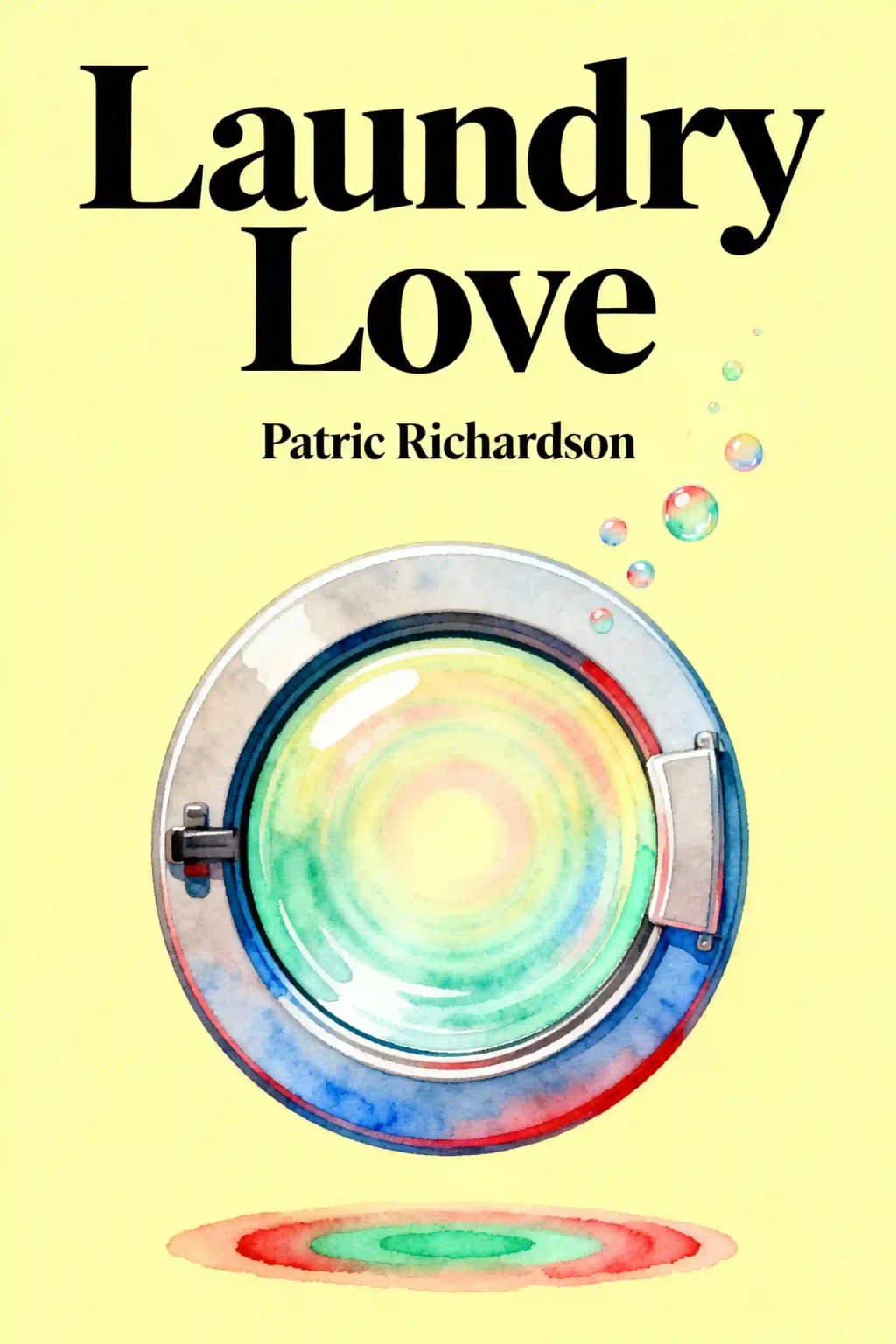
Patric Richardson's "Laundry Love" transforms a dreaded chore into joyful ritual. Now in its fourth printing, this sensation has the New York Times calling Richardson "the Ina Garten of laundry." Discover why his vodka-freshening technique and sustainable alternatives to dry cleaning have sparked a nationwide movement.
Patric Richardson, author of Laundry Love: A Guide to Caring for Your Clothes and renowned laundry evangelist, blends his expertise in textile care with a passion for sustainable living.
A University of Kentucky graduate in fashion merchandising and textiles, Richardson honed his skills at luxury retailers like Neiman Marcus and Nordstrom before founding Mona Williams, a curated vintage store at the Mall of America.
His innovative approach to home laundry—emphasizing efficiency, affordability, and eco-friendly practices—led to sold-out "Laundry Camps" and his HGTV series The Laundry Guy. Richardson’s methods, featured in The New York Times, Wall Street Journal, and on NBC Nightly News, empower readers to ditch dry cleaning and embrace confidence in garment care.
His follow-up book, House Love, expands on his philosophy of joyful home maintenance. Laundry Love became a national bestseller, now in its fourth printing, and inspired a dedicated fanbase calling themselves "laundry revolutionaries."
Laundry Love reimagines laundry as a joyful, eco-conscious practice through innovative techniques like warm-water express cycles, homemade stain solutions, and eliminating dry cleaning. Patric Richardson, a fashion expert and "Laundry Evangelist," blends memoir elements with practical advice to help readers save time, money, and the environment while caring for clothing.
This book is ideal for eco-conscious homeowners, fashion enthusiasts, and anyone seeking to simplify laundry routines. Its tips on fabric care, stain removal, and sustainable practices appeal to DIYers, thrifty families, and individuals tired of expensive dry-cleaning bills.
Yes, reviewers praise its actionable advice, such as using vodka to freshen clothes and wool dryer balls to reduce static. Readers appreciate Richardson’s engaging tone and methods that extend garment life, though some may find his optimism about ironing overly enthusiastic.
Richardson advocates washing all fabrics on a warm express cycle to optimize cleaning and reduce wear. He discourages fabric softeners, recommends line-drying to preserve textiles, and uses aluminum foil balls in dryers to eliminate static. Ironing is presented as a mindful ritual with spray starch for crisp finishes.
The book promotes eco-friendly practices like avoiding single-use plastic detergent jugs, repurposing household items (e.g., vinegar, baking soda) for cleaning, and air-drying clothes. Richardson also critiques fast fashion, encouraging investment in durable garments to reduce waste.
For smelly but clean clothes, Richardson recommends spraying a vodka-water mixture (1:3 ratio) to neutralize odors without washing. He also advises using rubbing alcohol for stubborn smells and airing out garments instead of over-washing.
Yes, Richardson shares methods like pre-treating stains with diluted dish soap, using hydrogen peroxide for bloodstains, and applying lemon juice to brighten whites. He emphasizes prompt treatment and avoiding harsh chemicals like bleach.
The book disputes cold-water washing myths, advocating warm water for better detergent activation. It also rejects dry cleaning, teaching readers to hand-wash delicate items like silk and wool at home using gentle techniques.
Richardson has decades of expertise from roles at Neiman Marcus, Nordstrom, and his Mall of America store, Mona Williams. He holds a fashion merchandising degree and hosts Laundry Camp workshops, blending Appalachian resourcefulness with high-fashion textile knowledge.
Richardson frames ironing as a therapeutic activity, recommending steam-generating irons for efficiency. He details techniques for crisp collars and creases, using spray starch to repel stains and maintain polished looks.
Some readers may find Richardson’s enthusiasm for laundry unrealistic or overly niche. The book focuses heavily on clothing care, offering less guidance for household linens or bulk laundry challenges.
Unlike generic manuals, Laundry Love merges memoir, sustainability advocacy, and pro-grade fabric care tips. Its emphasis on mindset shifts (e.g., finding joy in chores) and avoidance of mainstream products set it apart.
Erlebe das Buch durch die Stimme des Autors
Verwandle Wissen in fesselnde, beispielreiche Erkenntnisse
Erfasse Schlüsselideen blitzschnell für effektives Lernen
Genieße das Buch auf unterhaltsame und ansprechende Weise
Caring for clothes is a language of love.
These extra loads are often signs of a life well lived.
Anything-yes, anything-can be washed at home.
My family loves color, especially my mom who stands out beautifully in any room.
Laundry has been my passion.
Zerlegen Sie die Kernideen von Laundry Love in leicht verständliche Punkte, um zu verstehen, wie innovative Teams kreieren, zusammenarbeiten und wachsen.
Destillieren Sie Laundry Love in schnelle Gedächtnisstützen, die die Schlüsselprinzipien von Offenheit, Teamarbeit und kreativer Resilienz hervorheben.

Erleben Sie Laundry Love durch lebhafte Erzählungen, die Innovationslektionen in unvergessliche und anwendbare Momente verwandeln.
Fragen Sie alles, wählen Sie die Stimme und erschaffen Sie gemeinsam Erkenntnisse, die wirklich bei Ihnen ankommen.

Von Columbia University Alumni in San Francisco entwickelt
"Instead of endless scrolling, I just hit play on BeFreed. It saves me so much time."
"I never knew where to start with nonfiction—BeFreed’s book lists turned into podcasts gave me a clear path."
"Perfect balance between learning and entertainment. Finished ‘Thinking, Fast and Slow’ on my commute this week."
"Crazy how much I learned while walking the dog. BeFreed = small habits → big gains."
"Reading used to feel like a chore. Now it’s just part of my lifestyle."
"Feels effortless compared to reading. I’ve finished 6 books this month already."
"BeFreed turned my guilty doomscrolling into something that feels productive and inspiring."
"BeFreed turned my commute into learning time. 20-min podcasts are perfect for finishing books I never had time for."
"BeFreed replaced my podcast queue. Imagine Spotify for books — that’s it. 🙌"
"It is great for me to learn something from the book without reading it."
"The themed book list podcasts help me connect ideas across authors—like a guided audio journey."
"Makes me feel smarter every time before going to work"
Von Columbia University Alumni in San Francisco entwickelt

Erhalten Sie die Laundry Love-Zusammenfassung als kostenloses PDF oder EPUB. Drucken Sie es aus oder lesen Sie es jederzeit offline.
What if the most mundane task in your life - the one you dread every week - could become an act of devotion? Picture a two-year-old boy, mesmerized by the swirling clothes in his mother's washing machine, who grows up to fill auditoriums at the Mall of America with people desperate to learn his secrets. This isn't about cleanliness. It's about reclaiming a lost art that connects us to the people we love and the planet we inhabit. Every time you toss a "dry clean only" garment into the donation pile or replace a shirt ruined by mysterious yellow stains, you're surrendering power to an industry that profits from your confusion. But here's the truth: almost everything you own can be washed at home, and doing so properly isn't just economical - it's transformative. Those tiny tags sewn into your clothes? They're lying to you. Not maliciously, but protectively - manufacturers print the absolute minimum care instructions that won't land them in court, not what's actually best for your garments. "Dry clean only" often means "we don't want to get sued if you mess this up." Consider cashmere - that luxurious fiber comes from goats living in harsh mountain climates, regularly exposed to rain and snow. Yet we're told it can't handle water? The truth is, gentle washing extends cashmere's life far beyond what dry cleaning can offer.