Kapitel 1
The Courage to Live a Meaningful Life
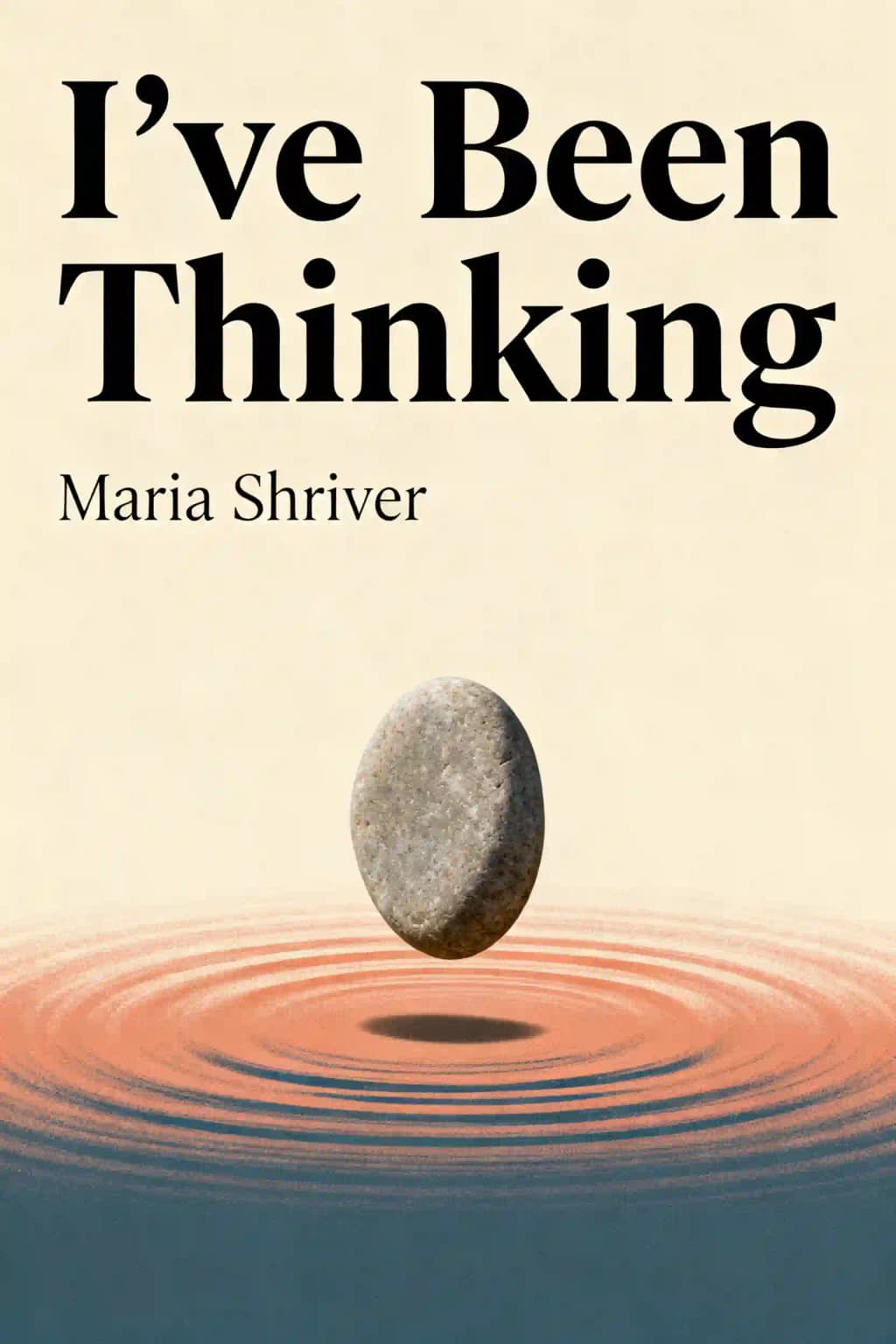
In a world of constant noise and distraction, Maria Shriver's "I've Been Thinking" offers a rare moment of genuine reflection. This deeply personal collection of essays has become a cultural touchstone for those seeking meaning in their everyday lives. Oprah Winfrey called it "a book that will change your life," while Arianna Huffington described it as "a spiritual retreat between two covers." The book has resonated with millions, including celebrities like Reese Witherspoon and Bono, who have publicly praised its wisdom. What makes this work so powerful is Shriver's ability to transform her own journey - as a member of the Kennedy family, former First Lady of California, award-winning journalist, and mother - into universal lessons that speak to our shared humanity. In these pages, she invites us to pause, reflect, and consider what truly constitutes a meaningful life - not according to society's metrics, but by our own deepest values.
Kapitel 2
Becoming Who We Choose to Be
Who we become is entirely up to our imagination, will, determination, and choices. This profound truth has fascinated me since childhood, as I've devoured countless biographies and interviewed people from all walks of life. What I've discovered is that no one's journey follows a straight line. Everyone faces struggles - mental, emotional, physical, financial, or professional - regardless of their background or circumstances.
I used to waste precious energy regretting past choices I thought were permanent or opportunities I was too scared to seize. But I've learned that living in either the past or future keeps me out of reality, robbing me of the present moment. Today, I choose to live authentically in the now, without judgment of myself or others.
This shift has been transformative. Rather than dwelling on what might have been or worrying about what could be, I direct my energy toward what actually matters - my family, friends, purpose, and mission. My actual life.
Think about it: How often do we get caught in cycles of regret or anxiety that prevent us from fully experiencing the day before us? The past is gone. The future isn't here. This day - this very moment - offers each of us a chance to be the person we already are beneath the layers of expectation and pretense.
As Ralph Waldo Emerson wisely noted, "What lies behind us and what lies before us are tiny matters compared to what lies within us." The power to shape who we become doesn't lie in perfect circumstances or an unblemished past, but in the choices we make today, guided by the wisdom we've gained from both our triumphs and mistakes.
Start where you are. Begin now. The journey to becoming your authentic self doesn't require waiting for the perfect moment - it only requires your decision to begin.
Kapitel 3
Discovering the Jewel Within
We all want someone to see the jewel inside us - to recognize our inherent value regardless of our age, appearance, or circumstances. Yet too often, we give others the power to decide our worth, when that power rightfully belongs to us alone. I know this because I've given it away myself, and reclaiming it has been one of my life's greatest challenges. Like many, I spent years measuring my value through others' eyes, seeking validation in accomplishments, relationships, and external markers of success.
Life's transitions can make it particularly difficult to perceive our inner beauty. Aging, watching loved ones change, seeing our prospects shift - these experiences can cloud our vision of ourselves. Sometimes I look in the mirror and wonder who's staring back. The reflection shows new lines, different contours, unfamiliar shadows. But then I remember watching both my parents age before my eyes, and I loved them no less as they changed. In fact, their transformation revealed new dimensions of beauty - my father's laugh lines deepened with wisdom, my mother's silver hair caught the light like strands of silk. So I've decided to do for myself what I did for them - love myself no less as I age, regarding myself not with judgment and criticism but with kindness and compassion.
This shift in perspective doesn't happen overnight. It's a daily practice of turning our focus away from the glittering gift wrap we think defines us - our appearance, achievements, possessions - and instead honoring the jewel inside, the essence of who we truly are. This means acknowledging our core values, celebrating our resilience, and recognizing the unique gifts we bring to the world. Whether it's our capacity for empathy, our creative spirit, or our ability to bring joy to others, these qualities shine regardless of external changes.
Consider how you speak to yourself when you look in the mirror. Would you use those same words with someone you love? If not, perhaps it's time to change the conversation. When negative self-talk creeps in, try replacing it with the same gentle encouragement you'd offer a dear friend. The wrinkles that appear, the gray hairs that emerge - these aren't signs of diminished worth but testaments to a life fully lived. Each mark tells a story: laughter shared, challenges overcome, wisdom earned through experience.
You are a jewel. Your value doesn't decrease with age or change with circumstance. Don't get discouraged when the gift wrap wrinkles or fades. There's something precious inside that remains untouched by time - a unique brilliance that the world needs now more than ever. This inner light grows stronger when we nurture it with self-acceptance and understanding. Remember that true beauty radiates from within, and like a diamond, pressure and time only serve to reveal our most brilliant facets.
Practice seeing yourself through eyes of love and appreciation. Notice the strength in your hands that have held so much, the warmth in your smile that welcomes others, the depth in your eyes that reflects your journey. These aren't imperfections to be hidden but rather signatures of a life richly lived and deeply felt.
Kapitel 4
Cultivating Inner Strength
What exactly is "intestinal fortitude"? It's that unwavering inner strength that allows certain people to remain calm in life's storms - the kind of steady, stable energy you want to be around and cultivate within yourself. People with this quality move through life with integrity and endurance, maintaining an admirable steadiness that often seems impossible to achieve.
Faith lies at the root of such fortitude. Not necessarily religious faith, though that can be part of it, but faith in something greater than yourself - a belief system that provides foundation when life shakes you to your core. This kind of strong, unwavering faith is built from small acts throughout your life, stemming from your personal beliefs and knowing there's a power greater than you at work.
I've been thinking we all need a dose of intestinal fortitude now, as our world feels increasingly unsteady. Just look around - people screaming at each other on television, political figures using demeaning language, trash-talking being applauded, and violence celebrated on social media. It's easy to get pulled into the hysterical negativity.
But there's another choice. Rather than being swept away by the chaos, we can strengthen our own intestinal fortitude by renewing our faith in what matters most. This allows us to respond not from anger or weakness, but from our center - where true strength, love, and power reside.
Think about the people in your life who embody this quality. They don't rage at others, call them names, or bully them. They don't get swept up in every passing drama. Instead, they maintain a quiet strength that comes from within - a strength that isn't dependent on external circumstances.
Developing intestinal fortitude is like building a muscle. It requires consistent practice and the willingness to stand firm in your values even when it would be easier to go with the prevailing winds. But the reward - that unshakable inner peace that comes from knowing who you are and what you stand for - is worth every effort.
Kapitel 5
Creating and Re-Creating Your Life
When we're young, we meticulously plan our lives - seeking partners, friends, children, and careers. We imagine a straight path forward, each milestone neatly following the last. But life has a way of upending these plans, forcing us to redesign everything we thought we knew about ourselves and our future.
Examples of this re-creation surround us: friends who overcame addiction, women who escaped abusive relationships, children who broke cycles of poverty, people who lost everything but started over. Each transformation required courage to face the unknown, to push against established patterns, to be creative with life's gift.
Several years ago, I had to re-create my own life. My marriage ended, my children were growing up, and the identity I had carefully constructed over decades no longer fit. Stepping into the unknown was terrifying, but I learned I could re-imagine, re-construct, and re-build. I continue this process daily, asking myself what serves me now and what needs to be released.
As Steve Jobs wisely noted, life can either be limiting and safe, or wide open, creative, and sometimes scary. "Everything around you that you call life was made up by people who were no smarter than you. And you can change it, you can influence it." Once you realize this, "you'll never be the same again."
This understanding is profoundly liberating. Your life isn't set in stone - it's a canvas awaiting your creative vision. Even when circumstances force change upon you, you still hold the brush. You decide which colors to use, which shapes to form, which stories to tell through the art of your life.
Think about areas where you've been clinging to outdated plans or identities. What might be possible if you embraced the opportunity to re-create? What dreams have you abandoned that might still be possible in a new form? Your life is yours to create and re-create - not just once, but continuously throughout your journey.
Kapitel 6
Finding True Power Within
Our understanding of power often centers on external markers - political positions, corporate titles, celebrity status, or material wealth. But I've encountered a different kind of power, one that emanates from within rather than without. I discovered it in an unexpected place: a community of Benedictine nuns in Erie, Pennsylvania.
Visiting Sister Joan Chittister and her community is always a moving experience. These women work in inner cities teaching and serving without financial reward or public recognition, yet they seem profoundly happy and fulfilled - by their vocation, their community, their service, and their simplicity. Each one radiates a genuine warmth, intellectual curiosity, and sharp mind that leaves visitors feeling calm, centered, and grateful.
I'm not naive about their struggles - I've read Saint Teresa of Calcutta's diaries revealing her private battles with God, vocation, and work. But anyone visiting this community would leave with a transformed understanding of what true power looks like.
These women may not run for president or lead Fortune 500 companies, but they step up for others daily, speaking for the struggling and working to improve everyone's lives. Their power comes from within - from their values, beliefs, and purpose - not from possessions, jobs, or relationships.
This insight has profound implications for how we pursue power in our own lives. Instead of chasing external validation or authority over others, what if we cultivated the kind of inner strength that allows us to remain steady in storms? What if we measured our power not by how many people answer to us, but by how many lives we touch with compassion?
I cherish being around such intellectually curious people who are growing, evolving, and interested in their own journeys and others'. I smile thinking how much I admire them and seek to emulate them, joining their sisterhood of the heart - a community bound not by blood or circumstance, but by shared values and a commitment to service.
Kapitel 7
Cultivating Inner Peace
"If there is light in the soul, there will be beauty in the person. If there is beauty in the person, there will be harmony in the house. If there is harmony in the house, there will be order in the nation. If there is order in the nation, there will be peace in the world."
This Chinese proverb beautifully connects what happens in our hearts to what unfolds in our homes, country, and world. What's inside us flows outward into our relationships, workplaces, communities, and culture. If rage fills us, it affects our families. If violence occupies our hearts and minds, it impacts others.
A friend once arranged for her priest to bless my family's home. This priest, who had moved to Los Angeles from India via the Philippines, prayed with us and spoke about peace - both in our hearts and how that creates a peaceful home. He emphasized how everything and everyone is connected.
"Create a peaceful home, a blessed home," he advised. "Make that a priority, regardless of your home's size. Your home should be a place of peace for you and your family, so when you go forth from it, you go forth from a place of peace out into the world."
We live in rapidly changing, challenging times, bombarded with stories of violence. Too many Americans live in fear, their homes dangerous places in dangerous cities. As a nation, we can do better.
What can each of us do to create a more peaceful environment? We can follow this proverb's guidance - blessing our homes, both the home within us and the physical spaces we inhabit.
While peace in the world requires global leaders coming together, peace in our hearts can begin right now. It may seem small, but it has profound implications. Let's bless our hearts and homes, challenging what is and imagining what could be: a more peaceful planet for all.
This practice begins with simple choices: how we speak to ourselves and others, how we arrange our physical spaces, what media we consume, and how we process difficult emotions. Creating peace within ourselves isn't selfish - it's the foundation for everything else we hope to build.
Kapitel 8
The Transformative Power of Gratitude
I believe strongly in the power of gratitude, and scientific research confirms this belief. Studies from institutions like Harvard Medical School and UC Berkeley show that making a daily conscious effort to be grateful makes you happier, more hopeful, and even improves physical health markers like blood pressure and immune function. It's not just spiritual wisdom - it's neuroscience. Brain scans reveal increased activity in regions associated with pleasure and reward when people practice gratitude.
Some fortunate people seem naturally grateful - born happy, optimistic, and appreciative. But most of us must work at maintaining a positive frame of mind. I've found that a daily gratitude practice is the best approach, and research indicates that consistency matters more than duration. Even five minutes of focused gratitude can shift our mental state dramatically.
Every morning before my feet touch the ground, I thank God for the gift of life. I express gratitude for my health, family, friends, and country. I acknowledge specific moments from the previous day - a kind word from a colleague, my daughter's laugh, a peaceful sunset. Starting the day this way makes for better days and, ultimately, a better life. The cumulative effect of this practice has been transformative over the years.
I seek out people with gratitude practices, enjoying conversations with them and learning from their example. These individuals share common traits: they view the world through a clear lens, respond to adversity with resilience, and maintain perspective during challenges. They radiate joy because they recognize how fortunate they are, and their attitude tends to be contagious, lifting those around them.
Think about it - when was the last time you paused to truly appreciate the gift of your breath, your beating heart, the roof over your head, or the people who love you? These aren't small things - they're everything. Consider the millions who lack clean water, adequate food, or basic safety. Our "ordinary" blessings are extraordinary by global standards.
You can never be too grateful. The power of gratitude can transform a bad day into a good one, rebooting your spirit and shifting your perspective. Being thankful makes all the difference. Research shows grateful people sleep better, maintain stronger relationships, and demonstrate greater empathy and reduced aggression.
Start your own daily gratitude practice. Write down three specific things you're grateful for each day, reflect on them, and carry that gratitude throughout your day. Be detailed - instead of "I'm grateful for my job," try "I'm grateful for my supportive supervisor who helped me through that challenging project." This specificity strengthens the emotional impact and makes the practice more meaningful.
This isn't about ignoring life's challenges or pretending everything is perfect. It's about recognizing that even amid difficulties, there are always gifts to acknowledge. During my darkest times, gratitude became an anchor, helping me find light in the smallest moments. Gratitude doesn't eliminate problems - it provides the strength and perspective to face them with grace, resilience, and hope. It transforms not just how we see our world, but how we experience and interact with it every single day.
Kapitel 9
Embracing Presence in a Distracted World
I'm acutely aware of how quickly life transforms. Watching Christopher, my youngest son, graduate high school and prepare for college was bittersweet. Though immensely proud and happy for his excitement about this new adventure, his departure marked the end of an era in my life.
For years, I structured my existence around my four children - Katherine, Christina, Patrick, and Christopher. My days revolved around carpools, homework sessions, family dinners, and school supply runs. My calendar overflowed with football games, dance recitals, parent-teacher conferences, and birthday celebrations. Weekends brought joy as my children and their friends gathered at my home to study, play, laugh, and connect.
As this chapter closed, I was determined to be fully present for my youngest child's final school events - from prom to senior gatherings to goodbyes with families we'd shared so much with. I wanted to absorb everything, being truly present for both my son and myself.
Presence requires focus - at least for me. I often find myself dwelling on the past or worrying about the future, making mindfulness a conscious effort. During Christopher's final week, though reflecting on his journey, I didn't miss a moment. Watching him attend senior prom, I accepted that he was no longer my baby but a remarkable young man admired by many for his heart and character.
Your conscious presence in your own life is powerful - a gift both to yourself and to those with whom you share your days. How often do we miss the moment before us because we're mentally somewhere else? How many precious experiences slip by unnoticed because we're distracted by devices or worries?
This practice of presence isn't just about special occasions. It's about bringing your full attention to ordinary moments - a conversation with a friend, a meal with family, even the simple act of breathing. When you're fully present, you discover that this moment - the only one you ever truly have - contains everything you need.
Kapitel 10
The Courage to Pause
Here you are, taking a brief break before hitting the Fast Forward button on your life again. I understand completely - I live on Fast Forward too.
But before you rush back into the whirlwind, I hope - actually, I pray - that you'll find the courage to first press Pause. That's right: press the Pause button. As everybody rushes around like lunatics, I dare you to do the opposite.
Pausing allows you to take a beat, to take a breath in your life. It gives us the opportunity to fix our out-of-control communication. We can change our national discourse by pausing - changing the channel from criticism to compassion, from name-calling to appreciation, from dishonesty to openness, from screaming to speaking.
PAUSE before you report something you "heard" but don't know is true. PAUSE before putting rumors out as fact or sending something that could ruin someone's life. PAUSE before judging others' decisions or disparaging someone's identity.
When we pause, we create space to realize when we're acting from ego. The wisest among us - Thoreau, Lindbergh, Buddha, Gandhi, Mother Teresa - all withdrew to journey within themselves.
In that pause, feel both your strength and vulnerability. Women, embrace your toughness and softness. Men, find your gentleness within your manliness. Be grateful for your journey and all the love in your life.
As you head into The Open Field of life, keep your mind and heart open. Have the courage to go beyond fears, judgments, and others' expectations. Live your own authentic story. And whenever in doubt: Pause, take a moment, and take the high road.
This practice isn't about withdrawing from life - it's about engaging with it more fully. When we pause, we create the space to respond thoughtfully rather than react impulsively. We see options that remain invisible when we're rushing. We connect with our deeper wisdom rather than our surface reactions.
In a world that values speed and constant action, pausing is a revolutionary act. It's also the most practical thing you can do to ensure your actions align with your values and serve your highest purpose.