Kapitel 4
Angola Prison: The Afterlife of Slavery
The road to Angola Prison takes travelers along I-10 West, the same highway that once meant Boy Scout camps and soccer tournaments for the author but represents a very different journey for others. The Louisiana State Penitentiary, commonly called Angola after the plantation that previously occupied the land, reveals how slavery transformed rather than ended after emancipation.
The death row unit functions like a panopticon-a central control room with glass windows allowing guards to observe everything. Tiers extend outward like spider legs, each holding about twelve men in individual cells. During visits, incarcerated men are allowed out of their cells for a daily four-hour period but must remain on their tier. Some exercise, others talk, use computers, or make phone calls. The experience of walking through as a visitor feels like an invasion of their privacy, with the air too fragile for anything beyond silent nods.
Norris, a former Angola inmate who now serves as a tour guide, is clearly beloved by those still incarcerated. Everyone knows him by name, their faces brightening when they see him. "It's challenging when I leave, because I'm leaving people that I care about," he explains. "I know I inspire them, but they give me the energy to keep fighting." The average sentence at Angola is eighty-seven years.
The most disturbing parallel with chattel slavery becomes visible in Angola's fields, where incarcerated men in white-and-blue sweatshirts work with garden hoes, their bodies set against autumn trees. Seeing Black men laboring in these fields makes time feel like it's bending in on itself-the parallel with plantation slavery is literal, not metaphorical.
Norris reveals that workers in the field earn just seven cents an hour, and only after an initial six-month period when they earn nothing while "paying off" their prison clothes. "This place really is just like the plantation was," he explains. "They lost all that free labor to emancipation, and now they've created laws to put them back in servitude." For Norris, picking cotton was particularly difficult: "It's like knowing your history, knowing what our folks went through, and all of a sudden, having one of these cotton sacks in your hand... I'm going through the very same thing that folks fought and died for, so I wouldn't have to go through it, and here it is all over again."
This direct connection between slavery and mass incarceration isn't coincidental. After emancipation, Southern states enacted Black Codes and convict leasing systems specifically designed to recapture Black labor. Today, the 13th Amendment's exception for "punishment for crime" continues to allow forced labor within prison walls.
Kapitel 5
Blandford Cemetery: The Mythology of the "Lost Cause"
At Blandford Cemetery in Petersburg, Virginia, the Confederate narrative lives on through stained glass and carefully curated history. The historic church's restoration was led by the Ladies' Memorial Association, who commissioned Tiffany Studios to create magnificent stained-glass windows. Louis Comfort Tiffany, son of the Tiffany & Co. founder, offered the windows at a significant discount-$350 instead of the standard $1,700 per window.
Inside the church, thirteen stunning windows depict Christian saints surrounded by brilliant blues, greens, and violets. Each window contains three elements: a state seal, a saintly figure, and an inscription honoring Confederate soldiers. The dissonance between religious imagery and Confederate memorialization creates an unsettling effect-Christianity used to sanctify a cause fundamentally built on human bondage.
When questioned about Confederate sympathizers visiting the site, tour guide Ken carefully reframes it as "Confederate empathy," noting that while many visitors come for the windows' beauty, others have ancestral connections to those buried there. Both Ken and his supervisor Martha acknowledge their overwhelmingly white visitor demographic, with Martha suggesting this is because Black visitors might feel uncomfortable with the context.
Martha expresses personal discomfort with certain Confederate heritage groups who use the cemetery for Memorial Day events, distinguishing between historical preservation and celebration. She believes Robert E. Lee, whom she describes as humble, would have disapproved of monuments erected in his honor, citing his 1869 letter advocating to "not keep open the sores of war."
However, Lee's own writings reveal his complex views on slavery-while calling it "a moral & political evil," he considered it "a greater evil to the white man than to the black race" and believed Black people were "better off here than in Africa." As a slave owner, Lee broke up families and brutally punished escaped enslaved people, having them whipped and their wounds washed with brine.
During the Civil War, Lee's forces executed Black Union soldiers who attempted to surrender at the Battle of the Crater, which began near Blandford Cemetery-a connection the tour notably omits. This selective remembering and forgetting demonstrates how Confederate memorialization often sanitizes history to create a more palatable narrative.
Kapitel 6
Juneteenth: Freedom Delayed, Freedom Celebrated
Standing at Ashton Villa in Galveston, Texas, visitors can trace the building's historic facade where, on June 19, 1865, Union General Gordon Granger announced that all enslaved people in Texas were free-two and a half years after the Emancipation Proclamation. Nearby stands a statue of Al Edwards Sr., immortalized holding up House Bill 1016 that made Juneteenth a state holiday in Texas. Edwards, who passed away in 2020, will forever be remembered as "the man who officially brought Juneteenth to Texas-and to the country." The villa itself, an Italianate mansion built by wealthy merchant James Moreau Brown using enslaved labor, stands as a complex symbol of both oppression and liberation.
Juneteenth represents a profound duality-a celebration born from tragedy. Enslavers across the South deliberately kept Black people in bondage for months after their legal emancipation, withholding news of freedom to extract additional forced labor during the critical cotton harvest season. Some enslavers waited until after harvest, while others simply refused to acknowledge the proclamation until forced by Union troops. The holiday serves as both solemn remembrance of what this country has done to Black Americans and celebration of all they've overcome. Early Juneteenth celebrations featured community gatherings, barbecues, prayer services, and the sharing of oral histories to ensure younger generations understood their heritage.
The delayed freedom of Juneteenth reveals an essential truth about American history: liberation on paper doesn't automatically translate to liberation in practice. For the quarter-million enslaved people in Texas in 1865, freedom came only when it was physically enforced by Union troops. This pattern would repeat throughout American history-legal rights for Black Americans often requiring federal intervention against local resistance, from the Civil Rights Act of 1964 to school desegregation to voting rights enforcement.
Juneteenth traditions evolved over generations, from early church-centered commemorations to modern festivals and educational events. Many celebrations incorporate red foods and drinks, symbolizing the blood shed in the struggle for freedom. The holiday gained momentum during the Civil Rights Movement, when it became a symbol of ongoing struggles for equality. After decades of grassroots observance, Juneteenth achieved federal holiday status in 2021, marking a national recognition of its significance.
Today, Juneteenth stands as a memorial to those who never experienced freedom and those still waiting for its full realization. It serves as both celebration and call to action, reminding Americans that the work of freedom remains unfinished. The holiday prompts reflection on contemporary challenges to equality-from disparities in education and healthcare to ongoing battles over voting rights and criminal justice reform. Now a federal holiday, it represents both how far America has come and how much further we have to go in fulfilling the promise of freedom for all, while encouraging all Americans to engage with this crucial chapter of our shared history.
Kapitel 7
Hidden Histories: New York's Complicity in Slavery
At the African Burial Ground in Lower Manhattan, tour guide Damaras concludes with powerful advice: "Question everything. Myself, everything you read, everything you hear. Fact-check, fact-check, fact-check. Don't believe anything if it makes you comfortable."
This wisdom proves essential when exploring New York City's deep entanglement with slavery-a history that challenges the common Northern narrative of moral superiority. In Central Park sits the former site of Seneca Village, a thriving community of free Black people that existed from 1825 to 1857. With about 225 residents by 1855-two-thirds Black, one-third Irish immigrants, and some Germans-the community lived peacefully integrated, with families attending baptisms together and intermarrying.
What made Seneca Village significant wasn't just that its Black residents were free, but that many owned property, providing stability, economic security, and crucially, voting rights. The village began when John and Elizabeth Whitehead divided their estate into 200 lots, with Andrew Williams, a Black shoe shiner, purchasing the first three plots for $125. By the 1850s, the community stretched from 82nd to 89th Street with homes, gardens, churches, and a school. Of the 71 Black property owners in New York City in 1850, one in five lived in Seneca Village.
As New York expanded northward, wealthy residents who had seen European parks wanted something similar. In 1855, Mayor Fernando Wood-who would later push for New York to secede from the Union-used eminent domain to seize the land, forcibly removing residents in 1857 despite their resistance. The New-York Daily Times, which had derogatorily called the settlement "Nigger Village," later described the violent eviction: "The supremacy of law was upheld by the policemen's bludgeons, and with many broken heads and ensanguined eyes."
Even the Statue of Liberty, that iconic symbol of American freedom, has a complicated relationship with slavery. The statue's creator, Edouard Rene de Laboulaye, was a French law professor and ardent abolitionist who proposed the gift after the Civil War ended and slavery was abolished. In early models, Lady Liberty held broken shackles symbolizing emancipation, but in the final version, these were moved to her feet, partially hidden beneath her robe-a powerful metaphor for how America has often hidden the history of slavery beneath more comfortable narratives of freedom.
Kapitel 8
Memory Across Oceans: Goree Island and the Global Legacy of Slavery
On a mild autumn morning in Dakar, Senegal, the author meets Momar Niang who will be his translator for a visit to Goree Island. Behind a desk covered with books and papers sits Eloi Coly, the curator and site manager of the House of Slaves. Wearing a gold-green boubou with red stripes and thick glasses, Eloi has dedicated 35 years to this site, choosing to live next door rather than commute from Dakar. "I believe that it's very important to keep the memory," he explains directly in English. "How to keep this memory and how to teach what's happened."
Eloi explains that Europeans initially coveted Goree for its strategic trading position, not for slavery. Only after Native Americans began dying in large numbers on plantations did colonizers "turn to Africa" for replacement labor. As demand grew, Europeans justified their actions by dehumanizing Africans: "They considered Black Africans not as human beings but as simple merchandise." This system required partnerships with certain African tribal leaders who exchanged prisoners from rival tribes for European firearms and goods. "The only currency that was accepted by Europeans was slaves," Eloi emphasizes, though he rejects equivalence between African and European culpability: "It was the Europeans who organized this. [Africans] didn't know what the final destination was."
When questions arise about historical numbers-scholars now estimate 33,000 enslaved people passed through Goree, not the millions once claimed-Eloi responds deliberately: "The number of slaves is not important when you talk about memory. When we talk about memory, we have to stand in the principles. One slave is too much." He views the House of Slaves as a symbol, "a place of remembrance" for a much broader phenomenon.
Architectural historian Louis Nelson later explains that Eloi "bears a responsibility, socially and culturally, to affirm the legacy of the position he inherited." The original curator, Boubacar Joseph Ndiaye, had filled a gap in collective memory when few were willing to confront this history. Historian Ana Lucia Araujo describes Ndiaye as a kind of griot, using storytelling to force confrontation with a forgotten past: "This is the problem of the memory of slavery, that we have all these gaps. And you need to fill those gaps with something."
Walking through the narrow alleyways before catching the last ferry, Momar points to street signs bearing French colonial names. "It's time to give to our streets the name of our heroes," he says firmly, "because we do have heroes in Africa."
Kapitel 9
Living Memory: How Close We Are to Slavery's Legacy
My grandmother's regret over questions unasked echoes a common human experience. When asked what she would have wanted to know from her grandfather who was born into slavery, her eyes closed as she leaned back. "I would want to know, how did it feel? How was he treated? What motivated him not to run away? Not to be so angry?" She wondered how he became such a respected, gentle man despite his circumstances, how he managed to learn to read and write without public schools, and about his parents-topics he never discussed.
Segregation enveloped her childhood. At four, she watched her elderly grandfather forced to stand for eight hours on a Greyhound bus despite available seats in the white section. At bus stations, they found dirty facilities for "Colored" passengers with often locked or broken bathrooms. "It was like, 'Okay we don't exist,'" she recalled. This discrimination extended everywhere-grocery stores, highways, restaurants. When she and her husband married and drove from Tallahassee to West Palm Beach, they had to pack their own food since no roadside establishments would serve them.
Her education suffered similarly. Schools for Black children received tattered hand-me-down textbooks from white schools-pages torn out, previous students' names scrawled inside. Her dedicated teachers copied textbook content by hand. The curriculum itself was designed to instill inferiority: "We just were taught that Africans were nasty, bad people... They were monkeys... savages." She never learned about the Middle Passage or that Africans were forcibly brought to America. "I didn't learn the truth about slavery until actually I got out of school and went to college," she admitted.
At the National Museum of African American History and Culture, she found the exhibits devastating yet familiar. "I lived it," she repeated. "I kept saying, 'I lived this.' So it wasn't anything new for me." When showing similar historical footage to her students years later, they'd ask incredulously, "Why didn't y'all fight back?" Her response: "A lot of people fought back, and they were killed. You never hear about them anymore."
These stories are our inheritance-monuments to an era still coursing through the veins of living Americans. We tell ourselves racial violence happened long ago, yet many who participated in civil rights era violence still walk among us. The woman who stood with the Obamas to open the National Museum of African American History was the daughter of a man born into slavery. In the long arc of history, even the most explicit manifestations of racism happened just yesterday.
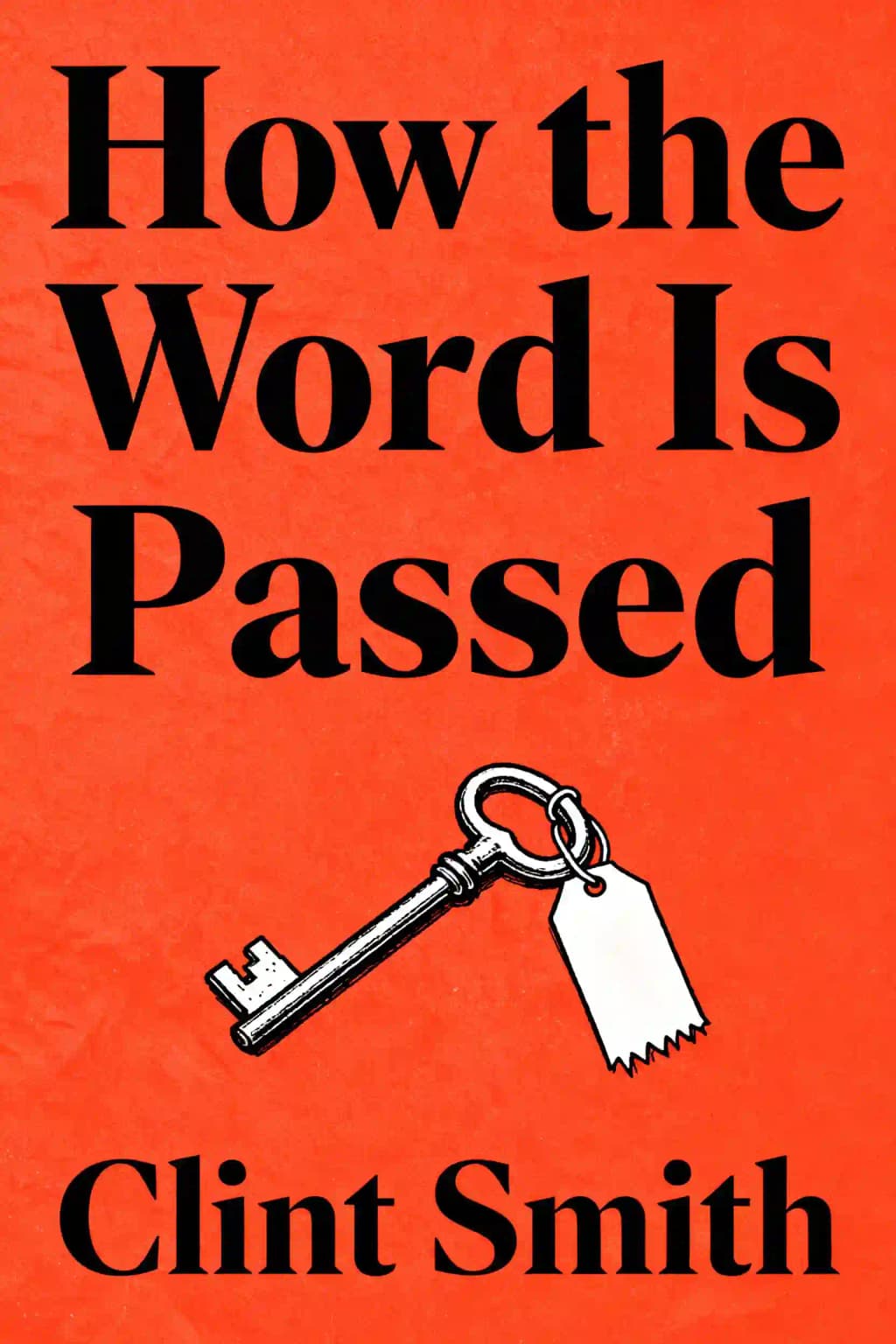
What makes "How the Word Is Passed" so powerful is this compression of time-the realization that slavery isn't ancient history but a living memory that shapes our present. By walking these grounds and speaking with those who preserve this history, we come to understand that the past is never truly past. It lives in our landscapes, our institutions, our families, and our collective psyche. Only by confronting this truth honestly can we begin to build a future that truly honors the principles of freedom and equality that America has long claimed to represent.