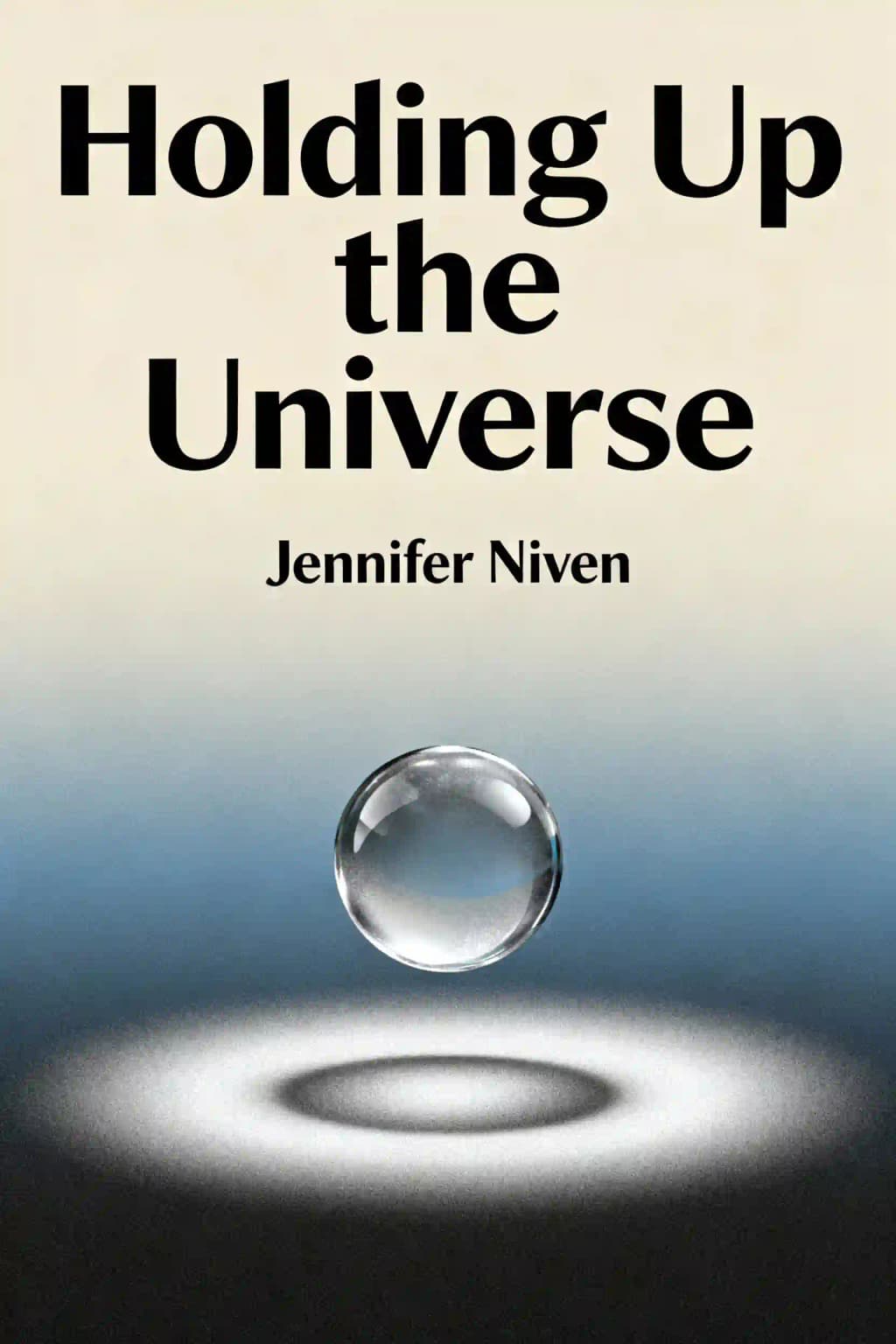
When America's "fattest teen" meets a boy who can't recognize faces, they discover what it means to truly see each other. Jennifer Niven's #1 NYT bestseller sparked heated online controversy before becoming a powerful testament to looking beyond appearances.
Jennifer Niven is the #1 New York Times bestselling author of Holding Up the Universe and a leading voice in young adult fiction exploring body image, identity, and mental health. Following the phenomenal success of All the Bright Places, which tackled depression and grief, this second YA novel follows Libby, struggling with weight and self-acceptance, and Jack, who has prosopagnosia (face blindness).
An Emmy Award-winning screenwriter, Niven co-wrote the Netflix adaptation of All the Bright Places starring Elle Fanning and Justice Smith. Before writing YA, she authored acclaimed non-fiction works including The Ice Master and the Velva Jean historical fiction series.
She also founded Germ, a web magazine celebrating the experiences of teens and young adults. Her books have been translated into over 75 languages and have won literary awards worldwide, cementing her reputation as a powerful advocate for authentic teen voices and inclusive storytelling.
Holding Up the Universe by Jennifer Niven is a 2016 young adult novel that follows two teenagers in Amos, Indiana: Libby Strout, formerly known as "America's Fattest Teen," and Jack Masselin, a popular boy secretly living with prosopagnosia (face blindness). When a cruel high school prank forces them into mandatory counseling together, they develop an unlikely romance while learning to accept their identities and see beyond appearances.
Jennifer Niven is a #1 New York Times and international bestselling author best known for her young adult novels. She wrote All the Bright Places (2015), which was adapted into a Netflix film starring Elle Fanning, along with Holding Up the Universe (2016) and Breathless (2020). An Emmy Award-winning screenwriter, Niven has also authored nonfiction works including The Ice Master and The Aqua Net Diaries, plus the Velva Jean historical fiction series.
Holding Up the Universe is ideal for young adult readers and anyone interested in stories about body positivity, invisible disabilities, and self-acceptance. It's perfect for fans of Jennifer Niven's All the Bright Places, readers who enjoy contemporary romance with depth, and those seeking authentic portrayals of characters overcoming adversity, grief, bullying, and identity struggles while finding love and courage to embrace their authentic selves.
Holding Up the Universe is worth reading for its powerful messages about acceptance, empowerment, and overcoming judgment. Jennifer Niven delivers a poignant love story that authentically addresses body image, invisible disabilities like prosopagnosia, grief, and bullying. The dual narrative provides intimate access to both characters' struggles, making it emotionally resonant. It won recognition as a bestseller and resonates with readers seeking stories about defying how others define your worth.
Prosopagnosia in Holding Up the Universe is a neurological disorder that prevents Jack Masselin from recognizing people's faces, even those of his family members. Jack keeps this condition secret throughout high school by identifying people through details like moles, hair color, gestures, and movement patterns. The novel explores how Jack eventually seeks diagnosis from researchers at Indiana University and learns to embrace this part of his identity rather than hiding it.
Libby Strout and Jack Masselin meet when Jack is pressured into playing "Fat Girl Rodeo," a cruel prank targeting Libby on her first day back at school. After Libby punches Jack, they're both assigned to mandatory group counseling called Conversation Circle. As they spend time together, they develop romantic feelings, share their secrets about prosopagnosia and grief, and eventually fall in love despite Jack's initial fear that he couldn't truly "see" her.
Holding Up the Universe explores themes of self-acceptance, identity, and seeing beyond physical appearances. The novel addresses body positivity through Libby's journey with weight and grief, invisible disabilities through Jack's prosopagnosia, and the courage to embrace imperfection. Other central themes include overcoming bullying, processing grief from parental loss, defying societal judgment, authentic self-presentation versus hiding behind personas, and finding love that recognizes your true worth beyond surface-level characteristics.
The "Fat Girl Rodeo" is a disgusting bullying game where Jack's friends pressure him to jump on Libby's back and stay on as long as possible during her first days back at school. Despite writing Libby an apologetic note beforehand saying "I'm not a shtty person but I'm about to do a shtty thing," Jack attempts the prank. Libby immediately punches him in the face, landing them both in mandatory counseling, which becomes the catalyst for their eventual relationship.
Both Holding Up the Universe and All the Bright Places by Jennifer Niven are young adult novels exploring mental health and unlikely teen romance. While All the Bright Places focuses on depression and suicide with characters Violet and Finch, Holding Up the Universe addresses body image, prosopagnosia, and grief through Libby and Jack. Both feature dual perspectives and bittersweet emotional depth, though Holding Up the Universe offers a more hopeful ending focused on self-acceptance.
One of the most memorable quotes from Holding Up the Universe is: "It's about the important things, like the way their face lights up when they laugh, or the way they move as they're walking towards you, or the way their freckles create a map of the stars." This quote captures the novel's central message about seeing people beyond surface appearances and recognizing their essence through meaningful details rather than conventional standards of beauty or normalcy.
Holding Up the Universe ends with Jack revealing his prosopagnosia to his friends and family after breaking up with Libby out of fear he couldn't recognize her if she lost weight. After both characters embrace their imperfections—Jack accepting his face blindness and Libby coming to terms with her mother's death and body—they reunite at a park. Jack tells Libby he can see her in a way he cannot see anyone else, and they confess their love as the novel concludes.
While Holding Up the Universe is praised for its body positivity and disability representation, some critics note the problematic "Fat Girl Rodeo" premise and Jack's initial treatment of Libby. The romantic development from cruel bullying to love can feel rushed or troubling to some readers. Additionally, some question whether the portrayal of prosopagnosia fully captures the complexity of the condition, and whether the resolution oversimplifies the challenges both characters face with their respective struggles.
Erlebe das Buch durch die Stimme des Autors
Verwandle Wissen in fesselnde, beispielreiche Erkenntnisse
Erfasse Schlüsselideen blitzschnell für effektives Lernen
Genieße das Buch auf unterhaltsame und ansprechende Weise
I want to be the girl who can do anything...I'm not going to be a statistic.
Imagine every room filled with strangers, even your own home.
My coping strategy: be charming, funny, always 'on,' and never lose control.
You should tell someone.
Zerlegen Sie die Kernideen von Holding Up the Universe in leicht verständliche Punkte, um zu verstehen, wie innovative Teams kreieren, zusammenarbeiten und wachsen.
Erleben Sie Holding Up the Universe durch lebhafte Erzählungen, die Innovationslektionen in unvergessliche und anwendbare Momente verwandeln.
Fragen Sie alles, wählen Sie Ihren Lernstil und gestalten Sie Erkenntnisse, die wirklich zu Ihnen passen.

Von Columbia University Alumni in San Francisco entwickelt
"Instead of endless scrolling, I just hit play on BeFreed. It saves me so much time."
"I never knew where to start with nonfiction—BeFreed’s book lists turned into podcasts gave me a clear path."
"Perfect balance between learning and entertainment. Finished ‘Thinking, Fast and Slow’ on my commute this week."
"Crazy how much I learned while walking the dog. BeFreed = small habits → big gains."
"Reading used to feel like a chore. Now it’s just part of my lifestyle."
"Feels effortless compared to reading. I’ve finished 6 books this month already."
"BeFreed turned my guilty doomscrolling into something that feels productive and inspiring."
"BeFreed turned my commute into learning time. 20-min podcasts are perfect for finishing books I never had time for."
"BeFreed replaced my podcast queue. Imagine Spotify for books — that’s it. 🙌"
"It is great for me to learn something from the book without reading it."
"The themed book list podcasts help me connect ideas across authors—like a guided audio journey."
"Makes me feel smarter every time before going to work"
Von Columbia University Alumni in San Francisco entwickelt

Erhalten Sie die Holding Up the Universe-Zusammenfassung als kostenloses PDF oder EPUB. Drucken Sie es aus oder lesen Sie es jederzeit offline.
Imagine waking up every morning unable to recognize your own face in the mirror, or returning to high school after years of isolation, known to millions as "America's Fattest Teen." These aren't hypothetical scenarios but the lived realities of Jack Masselin and Libby Strout, two teenagers navigating the treacherous waters of high school while carrying invisible and visible burdens. Their stories intertwine in a powerful exploration of what it means to truly see and be seen in a world obsessed with appearances. Jack appears to have everything-popularity, charm, a vintage Land Rover-but harbors a secret that threatens his carefully constructed facade: prosopagnosia, a neurological condition rendering him unable to recognize faces. "Imagine every room filled with strangers, even your own home," Jack explains. He identifies people by their walk, voice, and distinguishing features, his Afro grown specifically so he can find himself in reflections. His condition forces him to develop extraordinary social skills: "My coping strategy: be charming, funny, always 'on,' and never lose control."
Libby Strout became known as "America's Fattest Teen" when firefighters had to demolish her house to rescue her 653-pound body - a moment that went viral. After her mother's sudden death when she was ten, Libby's grief manifested through compulsive eating until she became physically trapped. Having lost 302 pounds through years of recovery, she's now returning to high school as a junior. The night before her first day, anxiety keeps her awake: "If a genie appeared, I'd wish for my mom to be alive, no more sadness, and to join the Martin Van Buren High School Damsels drill team." Despite her fears, Libby has developed self-acceptance: "I've lost 302 pounds - the size of two people - with 190 left to go, and I'm fine with that. I like who I am." Her first day is filled with stares and whispers. When Caroline Lushamp offers pity compliments like "You look really pretty," Libby feels her "soul die a little." Yet she perseveres, making friends who see beyond her size.
Jack and Libby's lives collide during lunch when Jack participates in "Fat Girl Rodeo" - a cruel high school game - to preserve his social standing. Pressured by peers, he throws himself around Libby in the cafeteria while students cheer and make mooing sounds. Libby responds with both vulnerability and strength: after freezing momentarily, she roars "NO!" with such force that students step back, then delivers a punch that leaves Jack bleeding. This confrontation lands them both in mandatory community service and daily counseling sessions. In these "Conversation Circle" sessions, their defenses begin to crack. Jack notices Libby's kindness when she subtly helps him identify classmates without highlighting his struggle. Libby glimpses Jack's vulnerability during discussions about school events, noticing how he tenses when describing basketball games where he can't distinguish between players.
Dancing is Libby's purest expression-a living connection to her mother's memory through worn VHS tapes they'd watch together. "Dancing is what I love most and what I plan to do with my life," she declares determinedly. During her Damsels drill team audition to "Flashdance... What a Feeling," she transcends her surroundings: "I become one with the music, feeling like I'm soaring beyond the gym, beyond the town, across countries." Despite earning spontaneous applause, Caroline Lushamp's suggestion to lose "two hundred-fifty pounds maybe" wounds deeply. This rejection mirrors a childhood ballet class where talent couldn't overcome body bias. Swimming class later forces Libby to face her greatest fear-exposing her body before judgmental peers. With "Screw it" as her battle cry, she enters wearing a vibrant purple bikini, her stomach marked with "I am wanted" in permanent marker. Ignoring gasps and snickers, she executes "an Olympic-worthy dive," finding freedom in the water's weightlessness and her own conviction.
Jack's relationship with Libby challenges his carefully constructed persona. At a party, overwhelmed by faces he can't recognize, he breaks convention and confesses his prosopagnosia to everyone. "I can't recognize faces," he explains to a room that erupts in laughter, assuming it's a joke. This vulnerability leads to a beating from which Libby rescues him. As she drives him home, Jack opens up about his struggles with identity. The conversation shifts when they arrive at Jack's house-directly across from where Libby's childhood home once stood. Jack confesses he witnessed her most humiliating moment-the day firefighters cut her from her house. "I was there the day they cut you out," he admits. When pressed, Jack reveals, "I was rooting for you," identifying himself as the anonymous sender of an encouraging book she received in the hospital. Jack's growth comes when he realizes he can remember Libby's face in detail: "Her slightly arched eyebrows that make her look amused, her nose that wrinkles when she laughs, her lips with corners that turn up." This epiphany shows him his ability to see Libby isn't about her weight-"It's her."
For Libby, Jack sees beyond her physical appearance to her true self-her wit, resilience, and passionate spirit. For Jack, Libby becomes the first person he can consistently recognize, not because of her size, but because he loves her enough to memorize every detail. Their relationship helps both address deep trauma. Libby confronts her fear of being trapped again-physically or emotionally-stemming from being cut from her house. When she punched Jack after the "Fat Girl Rodeo," she felt he was "trying to stuff me back into that house." Her counselor's insight proves crucial: "no one can lock me in unless I let them." Jack's journey involves dismantling his protective masks. His relationship with Caroline offers comfort but lacks emotional depth. With Libby, he experiences both the terror and joy of being truly known. The novel shows healing isn't linear. Both characters face significant challenges that ultimately strengthen their resilience and self-acceptance.
The climactic scene unfolds in the park where their story began. Through rain, Jack finds Libby and declares: "You're the one I see, Libby Strout." With eyes closed, he traces her features, describing the exact curve of her smile and warmth in her eyes - proving he knows her beyond visual recognition. When Libby asks if this means he loves her, Jack responds: "I'm pretty sure I see you because I love you." He returns an Ohio refrigerator magnet - a small treasure he secretly took from her house years ago during vandalism, protecting this piece of her history when others sought to destroy it. Their kiss is "world-expanding" and electric, where "we're breathing for each other, merging together until all that's left is electricity." The intimacy becomes a metaphor for complete acceptance. The novel concludes with them standing together. Libby sees herself reflected in Jack's pupils, "as if he's carrying me with him." Under the vast sky, Jack takes her hand and finds what he's been searching for: home. We all deserve to be truly seen - beyond our faces, bodies, and differences. Sometimes home isn't a place but a person who recognizes the universe within us.