Dr. Duff's "Hardcore Self Help" strips away clinical jargon with raw, humorous advice for anxiety and depression. Using techniques like the "emergency box" and 4-7-8 breathing, this straight-talking guide has become mental health's rebellious lifeline - where therapy meets real talk.
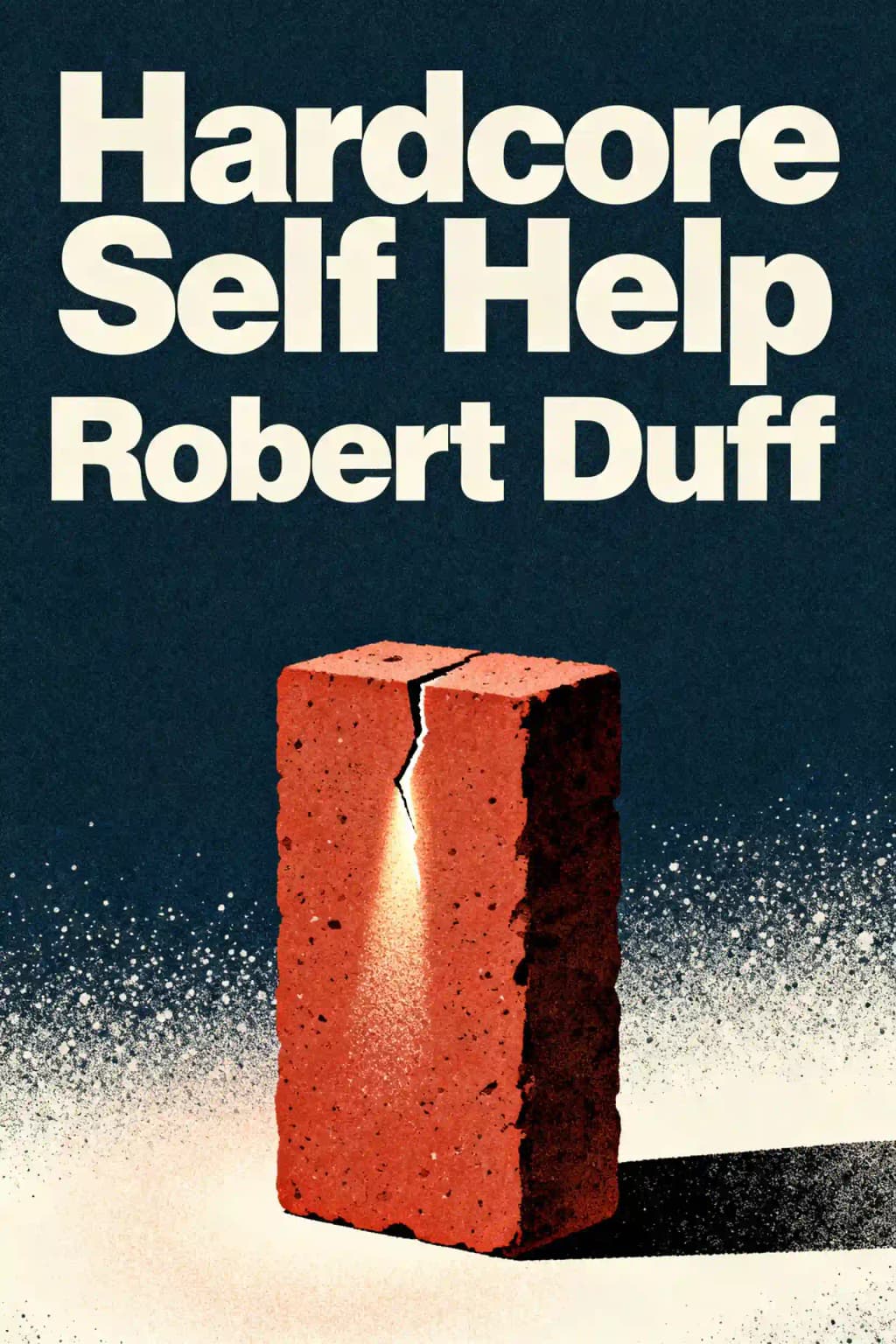
Robert Duff is a clinical psychologist, bestselling author, and the voice behind the Hardcore Self Help series, offering practical mental health guidance without jargon. His book Hardcore Self Help distills his expertise into actionable strategies for managing anxiety, depression, and life challenges, reflecting his mission to democratize psychological tools for everyday use.
A Southern California-based practitioner, Duff combines clinical experience with a relatable style honed through his popular Hardcore Self Help Podcast, where he addresses listener questions and interviews experts weekly.
In addition to Hardcore Self Help, Duff authored Hardcore Self Help: F**k Anxiety and Hardcore Self Help: F**k Depression, cementing his reputation as a no-nonsense advocate for mental wellness. His work emphasizes evidence-based techniques, from cognitive-behavioral strategies to mindfulness practices, while critiquing ineffective approaches in traditional mental health discourse.
The Hardcore Self Help series has become a trusted resource for readers seeking accessible solutions, with Duff’s podcast exceeding 400 episodes and his books frequently cited in self-help communities for their blunt yet compassionate tone.
Hardcore Self Help provides practical strategies for overcoming mental health challenges like anxiety and depression while fostering personal growth. It emphasizes actionable steps such as harnessing belief systems, visualization techniques, and persistent goal-setting, framed through a no-nonsense, conversational tone. The book also explores gratitude, forgiveness, and surrendering control to build resilience.
This book suits individuals grappling with anxiety, depression, or stagnant personal growth who prefer blunt, jargon-free advice. It’s also valuable for supporters of those with mental health struggles (e.g., family, coworkers) seeking relatable strategies. Fans of self-help that blends humor with practical psychology will find it engaging.
Yes—readers praise its relatable, actionable advice for breaking negative thought patterns and building resilience. Unlike traditional self-help books, it avoids vague platitudes, offering concrete tools like goal-tracking “character sheets” and crisis-management plans. Reviews highlight its effectiveness for those skeptical of clinical terminology.
Key concepts include:
Duff adopts a conversational, irreverent tone (“Your brain is a troll”) to demystify mental health. He prioritizes practicality over theory, offering tools like crisis “break glass” plans and humor-laced analogies (e.g., treating life like a video game). This contrasts with more abstract or spiritual self-help methodologies.
Some readers note its blunt tone may feel abrasive to those preferring gentler guidance. Others argue it oversimplifies complex mental health issues, though supporters counter that accessibility is its strength. A few critique the video-game analogies as gimmicky.
Duff’s strategies align with CBT principles (e.g., reframing thoughts, behavioral activation) but present them through pop-culture metaphors and casual language. It serves as a bridge for readers intimidated by clinical approaches.
Yes—it advises breaking projects into “quests,” using visualization to preempt challenges, and setting boundaries to prevent burnout. The “Power of Letting Go” chapter specifically addresses controlling workplace outcomes.
With rising global anxiety rates and remote work’s blurred boundaries, its tools for self-directed mental health management remain timely. The book’s focus on digital-age stressors (e.g., isolation, productivity pressure) resonates with modern readers.
As a psychologist, Duff translates clinical insights into street-smart advice, avoiding academic jargon. His experience with clients facing severe depression and anxiety informs the book’s focus on actionable, crisis-tested strategies.
Erlebe das Buch durch die Stimme des Autors
Verwandle Wissen in fesselnde, beispielreiche Erkenntnisse
Erfasse Schlüsselideen blitzschnell für effektives Lernen
Genieße das Buch auf unterhaltsame und ansprechende Weise
Anxiety: Your Ancient Survival System Gone Haywire
Anxiety isn't some modern invention-it's hardwired into our DNA for good reason.
Your body isn't betraying you-it's just running an outdated operating system.
Your anxiety isn't a sign of weakness or character flaw.
Your body becomes a betrayal machine-heart pounding, hands shaking, stomach churning.
Zerlegen Sie die Kernideen von Hardcore Self Help in leicht verständliche Punkte, um zu verstehen, wie innovative Teams kreieren, zusammenarbeiten und wachsen.
Erleben Sie Hardcore Self Help durch lebhafte Erzählungen, die Innovationslektionen in unvergessliche und anwendbare Momente verwandeln.
Fragen Sie alles, wählen Sie Ihren Lernstil und gestalten Sie Erkenntnisse, die wirklich zu Ihnen passen.

Von Columbia University Alumni in San Francisco entwickelt
"Instead of endless scrolling, I just hit play on BeFreed. It saves me so much time."
"I never knew where to start with nonfiction—BeFreed’s book lists turned into podcasts gave me a clear path."
"Perfect balance between learning and entertainment. Finished ‘Thinking, Fast and Slow’ on my commute this week."
"Crazy how much I learned while walking the dog. BeFreed = small habits → big gains."
"Reading used to feel like a chore. Now it’s just part of my lifestyle."
"Feels effortless compared to reading. I’ve finished 6 books this month already."
"BeFreed turned my guilty doomscrolling into something that feels productive and inspiring."
"BeFreed turned my commute into learning time. 20-min podcasts are perfect for finishing books I never had time for."
"BeFreed replaced my podcast queue. Imagine Spotify for books — that’s it. 🙌"
"It is great for me to learn something from the book without reading it."
"The themed book list podcasts help me connect ideas across authors—like a guided audio journey."
"Makes me feel smarter every time before going to work"
Von Columbia University Alumni in San Francisco entwickelt

Erhalten Sie die Hardcore Self Help-Zusammenfassung als kostenloses PDF oder EPUB. Drucken Sie es aus oder lesen Sie es jederzeit offline.
Ever feel like your brain is plotting against you? That's anxiety-your mind's ancient alarm system gone haywire in the modern world. In "Hardcore Self Help: F**k Anxiety," psychologist Robert Duff strips away the therapeutic jargon to deliver what we actually need: practical strategies explained in refreshingly direct language. Unlike traditional self-help that dances around difficult topics, Duff speaks directly to us in our darkest moments. What makes this approach revolutionary isn't the colorful language-it's how it transforms complex psychological concepts into accessible tools without dumbing them down. Your anxiety isn't a character flaw or weakness-it's your prehistoric brain trying to navigate a world of performance reviews and social media with tools designed for predator detection. That racing heart, shallow breathing, and feeling of impending doom? That's your sympathetic nervous system doing exactly what evolution designed it to do: prepare you to fight or flee. The problem is that your body can't distinguish between a hungry lion and a PowerPoint presentation-both register as threats requiring the same physiological response.
At anxiety's core lies the cognitive triangle-the connection between thoughts, feelings, and behaviors that drives your everyday experience. Picture someone you love in a terrible accident and you'll feel distressed. Imagine finding a million dollars and your emotional state transforms completely. Nothing in your external reality changed-just the thoughts in your head. These feelings drive behaviors. If you believe a party will be full of judgmental people, anxiety will keep you home. If you see it as full of potential friends, excitement will draw you there. Same party, different thoughts, entirely different outcomes. Complicating this process are cognitive distortions-unhelpful thinking patterns that skew reality. Anxiety amplifies their impact. You might filter out positive feedback while fixating on criticism, overgeneralize from one bad experience, catastrophize minor issues, or assume you know others' thoughts without evidence. Breaking free requires recognizing these distortions in real time. The ABC thought log helps: identify the Activating event (what happened), examine your Beliefs (your interpretation), and note the Consequences (feelings and actions). Then challenge those beliefs with evidence and create more balanced alternative interpretations.
Anxiety's physical symptoms-racing heart, shaking hands, chest tightness-often become the most distressing part, triggering additional anxiety and creating a vicious cycle that leads to panic attacks. Remember this truth: despite how terrifying these sensations feel, they cannot harm you. A panic attack won't cause a heart attack, stop your breathing, or make you lose control. Your body cannot sustain that level of arousal indefinitely-like a wave, panic always peaks and then subsides. Managing physical symptoms starts with breathing. When anxious, chest-based shallow breathing signals danger to your body. The 4-7-8 technique interrupts this cycle: inhale for 4 counts, hold for 7, exhale for 8. This extended exhale activates your parasympathetic nervous system-the "rest and digest" response that counteracts anxiety. Effective breathing requires practice during calm periods. Like a basketball player practicing free throws, you need preparation before performing under pressure. Start with just 5-15 minutes three times weekly. If lightheadedness occurs (common for beginners), briefly return to normal breathing before continuing.
The way you talk to yourself matters profoundly. Most anxiety sufferers have an inner critic that would make drill sergeants seem gentle. This harsh self-talk actively fuels anxiety, creating a secondary layer of suffering: anxiety about having anxiety. The antidote? Self-compassion - treating yourself with the same kindness you'd offer a friend in distress. Start by recognizing when you're in self-criticism mode. Notice your language and ask, "Would I say this to someone I care about?" If not, reframe your self-talk to be more balanced. Replace "I'm such a mess for feeling this way" with "It's human to struggle with anxiety, and I'm doing my best to manage it." Also crucial is allowing yourself to take breaks. Anxiety-prone people often feel guilty about non-productive activities, creating relentless pressure that worsens anxiety. Taking breaks isn't wasting time - it's investing in your mental health and future productivity. Don't neglect physical foundations either. Anxiety is significantly affected by sleep deprivation, dehydration, poor nutrition, and lack of movement. These basics create the conditions where your anxiety management strategies can work effectively.
Here's the truth most people miss: avoiding anxiety-provoking situations actually strengthens your anxiety. Avoidance provides temporary relief but reinforces the belief that the situation is dangerous and you can't cope. Each avoidance signals to your brain that there's something to fear. The most effective approach-backed by decades of research-is the opposite: systematic exposure to the very situations that trigger your anxiety. This means gradually facing increasingly challenging scenarios while building tolerance for discomfort. Think of exposure as weight training for emotional resilience. You wouldn't bench press 300 pounds on your first gym visit; you'd start with manageable weights and progress gradually. Similarly, exposure therapy involves creating a hierarchy of anxiety-provoking situations, beginning with those causing mild discomfort before advancing to more challenging ones. The key is staying in the situation long enough for your anxiety to naturally decrease-typically 20-45 minutes. During this time, your body learns that either the feared outcome doesn't occur or, if discomfort happens, you can handle it without catastrophe.
Despite surrounding stigma, therapy is one of the most effective tools for managing anxiety. Think of it as specialized training for your mind-similar to working with a personal trainer for physical fitness. Cognitive-behavioral therapy (CBT) has the strongest research support for anxiety disorders, focusing on identifying and changing unhelpful thought patterns and behaviors. Acceptance and Commitment Therapy (ACT) focuses less on changing anxious thoughts and more on changing your relationship with them. Finding the right therapist requires some trial and error. The therapeutic relationship-how comfortable you feel with your therapist-is actually one of the strongest predictors of success. Seek someone who specializes in anxiety, uses evidence-based approaches, and makes you feel understood rather than judged. If traditional therapy isn't accessible, consider alternatives like community mental health centers, therapy apps, online platforms, or support groups. Books based on CBT principles can also provide structured self-help, especially when combined with practical workbooks.
Managing anxiety isn't about dramatic transformations - it's about consistent small actions that gradually change your relationship with anxiety. Think of it as learning to dance with a challenging partner rather than trying to banish them entirely. Start by identifying one small, specific change you can make today. Perhaps it's practicing five minutes of deep breathing, challenging anxious thoughts, or taking a technology-free lunch break. Progress with anxiety isn't linear - you'll have good days and difficult days. This natural variation isn't failure; it's part of the process. On harder days, return to basics: breathing, self-compassion, and remembering that feelings are temporary states. Managing anxiety isn't just about reducing discomfort - it's about expanding your life. Each time you face a fear or show yourself compassion, you're building the life you want despite anxiety. Your anxiety doesn't define you - it's just one part of your complex, capable self.