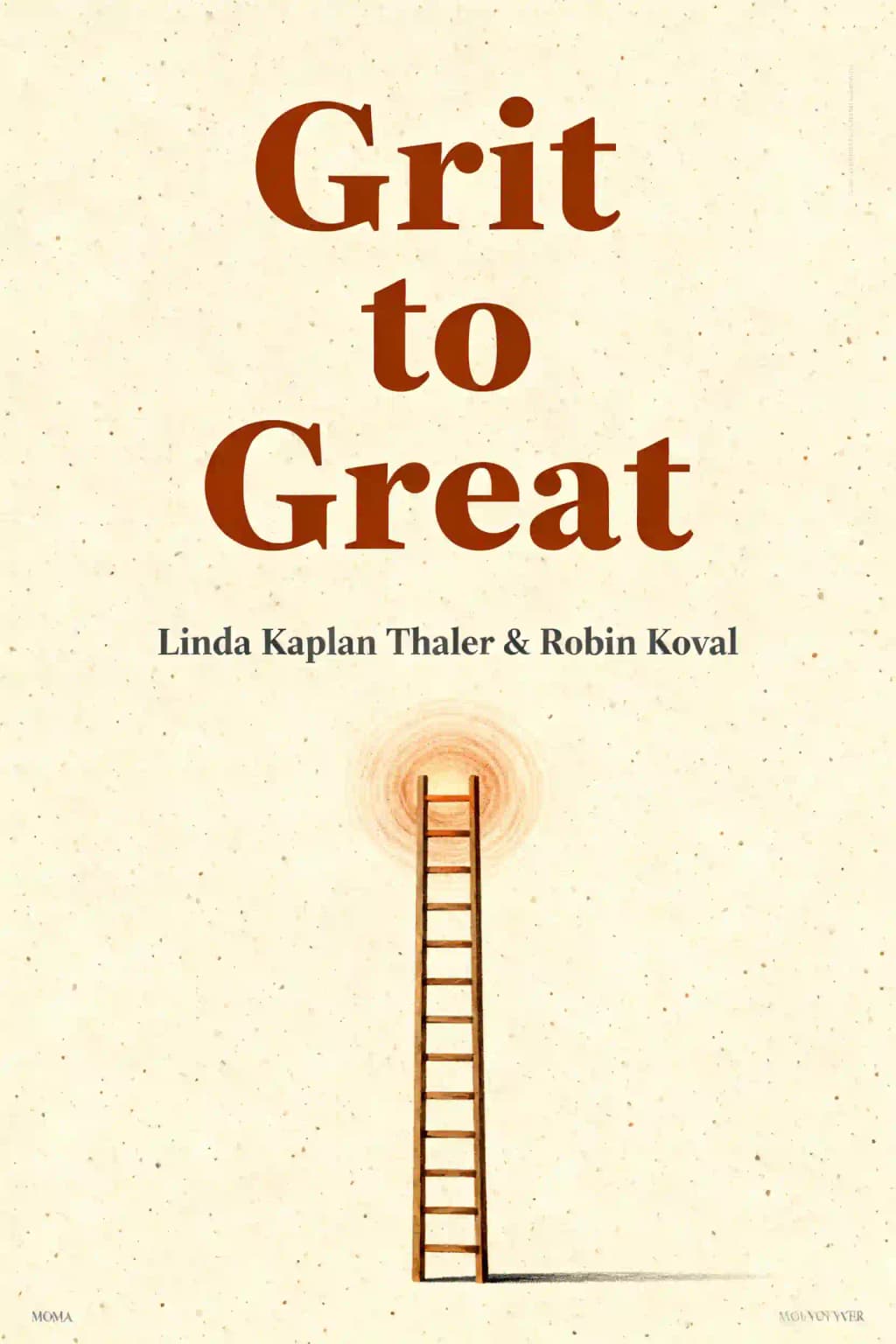
In "Grit to Great," advertising legends Thaler and Koval reveal why perseverance trumps talent. Endorsed by James Patterson, who declares: "You don't need brilliance to succeed - you need this book." Discover why grit, not genius, creates extraordinary success stories.
Linda Kaplan Thaler and Robin Koval, bestselling authors of Grit to Great: How Perseverance, Passion, and Pluck Take You from Ordinary to Extraordinary, are award-winning advertising executives and motivational speakers whose work reshaped modern marketing.
Kaplan Thaler, a 2016 Clio Lifetime Achievement Award recipient and Advertising Hall of Fame inductee, co-founded the billion-dollar agency behind iconic campaigns like the Aflac Duck and Clairol’s “Yes, Yes, Yes” ads. Koval, former CEO of the American Legacy Foundation, brings decades of leadership in public health advocacy.
Together, they’ve authored four national bestsellers blending business strategy and behavioral psychology, including The Power of Nice—a Goodreads Choice Awards nominee praised for reframing workplace collaboration—and Bang! Getting Your Message Heard in a Noisy World.
Frequent media commentators, they’ve appeared on Good Morning America, The Today Show, and The Apprentice. Grit to Great was named one of 2015’s top business books by Forbes, distilling their research on resilience into actionable insights for professionals. Their books have been translated into 12 languages and cited in over 1,200 academic works.
Grit to Great argues that perseverance, passion, and hard work—collectively termed "grit"—outperform innate talent in achieving long-term success. Authors Linda Kaplan Thaler and Robin Koval debunk the talent myth, emphasizing courage, resilience, initiative, and tenacity as core components of grit. The book combines research, real-world examples (e.g., Steve Jobs), and actionable strategies to help readers cultivate grit in personal and professional challenges.
Aspiring professionals, entrepreneurs, students, and anyone facing setbacks will benefit from this book. It’s tailored for individuals seeking practical advice on overcoming obstacles, building resilience, and sustaining effort toward long-term goals. Leaders aiming to foster grit in teams will also find value in its insights on creating a culture of perseverance.
Yes, particularly for readers seeking evidence-backed strategies to develop resilience. The book’s blend of motivational stories (e.g., Colin Powell’s career), psychological research, and clear frameworks makes it actionable. Critics praise its focus on effort over talent, though some note it may oversimplify systemic barriers to success.
Linda Kaplan Thaler is a Hall of Fame advertising executive (creator of the Aflac duck campaigns) and co-founder of the Kaplan Thaler Group. Her experience building a billion-dollar agency grounds the book’s principles in real-world success. She’s also co-authored bestsellers like The Power of Small and Bang!, establishing her authority on perseverance and creativity.
These traits, amplified by deliberate practice and a growth mindset, enable ordinary individuals to achieve extraordinary results.
Success stems from relentless effort and patience, not innate talent. The authors cite studies showing grit as a stronger success predictor than IQ, using examples like Angela Duckworth’s research. They argue that embracing discomfort and persisting through setbacks—not quick wins—leads to lasting achievement.
Some critics argue the book underplays systemic barriers (e.g., socioeconomic status) and overemphasizes individual responsibility. Others note its anecdotes may not apply universally. However, its focus on actionable steps for personal grit development remains widely praised.
This line encapsulates the book’s thesis: success comes from sustained effort (sweat), not innate confidence or talent (swagger). It reinforces the idea that humility, hard work, and consistency trump natural ability or charisma.
The book advises embracing challenges (e.g., career pivots) and cultivating habits like daily practice to strengthen resilience.
Both highlight perseverance as critical to success, but Thaler’s work leans more on corporate anecdotes and practical strategies (e.g., fostering team grit). Duckworth’s research dives deeper into psychological studies, while Grit to Great emphasizes relatable, actionable advice for professionals.
In an era of rapid technological change and economic uncertainty, the book’s lessons on adaptability and resilience remain vital. Its principles align with trends like remote work and AI disruption, where grit helps individuals navigate constant evolution.
These books complement Grit to Great by exploring overlapping themes of effort, resilience, and long-term achievement.
Erlebe das Buch durch die Stimme des Autors
Verwandle Wissen in fesselnde, beispielreiche Erkenntnisse
Erfasse Schlüsselideen blitzschnell für effektives Lernen
Genieße das Buch auf unterhaltsame und ansprechende Weise
Success isn't about having special gifts-it's about stamina and resilience.
Character, unlike talent, can be developed regardless of circumstances.
Failure is essential to developing grit.
You're not special.
Research shows that perseverance often matters more than innate ability in achieving long-term success.
Zerlegen Sie die Kernideen von Grit to great in leicht verständliche Punkte, um zu verstehen, wie innovative Teams kreieren, zusammenarbeiten und wachsen.
Destillieren Sie Grit to great in schnelle Gedächtnisstützen, die die Schlüsselprinzipien von Offenheit, Teamarbeit und kreativer Resilienz hervorheben.

Erleben Sie Grit to great durch lebhafte Erzählungen, die Innovationslektionen in unvergessliche und anwendbare Momente verwandeln.
Fragen Sie alles, wählen Sie die Stimme und erschaffen Sie gemeinsam Erkenntnisse, die wirklich bei Ihnen ankommen.

Von Columbia University Alumni in San Francisco entwickelt
"Instead of endless scrolling, I just hit play on BeFreed. It saves me so much time."
"I never knew where to start with nonfiction—BeFreed’s book lists turned into podcasts gave me a clear path."
"Perfect balance between learning and entertainment. Finished ‘Thinking, Fast and Slow’ on my commute this week."
"Crazy how much I learned while walking the dog. BeFreed = small habits → big gains."
"Reading used to feel like a chore. Now it’s just part of my lifestyle."
"Feels effortless compared to reading. I’ve finished 6 books this month already."
"BeFreed turned my guilty doomscrolling into something that feels productive and inspiring."
"BeFreed turned my commute into learning time. 20-min podcasts are perfect for finishing books I never had time for."
"BeFreed replaced my podcast queue. Imagine Spotify for books — that’s it. 🙌"
"It is great for me to learn something from the book without reading it."
"The themed book list podcasts help me connect ideas across authors—like a guided audio journey."
"Makes me feel smarter every time before going to work"
Von Columbia University Alumni in San Francisco entwickelt

Erhalten Sie die Grit to great-Zusammenfassung als kostenloses PDF oder EPUB. Drucken Sie es aus oder lesen Sie es jederzeit offline.
Ever wonder why some people achieve the impossible while others with seemingly more talent fall short? Steve Jobs had a mediocre GPA. Michael Jordan was cut from his high school basketball team. Colin Powell was an average student with little self-confidence. What transformed these ordinary beginnings into extraordinary success stories wasn't natural talent-it was grit. Those iconic Aflac Duck commercials that seemed so effortless? They required a full year of production with thirty team members working through endless rejections and setbacks. Success isn't about having special gifts-it's about stamina and resilience. Without consistent application and hard work, talent remains merely potential-"a masterpiece unpainted." When psychologist Angela Duckworth developed a simple twelve-point scale to measure grit, she discovered something surprising: sometimes there was a negative correlation between high IQ and grit. Those with higher intelligence often gave up more quickly when faced with difficult tasks, while those with comparatively lower IQs had developed grittier problem-solving approaches through necessity. Even Google stopped asking for transcripts and GPAs, finding they "don't predict anything." Instead, what matters is "results intelligence"-the ability to deliver under pressure and bounce back from difficulties.
