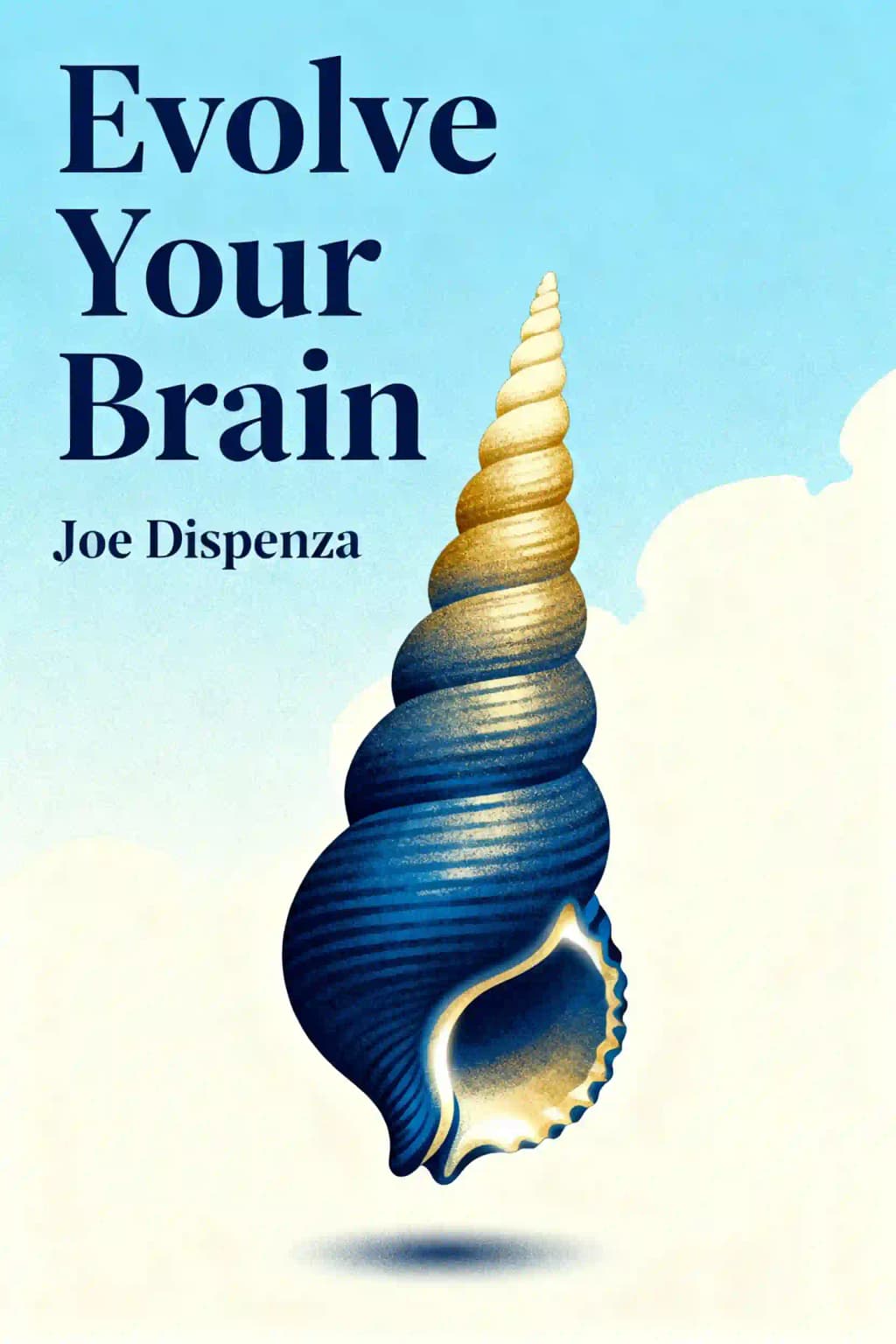
Discover how your thoughts physically rewire your brain. Endorsed by "What the Bleep" filmmaker William Arntz, this neuroscience revolution reveals the science behind changing habits. Can you really think yourself into a new reality? Neuroplasticity suggests the answer is yes.
Dr. Joe Dispenza, New York Times bestselling author of Evolve Your Brain: The Science of Changing Your Mind, is a pioneering researcher and lecturer bridging neuroscience, epigenetics, and quantum physics.
A Doctor of Chiropractic and Life University alumnus, Dispenza combines 30+ years of clinical practice with cutting-edge research to explore neuroplasticity, consciousness, and the mind-body connection—themes central to his transformative self-help and personal growth works. His flagship book builds on methodologies from earlier bestsellers like Breaking the Habit of Being Yourself and Becoming Supernatural, which have been translated into 20+ languages and integrated into corporate training programs worldwide.
Featured in the documentary SOURCE and the groundbreaking film What the Bleep Do We Know!?, Dispenza leads global workshops demonstrating how intentional mindset shifts can reshape brain chemistry and heal chronic conditions. His research-driven approach, validated by data from 10,000+ workshop participants, has established him as a trusted voice in holistic wellness. Evolve Your Brain has sold over 1 million copies and remains a cornerstone text in personal transformation literature, alongside his peer-reviewed studies on spontaneous remission.
Evolve Your Brain examines how thoughts and emotions physically alter brain structure through neuroplasticity. Dr. Joe Dispenza combines neuroscience, epigenetics, and quantum physics to argue that changing mental habits can heal chronic conditions, break destructive behaviors, and transform reality. The book includes practical techniques like meditation to reprogram the subconscious mind.
This book suits self-help enthusiasts, neuroscience students, and individuals seeking to overcome health issues or ingrained habits. It’s ideal for readers interested in mind-body connections, meditation’s scientific basis, or quantum physics’ role in personal growth. Critics note its density may challenge casual readers.
Yes, for those willing to engage with technical neuroscience concepts. Reviews praise its life-changing insights into habit formation and brain plasticity, though some criticize repetitiveness and a perceived pseudoscience slant. The blend of research and actionable steps makes it valuable for dedicated readers.
Neuroplasticity refers to the brain’s ability to reorganize neural pathways through focused thought and meditation. Dispenza explains how repetitive mental practices create new synaptic connections, enabling behavioral change and healing. This process forms the foundation for overcoming fear, anxiety, and physical ailments.
The book argues that chronic stress and negative emotions disrupt biological systems, while elevated states (e.g., gratitude, love) promote cellular repair. Dispenza cites studies showing how meditation can reduce inflammation, boost immunity, and trigger spontaneous remissions by altering gene expression.
Critics highlight its dense scientific jargon, uneven balance between theory and practice, and claims that lack empirical backing. Some readers find Dispenza’s emphasis on quantum physics speculative, while others view the content as repetitive or overly optimistic.
While both focus on habit change, Evolve Your Brain emphasizes neuroscience and meditation, whereas Atomic Habits offers pragmatic behavioral strategies. Dispenza’s approach targets subconscious reprogramming, while James Clear prioritizes incremental, environment-driven adjustments.
Key quotes include:
These themes reinforce the book’s focus on self-directed neuroplasticity.
Yes. The book teaches readers to interrupt anxiety loops by creating new neural pathways through mindfulness. Techniques like focused breathing and mental rehearsal aim to reduce amygdala activation, fostering emotional resilience over time.
Dispenza advocates meditation to quiet the analytical mind and access the subconscious. Practices include visualizing desired outcomes, cultivating elevated emotions, and sustaining focus to solidify new neural networks. Studies in the book link these methods to improved brain coherence and health.
This refers to using conscious intent to override automatic thoughts stored in the basal ganglia. By repeatedly engaging the prefrontal cortex (through meditation or visualization), individuals can dismantle limiting beliefs and install empowering ones, altering their biology and behavior.
It lays the scientific groundwork for later books like Breaking the Habit of Being Yourself, which expands on meditation techniques. Evolve Your Brain focuses more on neurobiology, while subsequent titles emphasize practical spirituality and healing case studies.
Erlebe das Buch durch die Stimme des Autors
Verwandle Wissen in fesselnde, beispielreiche Erkenntnisse
Erfasse Schlüsselideen blitzschnell für effektives Lernen
Genieße das Buch auf unterhaltsame und ansprechende Weise
Use it or lose it.
Your thoughts literally reshape your brain's physical structure.
The cerebellum stores hardwired attitudes, emotional reactions, habits.
The midbrain handles what can be called the four Fs: fighting, fleeing, feeding, and fornicating.
Zerlegen Sie die Kernideen von Evolve Your Brain in leicht verständliche Punkte, um zu verstehen, wie innovative Teams kreieren, zusammenarbeiten und wachsen.
Erleben Sie Evolve Your Brain durch lebhafte Erzählungen, die Innovationslektionen in unvergessliche und anwendbare Momente verwandeln.
Fragen Sie alles, wählen Sie Ihren Lernstil und gestalten Sie Erkenntnisse, die wirklich zu Ihnen passen.

Von Columbia University Alumni in San Francisco entwickelt
"Instead of endless scrolling, I just hit play on BeFreed. It saves me so much time."
"I never knew where to start with nonfiction—BeFreed’s book lists turned into podcasts gave me a clear path."
"Perfect balance between learning and entertainment. Finished ‘Thinking, Fast and Slow’ on my commute this week."
"Crazy how much I learned while walking the dog. BeFreed = small habits → big gains."
"Reading used to feel like a chore. Now it’s just part of my lifestyle."
"Feels effortless compared to reading. I’ve finished 6 books this month already."
"BeFreed turned my guilty doomscrolling into something that feels productive and inspiring."
"BeFreed turned my commute into learning time. 20-min podcasts are perfect for finishing books I never had time for."
"BeFreed replaced my podcast queue. Imagine Spotify for books — that’s it. 🙌"
"It is great for me to learn something from the book without reading it."
"The themed book list podcasts help me connect ideas across authors—like a guided audio journey."
"Makes me feel smarter every time before going to work"
Von Columbia University Alumni in San Francisco entwickelt

Erhalten Sie die Evolve Your Brain-Zusammenfassung als kostenloses PDF oder EPUB. Drucken Sie es aus oder lesen Sie es jederzeit offline.
Have you ever arrived at your destination with no memory of the drive? This common experience reveals something profound about your brain's capabilities. Your conscious mind was elsewhere while your subconscious expertly navigated traffic, operated pedals, and kept you safe. This phenomenon lies at the heart of Dr. Joe Dispenza's groundbreaking work in "Evolve Your Brain," which explores how our thoughts literally reshape our neural architecture. By understanding the science of neuroplasticity, we gain access to a remarkable power: the ability to consciously rewire our brains and transform our lives from the inside out.
For decades, scientists believed our brains were "hardwired" by early adulthood, making ingrained patterns nearly impossible to change. Revolutionary research has now revealed our brain's extraordinary plasticity throughout our entire lifespan. Neuroplasticity works through a simple principle: neurons that fire together, wire together. Repeatedly thinking certain thoughts or performing specific actions strengthens neural pathways, while unused connections eventually weaken - use it or lose it. This occurs through mechanisms like dendritic sprouting and new synapse formation. The implications are profound. Stroke patients previously thought permanently paralyzed have regained motor control through mental rehearsal. At Bellevue Hospital, up to 75% of subjects achieved complete restoration of control in paralyzed limbs through focused mental practice. Research shows mental practice alone creates physical changes in brain structure - subjects who merely imagined exercising a finger muscle showed a 22% increase in strength without actual movement. Every time you learn something new - a language, instrument, or different stress response - you're creating new neural pathways. With consistent practice, these pathways become your default mode. Significant changes can occur in as little as eight weeks, with MRI scans showing measurable increases in gray matter density in regions associated with learning, memory, and emotional regulation.
Your skull houses three interconnected biological computers with distinct functions. The reptilian brain (brainstem/cerebellum) controls basic life functions and habits. Its neurons form a million connections each, making it the densest brain region with over half of all neurons. The midbrain (limbic system) sits above the brainstem. Though only one-fifth of brain volume, this "emotional brain" powerfully influences behavior, managing our four basic survival drives: fighting, fleeing, feeding, and fornicating. The neocortex enables higher functions like reasoning and creativity. Humans are distinguished by our frontal lobe size - 30-40% of our neocortex compared to 3.5% in cats and 11-17% in chimpanzees. This region represents our highest consciousness. This three-brain architecture explains why change is difficult. Breaking habits requires our thinking neocortex to override automatic programs stored in primitive regions. Understanding how these brains interact reveals why we resist change and how targeted mental rehearsal can overcome that resistance.
Have you ever wondered why breaking old patterns feels physically uncomfortable? The answer lies in the biochemistry of emotions. Our thoughts produce chemical responses in our bodies, creating a literal addiction to familiar emotional states. When we think, peptides (chemical messengers from the hypothalamus) are released through the bloodstream to cell receptor sites. Each thought has its unique chemical signature, turning thinking into feeling. Repeatedly sending the same emotional signals causes our cells to produce "cheaper" proteins, contributing to premature aging and disease. This biochemical process creates a powerful feedback loop. When we remove ourselves from emotionally triggering situations, our cells - now addicted to those chemical states - demand their familiar fix through internal dialogue. That voice saying "You can start tomorrow!" is actually a withdrawal symptom. This explains why change feels uncomfortable - we literally don't "feel like ourselves." The familiar past has stronger emotional grip than the unfelt future. When our identity (made of past memories) dominates, we rationalize returning to the known because it "feels" right. Breaking this cycle requires understanding that discomfort isn't a sign something's wrong - it's evidence you're disrupting an addictive pattern. By persisting through temporary discomfort, you allow new neural and chemical patterns to establish, eventually creating a new "normal" that supports your desired state.
Mental rehearsal allows you to create new neural pathways without physical action. When you vividly imagine performing a new skill step by step, your brain processes it similarly to actual experience, forming new neural connections through focused attention alone. Your frontal lobe functions as a mental bouncer, clearing survival-oriented thoughts to make space for higher-order thinking about your potential. During mental rehearsal, this brain region interrupts habitual neural programs, simultaneously wiring new circuits while pruning old connections that no longer activate together. For effective practice, eliminate all distractions. When your attention shifts to existing networks, your consciousness reverts to familiar patterns instead of forming new ones. The goal is making your internal representation more real than your external environment - this is when rewiring occurs. To truly change, develop a deep connection with your new self-concept. This creates brain chemistry fundamentally different from survival mode. The midbrain releases a "love potion" helping you bond with this new version of yourself. Like prioritizing someone you've just fallen for, consistently revisit your new self-concept through regular mental rehearsal.
Mental rehearsal is powerful, but demonstration is the crucial final step - you must practice your evolved ideal in real life. The goal is to progress from thinking to doing to being, where your evolved understanding becomes so hardwired that you embody it without conscious thought. This progression follows three stages: thinking (knowledge acquisition), doing (applying knowledge through experience), and being (mastery through repetition). When practice makes something automatic, you've evolved from conscious effort to unconscious mastery. Change requires knowledge, instruction, and feedback. Knowledge creates new neural connections, instruction provides the "how-to" component, and feedback confirms correct application of what you've learned. Mastering any new skill follows four stages: unconsciously unskilled (unaware of what you don't know), consciously unskilled (recognizing your lack of knowledge), consciously skilled (performing with deliberate effort), and unconsciously skilled (performing naturally without constant thought).
When you control your environment through thought rather than letting environment dictate your thinking, you shift from effect to cause. Through mental rehearsal, your brain becomes a record of the future rather than the past. New neural pathways create new behaviors, producing new experiences that generate a new personal reality. The most profound insight from Dispenza's work is this: you are not a victim of your biology but its master. The power to evolve beyond current limitations lies in the organ already residing between your ears. By directing your attention and practicing mental rehearsal, you become the architect of your brain and the creator of your life. Your thoughts don't just reflect your reality - they create it. Each time you choose a new thought pattern over an old one, you're physically rewiring your brain. In a world obsessed with external solutions, perhaps the most revolutionary act is recognizing that the most powerful technology for transformation is the one you already possess - your magnificent, ever-evolving brain.