Kapitel 1
The Hidden Devastation Behind Our Plates
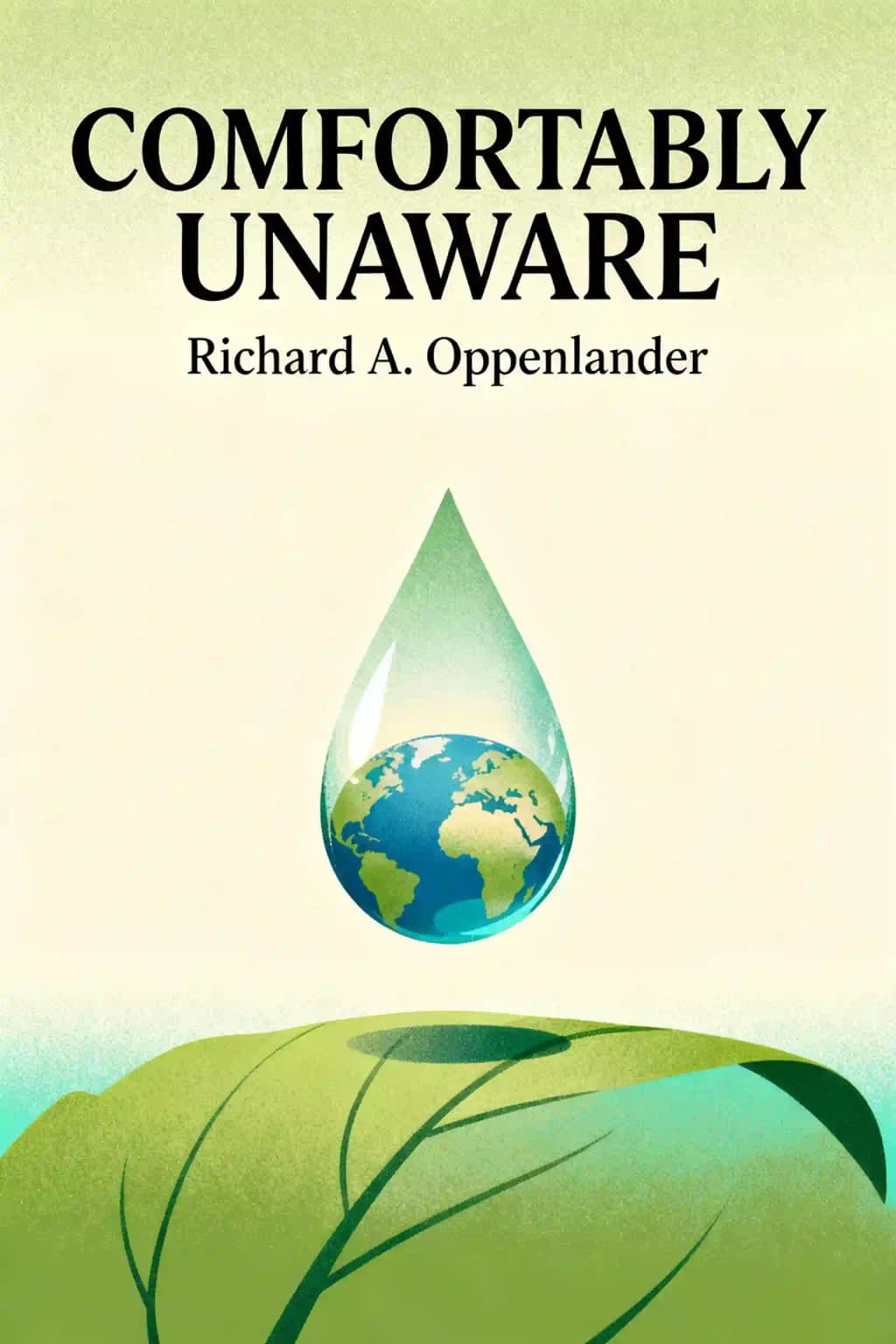
Every time you sit down to eat, you're casting a vote for the kind of world you want to live in. While many of us have become increasingly aware of environmental issues like climate change and plastic pollution, there remains a massive blind spot in our collective consciousness: the food on our plates. Richard Oppenlander's "Comfortably Unaware" shatters this comfortable ignorance by revealing the profound environmental impact of our dietary choices. Since its publication, this groundbreaking work has influenced environmental thinkers worldwide, with figures like James Cameron citing it as instrumental in their shift to plant-based eating. Unlike many environmental texts that focus solely on fossil fuels or carbon emissions, Oppenlander tackles the uncomfortable truth that our consumption of animal products is the primary driver of global environmental devastation. As climate anxiety grows and sustainability becomes mainstream, this book offers something rare: a clear path forward that begins with our very next meal.
Kapitel 2
The True Meaning of Sustainability
What does it mean to be truly sustainable? Most discussions of sustainability focus on isolated issues-carbon footprints, recycling, or energy efficiency-but fail to address the interconnected nature of global depletion. This fragmented approach has allowed us to remain comfortable in our unawareness while continuing behaviors that devastate our planet. From corporate greenwashing to well-intentioned but insufficient individual actions, we often miss the bigger picture of what sustainability truly requires.
Global depletion encompasses the comprehensive loss of our primary resources: biodiversity, rainforests, clean water, arable land, and even our own health. The single largest factor driving this depletion is our raising of 70 billion land animals yearly and extracting 1-2 trillion fish annually for food. This massive enterprise consumes resources at staggering rates that simply cannot be sustained. For example, it takes up to 2,400 gallons of water to produce one pound of beef, while just 25 gallons are needed for a pound of wheat. Similarly, we're destroying rainforests at a rate of 31 million acres annually, primarily to create grazing land and grow animal feed crops.
When we talk about "renewable" resources, we often forget that the timescales matter enormously. Water sources that take thousands of years to replenish and rainforests requiring centuries to regrow aren't meaningfully "renewable" within human lifespans. The Ogallala Aquifer, which supplies 30% of America's irrigation water, is being depleted 14 times faster than it can naturally recharge. Ancient rainforests, home to millions of species, are being cleared at rates where full regeneration would take 400-1000 years. We're depleting these life-sustaining resources at rates where replacement is impossible for generations, if ever.
While many industries contribute to environmental degradation, the meat, dairy, and fishing industries have the most devastating impact. Consider that livestock produce 40% of human-related methane emissions and 65% of nitrous oxide-greenhouse gases that are 23 and 310 times more potent than carbon dioxide, respectively. The fishing industry has depleted 90% of large fish populations and is projected to create fishless oceans by 2048 if current practices continue. Each year, up to 40% of marine life caught is discarded as bycatch, while bottom trawling destroys seafloor ecosystems that took centuries to develop.
The uncomfortable truth is that you can't meaningfully consider yourself "green" or "sustainable" by changing light bulbs or driving a hybrid while still consuming animal products. A person who eats meat but recycles is like someone who smokes two packs a day but takes vitamins-addressing a minor issue while ignoring the elephant in the room. Consider that switching to a plant-based diet reduces an individual's carbon footprint by 50% - more than giving up driving or avoiding air travel. Real sustainability requires examining what we put on our plates three times daily, every day of our lives, and understanding how these choices ripple through the entire ecosystem of our planet.
Kapitel 3
Unveiling Food's Hidden Origins
Have you ever truly considered where your food comes from? Not just the grocery store or restaurant, but its actual origins? This fundamental question remains obscured by cultural, political, and educational barriers that keep us comfortably unaware.
We need to start with basic definitions. Food is simply that which is consumed to support life. Plants and animals aren't inherently "food" unless we choose to eat them. Plants are living structures with chlorophyll-containing cells that exchange carbon dioxide for oxygen, without blood, organs, brains or nervous systems. Animals, conversely, have saturated fat and cholesterol in all their cells and tissue, along with blood, organs, brains, nervous systems, feelings, and emotions.
The terminology we use-"meat," "protein," "dairy"-obscures the reality of what these foods actually are: the flesh, secretions, and reproductive materials of other sentient beings. This linguistic sleight-of-hand keeps us disconnected from the true nature of what we're consuming.
The facts about our food system are staggering: we raise and kill over 70 billion land animals annually, depleting resources at an alarming rate. Methane from livestock is 23 times more potent than CO2 for global warming. Approximately 70% of former rainforests have been destroyed for livestock production. It takes a shocking 5,000 gallons of water to produce one pound of beef versus just 10-20 gallons for plant foods. One acre of land produces 10-15 times more protein when used for plants versus meat.
Perhaps most disturbing is that while 6 million children die yearly from starvation, we use most agricultural land to grow food for animals rather than humans. The inefficiency is breathtaking-we're literally feeding plants to animals, then eating the animals, losing 90% of the original food energy in the process.
Plants contain all essential nutrients humans need without the harmful substances found in animal products. Every nutrient we require-protein, calcium, iron, omega-3s-exists abundantly in the plant kingdom, without the saturated fat, cholesterol, and environmental devastation that comes with animal foods.
Kapitel 4
The Air We Breathe
Our atmosphere sustains all life yet is taken for granted. We breathe approximately 21,000 times daily, requiring fresh air with proper oxygen levels - a process so automatic we rarely consider its importance until air quality deteriorates. Yet livestock production devastates air quality in three primary ways: greenhouse gas emissions, direct pollution, and disruption of oxygen-carbon cycles through vegetation loss. This impact affects both local communities near farming operations and contributes to global climate patterns.
The livestock sector generates nearly 20% of all greenhouse gas emissions-more than global transportation at 13%. Every food choice that includes meat contributes more to global warming than all cars, planes, trains, and trucks combined. This isn't just about carbon dioxide; livestock directly emit methane through enteric fermentation (digestive processes), nitrous oxide from manure management, and ammonia through waste decomposition. For example, a single dairy cow can produce up to 500 liters of methane per day - equivalent to the emissions from a car driving 7,800 miles.
The scale of this pollution is almost incomprehensible. In the United States alone, livestock produce 89,000 pounds of excrement every second-130 times more than the entire human population. This waste contains antibiotics, hormones, and other chemicals that contaminate air and water systems. Factory farms often store waste in massive lagoons that release dangerous gases like hydrogen sulfide and particulate matter, causing respiratory issues in nearby communities. Studies have shown increased rates of asthma and other respiratory conditions in populations living near large-scale animal operations.
Additionally, livestock account for 80% of agricultural emissions, including 10% of all CO2, 40% of methane (23 times more potent than CO2), and 65% of nitrous oxide (310 times more potent). The production of animal protein requires ten times more fossil fuel and creates ten times more CO2 than plant protein, while also generating methane that plant foods don't produce. For instance, producing one pound of beef generates the equivalent of 57 pounds of CO2, while producing one pound of potatoes generates only 0.9 pounds of CO2.
The impact extends beyond direct emissions. Deforestation for grazing land and feed crop production eliminates crucial carbon sinks. The Amazon rainforest, often called Earth's lungs, loses vast areas yearly primarily due to cattle ranching and soy production for animal feed. Each acre of rainforest cleared releases stored carbon while reducing the planet's capacity to filter CO2 from the atmosphere.
When we consider that our atmosphere is being compromised by our food choices more than by our transportation choices, the solution becomes clear. Yet many environmental advocates focus exclusively on fossil fuels while ignoring the burger on their plate. Even Al Gore's "Inconvenient Truth" took the convenient path by focusing primarily on carbon dioxide rather than addressing the devastating impact of our food choices on air quality and climate change. This selective attention to environmental threats undermines efforts to address climate change comprehensively, as dietary choices represent one of the most significant individual actions we can take to reduce our environmental impact.
Kapitel 5
The Vanishing Forests
While you order a steak or burger, another acre of rainforest is being destroyed. Over 70% of the Amazon has been razed due to cattle ranching, with the United States being the largest consumer of Central and South American beef. A staggering 95% of Brazil's Atlantic coast rainforest has been slashed and burned, mostly for cattle.
Approximately 34 million acres of rainforest disappear annually-far more than the 190,000 acres lost in California's 2007 fires that received non-stop news coverage. About 80% of global rainforest loss is converted to cattle grazing or livestock feed crops. It requires fifty-five square feet of rainforest to produce just one quarter-pound burger.
Rainforests are often called the "lungs of our planet" for good reason-they produce over 20% of the world's oxygen supply, continuously recycling air by removing CO2 and releasing O2. A single acre of rainforest produces fourteen tons of oxygen annually. Fifty years ago, rainforests covered 15% of our planet; today, less than 2% remains.
These forests house nearly 50% of all living things-five million species of plants, animals, and insects. Scientists estimate we're losing at least 100 species daily to deforestation. In Brazil's Atlantic rainforest, 70% of plants and twenty primate species exist nowhere else on Earth. The forest's biodiversity is staggering-a single Brazilian pond contains more fish varieties than all European rivers combined.
Beyond biodiversity, rainforests are pharmaceutical treasures. Rainforest destruction has already wiped out ninety Amazonian tribes, with indigenous populations plummeting from six million to fewer than 250,000. With these tribes vanish thousands of years of medicinal knowledge-a single tribe may use over 200 plant species for medicine. The rainforest has yielded crucial medicines like curare, quinine, and vincristine (which dramatically improves childhood leukemia survival).
When we destroy rainforests for meat production, we lose carbon sinks, oxygen production, biodiversity, and potentially life-saving medicines yet to be discovered. All this sacrifice for a food that science increasingly shows is harmful to human health.
Kapitel 6
Land Use and World Hunger
Raising 70 billion animals annually for food demands staggering land resources that strain our planet's capacity. In the United States, nearly 80% of agricultural land supports livestock production-equivalent to half the entire country's landmass. Over 260 million acres of U.S. forest have been cleared just to grow animal feed, an area larger than Texas. Globally, livestock occupy 30% of Earth's ice-free land mass, with another 33% of agricultural land producing crops specifically to feed these animals. This includes vast swaths of former rainforest in Brazil and Indonesia, where ancient ecosystems are being destroyed for grazing and soy production.
The inefficiency of animal agriculture is breathtaking when examined in detail: any acre of land can produce 12-20 times more edible plant food than animal products. For example, one acre can yield 356 pounds of protein from soybeans, but only 22 pounds from beef. We're essentially using twenty times the land and crops, hundreds of times the water, while polluting waterways and destroying rainforests-all to produce food that's less healthy than plants. This inefficiency extends to caloric conversion: it takes roughly 16 pounds of grain to produce just one pound of beef.
Beyond sheer land use, livestock causes devastating environmental degradation through multiple mechanisms. Overgrazing has degraded 700 million acres of U.S. rangeland-an area nearly the size of Mexico-contributing to the loss of seven billion tons of topsoil annually. Globally, 20% of pastures are degraded from livestock, rising to 73% in arid regions where fragile ecosystems are particularly vulnerable. This degradation occurs through soil compaction, erosion, and loss of native vegetation.
Of Earth's 825 major land ecoregions, 306 report livestock as a current threat to biodiversity. The World Conservation Union confirms most endangered species suffer habitat loss primarily due to livestock expansion. Nearly 25% of all plant species face extinction, with amphibians and coral reefs showing the most rapid decline. In the Amazon, 80% of deforested areas have been converted to cattle ranches.
Food depletion compounds this environmental crisis in stark ways. An almost unbelievable 70% of all U.S. grain production feeds livestock, not humans, while six million children died of starvation in 2009 alone. The contrast is particularly striking: in Iowa, America's largest corn-producing state, 97% of grain goes to animal feed. Even during Ethiopia's devastating 1986 food crisis, the country was exporting cereal grains to feed European livestock. Today, 80% of starving children live in countries where food surpluses feed animals for wealthy consumers, highlighting a profound global inequality.
Each year in the United States, 157 million metric tons of human-edible crops become just 28 million metric tons of animal protein-a catastrophically inefficient conversion that's depleting our planet's resources at an unsustainable rate. This represents a loss of nearly 82% of potential food calories. If we redirected crops currently fed to livestock toward human consumption, we could feed an additional 3.5 billion people-effectively ending world hunger. This redistribution would also significantly reduce greenhouse gas emissions, water pollution, and habitat destruction associated with animal agriculture.
Kapitel 7
Water Crisis and Ocean Collapse
Our drinking water is disappearing at an alarming rate, primarily due to livestock production. The Colorado River illustrates this crisis dramatically-once a mighty 1,400-mile waterway that carved the Grand Canyon, it now ends in desert miles from the sea. The United States has claimed 95% of its water through nine major dams and eighty diversions, primarily to support cattle operations in western states.
Two dangerous misconceptions persist: that water is renewable (it largely isn't) and that urban areas are the primary users (they aren't). In the Upper Colorado River states, 90% of water use goes to crop irrigation, with 88% of irrigated land growing livestock feed.
The High Plains region demonstrates this mismanagement perfectly. Despite being drought-prone with minimal rainfall, it raises nearly half of America's cattle, dependent on the Ogallala aquifer. This ancient underground reservoir, formed during the ice ages, is being depleted at three to ten feet annually and may be completely gone by 2020. With recharge rates of less than half an inch per year, once it's gone, it's gone forever.
Our oceans face an equally dire situation. The rate of depletion, human-induced extinction, and environmental degradation in our seas is likely "greater than anything witnessed on land," according to the United Nations Environment Programme. The fishing industry has devastated coastal zones and high seas through overharvesting, bottom trawling, pollution, and invasive species introduction.
The statistics are alarming: 70% of the world's fish species are either fully exploited or depleted, with 1,081 types listed as threatened or endangered. Four million fishing vessels catch fish at nearly triple the sustainable rate. All seventeen primary fishing stocks worldwide are either overexploited or collapsing.
"Bykill" compounds this tragedy-for every pound of shrimp consumed, twenty pounds of other sea creatures are caught and killed. One-third of all fish caught worldwide become fishmeal for livestock, creating a double burden on marine ecosystems.
Rivers carry vast amounts of excrement and chemicals from livestock farms to the sea, causing massive algae blooms that deplete oxygen and create "dead zones" where nearly all sea life dies. The Gulf of Mexico hosts one of the world's largest dead zones, approximately half the size of Maryland. A Princeton University study concluded that shifting away from meat production would reduce nitrogen runoff enough to make this dead zone "non-existent."
Kapitel 8
The Power of Cultural Conditioning
Despite overwhelming evidence that animal products harm human health and the environment, most people continue consuming them due to deeply entrenched marketing campaigns, generational cultural conditioning, and systematic suppression of accurate information. This cognitive dissonance shapes our relationship with food from early childhood through adulthood.
The dairy industry has spent billions on marketing campaigns promoting milk as essential for bone health and calcium intake, despite clinical evidence showing the opposite effect. Countries with the highest dairy consumption, like the United States, Sweden, and Finland, paradoxically have some of the highest rates of osteoporosis and bone fractures. Meanwhile, plant-based sources like kale, bok choy, and fortified plant milks provide more bioavailable calcium without the inflammatory effects of dairy. A single cup of cooked collard greens contains 268mg of calcium - about 27% of the daily requirement. Milk contains numerous concerning compounds including IGF-1 growth hormone, antibiotics, and environmental toxins, with comprehensive testing revealing up to 73 distinct chemical contaminants in single samples. Most of the world's population (75%) is lactose intolerant, including 83% of African Americans and 90% of Asians, yet dairy remains prominently featured in school lunch programs and dietary guidelines.
The meat industry employs similar tactics of misdirection and selective information sharing. Despite extensive research linking regular consumption of processed and red meat to increased risks of colorectal cancer (up to 18% higher risk), stomach cancer, prostate cancer (32% higher risk), and breast cancer, industry lobbying has successfully prevented clear health warnings on packaging. All meat products contain cholesterol and saturated fat while providing zero fiber, antioxidants or beneficial plant compounds essential for optimal health. A single serving of bacon contains up to 68% of daily recommended saturated fat.
CDC studies paint an alarming picture: Americans are becoming increasingly obese and disease-prone, with 25% of children ages 5-10 already showing early warning signs of heart disease including high cholesterol and hardened arteries. Diet-related diseases now account for 70% of deaths in America, with associated medical costs ranging between $87-143 billion annually - costs that could be dramatically reduced by shifting toward plant-based nutrition.
Cultural conditioning begins in earliest childhood through both overt and subtle messaging. Children are taught to compartmentalize animals into arbitrary categories: dogs and cats are family members to be loved and protected, while pigs and cows - equally intelligent and emotionally complex - are reduced to food products. Parents readily explain natural food origins, telling children that apples come from trees and carrots from the ground, but rarely address the violent reality that hot dogs come from pigs that were confined in industrial facilities, electrically shocked, and processed - often while still conscious.
Even respected media voices and health authorities frequently avoid challenging the cultural norm of meat consumption. News reports about foodborne illness outbreaks consistently fail to acknowledge that pathogens like E. coli O157:H7 and salmonella found on contaminated produce originate exclusively from animal agriculture. During the massive 2010 salmonella outbreak that led to over half a billion eggs being recalled, NPR's extensive interview with infectious disease expert Dr. William Schaffner meticulously detailed egg contamination processes while completely avoiding discussion of the simplest solution: eliminating eggs from the diet entirely.
Kapitel 9
Breaking the Cycle of Depletion
The true environmental costs of animal products remain hidden from consumers. A quarter-pound burger requires 55 square feet of rainforest and 1,200 gallons of often non-renewable water, yet these costs aren't reflected in the $3.39 price tag. Implementing proper "ecotaxes" would make meat and dairy prohibitively expensive by accounting for resource depletion, habitat destruction, and greenhouse gas emissions.
Every endangered fish species caught inadvertently and ancient rainforest tree cut must be properly accounted for. These resources are essentially priceless and irreplaceable in our lifetime. As the author argues, if someone destroyed your yard and property, they would be responsible for restoring everything to its original condition immediately-the same should apply to fishing and livestock industries.
Beyond ecotaxes, a health-risk tax is justified for foods associated with chronic disease risk. With healthcare costs from poor food choices exceeding $100 billion annually, businesses selling animal products should help pay the medical bills to which they contribute.
Education must extend globally, particularly to countries where meat demand is escalating, like Asia where consumption has increased 140%. Rainforest communities must understand that intact forests yield greater economic value ($2,400+ per acre from sustainable harvesting of fruits, flowers, and medicinal plants) than cattle operations ($400 per acre).
Eventually, legislation restricting animal agriculture will become inevitable as resources deplete. Water shortages will likely trigger this realization, as more than half of U.S. freshwater is used for livestock. When municipalities face water shortages that can't be blamed on drought alone, they'll be forced to examine where water is actually going.
The transition would be gradual, addressing common concerns: animals currently in the system would decrease as demand falls; workers in animal agriculture would adapt as industries have throughout history; and the misconception that "grass-fed" or "organic" animal products are sustainable would be corrected.
The math simply doesn't work for grass-fed livestock. In the U.S. alone, providing appropriate pasture for the 98 million cattle and 70 million pigs raised annually would require 2.52 billion acres-more than the country's total land mass of 2.26 billion acres. This doesn't even account for the 250 million turkeys, 7 million sheep, and 8 billion chickens consumed yearly.
Halfway measures aren't enough-each bite of animal product contributes to global depletion. Going "meatless on Monday" is merely reducing contribution to environmental destruction from seven days to six days weekly. The author strongly recommends going meatless every day, arguing that meat consumption is a choice, not a physiological mandate. We must vote with our minds first, then let our forks follow, breaking away from cultural constraints and marketing influences to make truly sustainable choices.
As Albert Einstein observed: "Nothing will benefit human health and increase the chances for survival of life on earth as much as the evolution to a vegetarian diet." The choice is clear-we can remain comfortably unaware as our planet deteriorates, or we can acknowledge the impact of our food choices and create a truly sustainable future.