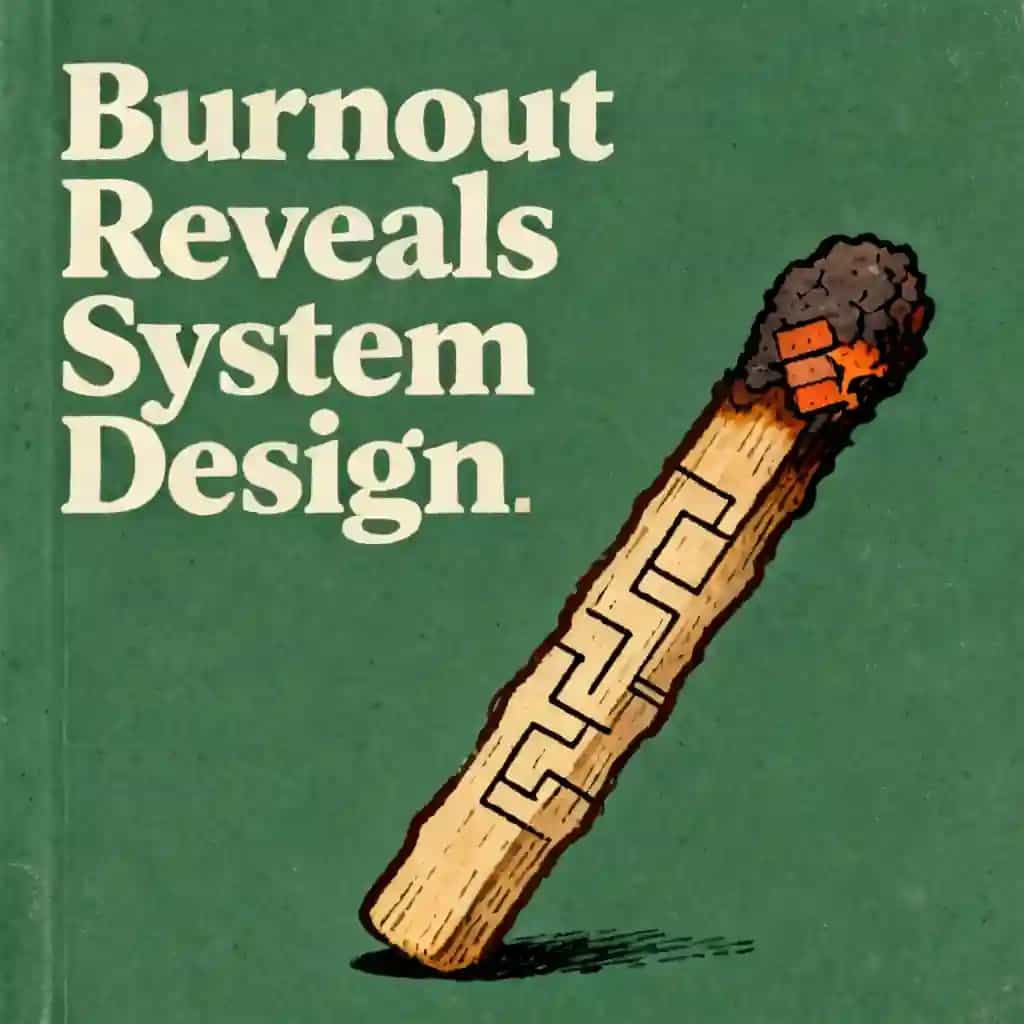
Millennial burnout isn't personal failure - it's systemic. Anne Helen Petersen's viral phenomenon (7+ million reads) exposes how unchecked capitalism created a generation drowning in expectations. Ezra Klein calls it "essential to understanding our age" - while readers everywhere finally feel seen in their exhaustion.
Anne Helen Petersen, bestselling author of Can’t Even and acclaimed cultural critic, holds a PhD in media studies and leverages her expertise in millennial burnout, workplace dynamics, and modern culture.
A former senior writer for BuzzFeed News, her viral 2019 essay on burnout catalyzed a global conversation, later expanded into Can’t Even—a trenchant analysis of generational exhaustion rooted in economic instability and societal pressures.
Petersen’s other works, including Too Fat, Too Slutty, Too Loud and Scandals of Classic Hollywood, dissect celebrity culture through an academic lens, blending rigorous research with accessible prose. She authors the Culture Study newsletter, reaching over 65,000 subscribers weekly, and co-hosts the Work Appropriate podcast, offering practical advice on navigating modern labor challenges.
Her insights have been featured in The New York Times, and her newsletter’s thriving community underscores her influence as a voice for systemic critique. Can’t Even has been widely cited in discussions about work-life balance and adopted in university sociology curricula.
Can't Even examines burnout as a defining condition for millennials, linking it to systemic issues like unchecked capitalism, eroded labor protections, and social media’s pressure to curate a "perfect" life. The book combines sociohistorical analysis, interviews, and cultural critique to explore how work, parenting, and social dynamics perpetuate exhaustion, arguing that burnout stems from institutional failures rather than individual shortcomings.
Millennials grappling with chronic stress, employers seeking to understand generational workplace challenges, and anyone interested in the societal roots of burnout will find this book insightful. It’s particularly relevant for readers seeking a data-driven critique of modern work culture and its impact on mental health.
Anne Helen Petersen is a journalist, cultural critic, and former BuzzFeed senior writer with a PhD in media studies. Known for her viral 2019 article on millennial burnout, she writes about labor, celebrity culture, and generational dynamics, blending academic rigor with accessible analysis.
Yes, for its incisive exploration of systemic burnout causes, though critics note it offers more diagnosis than solutions. Petersen’s mix of personal narratives, historical context, and sharp commentary makes it a compelling primer on millennial struggles.
The book frames burnout as a product of precarious work conditions, student debt, and societal expectations to optimize every aspect of life. It argues that millennials face unprecedented pressure to monetize hobbies, maintain social media personas, and achieve unattainable work-life balance.
Petersen identifies unchecked capitalism—including gig economy exploitation, stagnant wages, and weakened unions—as a core driver of burnout. She traces how neoliberal policies shifted risk from institutions to individuals, leaving millennials overworked and financially insecure.
The book critiques social media for amplifying anxiety through performative perfectionism, where self-worth becomes tied to curated online identities. Petersen highlights how platforms like Instagram enforce unsustainable comparisons, exacerbating feelings of inadequacy.
Yes, it contrasts millennials’ economic instability (e.g., student debt, unaffordable housing) with boomers’ relative financial security, emphasizing how systemic inequities—not laziness—shape generational struggles.
Petersen argues modern parenting intensifies burnout, as millennial parents face pressure to “optimize” child-rearing while juggling careers and financial strain. The book critiques unrealistic expectations of “intensive motherhood” in a culture lacking paid leave or childcare support.
Some reviewers note the book focuses heavily on middle-class experiences and offers few actionable solutions. Others praise its diagnostic clarity but wish it provided more pathways for individual or collective resistance.
As remote work blurs boundaries and economic instability persists, the book’s analysis of burnout’s structural roots remains urgent. Its critique of productivity culture resonates amid ongoing debates about labor rights and mental health.
“Burnout is a systemic condition, not a personal failure.” This line underscores the book’s central thesis: solutions require societal change, not just individual resilience.
Erlebe das Buch durch die Stimme des Autors
Verwandle Wissen in fesselnde, beispielreiche Erkenntnisse
Erfasse Schlüsselideen blitzschnell für effektives Lernen
Genieße das Buch auf unterhaltsame und ansprechende Weise
The system is fundamentally broken.
Work is more precarious, parenting more exhausting, and leisure more elusive.
Children first, marriage second.
Risk management used to be a business practice. Now it's our dominant child-rearing strategy.
Playing by the rules offered no guarantee of success.
Zerlegen Sie die Kernideen von Can't Even in leicht verständliche Punkte, um zu verstehen, wie innovative Teams kreieren, zusammenarbeiten und wachsen.
Erleben Sie Can't Even durch lebhafte Erzählungen, die Innovationslektionen in unvergessliche und anwendbare Momente verwandeln.
Fragen Sie alles, wählen Sie Ihren Lernstil und gestalten Sie Erkenntnisse, die wirklich zu Ihnen passen.

Von Columbia University Alumni in San Francisco entwickelt
"Instead of endless scrolling, I just hit play on BeFreed. It saves me so much time."
"I never knew where to start with nonfiction—BeFreed’s book lists turned into podcasts gave me a clear path."
"Perfect balance between learning and entertainment. Finished ‘Thinking, Fast and Slow’ on my commute this week."
"Crazy how much I learned while walking the dog. BeFreed = small habits → big gains."
"Reading used to feel like a chore. Now it’s just part of my lifestyle."
"Feels effortless compared to reading. I’ve finished 6 books this month already."
"BeFreed turned my guilty doomscrolling into something that feels productive and inspiring."
"BeFreed turned my commute into learning time. 20-min podcasts are perfect for finishing books I never had time for."
"BeFreed replaced my podcast queue. Imagine Spotify for books — that’s it. 🙌"
"It is great for me to learn something from the book without reading it."
"The themed book list podcasts help me connect ideas across authors—like a guided audio journey."
"Makes me feel smarter every time before going to work"
Von Columbia University Alumni in San Francisco entwickelt

Erhalten Sie die Can't Even-Zusammenfassung als kostenloses PDF oder EPUB. Drucken Sie es aus oder lesen Sie es jederzeit offline.
Something broke in early 2019 when a simple tweet about errand paralysis went viral. Millions of millennials recognized themselves in that confession-not lazy, not entitled, just utterly depleted by the basic mechanics of living. The pandemic would later expose what we'd been whispering for years: we're not failing at adulthood; adulthood as currently designed is failing us. We were raised to believe hard work guaranteed security, that following the rules meant stability, that optimization led to success. Instead, we got precarity disguised as opportunity, exhaustion rebranded as hustle culture, and a constant gnawing sense that no matter how hard we work, the ground keeps shifting beneath us. Here's the uncomfortable truth: boomers taught us to expect meaningful work and then seem genuinely baffled when we refuse soul-crushing jobs. They raised us to believe we were special, invested heavily in our potential, and now express shock that we won't quietly accept diminished circumstances. Boomers grew up during unprecedented stability-the postwar era when a single income could support a family, when pensions were standard, when risks were distributed across society rather than borne individually. But as boomers reached adulthood, that stability crumbled. Wages stagnated while costs climbed. Vietnam and Watergate shattered institutional trust. Rather than demanding systemic fixes, many embraced what Jacob Hacker calls the "Personal Responsibility Crusade"-the seductive idea that government safety nets made people weak and dependent. This ideology transferred massive risks from institutions onto individuals. Companies stopped training workers. Pensions vanished-from covering 46% of private-sector workers in 1980 to just 16% by 2019. The 401(k) replaced guaranteed retirement, forcing workers to gamble their futures on markets they couldn't control. This constant anxiety about maintaining class position was the boomer version of burnout. And faced with forces beyond their control, middle-class boomers doubled down on what they could manage: their children's futures.
Picture two millennial childhoods. Caitlin grew up in DC suburbs with every hour scheduled-piano, soccer, SAT prep, college counseling. Meanwhile, Stefanie roamed rural Idaho unsupervised, building forts in feral freedom. Sociologist Annette Lareau documented this divide as "concerted cultivation"-middle-class parenting prioritizing constant enrichment. These children developed impressive skills: large vocabularies, comfort questioning authority, strategic planning. They also developed adult-level anxiety before age ten. Even struggling families absorbed these ideals. Sue scrimped for Catholic school tuition. Rita, below the poverty line, saved $10 monthly for summer camp. Two 1970s events accelerated overprotective parenting: a playground injury lawsuit that sanitized playgrounds nationwide, and Etan Patz's abduction, sparking "stranger danger" panic despite no actual increase in abductions. By the 1990s, Sharon Hays identified the dominant approach as "child-centered, expert-guided, emotionally absorbing, labor-intensive, and financially expensive." As Malcolm Harris notes, "Risk management used to be a business practice. Now it's our dominant child-rearing strategy." Meet "AP Frank"-so committed to Harvard he took too many Advanced Placement classes to fit lunch into his schedule. He'd never been drunk, never stayed at friends' houses, rarely slept. When Alexandra Robbins published his story in 2006 as a cautionary tale, many readers treated it as an instruction manual. Before World War II, just 4% of women and 5.9% of men held bachelor's degrees. President Truman's postwar commission recommended doubling enrollment, birthing "the education gospel"-the belief that college is essential regardless of cost. The physical toll was severe: trichotillomania, insomnia, anxiety attacks, IBS, panic disorders. Students avoided anything "risky"-drinking, sleepovers, even reporting inappropriate teacher behavior-that might damage college prospects. One 4.0 student realized he'd learned "how to retain information" but never "how to think." As college became accessible, employers simply raised barriers-demanding graduate degrees or prestigious institutions. Many millennials had "misaligned ambitions"-over 90% expected college attendance with limited knowledge about requirements or job realities. Students like Ann were pushed toward college without guidance, resulting in crippling debt. She now pays $500 monthly, lamenting "I should've never gone to college." For many, degrees haven't yielded promised stability-just more work.
Steve Jobs' 2005 Stanford address crystallized dangerous mythology: if you love your work, it won't feel like labor. "Lovable" jobs-those earning "Wow, what a cool job" responses-offer visibility, autonomy, or perceived altruism. Their desirability creates devastating conditions: fierce competition lets employers slash compensation while maintaining endless supplies of passionate applicants. When passion becomes the accepted motivation, talk of wages becomes crass. Elizabeth's Disney experience exemplifies this exploitation-the company relied on brand devotion to justify barely-above-minimum wages with no advancement. When passionate workers unionize, employers reframe "jobs" as "passions" and "workplaces" as "family" to eliminate class consciousness. Stephanie's story illustrates painful recalibration. Despite academic excellence, her post-graduation search yielded only rejection. After 150+ applications while working at a pizza place, she found a nonprofit position four years later for $15 hourly with no benefits. Her understanding transformed: "I don't want a 'cool' job anymore, because jobs that are your 'dream' consume too much of one's identity outside of work hours in a way that can be so toxic." The "precariat"-Uber drivers, retail workers, adjuncts, freelancers-differs from the traditional working class. While the working class had stable jobs and union protection, the precariat cobbles together multiple jobs to survive. They experience high turnover, often have college education, and live in constant insecurity. As Guy Standing explains, they're "the first class in history expected to labour and work at a lower level than the schooling it typically requires." When economic troubles hit in the 1970s-80s, "free market" ideology rolled back union protections. Corporate leaders began "downsizing," transforming temp workers from occasional fill-ins to full-time disposable labor valued as "flexible." Today's workplace has been systematically "fissured"-companies shed everything except "core competencies," outsourcing from janitorial services to customer support. At Google, subcontracted workers (121,000) outnumber actual employees (102,000), working alongside them with lower pay, worse benefits, and no paid vacation. This arrangement shields companies from responsibility-harassment complaints, healthcare issues, and pay equity concerns get shuffled to contractors. The system drives wages down as subcontractors compete by underbidding each other, while conveniently union-busting-companies legally eliminate unionized positions by outsourcing, then indirectly rehire non-union workers through contractors.
My day begins before I'm fully conscious-SleepCycle alarm, news alerts, Instagram likes, emails flooding in before I leave bed. Throughout the day I'm tethered: commanding Alexa, monitoring Slack, tweeting observations, checking engagement. Even during exercise or backyard relaxation, I'm checking my phone, finalizing work. This exhausting digital life is shameful to admit, yet millennials check phones 150 times daily and spend over six hours weekly scrolling emails. We hate yet depend on our phones because of the "attention economy"-the buying and selling of our time. Apps release dopamine through "bright dings of pseudo-pleasure" from likes and notifications, creating addiction to incremental rewards. Instagram has become most responsible for millennial burnout. The feed becomes a constant reminder of how you haven't "figured your shit out," presenting a personalized mosaic of lives you're not living. We post to narrativize our lives, convincing ourselves we've achieved the balance we're told we should have. Before 2016, keeping up with news felt achievable. Trump's presidency sent the cycle into hyperdrive. You unlock your phone and "everything gets LOUD again"-finding people mid-thought, context-free, frozen in emotion. This overwhelming experience creates constant catch-up that never resolves. Slack promised to kill email but instead brought the entire office into your phone-into your bed, plane rides, grocery lines. Now sites of digital leisure double as sites of digital labor, with fewer employers providing separate work phones. Beyond overwork, workers face increasing surveillance. The "open office" exemplifies this-a cost-cutting measure making everyone visible while making focused work impossible.
For millennials, the days between Christmas and New Year's have become anxiety sources rather than rest. In 2018, adults 25-34 reported just 4.2 hours of daily leisure, with only 20.4 minutes for "thinking/relaxing." The word "leisure" comes from Latin "licere" - to be permitted or free - but when all hours can be converted to work, non-working time feels like lost opportunity. One writer described herself as "the most unleisured person I know," having monetized every hobby. The fear driving this isn't purely financial but existential - uncertainty about future stability creates pressure to maximize every opportunity. Two hundred years ago, formal leisure belonged to the aristocracy. The industrial revolution and labor reforms eventually created the five-day workweek, democratizing leisure. By 1930, economist John Maynard Keynes predicted his grandchildren would work just fifteen hours weekly. But American capitalism dictated that increased productivity should yield more output rather than less work. Melissa Gregg traces the "productivity" craze to the 1970s, with spikes in the 1990s and present day - each coinciding with economic anxiety. Our productivity obsession has created stark labor hierarchy: salaried knowledge workers at the top, supported by underpaid contractors who enable the privileged to work more. The result is a generation unable to rest, constantly converting every moment into potential productivity.
I'm not a parent and likely won't be. Like many millennials, I've "delayed" adult milestones - getting a 401k at thirty-one, buying a house at thirty-seven, remaining unmarried. But did I choose to delay these things, or did societal realities make them impossible? Throughout grad school, moving for jobs, and journalism in New York with crushing student loan payments, I watched friends navigate parenthood through endless labor and compromises I couldn't imagine while already burning out. Children aren't the problem; our society turns them into "mini-life bombs" through unrealistic expectations and unsustainable labor demands. Millennials are making similar calculations. Between 2017-2018, birth rates hit historic lows in America and the UK. We don't have fewer children because we love careers more - we struggle to see how society allows us to do both without self-destruction. Japan offers a stark preview: a fertility rate of 1.42, with only 6% of men taking paternity leave. The result is burnout so severe there's a word for death from overwork: *karoshi*. I won't offer a checklist of solutions - I can't fix you when society has broken you. Instead, I've provided a lens to see yourself clearly. Look squarely at your fatigue and remember no app can lift it. It's a symptom of living as a millennial today, exacerbated by race, class, debt, and immigration status. We can unite in resistance, refuse to blame ourselves for societal failures, and vote for politicians who will fight for change. If we have the endurance to work ourselves this deeply into the ground, we also have the strength to fight. We have little savings and less stability. Our anger is barely contained. Underestimate us at your peril: We have so little left to lose.