Kapitel 1
The Twilight Saga's Final Chapter: Love, Sacrifice, and Immortality
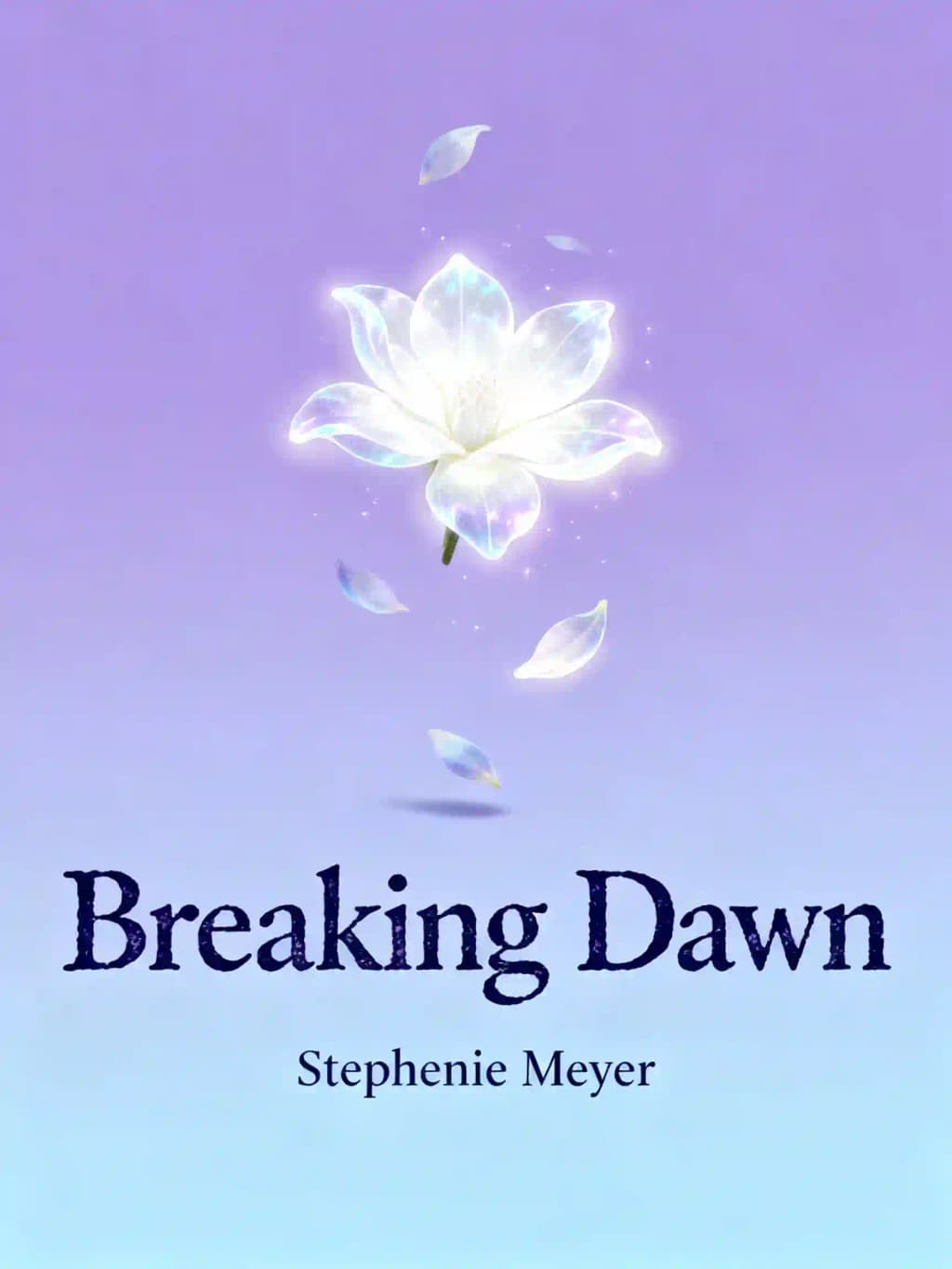
Breaking Dawn captivates readers from the first page with its exploration of love's ultimate sacrifices. As the conclusion to Stephenie Meyer's global phenomenon that sold over 100 million copies worldwide, this novel completes Bella and Edward's journey in unexpected ways. When the series first appeared in 2005, few predicted it would inspire a $3.3 billion film franchise, reshape young adult literature, and divide critics while creating a passionate fanbase including celebrities like Taylor Swift and Emma Watson. What begins as a wedding story quickly transforms into a tale about the lengths we'll go to protect those we love-even if it means sacrificing our humanity or facing death itself.
Kapitel 2
The Wedding: Human Moments in a Supernatural World
The story opens with Bella Swan's impending marriage to Edward Cullen, a moment that crystallizes the tension between mortal and immortal worlds. Bella's self-consciousness about her tank-like Mercedes Guardian-Edward's latest overprotective gift-serves as a metaphor for her larger anxieties about transitioning from human to vampire life. The vehicle's imposing presence and missile-proof glass reflect Edward's obsession with her safety, while Bella's discomfort with such extravagant protection mirrors her struggle to reconcile her ordinary human nature with the extraordinary supernatural world she's entering.
Alice Cullen, Edward's prescient sister, orchestrates the wedding with military precision and artistic flair, transforming the modernist Cullen house into a romantic wonderland. The decoration process becomes an exercise in elegant excess: thousands of twinkle lights create a celestial canopy, white satin bows cascade down staircases, and carefully curated floral arrangements blend orange blossoms, lilac, freesia, and roses to create what Alice calls "an enchanted forest." Despite Bella's characteristic protests during her extensive makeover-"I'm going to look plain next to him no matter what"-Alice and Rosalie's careful attention to every detail, from the vintage-inspired lace veil to the perfect shade of lipstick, creates a bridal vision that leaves even the typically stoic Charlie Swan emotional. The ceremony itself becomes a sensory blur for Bella until she locks eyes with Edward at the altar, his marble face "severe with emotion until he breaks into an exultant smile," a moment that captures their supernatural bond in deeply human terms.
The wedding scenes masterfully ground supernatural elements in deeply human emotions and traditions. When Charlie presents Bella with sapphire-studded silver hair combs that belonged to Grandma Swan, the moment resonates with generational significance. The combs become both "something blue" and "something old," connecting Bella to her human lineage even as she prepares to leave it behind. The traditional wedding vows include one subtle but profound modification-"as long as we both shall live" replaces "till death do us part"-acknowledging the immortal future that awaits them while foreshadowing the life-and-death stakes of what's to come. This careful attention to human ritual, even as it's being subtly altered to accommodate supernatural reality, emphasizes the story's central theme of transformation and the price of choosing between two worlds.
The guest list itself becomes a delicate balance of human and vampire worlds: the Denali coven mingles with Bella's high school friends, while the werewolves maintain an uneasy presence at the reception. Each interaction highlights the precarious nature of Bella's position as she stands at the threshold between mortality and immortality, her white dress symbolizing not just bridal purity but the blank slate of her impending transformation.
Kapitel 3
Isle Esme: Passion and Consequences
The honeymoon takes Bella and Edward to Isle Esme, a private island gifted to Esme by Carlisle, where their relationship faces its most intimate test. Their first night together represents the culmination of three books' worth of sexual tension, carefully navigating the danger of Edward's supernatural strength against Bella's human fragility. When Edward carries Bella across the threshold into a house with a massive white bed, both are nervous about what's to come. Their midnight swim in the warm ocean becomes one of the series' most sensual scenes, with Edward cautioning Bella to tell him if he hurts her while she assures him they belong together.
The morning after reveals the physical consequences of their lovemaking-bruises on Bella's skin from Edward's superhuman strength. Though Bella insists she's fine and the marks don't hurt, Edward is devastated by the evidence of how he's harmed her. His self-loathing leads to a vow that devastates Bella: "I will not make love with you until you've been changed. I will never hurt you again."
What follows is a fascinating power struggle as Bella attempts to seduce her own husband, progressing from innocent ivory satins to more revealing pieces from Alice's lingerie collection. The dynamics shift when Bella proposes a deal-she'll stay human longer and attend Dartmouth if Edward will be intimate with her again. This negotiation over her humanity becomes a central theme, with physical intimacy serving as both metaphor and catalyst for larger transformations to come.
The honeymoon takes an unexpected turn when Bella discovers she's pregnant-something thought impossible between vampires and humans. The realization transforms her relationship with her body and with Edward, who reacts with horror rather than joy. "That thing is not my son," he says coldly, revealing the first major rift in their seemingly perfect union. Bella's immediate protective instinct toward her unborn child establishes the novel's central conflict-how far will she go to protect this unexpected life, even if it costs her own?
Kapitel 4
Jacob's Perspective: The Reluctant Alpha
Breaking Dawn's narrative structure takes a bold turn when it shifts to Jacob Black's first-person perspective for the middle section. This structural choice allows readers to witness Bella's deteriorating condition through outside eyes while exploring Jacob's evolution from bitter rival to reluctant protector. His raw, often darkly humorous voice provides a stark contrast to Bella's more introspective narration.
Jacob's journey begins with his intention to confront the Cullens after hearing Bella has returned "sick" from her honeymoon. What he discovers instead is horrifying-Bella wasting away as her half-vampire pregnancy consumes her from within. "Her torso was grotesquely swollen, her hands cradling a massively pregnant belly. The monster inside her was killing her, feeding on her life. Just as I'd always known Edward would."
The pregnancy creates unexpected alliances, with Rosalie protecting the fetus while Edward desperately wants to remove it to save Bella's life. Jacob finds himself aligned with his former rival in wanting to save Bella, leading to Edward's shocking proposal: if Jacob can convince Bella to give up the "monster" killing her, she could have children with him instead. "She can have puppies, if that's what it takes," Edward says desperately, revealing the depths of his desperation.
When Sam's pack decides the unborn child poses a threat that must be eliminated, Jacob makes the momentous choice to embrace his birthright as Alpha, breaking from the pack to protect Bella and the Cullens. "Ephraim Black's son was not born to follow Levi Uley's," he declares, establishing his own pack with Seth and later Leah Clearwater. This transformation from reluctant werewolf to Alpha leader represents Jacob finding his own path beyond his unrequited love for Bella.
Kapitel 5
Renesmee's Birth: Between Life and Death
The birth scene stands as one of the most visceral and violent moments in young adult literature, pushing the boundaries of what the genre typically permits. Bella's body violently convulses as the placenta detaches, her spine cracking under the supernatural strength of the half-vampire child within her. The desperate emergency delivery unfolds in the Cullens' home, transformed into a makeshift medical facility, with Carlisle unexpectedly absent. When medical instruments prove ineffective against the rock-hard amniotic sac, Edward must resort to using his vampire teeth to cut through Bella's stomach - a moment that horrifically merges vampire abilities with human medical necessity. Jacob, setting aside his personal anguish, performs CPR while Edward methodically injects his venom directly into Bella's heart at strategic points, beginning her transformation into a vampire as their daughter Renesmee enters the world.
The name "Renesmee" - an elaborate combination of Renee (Bella's mother) and Esme (Edward's adoptive mother) - symbolizes how this child bridges not just human and vampire worlds, but also unites two distinct families. Her unique nature as a half-human, half-vampire hybrid manifests in fascinating ways: a beating heart, blood-flushed cheeks, and accelerated growth that will age her to maturity in just seven years. She possesses remarkable abilities, including the power to share her thoughts through touch and penetrate mental shields, making her unprecedented in vampire lore. This extraordinary nature becomes central to the novel's final conflict, as her very existence challenges vampire laws and traditions.
Through Jacob's imprinting on Renesmee - an involuntary werewolf bonding that creates a lifelong connection - Meyer ingeniously resolves the love triangle that drove earlier books. This supernatural connection transforms Jacob from potential romantic rival to devoted guardian, creating a complex family dynamic where former enemies become protectors. The imprinting process itself is described as an unbreakable gravitational pull, shifting Jacob's entire world to orbit around Renesmee's existence. This creates a new kind of family structure that transcends not only species boundaries but also traditional concepts of loyalty and love.
This resolution has sparked significant debate among readers and critics. Some view the imprinting as a convenient plot device that sidesteps the emotional complexity of the love triangle, arguing it diminishes Jacob's previous character development and feelings for Bella. Others appreciate how it transforms Jacob's obsessive love into something more sustainable and appropriate, while simultaneously ensuring his continued presence in Bella's life. The controversy extends to discussions about the implications of an adult werewolf being spiritually bound to an infant, though Meyer carefully frames the connection as initially protective rather than romantic. Regardless of interpretation, Renesmee's birth marks the point where Breaking Dawn fully embraces its supernatural elements, moving beyond the relatively grounded romance of earlier books into more fantastical territory that explores themes of transformation, sacrifice, and the nature of family bonds.
Kapitel 6
Bella's Transformation: The Newborn Vampire
When the narrative returns to Bella's perspective, readers experience her vampire transformation from within-three days of excruciating burning pain described with unflinching detail. "The pain is bewildering, impossible to comprehend. My consciousness flickers between reality and blackness. Reality is red agony-like being sawed in half, hit by a bus, punched, trampled, and submerged in acid simultaneously." The transformation process is portrayed as a complete cellular reconstruction, with every nerve ending aflame as her human body dies and immortal form emerges. Throughout these torturous days, Bella maintains enough awareness to appreciate Edward's constant presence, his cool hand in hers serving as her only anchor to reality.
Bella's emergence as a vampire subverts expectations established throughout the series. Rather than the bloodthirsty newborn everyone anticipates, she demonstrates remarkable self-control from her first moments. Her ability to resist human blood and maintain her essential "Bella-ness" challenges vampire mythology while emphasizing her special nature. Even the Cullens are astounded by her composure - Jasper, their resident expert on newborns, cannot comprehend her restraint. When she looks in the mirror for the first time, she struggles to recognize herself in the beautiful stranger with crimson eyes, finding comfort only when she notices her slightly unbalanced upper lip-"maybe the rest of me is in there too." This small imperfection becomes a touchstone, connecting her new existence to her human life.
Meyer uses Bella's heightened vampire senses to create lush sensory descriptions that transform ordinary moments into extraordinary experiences. She sees "the individual filaments in the light bulb, an eighth color in the spectrum I have no name for, microscopic dust motes dancing like planets." The world becomes a symphony of previously imperceptible details - the complex harmonics in a whispered word, the intricate patterns in a spider's web, the rainbow prisms in each dewdrop. These passages effectively convey the disorientation and wonder of experiencing the world through immortal senses, while also highlighting the permanent separation from her human life.
The transformation completes Bella's journey from awkward human to powerful immortal, finally placing her on equal footing with Edward. Their first kiss as equals reveals what Edward has been holding back: "It's like our first kiss-he's never kissed me this way before, and it almost makes me feel guilty to experience such pleasure." This equality extends beyond physical strength to Bella discovering her "gift"-a mental shield that can protect others from psychic attacks, transforming her former vulnerability into her greatest strength. This ability proves crucial not just for her own protection but for safeguarding her entire supernatural family. The shield represents a perfect metaphor for Bella's character development - what once made her feel weak and different now makes her indispensable and powerful.
Through her transformation, Bella achieves not just immortality but a sense of completeness that eluded her as a human. Her new form feels less like a change and more like finally becoming who she was always meant to be, challenging traditional vampire narrative tropes about the loss of humanity and suggesting instead that some transformations can lead to self-actualization rather than self-destruction.
Kapitel 7
The Volturi Confrontation: Standing Against Authority
The final section builds toward a dramatic confrontation with the Volturi-vampire royalty who maintain strict laws within vampire society, particularly those against immortal children. These children, turned into vampires while still infants, are forbidden due to their inability to control their devastating bloodlust or keep the vampire world secret. When Irina, a vampire from the Denali coven, catches a distant glimpse of Renesmee and mistakes her for an immortal child, she reports this violation to the Volturi. In response, Aro, Caius, and Marcus mobilize their entire guard - an unprecedented gathering of their most gifted enforcers - with the apparent intention of destroying the Cullen family.
This existential threat catalyzes an extraordinary alliance as the Cullens reach out to vampires across the globe, calling in favors and seeking witnesses who can testify to Renesmee's unique nature. The Cullens' home becomes a gathering place for the largest assembly of peaceful vampires in history, each bringing their own stories, powers, and perspectives. Benjamin, an Egyptian vampire who can manipulate the elements, demonstrates how some vampires possess abilities beyond the traditional supernatural powers. Zafrina, from the Amazon, wields the power to create powerful visual illusions that can blind or deceive others. The ancient Romanians, Vladimir and Stefan, arrive with centuries of grudges against the Volturi who overthrew their rule, adding historical depth to the vampire world's complex political landscape.
Meyer's world-building expands dramatically through these international characters, revealing a complex vampire society with diverse feeding habits, cultural traditions, and moral codes. Some, like the Amazonian vampires, maintain primitive lifestyles in remote regions, while others, such as the Egyptian coven, have adapted to modern urban environments while maintaining ancient traditions. The gathering also introduces various mated pairs, showing how vampire relationships differ across cultures, from the passionate devotion of the Americans to the more pragmatic arrangements of the European covens.
The culminating confrontation unfolds in a snow-covered clearing that becomes a symbolic battlefield for competing visions of vampire society. Rather than devolving into physical combat, the scene transforms into a sophisticated political and moral debate. Garrett, a former American revolutionary turned vampire, delivers a compelling indictment of the Volturi's true motivations, exposing their facade of justice as a cover for their hunger for power and control over the vampire world. His words resonate not only with the gathered witnesses but even cause doubt among the Volturi's own supporters.
The strategic arrival of Alice and Jasper with Nahuel, another human-vampire hybrid, proves crucial. Nahuel's existence and testimony demonstrate that hybrid children like Renesmee can safely mature and integrate into both human and vampire societies without threatening their secrecy. This evidence directly contradicts the Volturi's primary justification for execution, forcing them to acknowledge the weakness of their position.
The resolution achieves its power through the triumph of diplomatic maneuvering over brute force. Bella's shield ability, which can now protect dozens of vampires simultaneously from mental attacks, creates a crucial strategic deadlock. This defensive capability neutralizes the Volturi's most powerful weapons - Jane's pain illusion and Alec's sensory deprivation - while maintaining a peaceful standoff. Faced with the prospect of significant casualties among his prized guard and the potential loss of political legitimacy, Aro must retreat, establishing a new equilibrium in vampire politics where power is more evenly distributed and justice must be more clearly justified.
Kapitel 8
Forever: Finding Immortal Balance
The novel concludes with Bella achieving a profound breakthrough in her vampiric abilities - mastering the complex skill of completely retracting her mental shield, allowing Edward to finally access her thoughts. This intimate mental connection represents more than just a supernatural feat; it symbolizes the final wall between them crumbling away, creating a perfect understanding that had eluded them throughout their entire relationship. When Bella declares, "No one has ever loved anyone as much as I love you," Edward's playful response claiming "one exception" reflects their eternal playful dynamic, even as immortals.
This milestone marks the culmination of Bella's transformation from an awkward, self-doubting teenager in Forks to a powerful, self-assured immortal who has found her authentic place in the supernatural world. Crucially, she accomplishes this without losing the compassion, loyalty, and emotional depth that defined her humanity. Her journey has yielded rewards beyond her initial dreams: a powerful and protective family in the Cullens, an eternal soulmate in Edward, and the unexpected miracle of motherhood through Renesmee. She's gained extraordinary physical abilities while retaining her human capacity for love and sacrifice.
The path to this happiness demanded more from Bella than anyone anticipated - excruciating physical pain during her transformation, the terror of a life-threatening pregnancy, and the diplomatic challenges of uniting vampires and werewolves. Each trial strengthened her character and proved her worthiness of the immortal life she chose. Her shield ability itself evolved from a defensive mechanism to a tool for deeper connection, mirroring her personal growth from someone who needed protection to someone strong enough to protect others.
Breaking Dawn ultimately presents a nuanced message about the nature of true love and personal growth. Through Bella's evolution from human to vampire, Meyer parallels the universal experience of growing from adolescence to adulthood, showing how embracing change rather than resisting it leads to fulfillment. The immortality Bella achieves transcends mere physical permanence - it manifests in the lasting impact she has through Renesmee, who represents a bridge between supernatural worlds, and through the unprecedented alliance she helps forge between traditional enemies.
The final line - "And then we continued blissfully into this small but perfect piece of our forever" - delivers the promised happy ending while suggesting that even eternity remains dynamic and full of potential. Meyer leaves readers with the understanding that love's true immortality lies not in unchanging permanence, but in its capacity to grow, adapt, and discover new depths through the endless days ahead. The saga concludes by affirming that when shared with loved ones, forever isn't just about duration - it's about continuous discovery, growth, and the eternal expansion of love's possibilities.
Kapitel 9
The Significance of Choice in Breaking Dawn
Throughout Breaking Dawn, characters face consequential choices that define not just their futures but their very identities. Bella's decision to keep her pregnancy despite knowing it might kill her represents the novel's most controversial choice, one that has been interpreted through various political lenses. Yet Meyer frames this less as a statement on reproductive rights and more as an exploration of maternal instinct and sacrifice-Bella's immediate connection to her unborn child transcends rational calculation of risk.
Similarly, Jacob's choice to break from Sam's pack represents a rejection of predetermined paths in favor of forging his own moral code. "I was not born to kneel to Sam," he realizes in a moment of clarity that transforms him from follower to leader. This theme of choosing one's own destiny despite biological or social constraints runs throughout the novel, challenging deterministic views of both human and supernatural nature.
Even the Volturi confrontation hinges on choice rather than fate. When various vampires choose to stand with the Cullens despite potential death, they reject the Volturi's authority based on fear. As Garrett tells the assembled witnesses, "The only law that applies to the newborn is the law of her creator. Her family. These ancient ones made you their pawns." This revolutionary sentiment-that authority must be earned rather than imposed-provides the philosophical backbone for the novel's climax.
Breaking Dawn ultimately suggests that immortality's greatest gift isn't endless time but the freedom to choose how that time is spent. When Bella reflects on her transformation, she realizes: "After eighteen years of mediocrity, I was pretty used to being unremarkable. I couldn't expect to be good at this too. But I hoped I would be eventually. Though I had no shortage of immortal time to practice."
In this final chapter of the Twilight saga, Meyer delivers a message about the power of choice to transcend limitations-whether human frailty, supernatural instinct, or social expectation. It's this emphasis on agency within constraints that gives Breaking Dawn its emotional resonance beyond the supernatural trappings, speaking to readers' own struggles to define themselves within the limitations of their lives.