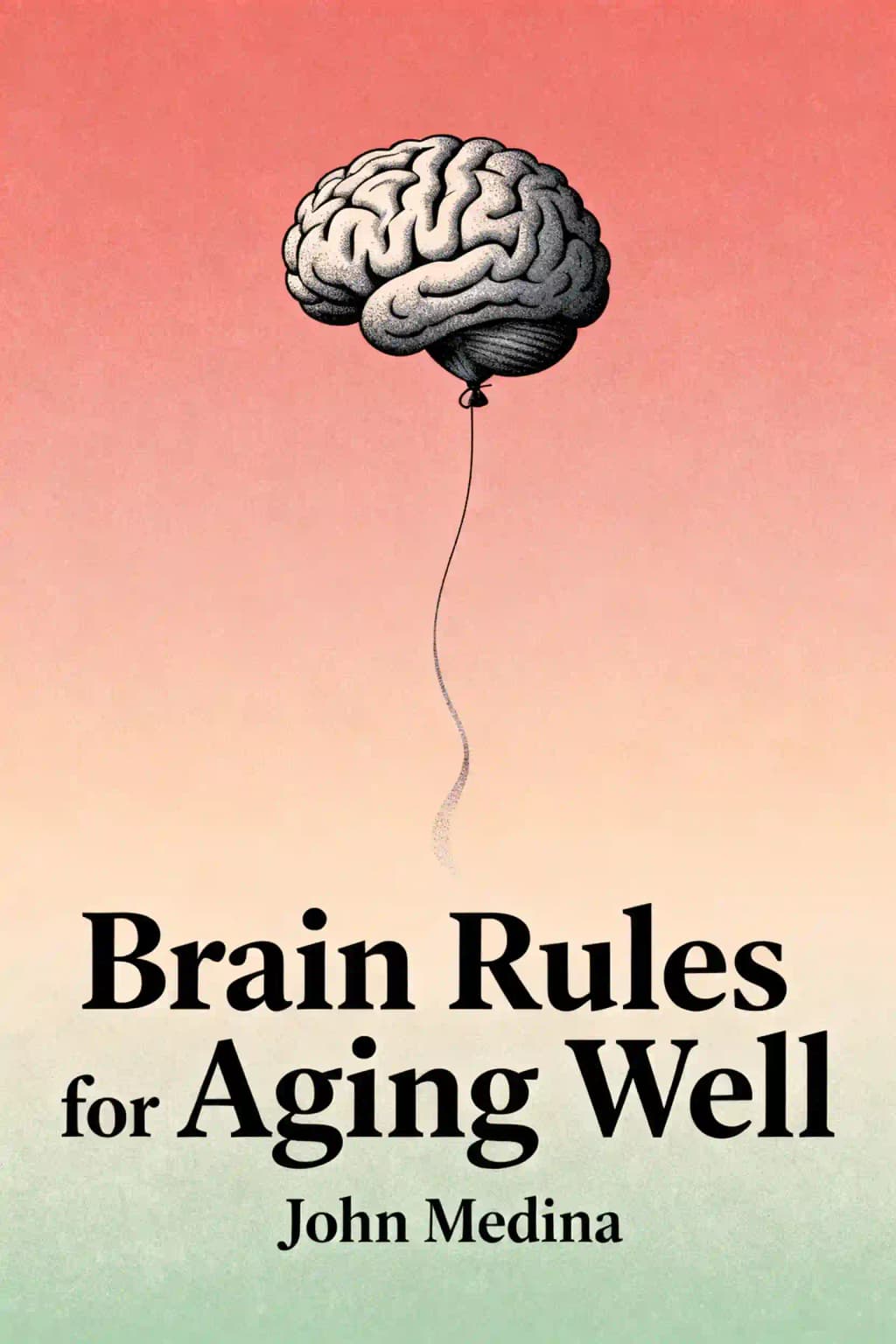
Brain Rules for Aging Well
10 Principles for Staying Vital, Happy, and Sharp
Überblick über Brain Rules for Aging Well
Discover why social connections are "brain vitamins" that reduce cognitive decline by 70%. Molecular biologist John Medina's science-backed guide challenges retirement norms, revealing how exercise triggers neurogenesis and why traditional retirement accelerates mental decline. Your roadmap to a thriving, sharper aging brain.

Kernthemen in Brain Rules for Aging Well
- cognitive reserve
- social neurobiology
- positivity effect
- longevity science
- brain plasticity
Zitate aus Brain Rules for Aging Well
Aging isn't just about inevitable decline.
Tripling your social network can literally double your amygdala volume.
Happiness actually increases as we age.
The quality of social connections matters more than quantity.
Friendships and social activities are perhaps the most powerful brain boosters.
Personen in Brain Rules for Aging Well
- John MedinaAuthor and developmental molecular biologist
- Ellen LangerPsychologist known for the counterclockwise study
- ScroogeLiterary figure used to illustrate life shifts
Über den Autor
Über den Autor von Brain Rules for Aging Well
John J. Medina is the New York Times bestselling author of Brain Rules for Aging Well: 10 Principles for Staying Vital, Happy, and Sharp. He is a developmental molecular biologist celebrated for making brain science accessible to broad audiences.
As a researcher, professor, and consultant, Medina specializes in translating complex neuroscience into actionable strategies for optimizing brain health across life stages. His groundbreaking Brain Rules series—including Brain Rules: 12 Principles for Surviving and Thriving at Work, Home, and School and Brain Rules for Baby—has been translated into over 20 languages and adopted as textbooks in universities worldwide.
Medina is the founding director of the Talaris Research Institute and affiliate professor of bioengineering at the University of Washington School of Medicine. He blends academic rigor with real-world applications, advising healthcare systems and Fortune 500 companies on brain-friendly practices.
Known for his dynamic TED Talks and media features on NPR and in The Psychiatric Times, Medina’s work has shaped global conversations about cognitive health. The Brain Rules series has sold millions of copies, with Brain Rules for Aging Well extending his legacy of empowering readers to harness neuroscience for lifelong vitality.
Zusammenfassung von Brain Rules for Aging Well herunterladen
Erhalten Sie die Brain Rules for Aging Well-Zusammenfassung als kostenloses PDF oder EPUB. Drucken Sie es aus oder lesen Sie es jederzeit offline.
FAQ zu diesem Buch
John Medina’s Brain Rules for Aging Well explores the science of aging through 10 actionable principles to maintain cognitive vitality, emotional health, and physical well-being. It combines geroscience research with strategies for improving memory, reducing stress, and fostering social connections. Topics include brain-friendly diets, exercise benefits, and mindfulness practices.
This book is ideal for adults over 40, caregivers, or anyone seeking evidence-based methods to combat age-related cognitive decline. It’s also valuable for younger readers interested in proactive brain health strategies. Medina’s engaging style makes complex neuroscience accessible to non-experts.
Yes—it offers peer-reviewed insights into aging’s biological mechanisms paired with practical advice. Readers gain tools like stress-reduction techniques, social engagement tips, and lifelong learning strategies. Its optimistic tone challenges stereotypes of inevitable decline.
- Social vitamin theory: Relationships act as cognitive “workouts” to reduce decline.
- Mindfulness rewiring: Meditation enhances emotional regulation and attention.
- Movement benefits: Aerobic exercise and dancing boost brain plasticity.
Medina emphasizes procedural memory retention through skill-building (e.g., learning instruments) and semantic memory growth via lifelong education. He advises against passive routines, advocating novel mental challenges to stimulate neural pathways.
The book highlights Mediterranean-style diets rich in omega-3s, antioxidants, and leafy greens. It warns against processed sugars and emphasizes hydration’s role in cognitive function.
- “Be a friend to others…” (social bonds’ impact on immunity and cognition).
- “Mindfulness not only soothes but improves…” (stress reduction and attention).
- “Ideal subjective age is twelve years younger…” (mindset’s role in performance).
Unlike Brain Rules (general neuroscience) or Brain Rules for Baby (child development), this focuses specifically on aging. It integrates updated geroscience findings with tailored strategies for older adults.
Some note the book prioritizes optimism over severe age-related conditions like dementia. Others desire more granular guidance for readers with existing cognitive impairments.
Yes—it links sleep quality to memory consolidation and toxin clearance. Recommendations include consistent sleep schedules and reducing blue-light exposure before bed.
With global aging populations, its evidence-based approach to mitigating healthcare costs through lifestyle changes remains critical. Updated research validates Medina’s emphasis on social and physical activity.
- Schedule weekly social interactions (in-person or virtual).
- Practice 10-minute mindfulness sessions.
- Add aerobic exercise like brisk walking or swimming.