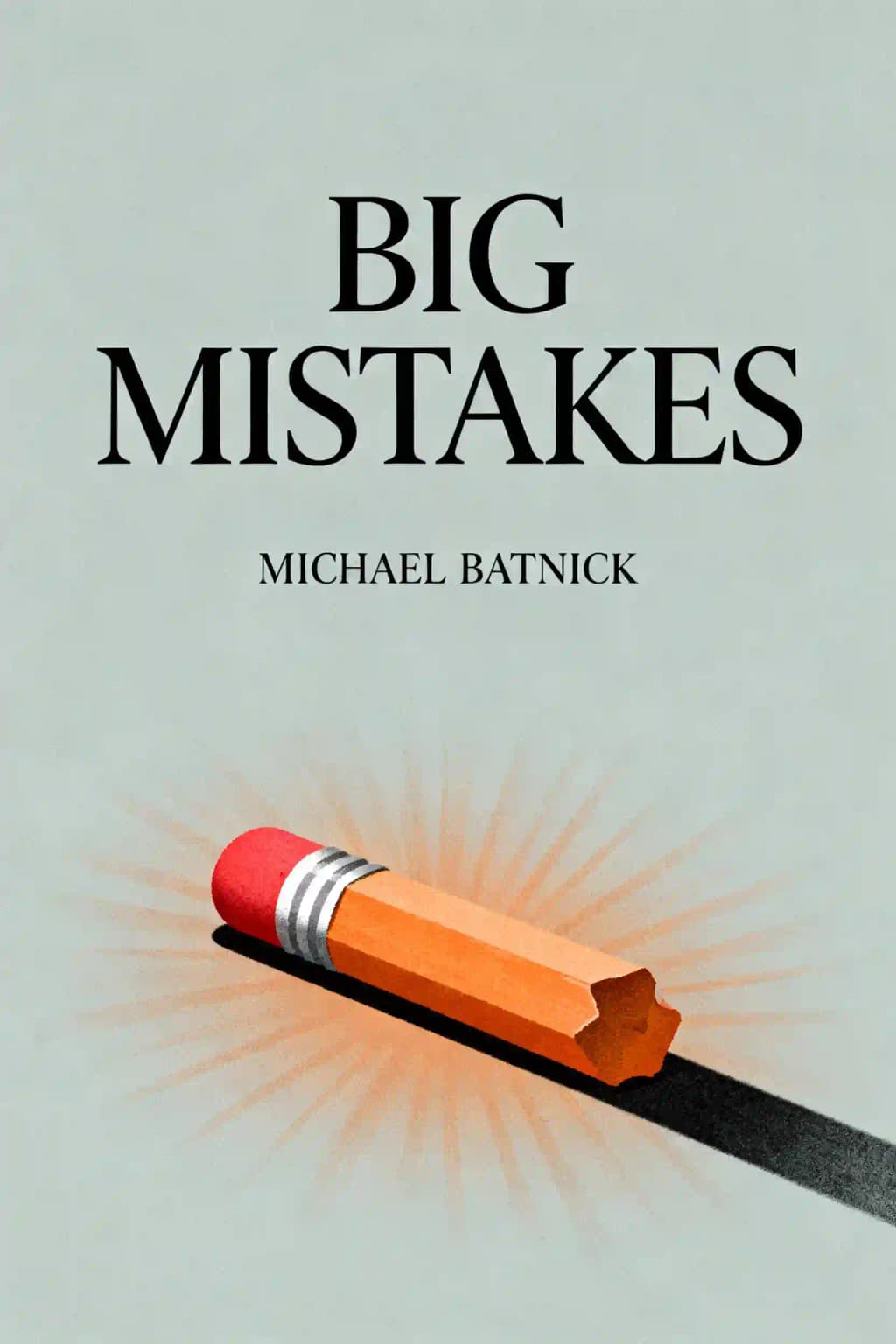
Even legendary investors like Warren Buffett make catastrophic mistakes. Batnick's eye-opening exploration reveals billion-dollar blunders from Wall Street's elite, proving success requires failure first. Ben Carlson calls it essential reading - because what you'll learn from their losses is priceless.
Erlebe das Buch durch die Stimme des Autors
Verwandle Wissen in fesselnde, beispielreiche Erkenntnisse
Erfasse Schlüsselideen blitzschnell für effektives Lernen
Genieße das Buch auf unterhaltsame und ansprechende Weise
Think about this: Warren Buffett, the Oracle of Omaha himself, once bought a shoe company and later called it one of his worst decisions ever. If someone with Buffett's track record can stumble spectacularly, what does that tell us about the rest of us? The uncomfortable truth is that investing isn't a game where genius guarantees victory. Even the brightest minds on Wall Street-Nobel Prize winners, legendary traders, billionaire fund managers-have made mistakes that would make your average retail investor blush. These aren't just cautionary tales about greed or recklessness. They're windows into something deeper: the universal patterns of human psychology that trip us up regardless of IQ or experience. Success in markets isn't about never falling down. It's about understanding why we fall, learning from others who've face-planted before us, and developing the emotional armor to keep going. Because in investing, experience remains the most brutal teacher-and wisdom comes from watching others pay tuition. Benjamin Graham literally wrote the book on value investing. Before him, stock picking was closer to fortune-telling than financial analysis. He transformed investing into a discipline by recognizing a simple truth: price and value aren't the same thing. His "margin of safety" principle-buying stocks significantly below what they're actually worth-became gospel for generations of investors. Graham understood that markets aren't rational calculators but emotional creatures, with prices swinging wildly while underlying business values remain stable. His "Mr. Market" allegory captured this perfectly: imagine a manic-depressive business partner who shows up daily offering to buy or sell his stake at wildly different prices based purely on mood. But here's where it gets interesting. During the Great Depression, Graham lost 70% of his wealth. Seventy percent. The father of value investing watched his carefully calculated margins of safety evaporate as cheap stocks got cheaper and then cheaper still. This wasn't a failure of intelligence but a confrontation with reality: value investing isn't foolproof, cheap can always become cheaper, and sometimes value never materializes at all. What made Graham truly great wasn't his initial success but his intellectual humility. By 1976, he acknowledged that detailed security analysis offered fewer advantages than before because everyone was doing it. Wall Street's collective brilliance had essentially canceled itself out. He recognized that future price movements represent what nobody knows-not what the smartest people think they know. Though Graham wouldn't grasp why Amazon's market cap could surge $350 billion despite razor-thin margins while Walmart shed value despite fat profits, he'd recognize the emotional drivers behind it. His enduring lesson? Respect value but don't worship it. There are no ironclad laws in markets-only principles that work until suddenly they don't.
Zerlegen Sie die Kernideen von Big Mistakes in leicht verständliche Punkte, um zu verstehen, wie innovative Teams kreieren, zusammenarbeiten und wachsen.
Destillieren Sie Big Mistakes in schnelle Gedächtnisstützen, die die Schlüsselprinzipien von Offenheit, Teamarbeit und kreativer Resilienz hervorheben.

Erleben Sie Big Mistakes durch lebhafte Erzählungen, die Innovationslektionen in unvergessliche und anwendbare Momente verwandeln.
Fragen Sie alles, wählen Sie die Stimme und erschaffen Sie gemeinsam Erkenntnisse, die wirklich bei Ihnen ankommen.

Von Columbia University Alumni in San Francisco entwickelt
"Instead of endless scrolling, I just hit play on BeFreed. It saves me so much time."
"I never knew where to start with nonfiction—BeFreed’s book lists turned into podcasts gave me a clear path."
"Perfect balance between learning and entertainment. Finished ‘Thinking, Fast and Slow’ on my commute this week."
"Crazy how much I learned while walking the dog. BeFreed = small habits → big gains."
"Reading used to feel like a chore. Now it’s just part of my lifestyle."
"Feels effortless compared to reading. I’ve finished 6 books this month already."
"BeFreed turned my guilty doomscrolling into something that feels productive and inspiring."
"BeFreed turned my commute into learning time. 20-min podcasts are perfect for finishing books I never had time for."
"BeFreed replaced my podcast queue. Imagine Spotify for books — that’s it. 🙌"
"It is great for me to learn something from the book without reading it."
"The themed book list podcasts help me connect ideas across authors—like a guided audio journey."
"Makes me feel smarter every time before going to work"
Von Columbia University Alumni in San Francisco entwickelt

Erhalten Sie die Big Mistakes-Zusammenfassung als kostenloses PDF oder EPUB. Drucken Sie es aus oder lesen Sie es jederzeit offline.