Kapitel 1
A Lifetime of Untangling Faith's Knots
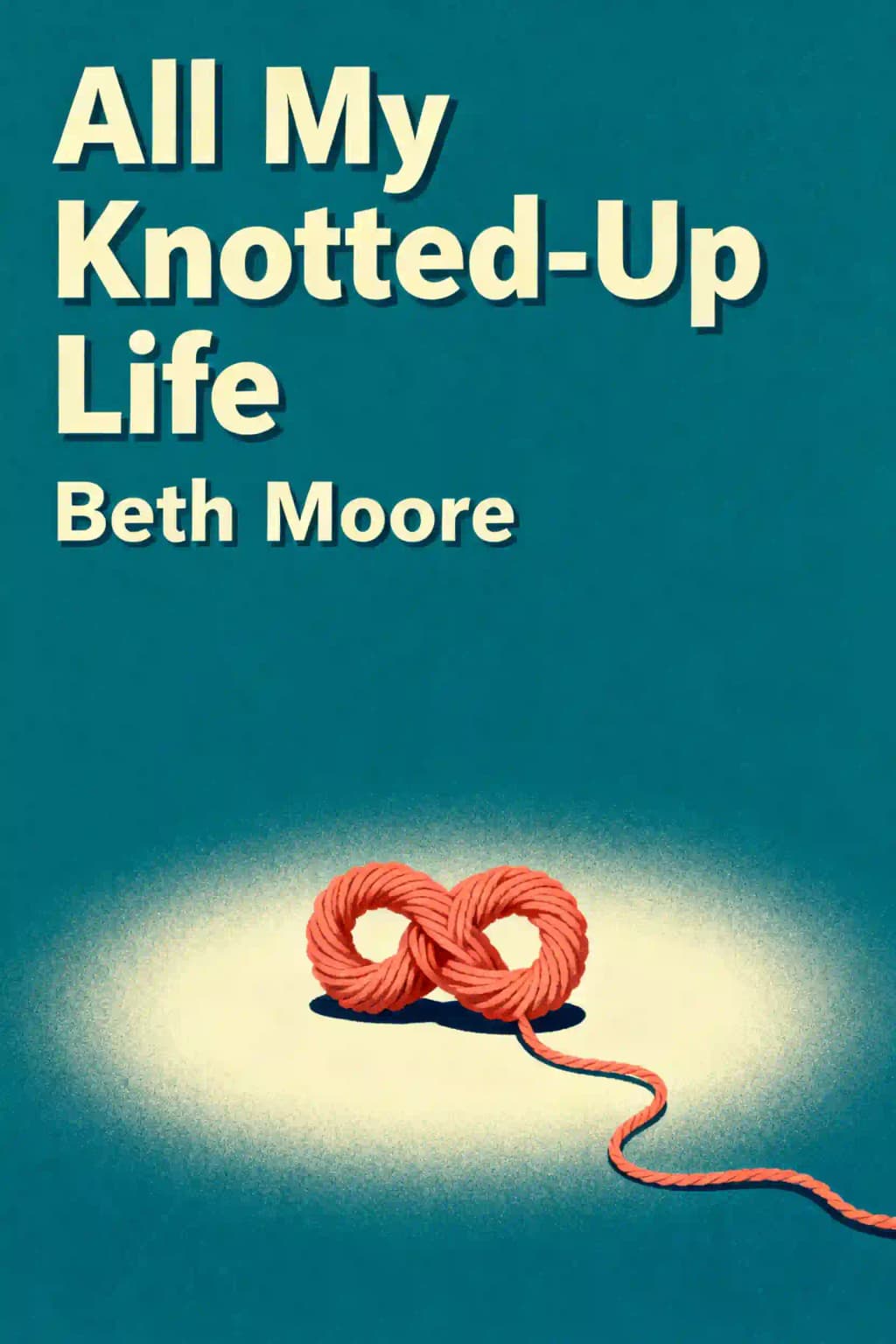
Beth Moore never planned to write her memoir until she realized that life doesn't resolve itself into neat packages. The celebrated Bible teacher and founder of Living Proof Ministries has spent decades helping millions of women discover Scripture's transformative power. Yet her own story remained largely untold-a complex tapestry of childhood trauma, spiritual awakening, and denominational heartbreak. When Oprah featured "All My Knotted-Up Life" as her March 2023 book club selection, even secular readers were drawn to Moore's raw vulnerability. Her memoir resonated with survivors of trauma while challenging evangelical circles with its unflinching honesty about church culture. As Tim Keller once noted, "Beth's gift isn't just her biblical insight-it's her courage to speak truth when silence would be easier." Through her journey from a troubled Arkansas childhood to becoming one of Christianity's most influential voices, Moore invites us to witness how God works through our most tangled circumstances.
Kapitel 2
River People Shouldn't Go to Sea
We were river people. River people have no business going to the sea. This truth became painfully clear during a family vacation to Florida when I was six years old. Standing beside my father in the surf, I suddenly found myself underwater, desperately clinging to his ankle as the undertow pulled me. When he finally yanked me up, I stood shivering and coughing salt water, unable to form words about my near-drowning experience.
Our family of eight had packed into a blue and white Volkswagen bus for this journey from our small Arkansas college town. My eighteen-year-old sister Sandra knew good hair and makeup, while my fourteen-year-old brother Wayne was musical and could dance-practically Paul McCartney's twin through my adoring eyes. We traveled with ten pieces of luggage strapped hillbilly-style to the van alongside our brand-new tent from Sears.
That first night at Fort Walton Beach campsite revealed our family's camping ineptitude. Dad struggled with the tent assembly while Mom chain-smoked Pall Malls. His face turned tricolored-deep red against that narrow strip of white in his cocoa-colored hair that looked like a lightning strike. The rest of us coped in our ways: Wayne fidgeted nervously, Sandra took Gay to the restrooms, Tony threw rocks, and I sucked my fingers staring at the starless Florida sky.
Family is fierce and frightful-all zipped up inside the unknown together, not always voluntarily. We feel utterly alone while crushed together so close our sweat mingles. We know too much to truly know each other. Family freezes its members in time, confident that what was true twenty years ago remains true. We're amoebas, simultaneously demanding singularity and intimacy.
Our tent adventure ended abruptly when a thunderstorm struck, collapsing our Sears shelter with remarkable ease. Fear was a core value in our family-we were "tutored and tested on it," especially regarding thunderstorms. We found refuge in an all-night diner until sunrise, where Nanny declared she "shoulda flown," triggering Mom to remind her about packing her burial dress last time she flew, fearing Cuban hijackers.
After three blissful days with cousins, we continued to Miami where our alternator failed. Our final vacation stop was Sears, where Dad returned the wadded-up tent demanding a refund. Then we returned home, everyone immediately resuming normal life while I twirled on the burlap-bag swing hanging from an Arkansas pine, processing the adventure in my own six-year-old way.
Kapitel 3
From the Hill to the Ligon House
When I was young, we moved from our beloved hill to the Ligon house on Twelfth Street in Arkadelphia. Mom claimed the move was because driving us kids back and forth to town was driving her batty. To us younger kids, it seemed we must be rich now-moving to a three-room-bigger "named" house with Dad retiring from the Army to manage the Royal Theater and SkyVue Drive-In.
I hated leaving our hill with all its breathing space and walking distance to the Caddo River where we dug crawdads from the mud. On the hill, we'd shoot outside the minute we finished breakfast, playing for hours with unbrushed teeth and crusty milk mustaches until our feet were tough as whitleather. We only came inside for snacks, partly because Nanny would poke us with the broom saying, "Scat on outta here or I'll give you something to do."
Pappaw, Dad's one-eyed father, would visit regularly, especially on Fridays when Ouachita Baptist University had home football games. He and Dad would set up lawn chairs at the hill's edge to watch the games for free while we kids ran circles around them, stealing handfuls of peanuts. The treehouse Dad and Pappaw built between two oaks was our pride and joy, despite Nanny's concerns about broken necks.
The Ligon house was undeniably deluxe with two places to eat-a breakfast room and a dining room-and two places to sit-a den and a living room (which Mom called the music room). The music room housed Wayne's piano. Though we all took lessons, Wayne was the natural talent. By twelve, he was already the rehearsal pianist for The Sound of Music, and his theatrical career progressed from playing a cadaver in Arsenic and Old Lace to starring roles in numerous productions.
Moving to Twelfth Street meant a promotion in family status for me-I got to share a room with my big sister Gay instead of sleeping with Nanny on her feather mattress. This was a groundbreaking shift acknowledging my entry into girlhood, though nights were scary in our new wing far from everyone else. I often had nightmares about a Shadow with "a single strike of lightning on its head" that would hover over our bed-perhaps an unconscious echo of my father's distinctive white streak in his dark hair.
Kapitel 4
The Royal Theater: Our Second Home
What we Greens lost in free seats to Ouachita football games when we left the hill, we made up for in free admission to the movies. The Royal Theater was the pearl of Main Street, a signature art deco establishment with the word Royal in giant cursive letters and a double marquee where Dad would improvise with letters when needed, even cutting the tops off Rs to make Ks.
For seventy cents apiece, anyone was welcome-but differently. Whites entered through the official entrance with the doorman while Blacks entered a separate door, bought tickets at the back of concessions, and climbed narrow stairs to the balcony. This was the mid-sixties, ten years after school segregation was declared unconstitutional.
When the theater was nearly empty, I'd sneak upstairs to see what movies looked like from there. The seats were old, stained, and sooty. I'd sit in different seats thinking "Well, they can see pretty good." Always "they." That's how it was. There are some things sitting in someone else's seat can't tell you-you'd have to sit in the same skin.
Dad made the best popcorn with fresh kernels, coconut oil, and butter-flavored salt. We kids worked at the theater-Wayne at the popper (earning a scar), Tony tearing tickets, and Gay and I at concession with sophisticated maturity. We could have all the coke and popcorn we wanted using Dixie cups and pickle bags.
In our region, every soda was called a "coke"-you'd specify "orange coke" or "grape coke" or even order "a suicide" with a shot of every kind. Pickle juice was served separately in cups of crushed ice. We all grew up at the Royal, doing things we shouldn't right under Dad's nose, like Wayne kissing Belinda Bippus during Rome Adventure.
The theater was our playground, our workplace, and our education. I watched countless films from behind the concession counter, memorizing scripts and dreaming of lives different from my own. When I bawled for fifteen minutes after Romeo and Juliet, I wasn't just crying for the star-crossed lovers-I was processing emotions I couldn't yet name, finding catharsis in stories that would help me understand my own complicated life.
Kapitel 5
Baptized Inside and Out
I could leave the Royal Theater with my popcorn, take a left on Main, right on North Seventh, and soon enter a place more familiar than our Tudor home on Twelfth Street-First Baptist Church of Arkadelphia. This palatial tan-brick structure with tall stained-glass windows housed a serious sanctuary, educational spaces, a church library, preschool department, and fellowship hall with kitchen. Though small, I knew every inch except the boys' restroom.
Our church rivaled the Presbyterians in sophistication, attended by Ouachita Baptist University students and professors who sang our solos and led our choirs. The Greens weren't overly religious at home, but rain or shine, we attended church three times weekly-Sunday mornings, Sunday evenings, and Wednesdays. We were practically delivered from the womb to church nursery workers.
Churches then had no "theology of germs"-colds or stomach issues weren't excuses to miss. "Blow hard, wipe good, and I'll be by to get you in a few hours," was the standard response to illness.
My baptism at age nine was a momentous occasion. I carefully positioned my feet under the small bar on the baptismal floor, curling my toes tightly around it to prevent flipping backward during immersion. Brother Reeves placed one hand between my shoulder blades and raised the other, proclaiming, "In obedience to the command of our Lord and Savior Jesus Christ and upon your profession of faith, I now baptize you, my sister, Beth Green..."
The dunking came swiftly-no countdown, no warning. In two seconds flat, I'd been buried with Christ in baptism and raised-literally raised as my feet came out from under the bar. Despite promises to the contrary, water rushed up my nose and down my throat. I was baptized thoroughly, inside and out.
That day, overwhelmed with emotion I couldn't understand, I'd cried through the entire handshaking line, sensing something more important than I knew was happening. Looking back, I recognize this as my first profound spiritual experience-a genuine encounter with God that would shape my life's direction, though I couldn't have articulated it then. The waters that washed over me that day began a lifelong journey of faith that would sustain me through the darkest storms ahead.
Kapitel 6
The Storm Within Our Walls
Darkness could descend swiftly, turning daylight to night, with winds that could tear a house from its foundation and send it spinning through the air. I'd seen such storms on screen, but then I felt it within our own walls on Twelfth Street. Madness came for our family-seeping through window cracks, infecting our blood, haunting our rooms like a ghoul. At eleven years old, I would finally confront what I'd always sensed was wrong.
That morning, Mom told me Dad would take me alone to my orthodontist appointment in Little Rock. I protested, reminding her how we'd always gone as a family, stopping at Casa Bonita afterward before rushing home for Tony and Gay's return from school. Despite my pleas, Mom couldn't join us due to school obligations.
The drive to Little Rock went smoothly. We listened to the radio until it grew staticky, and though Dad grumbled about parking, the appointment itself went fine. My orthodontist, appropriately smiley for someone in "the mouth business," tightened my braces-which I needed after falling into a coffee table at age six, displacing my permanent teeth.
It was on the drive home, after the cityscape gave way to countryside, that everything changed. Dad switched off the radio despite the clear signal and an uncomfortable silence filled the car. The air grew thick as cotton. Dad's jaw clenched rhythmically before he ordered me to sit beside him, patting the seat. When I hesitated, he pulled me by my bare arm, tugging at the collar of my bright-green sailor-style jumper.
My thoughts screamed silently as I cried and he laughed. In that moment, I knew with certainty what I'd perhaps always known-my father was a "no-count dad." The only dad I had, but a no-count dad nonetheless.
When we returned home, everything looked different. The Ligon house seemed shifted on its foundation, the brick darker than I remembered-brown as mud rather than red. The light bulbs appeared dimmer, their filaments flickering, and the off-white walls showed no trace of white at all. My world had fundamentally changed.
Mom became ill, folding into herself for nearly four years, alternating between periods of seeming normalcy and disturbing behavior-writing on walls, marking out faces in photos, and falling into sleep too deep to stir. Dad kept us from her when she was at her worst, claiming she was "crazy," while hiding his own affair.
Through this chaos, I spiraled from a strong student to making Ds, wearing makeup and short skirts, going places I shouldn't with my older sister who reasoned it was safer than staying home. I was caught between being a good girl doing bad things and a bad girl doing good things, terrified equally of getting caught and of no one caring enough to catch me.
Kapitel 7
Uprooted to Houston: A Forced New Beginning
We arrived in Houston after an overnight drive from Arkadelphia, our family transplanted from our Arkansas roots to the sprawling Texas metroplex. Dad had been promoted to oversee all the AMC multiscreen theaters in Houston, a step up in status if not salary. Tony and I stared speechlessly out the windows, our bloodshot eyes wide with shock as we navigated the bumper-to-bumper traffic and unfamiliar landscape.
The move was nearly inexplicable-we were Arkansans to our core, with our heritage, relatives, and ancestors all tied to the rural hills of Arkansas. Now we found ourselves in a foreign world, with businesses boarded up from a recent hurricane threat, convinced we'd come to die.
We were strangers in this vast Texas city, our Arkansas roots violently uprooted. Tony and I started school immediately-me at Spring Woods High with its overwhelming 4,700 students and him in eighth grade. The culture shock was immense as we navigated massive hallways where I was constantly knocked about like a pinball. The stark racial segregation was jarring after our integrated Arkadelphia schools, with only a handful of Black students in this "white flight" suburban district.
When our parents returned to Arkadelphia for the final move, I begged to see my best friend Dodie one last time. They refused, needing to follow the moving van immediately. I threw what they called a "conniption fit" in the yard, devastated at being denied this goodbye with the friend who'd shared my secrets, clothes, and countless sleepovers.
As we prepared to leave, sirens wailed through town. The next day in Houston, Mom and Nanny sat me down with tissues in hand-Dodie and our friend Mike had died in a car accident on their way to the Pig Pit Bar-B-Q, the very outing I'd wanted to join. The fissure this created never fully healed, making our move to Houston permanently, irrevocably real.
Mom's mental state had improved with proof of Dad's infidelity. She stayed with Dad despite valid reasons to leave, sentencing him to "infernally long bouts of solitary confinement under the same roof." She never saw leaving as viable-with her high school education, financial troubles, elderly mother, and children to support. Dad seemed to want Mom to slip out of the picture so someone new could raise us, but that wasn't going to happen-you could "bet your toy poodle on that."
Kapitel 8
Finding Faith Alone and First Love
At fifteen, I found unexpected relief in my invisibility at Spring Woods High. I was neither cool nor uncool, neither in nor out. The sheer mass of students meant no one noticed who was new. Though my thick Arkansas accent brought ridicule when I finally spoke up in class, I persisted. Lunch was brutal until those eight magnificent words: "You can sit with us if you want."
When my parents dropped out of church after our move, I made the small but significant decision to attend alone. The Turners gave me rides until Mom offered to drive me, though she never joined. I got my driver's license on my sixteenth birthday and borrowed our black-and-yellow Dodge Dart with its perpetually overheating radiator to drive myself to church activities.
Those three years became a time of deciding rather than having everything decided for me. Despite cycles of what felt like hypocrisy-wanting to be someone better than I was capable of being consistently-Jesus stayed with me. What I couldn't see was that beneath my self-doubt was something powerful driving me back to faith: hope.
I followed the Turners to church, and after high school graduation, I followed their younger daughter Sandy to college in San Marcos. She was a senior at Southwest Texas State University when I enrolled as a freshman. The hill country campus with its clear, green river was a natural pick for Arkansans like us.
I dove into college life immediately, trying out for drill team before unpacking and pledging a sorority shortly after. I majored in political science on a pre-law track, hoping to follow my grandfather Micajah's path. Remarkably, my parents' relationship had warmed-they'd found a church near home, with Dad attending first before convincing Mom and Tony to join.
The summer between freshman and sophomore years brought a life-altering moment. I volunteered to chaperone sixth-grade girls at GA camp when no mothers could attend. On the fourth morning, standing at the bathroom sink in the crude camp facilities, I experienced God's presence. There was nothing dramatic-no vision, voice, or supernatural sign-just an overwhelming sense of divine presence that made me grip the sink. The moment conveyed a simple message: "You're mine."
After the morning session, I sought out the camp overseer to describe my experience. She listened attentively and said, "I believe, Beth, that you have received what we Baptists would term a call to vocational Christian service." Though I had no idea what specific ministry I was called to, I'd surrendered to full-time service.
Kapitel 9
A Marriage of Unlikely Souls
I'd noticed him before across the college cafeteria-the kind of handsome hard not to notice. While I was loudly complaining about Miracle Whip in blue cheese dressing to my drill team friends, he walked in wearing a Western shirt, Wrangler jeans, and cowboy boots, looking like a young George Strait. We formally met a month later through my brother Tony-Keith was president of the Pikes fraternity, while I was president of Chi Omega sorority.
At a mixer between our Greek organizations, when he offered me a drink and I loudly proclaimed "I don't drink!" during a moment of silence, he looked flummoxed. But when I added "But I dance," he spun around, extended his palm, and asked, "Well, then. May I have this dance?"-perhaps the most romantic gesture I've ever received.
By the time we each realized how deeply troubled the other was, we were too lovestruck to turn back. Our differences spanned everything: theological, ideological, political, financial, familial. Keith hunted; I found it barbaric. I loved poetry; he'd laugh by the third rhyme. His family had money; mine was in debt. He cursed fluently; I spoke "Christian cheese." Both families preferred our previous partners.
I explained to Keith that I was going to work for God-not as a nun, which he feared given his Catholic background-but in some unknown capacity. After my intense declaration, Keith stared hard at me before finally saying, "Well, in that case, I can live with it." And he did. We married that December in a low-budget ceremony with a $60 rented dress. Keith sacrificed the peak of deer season for me-the ultimate sign of his devotion.
Early in our marriage, I awakened to Keith standing on our bed, shouting in terror. This was my introduction to what would later be diagnosed as PTSD-the result of childhood trauma when he and his brother were caught in a garage explosion. His brother died from the burns while Keith survived physically but was emotionally scarred forever.
Keith's trauma stemmed from a horrific accident when he and his brother "Duke" were toddlers. They played with gasoline in the garage, which ignited under the water heater. Duke, more severely burned, later died. Keith was eventually diagnosed with severe PTSD and bipolar disorder. Our marriage has been marked by constant medical adjustments-"More ups, more downs. More tears. More conflicts. More appointments." Yet we've survived through divine grace and mutual compassion.
Kapitel 10
Motherhood: The Greatest Gift
Two months after our wedding, I visited my mother convinced that "marriage has made me sick." I complained of exhaustion, nausea, and tender breasts. As I lamented these symptoms over Sara Lee cheesecake and coffee, suggesting I needed a divorce, my mother extinguished her cigarette mid-smoke and delivered the revelation with a mischievous grin: "You're not sick. You're pregnant."
I gave birth to our daughter at 5:18 p.m. after a grueling labor that began with me stubbornly teaching Sunday school while contractions mounted. We were stunned to hear "you have a daughter"-we'd been certain it was a boy. That night, alone with my newborn, I unwrapped her and marveled at this magnificent creature who had "birthed something in my heart." Though we'd expected Matthew Keith, we welcomed Amanda instead, a pure, innocent being who instantly became my "lifelong dream come true."
Three years later, we welcomed Melissa, our second daughter. Though we'd wanted a son, we couldn't imagine missing these exact two girls. Despite sharing similar features, they were astonishingly different-Amanda was agreeable, bookish and asked "how"; Melissa argumentative, adventurous and asked "why." Amanda talked early; Melissa walked early. Amanda loved stillness; Melissa craved motion and adventure. Amanda was my girl; Melissa was Keith's.
Our family expanded again when Keith's cousin had a four-year-old son she couldn't parent due to drug addiction. This little boy, nicknamed Spud, was reportedly Keith's spitting image. Despite my hesitation-our youngest had just started elementary school, giving me newfound freedom during school hours-we welcomed him into our home. We tried to adopt him, but his absent father wouldn't sign the papers despite seeking no role in the boy's life.
Despite our determination and love, we ultimately couldn't provide everything Spud needed. During his elementary years, his behavioral challenges at school were frequent and sometimes mystifying, though his brightness and beauty were undeniable. After seven years with us, he returned to his biological mother who had met a decent man and wanted her firstborn back. The guilt of failing at what I thought I was best at-mothering-left an acrid taste that still haunts me.
Kapitel 11
Ministry Birth Pains
When I was a new mom in my early twenties, the women at my church decided I should lead an aerobics class. Despite my hesitation and promise to God that whatever I did would be ministry, they insisted. The class grew quickly, prompting me to contact First Baptist Church about their program. Instead of guidance, they offered me a job overseeing their aerobics program, which I'd end up teaching for twelve years.
My first official speaking opportunity came at First Baptist's women's retreat, where I led a breakout session called "Making Fitness Count for Christ." Afterward, Marge Caldwell, a renowned Christian speaker approaching seventy, told me she thought I was called to speak. Though this prophetic word didn't bear immediate fruit, it planted a seed.
Years later, when I was twenty-seven with two young daughters, Marge called offering me a substitute Sunday school teaching position for married women. I reluctantly agreed, finding myself teaching women older than myself. I dreaded every Sunday, attempting to deliver motivational speeches rather than Bible lessons.
One Sunday morning, miserable about my teaching inadequacy, I spotted an announcement for a Bible doctrine class taught by Buddy Walters. Though expecting boredom, I attended with a new notebook and colored pens. Buddy simply opened his worn King James Bible and began teaching without fanfare. I sat mesmerized by his genuine love for Scripture-not just discipline or respect, but pure delight. After class, I ran to my car and burst into tears, crying to God, "I don't know what that was, but I want it."
That night, God lit a torch in my heart for Scripture that has never been quenched in thirty-five years. I became ravenous for Bible study under Buddy's teaching, pestering him with questions until he assigned homework and taught me how to use Bible commentaries. I'd go on to teach Sunday school for twenty-three years, with the biblical knowledge feeding decades of speaking events.
The teaching ministry I'd name Living Proof grew alongside my daughters. By the time my girls were riding Big Wheels, I was boarding airplanes, traveling two Friday nights a month while Keith managed at home. I desperately wanted both family and ministry, to raise my own children and help women catch a fever for Scripture.
With Spud in school, I immersed myself in Bible study, using every moment from school bell to school bell. My teaching expanded to a Thursday morning class at a nearby Baptist church, where women began requesting homework assignments between sessions. When I stumbled upon the detailed biblical account of the Tabernacle in the wilderness, I naively decided to create a ten-week Bible study on it. Though I was in over my head, this became the most intense spiritual experience of my life-I metaphorically moved into that Tabernacle, discovering Jesus more vividly than ever before.
Kapitel 12
Losses and Gains: The Rhythm of Life
My brother Wayne called early one morning to tell me our mother was dying. I rushed to be with her, joining my siblings at her bedside. Two years earlier, she'd been diagnosed with aggressive breast cancer that had metastasized rapidly despite treatment. Wayne and his wife Lisa had moved in with our parents nine months earlier to care for Mom. Now all the children and grandchildren gathered around her twin bed in her final hours.
As Mom lay dying, we gathered around her, deciphering her unintelligible speech as all the loving things we longed to hear. My daughters processed their grief differently-Amanda too tender to watch her nanny dying, Melissa unable to leave the room. Mom remained witty and coherent despite her failing body, gasping dramatically when Melissa announced she'd gotten her driver's license.
When Esther Aletha Rountree Green took her final breath, I knew with certainty that she finally understood Jesus loved her completely. Though Dad remarried within six months, we five children, who rarely agreed on anything, unanimously chose to chisel "Queen of Everything" beneath her name.
The year my mother died and my firstborn left for college, colleagues from Lifeway Christian Resources invited me to lunch to propose partnering on events together. Over enchiladas at Pappasito's Cantina, they proposed creating joint events where they would handle all logistics while I focused solely on teaching. We initially called it "Living Proof Seminar," and they found a young worship leader named Travis Cottrell who became like family.
By my midforties, Living Proof Live had outgrown church sanctuaries for arenas, with our first ten-thousand-person event in Pensacola. The responsibility was overwhelming-I once went facedown on hotel carpet praying desperately before facing such crowds. We witnessed God move in indescribable ways while encountering gut-wrenching pain among attendees.
With visibility came scrutiny, especially as social media demolished the compartmentalization that once separated Christian spheres. I'd attempted seminary but couldn't continue due to my children's schedules, instead building a massive library of commentaries whose writers became my professors. I devoured resources across denominational lines, studying renowned rabbis, monks, mystics, church fathers, reformers, and Bible translators.
Kapitel 13
Finding Home When Church No Longer Feels Like Home
After returning from a deeply moving ministry event with Native American women in Chinle, Arizona in October 2016, I encountered the Donald Trump Access Hollywood tape scandal and the evangelical leaders' dismissive responses. As a sexual abuse survivor who had just spent days with other survivors, I couldn't remain silent. I posted a series of tweets expressing outrage at how acceptable the objectification of women had become, even among Christian leaders.
The backlash was immediate and severe. My ministry was flooded with angry calls, my Bible studies were pulled from churches (some even burned), and I was accused of joining Hillary's campaign. The response revealed to me that what I'd thought was about scriptural obedience in gender roles was actually about power and control.
In 2018 and 2019, the sexual abuse scandal in the Southern Baptist Convention reached its peak. Court affidavits accused primary architects of the Conservative Resurgence of sexual misconduct, while journalists documented over seven hundred victims across two decades. Three months after this crisis broke, I found myself at the center of controversy over women speaking from pulpits. Despite my forty years of loyalty, Southern Baptist brethren "came for me like I'd burned down churches."
My father died just shy of nine years after my mother. These appeared to be his happiest years, married to a good friend of Mom's from church. When my stepmother called one morning to say something was wrong with Dad, I rushed to the hospital. He'd suffered a massive stroke. Alone with him in the emergency room, I held his limp hand and whispered, "I forgive you, Dad. I forgive you. All is well. Be at peace."
The happiest year of my married life converged with the saddest year of my church life. By March 2021, when I publicly departed from the Southern Baptist Convention-the denomination I'd loved all my life and served since childhood-Keith was fully present. His return from illness was gradual, but once back, I had my happiest married year ever.
For the first time in my life, I had no home church and no idea where to go. Keith saw this as freedom; I felt legless and harborless. After watching online services during the pandemic, I was starving for in-person worship. One Saturday evening, frustrated by my anxiety about where to attend the next morning, Keith ordered me to Google Anglican churches in Houston.
We entered the sanctuary through a huddle of robed people preparing for a procession. When the service began, Keith-surprisingly-seemed completely at home with the liturgy. He knew exactly what to do, when to kneel, when to stand, and could recite the Nicene Creed from memory. Throughout the service, he wept openly and unashamedly. We both knelt at the altar rail like starving people begging for bread.
During the offertory, the organist played "My Hope Is Built on Nothing Less," a Baptist hymn from my childhood. As the familiar notes washed over me, I realized how firmly Christ had held me through it all. Walking to the car, I realized that beyond the clouds, all was calendared by Providence. My heritage couldn't be stripped from me any more than my future could be stolen.
Ten years ago, Keith built me a house in the woods where we intend to live out our days. Now it's just Keith and me in these woods. Our daughters live miles away with their families, though we remain deeply connected. But in our daily lives, Keith is all I have left of them here in our woodland sanctuary.
I saw this life of mine going differently. I expected to have more riddles solved, more people sorted out, more grays dissolved to black-and-white. I needed neatness from God but got a tangled-up knot instead. Yet I've realized how little difference exists between a tight knot and a firm tie. Inside the balled-up mass of tangled strands, God has the loose ends tied securely. Through all the bruising, bleeding, sobbing and pleading, my hand has been tightly knotted with the hand of Jesus. In all the letting go, he has held me fast. He will hold me still. And he will lead me home.