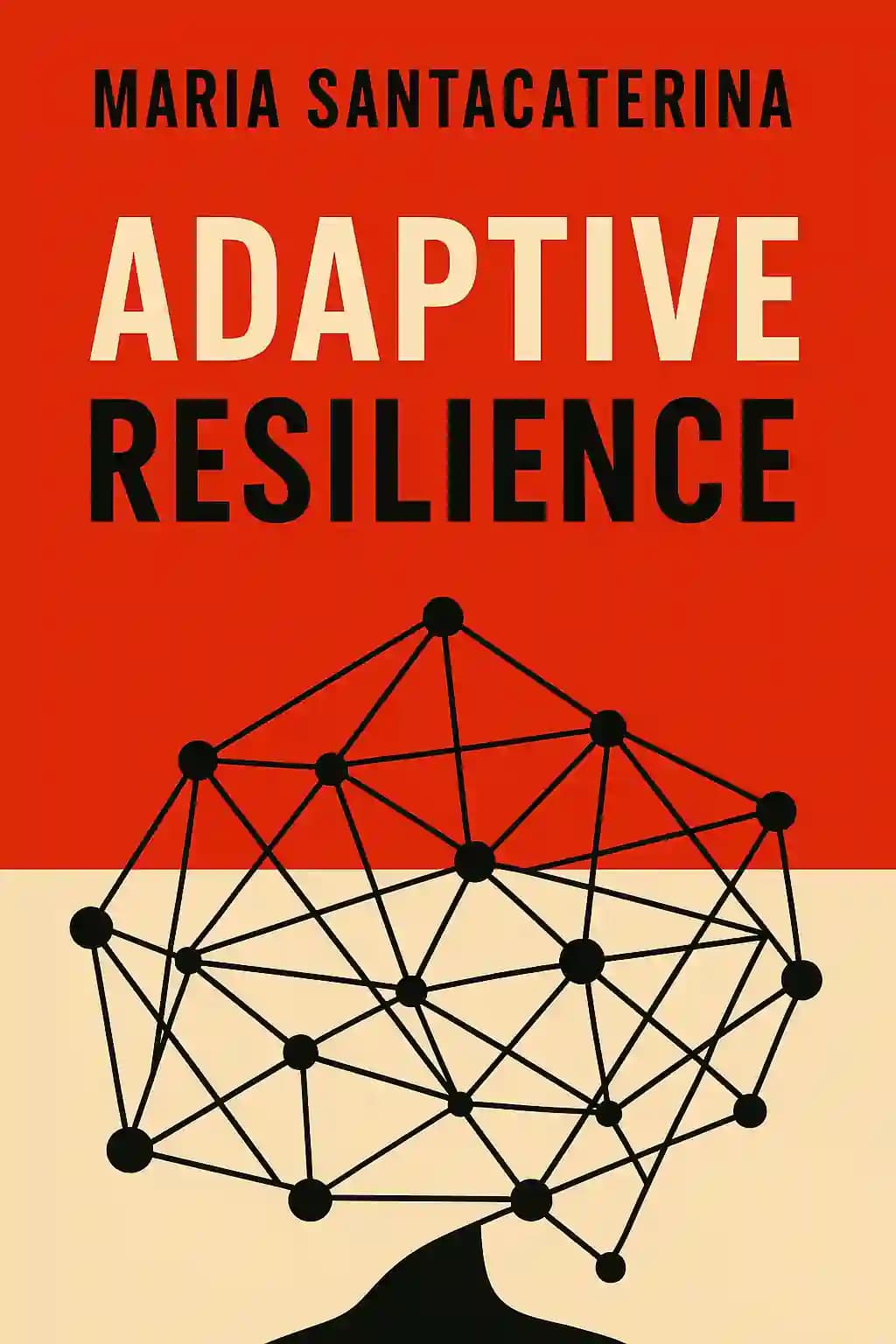
Adaptive Resilience
Überblick über Adaptive Resilience
In "Adaptive Resilience," Maria Santacaterina offers a transformative guide for thriving amid digital disruption. What if the key to future success lies in reframing our relationship with AI? Endorsed by global leaders, this book reveals how human values drive sustainable innovation in an increasingly automated world.
Kernthemen in Adaptive Resilience
- digital transformation strategy
- organizational agility
- human-centric technology
- ethical innovation
- data-driven decision-making
Zitate aus Adaptive Resilience
Evolve or become obsolete.
Technology is a tool, not a solution in itself.
Continuous learning and personal growth are non-negotiable.
Personen in Adaptive Resilience
- Maria SantacaterinaAuthor and developer of adaptive resilience
Zusammenfassung von Adaptive Resilience herunterladen
Erhalten Sie die Adaptive Resilience-Zusammenfassung als kostenloses PDF oder EPUB. Drucken Sie es aus oder lesen Sie es jederzeit offline.
FAQ zu diesem Buch
Adaptive Resilience provides a strategic roadmap for organizations to thrive in the digital era by balancing technological innovation with ethical, human-centric values. It advocates transforming businesses "from the inside-out and outside-in," combining interdisciplinary research, real-world case studies, and actionable frameworks to foster sustainable growth, equitable practices, and long-term resilience amid AI-driven disruption.
This book is essential for CEOs, board members, and senior executives navigating digital transformation. It’s particularly valuable for leaders seeking evidence-based strategies to integrate AI ethically, reimagine business models, and cultivate adaptive organizational cultures. Santacaterina’s insights also resonate with entrepreneurs and policymakers addressing global technological challenges.
Yes—ranked as a top leadership guide for its timely analysis of AI’s societal impacts and practical tools for building future-proof organizations. Reviewers praise its blend of visionary thinking and executable strategies, making it a critical resource for maintaining competitive advantage in volatile markets.
Adaptive resilience is the capacity to continuously evolve through uncertainty by aligning technological adoption with human values. Unlike traditional crisis management, it emphasizes proactive adaptation, ethical decision-making, and systemic innovation to create self-sustaining growth cycles.
Key frameworks include:
- Inside-out/outside-in transformation: Aligning internal culture with external stakeholder needs.
- Virtuous growth cycles: Linking profitability to societal value creation.
- Ethical AI integration: Guidelines for deploying automation without compromising human agency.
Santacaterina argues AI should augment—not replace—human creativity, emphasizing governance models that prioritize transparency and accountability. The book contrasts human pattern recognition with machine learning limitations, advocating for balanced human-AI collaboration in strategic decision-making.
Case studies span luxury industries, global tech firms, and multinational corporations, illustrating how adaptive resilience principles drive successful pivots during market shifts. Examples include cultural overhauls to accommodate AI adoption and sustainability-focused supply chain transformations.
It champions visionary governance—leadership that combines strategic foresight with operational agility. Santacaterina stresses the need for executives to master complexity, foster psychological safety, and make values-driven decisions in fast-changing environments.
The text prioritizes equity, sustainability, and stakeholder capitalism, urging leaders to:
- Audit algorithms for bias
- Align ESG goals with core operations
- Design technologies that enhance human dignity.
Unlike narrow tech-focused guides, Santacaterina’s work uniquely bridges organizational behavior, ethics, and AI strategy. It’s frequently compared to works by Amy Edmondson and Tim Brown for its systemic approach to innovation.
- Conduct a “resilience audit” to identify adaptability gaps.
- Establish cross-functional teams to drive cultural and technological alignment.
- Implement metrics tracking both financial performance and societal impact.
With AI adoption accelerating and global crises increasing volatility, the book’s focus on continuous adaptation offers a survival toolkit. Its interdisciplinary approach addresses gaps in conventional change management literature, making it indispensable for post-pandemic recovery strategies.




