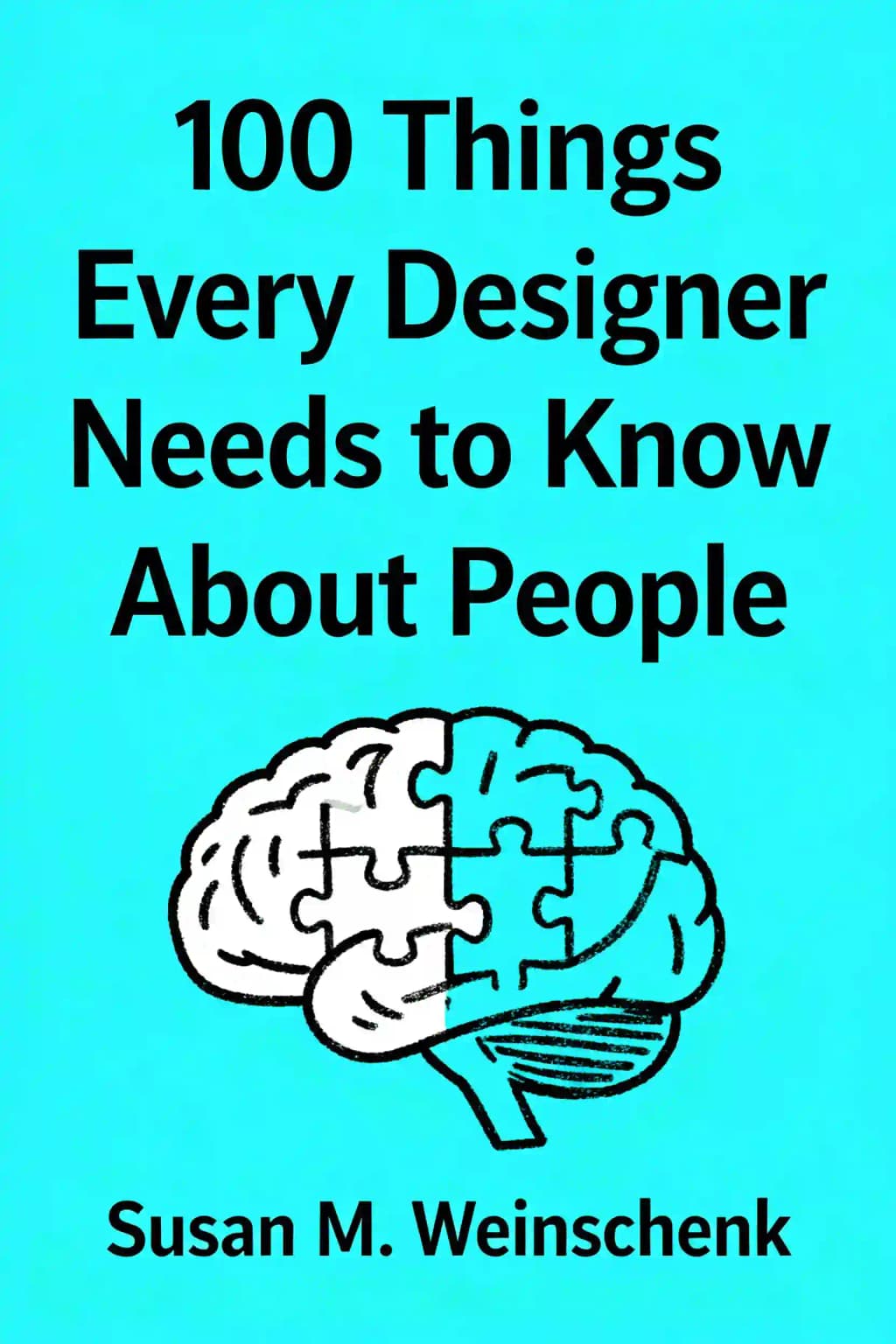
Decode the psychology behind every click, swipe, and interaction. This design bible - consistently ranked among top UX resources - distills cognitive research into 100 actionable insights. Why do Fortune 1000 companies consult its author? Because understanding how people think transforms good design into irresistible experiences.
Erlebe das Buch durch die Stimme des Autors
Verwandle Wissen in fesselnde, beispielreiche Erkenntnisse
Erfasse Schlüsselideen blitzschnell für effektives Lernen
Genieße das Buch auf unterhaltsame und ansprechende Weise
When you create an interface, you're not just arranging elements on a screen-you're providing raw materials that users' brains will actively interpret and sometimes misinterpret.
Zerlegen Sie die Kernideen von 100 Things Every Designer Needs to Know About People in leicht verständliche Punkte, um zu verstehen, wie innovative Teams kreieren, zusammenarbeiten und wachsen.
Destillieren Sie 100 Things Every Designer Needs to Know About People in schnelle Gedächtnisstützen, die die Schlüsselprinzipien von Offenheit, Teamarbeit und kreativer Resilienz hervorheben.

Erleben Sie 100 Things Every Designer Needs to Know About People durch lebhafte Erzählungen, die Innovationslektionen in unvergessliche und anwendbare Momente verwandeln.
Fragen Sie alles, wählen Sie die Stimme und erschaffen Sie gemeinsam Erkenntnisse, die wirklich bei Ihnen ankommen.

Von Columbia University Alumni in San Francisco entwickelt
"Instead of endless scrolling, I just hit play on BeFreed. It saves me so much time."
"I never knew where to start with nonfiction—BeFreed’s book lists turned into podcasts gave me a clear path."
"Perfect balance between learning and entertainment. Finished ‘Thinking, Fast and Slow’ on my commute this week."
"Crazy how much I learned while walking the dog. BeFreed = small habits → big gains."
"Reading used to feel like a chore. Now it’s just part of my lifestyle."
"Feels effortless compared to reading. I’ve finished 6 books this month already."
"BeFreed turned my guilty doomscrolling into something that feels productive and inspiring."
"BeFreed turned my commute into learning time. 20-min podcasts are perfect for finishing books I never had time for."
"BeFreed replaced my podcast queue. Imagine Spotify for books — that’s it. 🙌"
"It is great for me to learn something from the book without reading it."
"The themed book list podcasts help me connect ideas across authors—like a guided audio journey."
"Makes me feel smarter every time before going to work"
Von Columbia University Alumni in San Francisco entwickelt

Erhalten Sie die 100 Things Every Designer Needs to Know About People-Zusammenfassung als kostenloses PDF oder EPUB. Drucken Sie es aus oder lesen Sie es jederzeit offline.
The digital experiences we encounter daily - from apps to websites - aren't just about aesthetics or functionality. They're psychological interfaces designed to work with (or against) the natural tendencies of our minds. Susan Weinschenk's groundbreaking work reveals that successful design isn't about what looks good, but what feels intuitive to our brains. Our minds didn't evolve for digital interfaces; they evolved for survival in natural environments. Yet understanding these evolutionary patterns helps explain why certain designs captivate us while others frustrate us to the point of abandonment. When you tap an app icon expecting an immediate response but encounter a delay, the disappointment you feel isn't just impatience - it's a neurological reaction. Your brain predicted a specific outcome and received something different, triggering a cascade of negative emotions. This gap between expectation and reality lies at the heart of user experience. The most successful designs aren't necessarily the most beautiful or feature-rich - they're the ones that align seamlessly with our psychological wiring.