
Buch
The Let Them Theory
Mel Robbins
Empower yourself by letting go of what you can't control and focusing on your own happiness and growth.

00:00
00:00
Discover 5 must-read motivational books for personal growth in 2026. Actionable strategies from Atomic Habits, Think Again, Can't Hurt Me, and more.
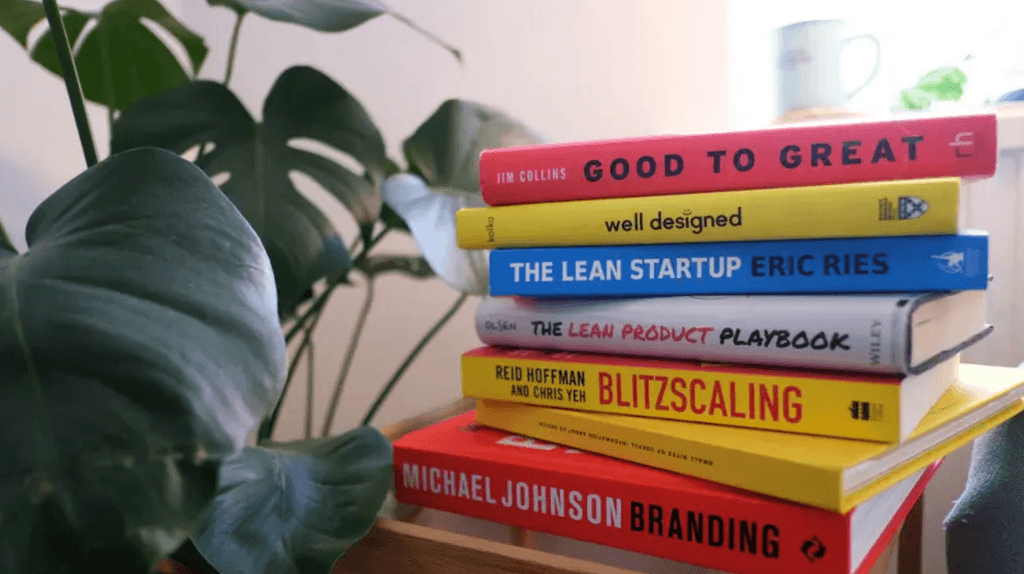
The personal development market is projected to reach $54.09 billion in 2026, and for good reason—more people than ever are investing in their own growth. But with thousands of self-help titles published each year, finding the ones that actually deliver results can feel like searching for a needle in a haystack.
We picked five books that stand out for their practical advice, research-backed insights, and real-world impact. These aren't feel-good platitudes—they're actionable frameworks you can apply starting today.
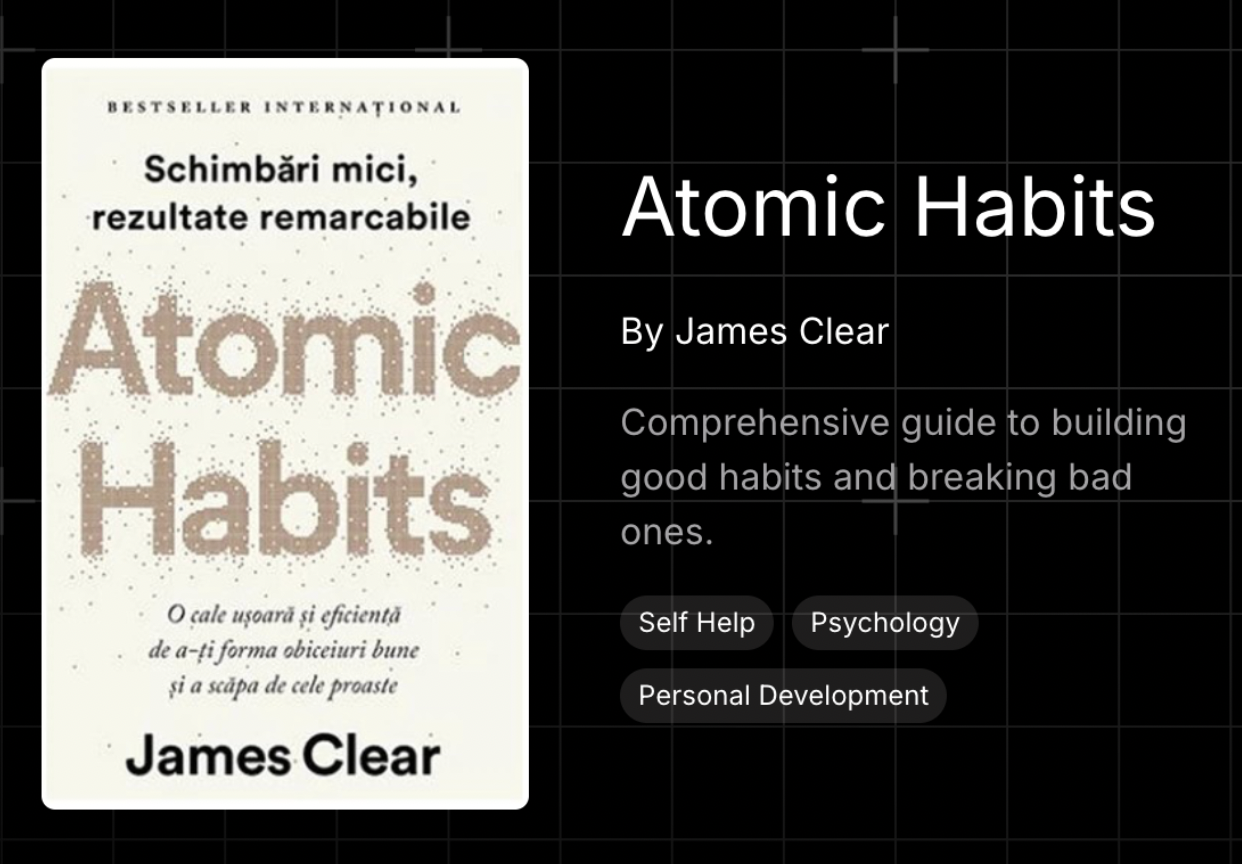
"Atomic Habits" remains the gold standard for habit-building books because it replaces willpower with systems. James Clear's core argument: you don't rise to the level of your goals—you fall to the level of your systems. That reframe alone changes how you approach personal growth.
The book breaks habit formation into four laws: make it obvious, make it attractive, make it easy, and make it satisfying. Each law comes with specific tactics you can implement immediately.
"The purpose of setting goals is to win the game. The purpose of building systems is to continue playing the game."
Start with a two-minute version of any habit you want to build. Want to read more? Read one page before bed. Want to exercise? Put on your running shoes and step outside. The friction-reducing approach works because it removes the mental barrier of "getting started."
Pair this with environment design. Place your book on your pillow. Put your gym bag by the door. When your environment supports your habits, discipline becomes optional.
Listen to the Atomic Habits summary on BeFreed to get the key frameworks in 15 minutes.
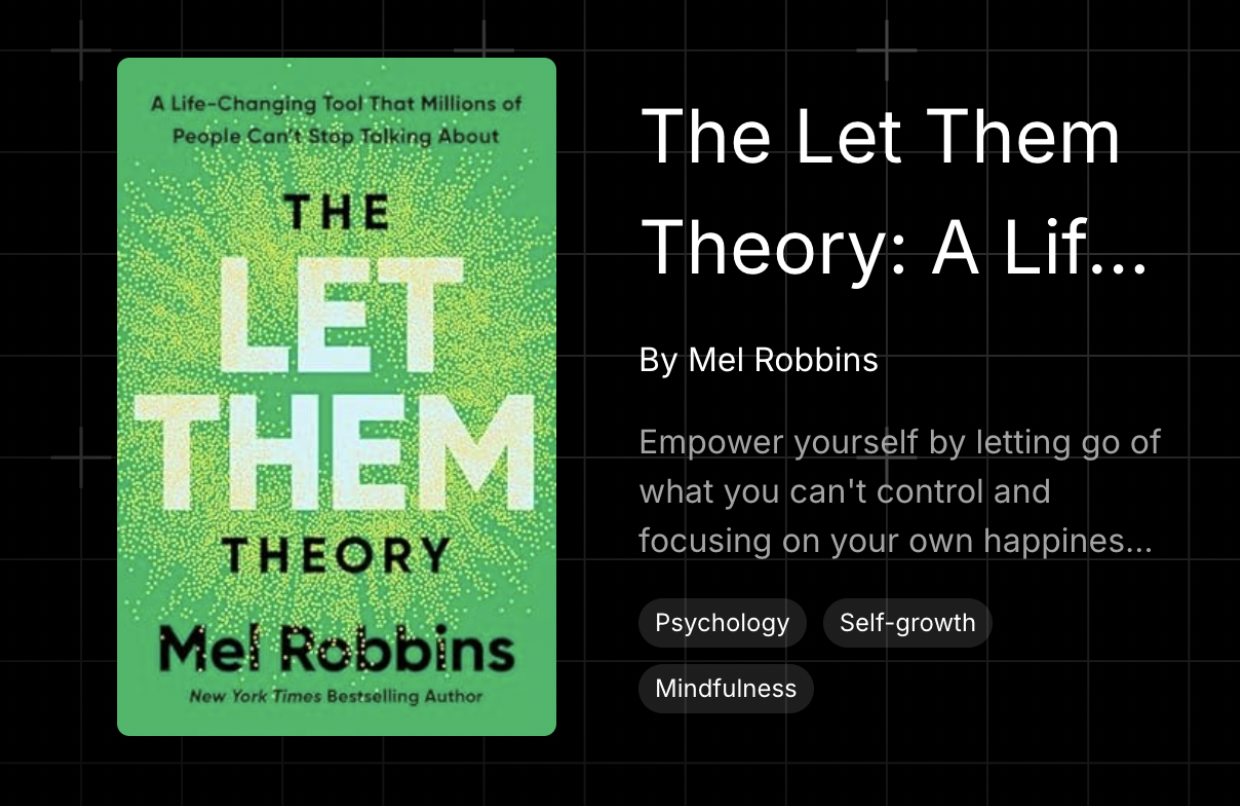
"The Let Them Theory" tackles one of the biggest energy drains in modern life: trying to control how other people think, feel, and behave. Mel Robbins draws from Stoicism and Buddhism to build a simple framework—when someone does something that frustrates you, say "Let them" and redirect your energy to what you can actually control.
Empower yourself by letting go of what you can't control and focusing on your own happiness and growth.
This isn't about being passive. It's about being strategic with your emotional energy. Every minute you spend trying to change someone else's behavior is a minute stolen from your own growth.
Next time a coworker's behavior frustrates you, pause and say "Let them." Then ask yourself: "What can I do right now that moves my own life forward?" This redirect takes practice, but it frees up enormous mental bandwidth.
The book is especially useful for people-pleasers and over-thinkers who burn energy trying to manage others' perceptions. Hear the key ideas on BeFreed.
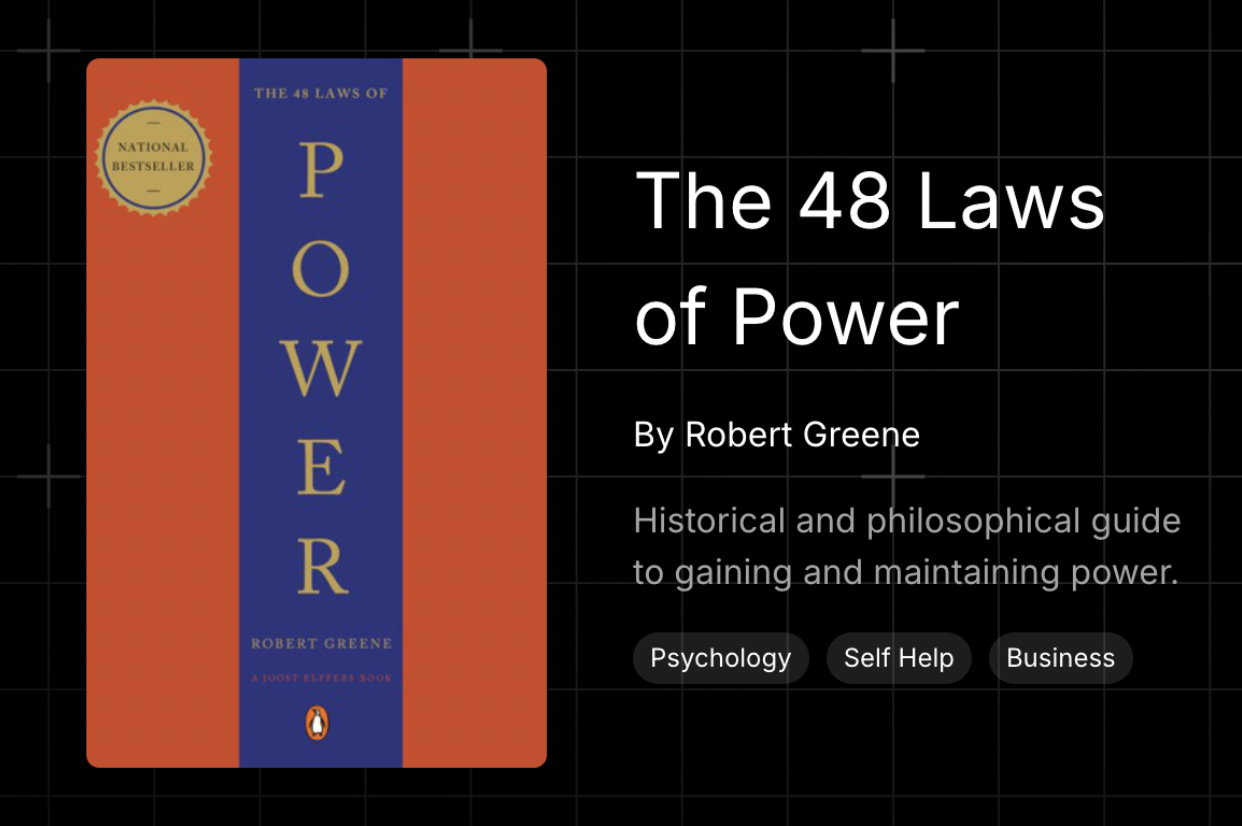
"The 48 Laws of Power" is not a playbook for manipulation—it's a field guide for understanding how influence works. Robert Greene draws from centuries of history, philosophy, and psychology to map the patterns behind power dynamics in every human relationship.

Historical and philosophical guide to gaining and maintaining power.
In 2026, where remote work, social media, and decentralized teams add complexity to every professional interaction, understanding these dynamics matters more than ever. The book helps you recognize when others are using influence tactics on you, and gives you frameworks to lead with clarity.
Pick one law that addresses your current challenge. If you tend to over-explain your decisions, practice Law 9—let your results speak. If you struggle with long-term planning, use Law 29 to map out your goals three steps ahead.
The book works best when you treat it as a reference rather than reading cover to cover. Explore the summary on BeFreed to find the laws most relevant to your situation.
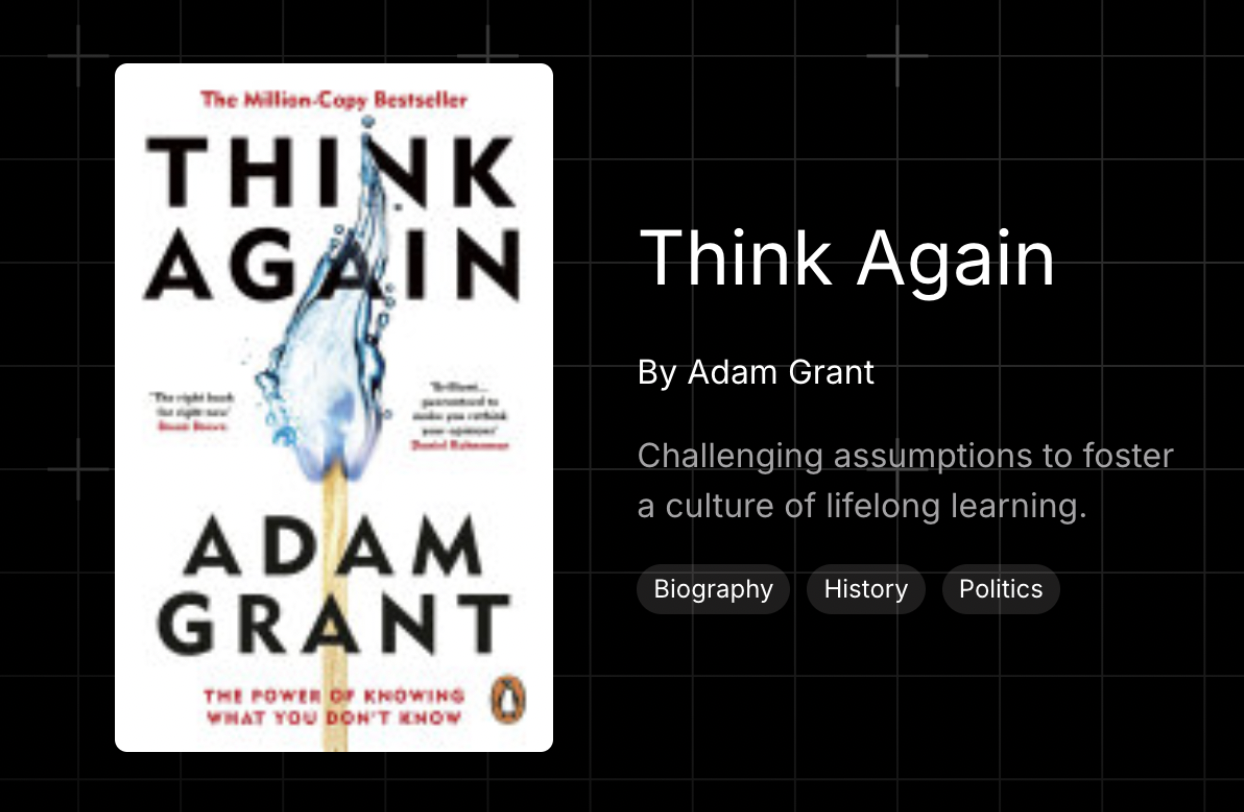
"Think Again" argues that the most important skill in a rapidly changing world isn't what you know—it's how quickly you can update what you know. Adam Grant, organizational psychologist at Wharton, makes a research-backed case for intellectual humility: the willingness to admit you're wrong and change course.

Challenging assumptions to foster a culture of lifelong learning.
In 2026, where industries shift overnight and yesterday's best practices become today's outdated assumptions, this skill separates people who adapt from people who get left behind.
Start with one belief you hold strongly and ask: "What evidence would change my mind?" If you can't answer that question, you're holding a belief, not a conclusion.
In meetings, practice saying "I might be wrong about this, but..." more often. Grant's research shows that leaders who express uncertainty actually gain more trust and respect from their teams.
Get the full framework on BeFreed—the summary distills Grant's research into actionable strategies you can apply this week.
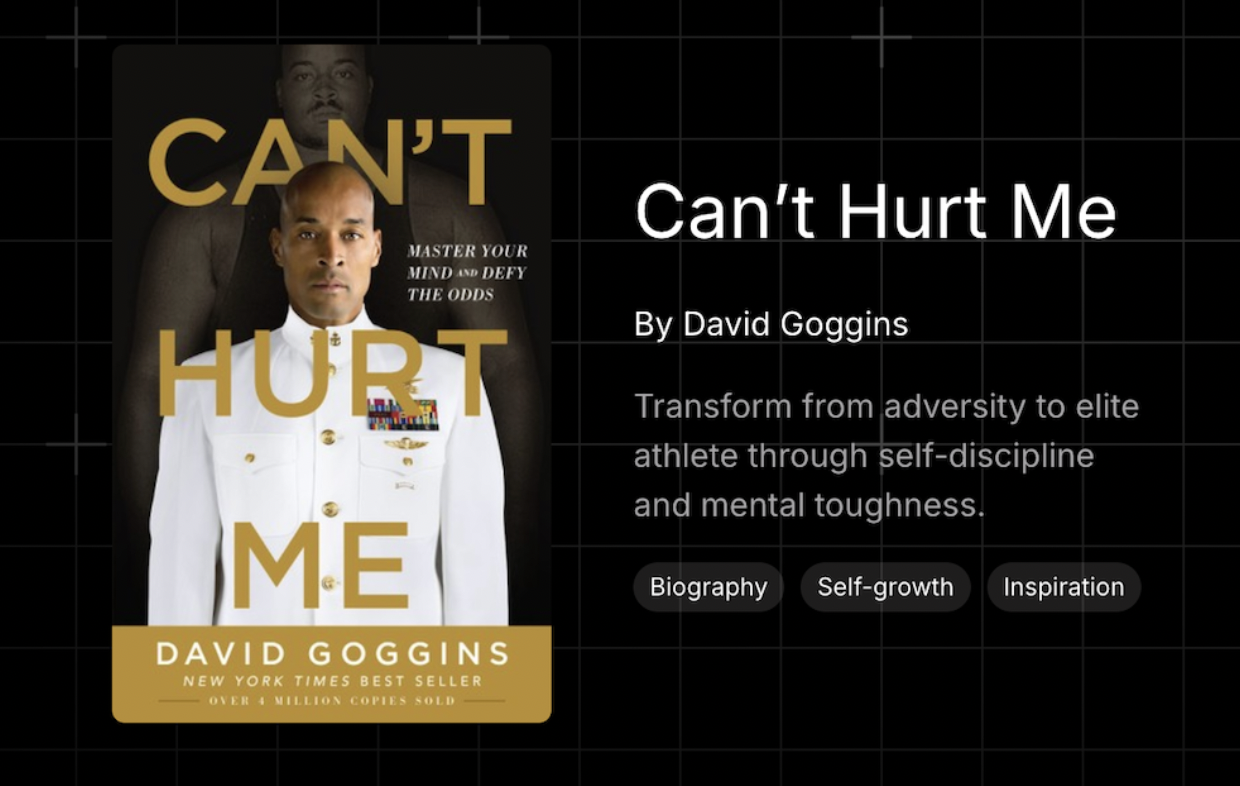
"Can't Hurt Me" is the opposite of gentle self-help. David Goggins—former Navy SEAL, ultramarathon runner, and world record holder for pull-ups—shares his journey from an abusive childhood and obesity to becoming one of the mentally toughest people alive. His core message: most people operate at a fraction of their capacity, and the only way to unlock the rest is through deliberate discomfort.
This book resonates in 2026 because comfort has never been more accessible—and that's exactly the problem. When everything is optimized for ease, the ability to do hard things becomes a genuine competitive advantage.
Pick one uncomfortable task you've been avoiding and do it today. Not tomorrow, not next week—today. It could be a hard conversation, a challenging workout, or a project you've been procrastinating on.
Then use Goggins' technique of reflecting on past victories. Keep a list of hard things you've accomplished. When self-doubt creeps in, review that list as evidence that you can handle what's ahead.
Listen to the Can't Hurt Me summary on BeFreed for the key principles in audio format—perfect for a workout or commute.
Each book serves a different purpose. Here's a quick guide:
You don't have to read all five cover to cover. Use BeFreed AI to listen to podcast-style summaries of each book in 10-40 minutes. Get the core ideas, decide which resonates most, then go deeper on the ones that match your current goals.
The best time to start your growth journey is now. Pick one book, apply one idea today, and let the momentum build from there.

The 10 Best Self Help Books to Read in 2025
Unlock your leadership potential in 2025 with these 10 must-read books—essential insights for modern leaders to grow, inspire, and lead with impact.
BeFreed Team

Best Books on Building Habits in 2026
Discover the 7 best books on building habits in 2026, from Atomic Habits to Tiny Habits. Find the right habit book for your goals with our expert guide.
BeFreed Team

Top Negotiation Tips from Must-Read Books in 2026
Maximize your time and focus with the top productivity books of 2026—smart strategies to work better, stress less, and achieve more.
BeFreed Team

Top Resilience Books of 2026 for Mental Health
Discover the top resilience books of 2026 to strengthen your mindset, overcome challenges, and empower your mental health journey.
BeFreed Team

Success Blueprint for Entrepreneurs Inspired by Elon Musk
Explore the books that every ambitious entrepreneur needs on their shelf. Learn to think big, decide smart, and build greatness.
BeFreed Team

Books Recommended by Ali Abdul
Level up your mindset, habits, and business with this reading list of top book recommendations by Ali Abdaal—practical, deep, and life-changing.
BeFreed Team

How to be a better me
Personal growth requires more than motivation—it demands a structured approach to transformation. This learning plan provides practical frameworks for anyone seeking meaningful change through self-awareness, habit formation, emotional intelligence, and purpose-driven living.

Read books on self-growth, finance & business
This comprehensive plan bridges the gap between personal development and professional excellence. It is designed for aspiring entrepreneurs and professionals who want to master their mindset, money, and management skills simultaneously.