
Book
Helgoland
Carlo Rovelli
A poetic exploration of quantum mechanics, challenging our perceptions of reality through physics and philosophy.
Discover the basics of quantum mechanics — superposition, entanglement, and the uncertainty principle — explained simply for beginners with top book picks.
Physics and quantum mechanics are the branches of science that explain how the universe operates, from the largest galaxies to the smallest subatomic particles. While classical physics describes the macroscopic world we can see and touch, quantum mechanics focuses on the microscopic realm of atoms, electrons, and photons. At this subatomic level, the traditional rules of reality break down, replaced by a system where particles can exist in multiple places at once and communicate instantly across vast distances.
Exploring these concepts can feel overwhelming, especially if you want to avoid heavy math. BeFreed offers AI-generated summaries of top science books, helping you grasp complex physics and quantum mechanics topics through bite-sized insights without committing to dense textbooks.
Quantum mechanics is the fundamental theory in physics that describes the physical properties of nature at the scale of atoms and subatomic particles. It matters because it provides the foundation for our understanding of the universe's building blocks.
Without quantum mechanics, we would not understand how atoms bond to form molecules or how light interacts with matter. This field of study was developed in the early 20th century when scientists realized that the existing laws of physics could not explain the behavior of microscopic particles. For a deep look into the origins of these ideas, Carlo Rovelli's Helgoland provides a brilliant historical and scientific perspective on the birth of quantum theory.
A poetic exploration of quantum mechanics, challenging our perceptions of reality through physics and philosophy.
Classical physics, shaped by Isaac Newton, relies on predictability. If you throw a baseball, classical physics allows you to calculate exactly where it will land based on its speed and trajectory.
Quantum mechanics operates on probability rather than certainty. At the subatomic level, you cannot predict the exact path of an electron. Instead, you can only calculate the likelihood of finding it in a specific location.
Superposition is the principle that a quantum particle can exist in a combination of all its possible states simultaneously until it is measured or observed.
Imagine spinning a coin on a table. While it spins, it appears as a blur, acting as both heads and tails at the same time. It only becomes definitively heads or tails when you slap your hand down to stop it. Subatomic particles behave similarly. They remain in a blur of multiple possibilities until an observer or a measuring device forces them to pick a single state. Books like Gary Zukav's The Dancing Wu Li Masters excel at explaining these mind-bending concepts using accessible language instead of complex equations.
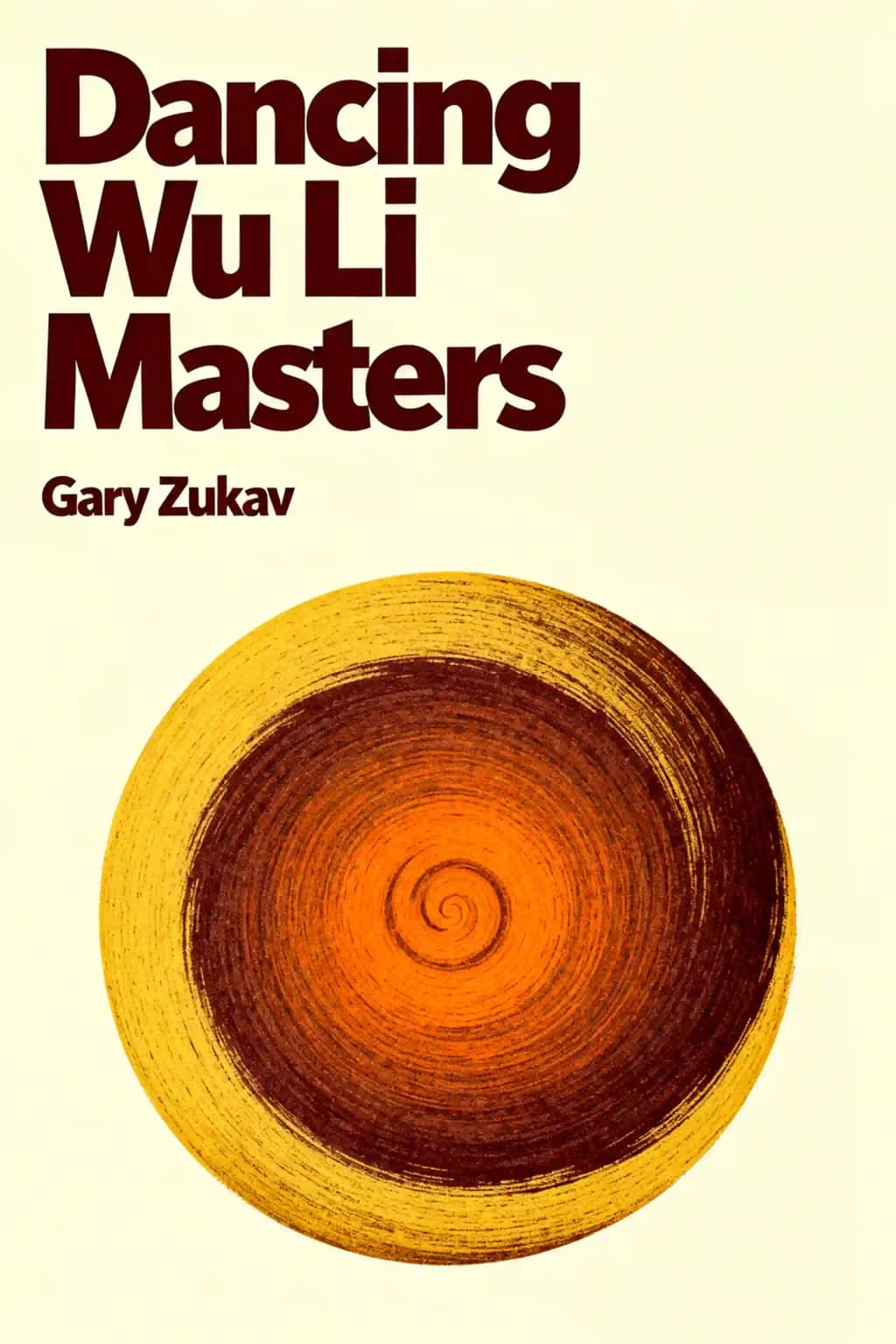
Physics and spirituality dance together in quantum's mystical revolution
To illustrate the strangeness of superposition, physicist Erwin Schrödinger proposed a famous thought experiment. Imagine a cat inside a sealed box with a radioactive atom, a Geiger counter, and a vial of poison. If the atom decays, the poison is released. If it does not decay, the cat is safe.
Because the atom's decay is a quantum event, it exists in a superposition of both decayed and not decayed. According to quantum theory, until you open the box to look, the cat is simultaneously alive and dead. This analogy highlights how bizarre quantum rules seem when applied to everyday objects.
Quantum entanglement is a phenomenon where two or more particles become linked, meaning the state of one instantly influences the state of the other, regardless of the distance between them.
If you measure the spin of one entangled electron and find it pointing up, its partner will instantly point down, even if it is on the other side of the galaxy. Albert Einstein famously doubted this concept, calling it "spooky action at a distance." However, modern science has proven him wrong. In fact, the Nobel Prize in Physics 2022 was awarded to a team of scientists for their successful experiments with entangled photons.
Entanglement is not just a theoretical curiosity. It is the driving force behind the next generation of secure communications. Because observing an entangled particle changes its state, any attempt to intercept a quantum message would immediately alter the data, alerting the sender to the breach.
The uncertainty principle states that you cannot simultaneously know both the exact position and the exact momentum of a quantum particle.
Formulated by Werner Heisenberg, this principle shows that the very act of measuring a particle alters its state. If you use light to measure an electron's position, the energy from the light bumps the electron, changing its speed. If you measure its speed accurately, you lose information about its position. For readers curious about how these limits of computation and measurement tie into human consciousness, Roger Penrose explores this intersection in The Emperor's New Mind.

A thought-provoking exploration of consciousness, quantum mechanics, and artificial intelligence that challenges conventional views on human cognition and computing.
Wave-particle duality is the concept that every elementary particle exhibits the properties of both particles and waves.
For centuries, scientists debated whether light was made of tiny physical particles or continuous waves of energy. Quantum mechanics reveals that it is both. In the famous double-slit experiment, firing individual photons at a barrier with two slits creates a wave-like interference pattern on the wall behind it. However, if you place a detector at the slits to see which one the photon passes through, it acts strictly like a particle, and the wave pattern disappears. Fritjof Capra's The Tao of Physics draws fascinating parallels between this dual nature of reality and Eastern philosophical traditions.

Bridging modern physics and Eastern mysticism, exploring universal interconnectedness.
Quantum mechanics matters because it is the foundational science behind modern technologies like smartphones, MRI machines, and lasers.
Without an understanding of how electrons move through different materials, we could not have built the transistors that power every modern computer. The microchips in your devices rely entirely on quantum principles to function.
While classical computers process data in bits (0s and 1s), quantum computers use qubits, which leverage superposition to be 0 and 1 simultaneously. This allows them to solve complex problems millions of times faster than traditional computers.
This technological leap is highly lucrative. According to McKinsey, the quantum computing market is projected to reach $65 billion by 2030. Michio Kaku outlines the massive potential of this industry in Quantum Supremacy, detailing how quantum machines will revolutionize medicine, cryptography, and artificial intelligence.
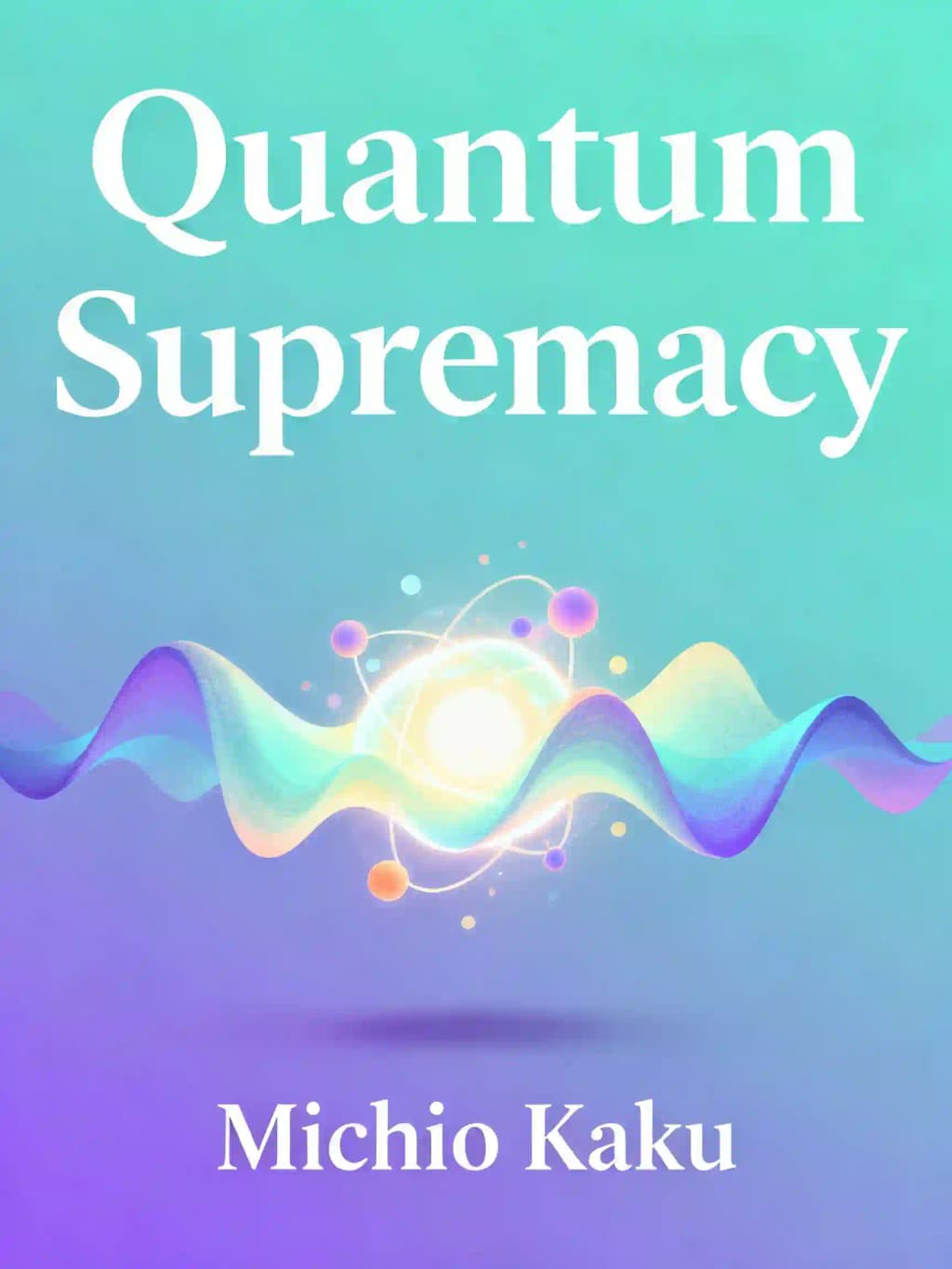
Explore the revolutionary potential of quantum computing to solve humanity's greatest challenges and reshape our technological future.
Many beginners worry that they need an advanced math degree to understand physics and quantum mechanics. Fortunately, several excellent books break down these concepts for non-technical readers.
As mentioned throughout this guide, Carlo Rovelli's Helgoland is perfect for understanding the history of quantum theory. Gary Zukav's The Dancing Wu Li Masters and Fritjof Capra's The Tao of Physics offer accessible, philosophical approaches to the subject. For a look at the future of quantum technology, Michio Kaku's Quantum Supremacy is essential reading, while Roger Penrose's The Emperor's New Mind challenges readers to think about the limits of artificial intelligence through a quantum lens.
Diving into quantum mechanics books can be a significant time commitment. BeFreed makes it easier to explore these fascinating topics. Our platform offers high-quality, AI-generated summaries of top science and physics books.
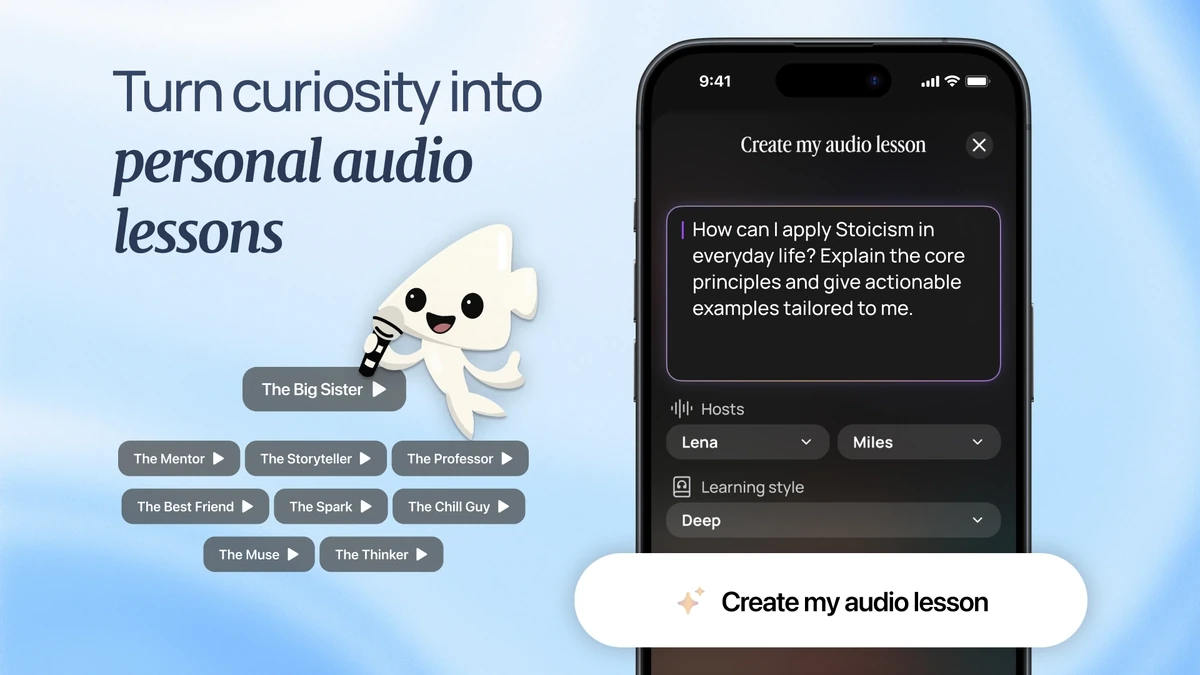
With BeFreed, you can quickly absorb the core ideas of wave-particle duality, entanglement, and quantum computing without getting bogged down in academic jargon. It is the perfect tool for curious minds who want to expand their scientific knowledge efficiently.
Physics and quantum mechanics reveal a universe that is far stranger and more connected than our everyday experiences suggest. From particles existing in multiple states to instantaneous connections across space, the subatomic world defies common sense. Yet, these principles are not just abstract ideas — they are the engines driving the technology of the future.

quantum physics for dummies
This learning plan demystifies the most complex field of science for curious beginners and tech enthusiasts. It bridges the gap between abstract theory and real-world technology, making it essential for anyone looking to understand the future of computing and the fundamental nature of the universe.

Quantum Secrets for the Curious Teen
This plan is designed for students and science enthusiasts who want to demystify the complex laws of the subatomic world. It provides a structured path from basic quantum mechanics to the frontiers of theoretical physics, making it ideal for those considering a future in STEM.

The Quantum Reality Paradox
This plan is essential for anyone seeking to bridge the gap between classical intuition and the counterintuitive truths of modern physics. It is designed for curious minds and science enthusiasts who want to grasp the profound philosophical and physical implications of quantum mechanics.

From Clockwork to Quanta
This learning plan provides a vital bridge between the intuitive laws of Newton and the complex, counter-intuitive reality of modern physics. It is ideal for science enthusiasts and students seeking to understand how the collapse of classical certainty birthed the quantum revolution.

The Unified Physics Masterclass
This masterclass is essential for anyone seeking a rigorous, top-down understanding of the laws governing our universe. It bridges the gap between classical mechanics and modern quantum gravity, making it ideal for aspiring physicists, engineers, or science enthusiasts.

Learn basic physics using created content
This learning plan provides a structured path from classical mechanics to the frontiers of modern science. It is ideal for curious minds and students looking to build a solid foundation in how the universe functions at every scale.

Learn physics
This learning plan provides a structured journey from classical foundations to the cutting edge of modern theory. It is ideal for curious minds and students seeking to understand the fundamental laws that govern our universe from the subatomic to the cosmic scale.

The Geometry of Existence
This curriculum is essential for students and enthusiasts seeking to understand the mathematical elegance underlying the physical universe. It provides a high-level synthesis of classical mechanics, quantum theory, and relativity, making it ideal for those with a foundation in physics who want to see the 'big picture' of cosmic design.