Why emergency lights are red and blue
White headlights used to blend in, making emergencies hard to spot. Learn how wavelength science and daytime contrast created the dual-color standard.
Why emergency lights are red and blue最佳语录
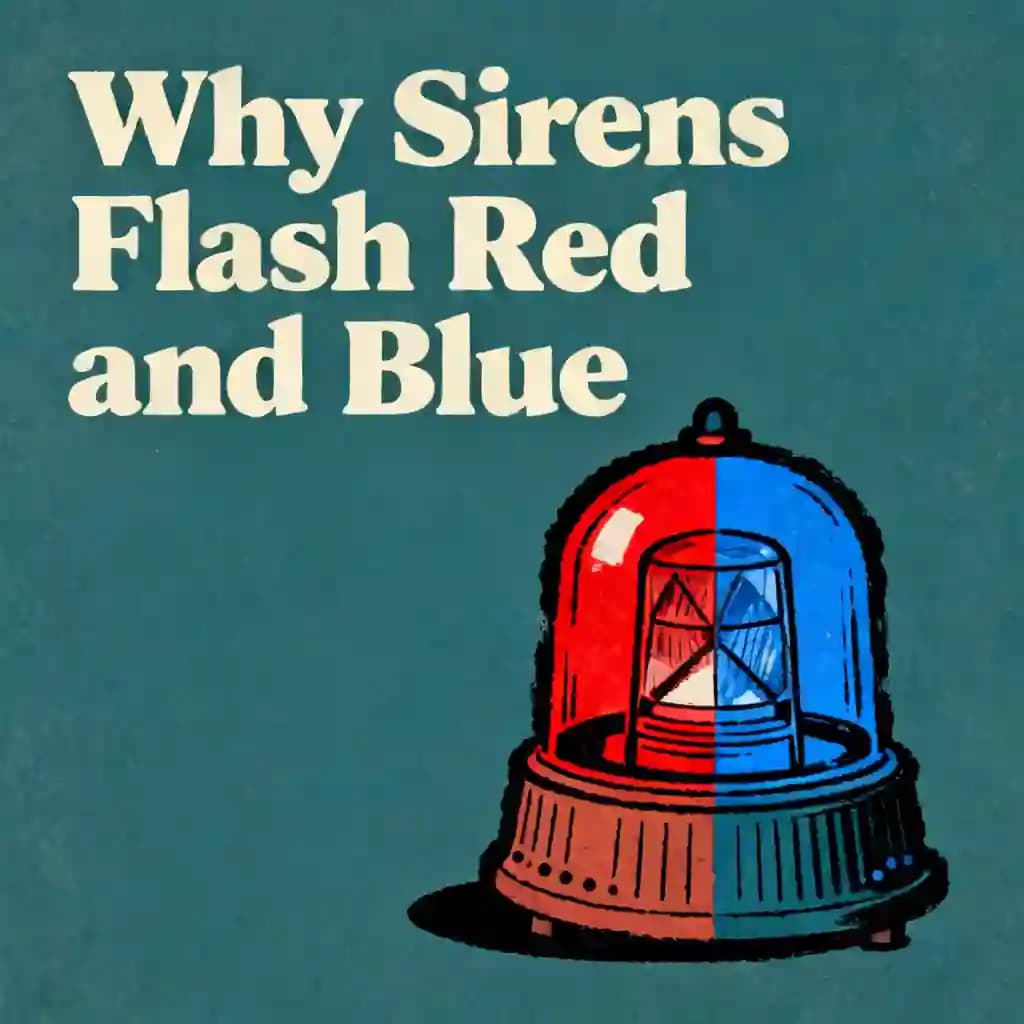
Red handles the long-range night shift, and blue handles the high-contrast day shift. It’s a masterclass in human factors engineering where the colors create a visual disruption that doesn't exist anywhere else in nature.
Generated by Jacob
How did emergency personnel determine to use red and blue lights

常见问题
Before the 1950s, police cars primarily used white lights, which were often indistinguishable from standard headlights. The shift to red and blue was a calculated safety move to improve visibility and distinctiveness. Red was chosen because it was already a cultural shorthand for "danger" or "stop," while blue was added later to provide contrast against urban clutter and improve visibility during the day.
Red light has a long wavelength that does not scatter easily, allowing it to pierce through fog, rain, and smoke more effectively than other colors. Blue light has a shorter wavelength that scatters more, making it highly noticeable against sunlit environments during the day. Additionally, the human eye undergoes the Purkinje effect at night, shifting sensitivity toward the blue end of the spectrum, which makes blue lights appear more "piercing" or bright in the dark.
Modern LED technology allows agencies to program specific flash patterns to communicate different levels of urgency. Rapid-fire strobes are used during pursuits or when rushing to a call to clear traffic quickly, as they are "perceptually salient" and grab attention fast. Conversely, once a vehicle is stationary, it may switch to a slower, pulsing "scene lighting" pattern to reduce disability glare and prevent disorienting other drivers.
There is no single federal mandate in the United States; instead, emergency light colors are governed by a patchwork of state and local laws. While red and blue is the most common combination for law enforcement, some states reserve blue exclusively for police, while others allow volunteer responders to use single blue or green "courtesy lights." Internationally, many European countries use blue-only signals, a tradition rooted in World War II blackout measures.
Takedown lights are powerful, forward-facing white beams used to illuminate the interior of a stopped vehicle at night, providing safety for the officer by obscuring the driver's view of their approach. Alley lights are located on the sides of the light bar and are used to illuminate sidewalks, house numbers, or dark passages during patrols. These lights function as high-powered, vehicle-mounted flashlights rather than warning signals.
"Instead of endless scrolling, I just hit play on BeFreed. It saves me so much time."


"I never knew where to start with nonfiction—BeFreed’s book lists turned into podcasts gave me a clear path."


"Perfect balance between learning and entertainment. Finished ‘Thinking, Fast and Slow’ on my commute this week."
"Crazy how much I learned while walking the dog. BeFreed = small habits → big gains."
"Reading used to feel like a chore. Now it’s just part of my lifestyle."

"Feels effortless compared to reading. I’ve finished 6 books this month already."
"BeFreed turned my guilty doomscrolling into something that feels productive and inspiring."

"BeFreed turned my commute into learning time. 20-min podcasts are perfect for finishing books I never had time for."
"BeFreed replaced my podcast queue. Imagine Spotify for books — that’s it. 🙌"

"It is great for me to learn something from the book without reading it."
"The themed book list podcasts help me connect ideas across authors—like a guided audio journey."
"Makes me feel smarter every time before going to work"
"Instead of endless scrolling, I just hit play on BeFreed. It saves me so much time."
"I never knew where to start with nonfiction—BeFreed’s book lists turned into podcasts gave me a clear path."
"Perfect balance between learning and entertainment. Finished ‘Thinking, Fast and Slow’ on my commute this week."
"Crazy how much I learned while walking the dog. BeFreed = small habits → big gains."
"Reading used to feel like a chore. Now it’s just part of my lifestyle."
"Feels effortless compared to reading. I’ve finished 6 books this month already."
"BeFreed turned my guilty doomscrolling into something that feels productive and inspiring."
"BeFreed turned my commute into learning time. 20-min podcasts are perfect for finishing books I never had time for."
"BeFreed replaced my podcast queue. Imagine Spotify for books — that’s it. 🙌"
"It is great for me to learn something from the book without reading it."
"The themed book list podcasts help me connect ideas across authors—like a guided audio journey."
"Makes me feel smarter every time before going to work"
"Instead of endless scrolling, I just hit play on BeFreed. It saves me so much time."
"I never knew where to start with nonfiction—BeFreed’s book lists turned into podcasts gave me a clear path."
"Perfect balance between learning and entertainment. Finished ‘Thinking, Fast and Slow’ on my commute this week."
"Crazy how much I learned while walking the dog. BeFreed = small habits → big gains."
"Reading used to feel like a chore. Now it’s just part of my lifestyle."
"Feels effortless compared to reading. I’ve finished 6 books this month already."
"BeFreed turned my guilty doomscrolling into something that feels productive and inspiring."
"BeFreed turned my commute into learning time. 20-min podcasts are perfect for finishing books I never had time for."
"BeFreed replaced my podcast queue. Imagine Spotify for books — that’s it. 🙌"
"It is great for me to learn something from the book without reading it."
"The themed book list podcasts help me connect ideas across authors—like a guided audio journey."
"Makes me feel smarter every time before going to work"
"Instead of endless scrolling, I just hit play on BeFreed. It saves me so much time."
"I never knew where to start with nonfiction—BeFreed’s book lists turned into podcasts gave me a clear path."
"Perfect balance between learning and entertainment. Finished ‘Thinking, Fast and Slow’ on my commute this week."
"Crazy how much I learned while walking the dog. BeFreed = small habits → big gains."
"Reading used to feel like a chore. Now it’s just part of my lifestyle."
"Feels effortless compared to reading. I’ve finished 6 books this month already."
"BeFreed turned my guilty doomscrolling into something that feels productive and inspiring."
"BeFreed turned my commute into learning time. 20-min podcasts are perfect for finishing books I never had time for."
"BeFreed replaced my podcast queue. Imagine Spotify for books — that’s it. 🙌"
"It is great for me to learn something from the book without reading it."
"The themed book list podcasts help me connect ideas across authors—like a guided audio journey."
"Makes me feel smarter every time before going to work"