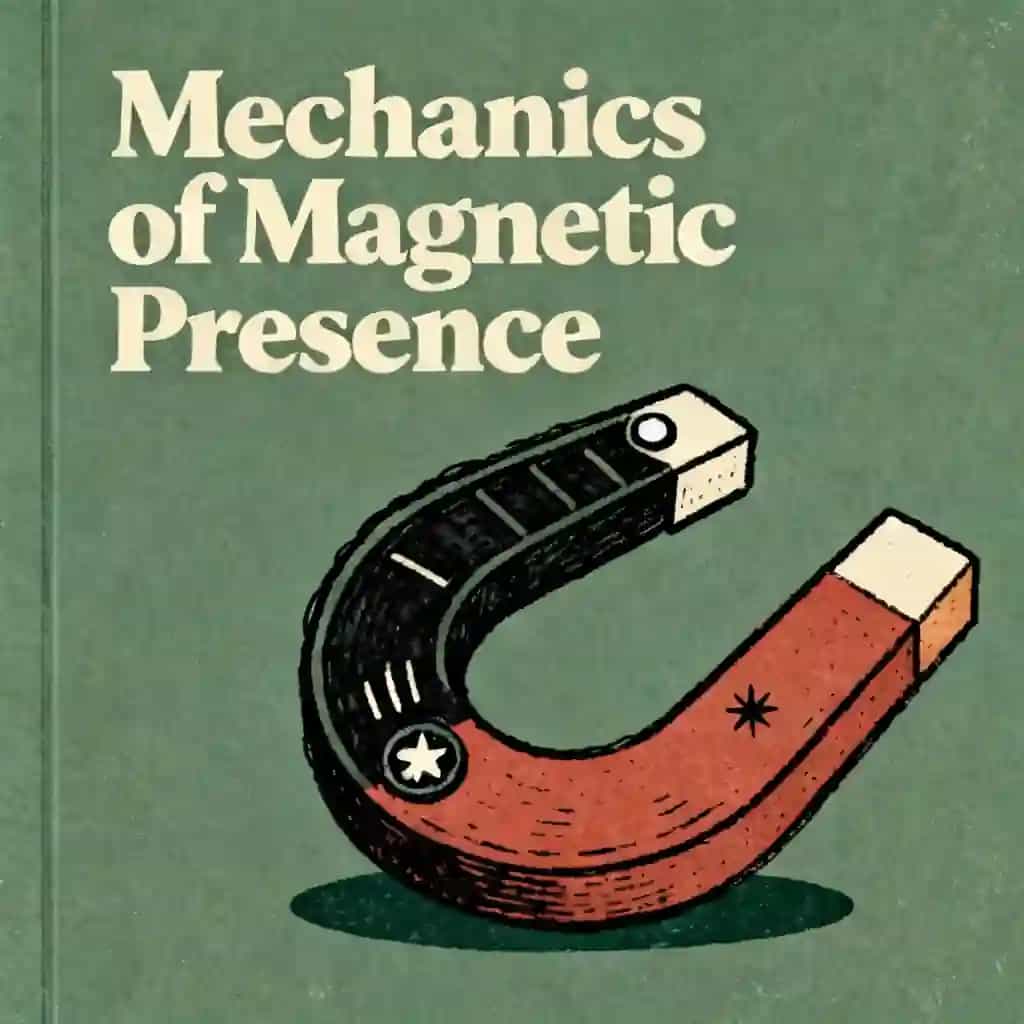
The Mechanics of Magnetic Presence
Unlock the science of charisma by mastering body language, stillness, and purposeful movement. Learn how to command any room using the powerful equation of status, warmth, and presence.

The Mechanics of Magnetic Presence最佳语录
Real magnetic presence comes from stillness and purposeful movement, not performance. It is the ability to remain centered and grounded regardless of what is happening around you.
Generated by T
Charisma that works on anyone. Moving with purpose, body control and body language control

常见问题
The script defines magnetic presence as a learnable equation consisting of Status, Warmth, and Presence. Status is conveyed through "Power Postures" and expansive movements that signal confidence and competence. Warmth is the "emotional gateway" to trust, established through genuine smiles, approachable energy, and mirroring. Presence is the "glue" that holds the other two together; it is the practice of being fully engaged in the moment so that your internal state matches your external signals, preventing you from appearing inauthentic or like you are "trying too hard."
According to research cited in the script, holding an expansive "power pose" for just two minutes can significantly shift your hormones. This practice can lead to a twenty percent increase in testosterone, which is associated with dominance and confidence, and a twenty-five percent drop in cortisol, the body's primary stress hormone. To translate this into a social setting without looking aggressive, the script suggests "High Impact Alignment": imagining a string pulling the top of your head toward the ceiling, keeping your chest open to avoid "turtling," and maintaining a stable base with your feet shoulder-width apart.
The "60/70 Rule" suggests that the "sweet spot" for building rapport is maintaining eye contact for about sixty to seventy percent of a conversation. Maintaining eye contact one hundred percent of the time can be perceived as aggressive or "creepy," while looking away more than forty percent of the time can make you appear insecure or dishonest. When you do look away to give the other person "breathing room," the script advises glancing to the side rather than down, as looking down is a submissive signal that can undermine your status.
Pacifying behaviors are self-touch movements—such as fidgeting with a ring, rubbing the neck, or touching the face—that humans use to soothe themselves under pressure. In a social or professional setting, these act as "leakage" that broadcasts nervous energy and anxiety to others. Magnetic individuals master stillness in their hands and replace these nervous habits with "Illustrators," which are purposeful gestures that physically map out the message being spoken, such as using open palms to signal transparency or the "steeple" gesture to project calm confidence.
To sound more commanding, the script recommends avoiding "Uptalk," which is the habit of ending statements with a rising inflection that makes them sound like questions. Instead, magnetic speakers use a "downward inflection" to signal conviction. Additionally, speakers should focus on "vocal resonance" by breathing from the diaphragm rather than the throat and utilizing the "Power of the Pause." Strategic silence and a measured pace demonstrate that a speaker is not in a rush, which is a significant high-status signal.
"Instead of endless scrolling, I just hit play on BeFreed. It saves me so much time."


"I never knew where to start with nonfiction—BeFreed’s book lists turned into podcasts gave me a clear path."


"Perfect balance between learning and entertainment. Finished ‘Thinking, Fast and Slow’ on my commute this week."
"Crazy how much I learned while walking the dog. BeFreed = small habits → big gains."
"Reading used to feel like a chore. Now it’s just part of my lifestyle."

"Feels effortless compared to reading. I’ve finished 6 books this month already."
"BeFreed turned my guilty doomscrolling into something that feels productive and inspiring."

"BeFreed turned my commute into learning time. 20-min podcasts are perfect for finishing books I never had time for."
"BeFreed replaced my podcast queue. Imagine Spotify for books — that’s it. 🙌"

"It is great for me to learn something from the book without reading it."
"The themed book list podcasts help me connect ideas across authors—like a guided audio journey."
"Makes me feel smarter every time before going to work"
"Instead of endless scrolling, I just hit play on BeFreed. It saves me so much time."
"I never knew where to start with nonfiction—BeFreed’s book lists turned into podcasts gave me a clear path."
"Perfect balance between learning and entertainment. Finished ‘Thinking, Fast and Slow’ on my commute this week."
"Crazy how much I learned while walking the dog. BeFreed = small habits → big gains."
"Reading used to feel like a chore. Now it’s just part of my lifestyle."
"Feels effortless compared to reading. I’ve finished 6 books this month already."
"BeFreed turned my guilty doomscrolling into something that feels productive and inspiring."
"BeFreed turned my commute into learning time. 20-min podcasts are perfect for finishing books I never had time for."
"BeFreed replaced my podcast queue. Imagine Spotify for books — that’s it. 🙌"
"It is great for me to learn something from the book without reading it."
"The themed book list podcasts help me connect ideas across authors—like a guided audio journey."
"Makes me feel smarter every time before going to work"
"Instead of endless scrolling, I just hit play on BeFreed. It saves me so much time."
"I never knew where to start with nonfiction—BeFreed’s book lists turned into podcasts gave me a clear path."
"Perfect balance between learning and entertainment. Finished ‘Thinking, Fast and Slow’ on my commute this week."
"Crazy how much I learned while walking the dog. BeFreed = small habits → big gains."
"Reading used to feel like a chore. Now it’s just part of my lifestyle."
"Feels effortless compared to reading. I’ve finished 6 books this month already."
"BeFreed turned my guilty doomscrolling into something that feels productive and inspiring."
"BeFreed turned my commute into learning time. 20-min podcasts are perfect for finishing books I never had time for."
"BeFreed replaced my podcast queue. Imagine Spotify for books — that’s it. 🙌"
"It is great for me to learn something from the book without reading it."
"The themed book list podcasts help me connect ideas across authors—like a guided audio journey."
"Makes me feel smarter every time before going to work"
"Instead of endless scrolling, I just hit play on BeFreed. It saves me so much time."
"I never knew where to start with nonfiction—BeFreed’s book lists turned into podcasts gave me a clear path."
"Perfect balance between learning and entertainment. Finished ‘Thinking, Fast and Slow’ on my commute this week."
"Crazy how much I learned while walking the dog. BeFreed = small habits → big gains."
"Reading used to feel like a chore. Now it’s just part of my lifestyle."
"Feels effortless compared to reading. I’ve finished 6 books this month already."
"BeFreed turned my guilty doomscrolling into something that feels productive and inspiring."
"BeFreed turned my commute into learning time. 20-min podcasts are perfect for finishing books I never had time for."
"BeFreed replaced my podcast queue. Imagine Spotify for books — that’s it. 🙌"
"It is great for me to learn something from the book without reading it."
"The themed book list podcasts help me connect ideas across authors—like a guided audio journey."
"Makes me feel smarter every time before going to work"