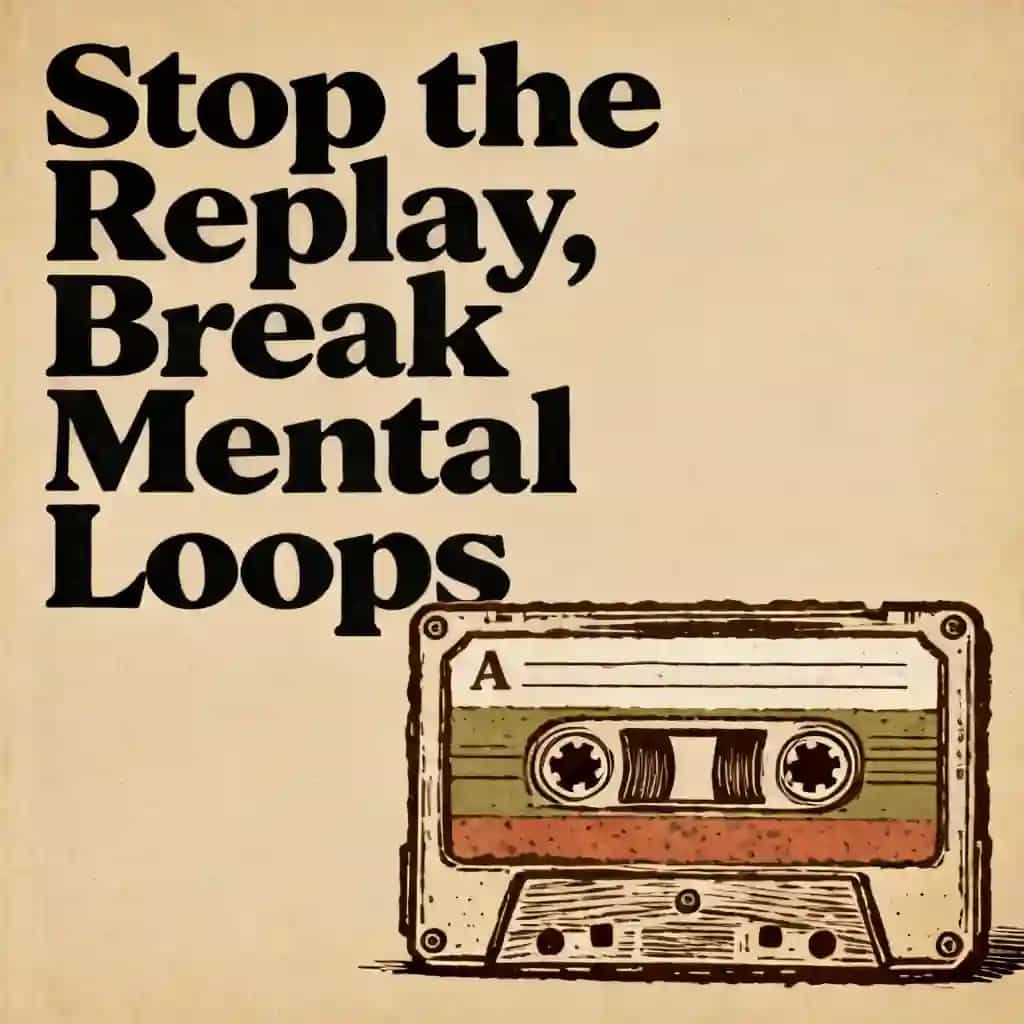
Stop thought loops and quiet your mind
When your brain gets stuck on a worry, it feels like problem-solving but it’s actually rumination. Learn how to break the cycle and find peace.

Stop thought loops and quiet your mind最佳语录
Rumination is what researchers call 'perseverative cognition.' It’s repetitive, it’s circular, and it’s almost always focused on the 'why' instead of the 'how.'
Generated by Maddie
How to stop thought loops

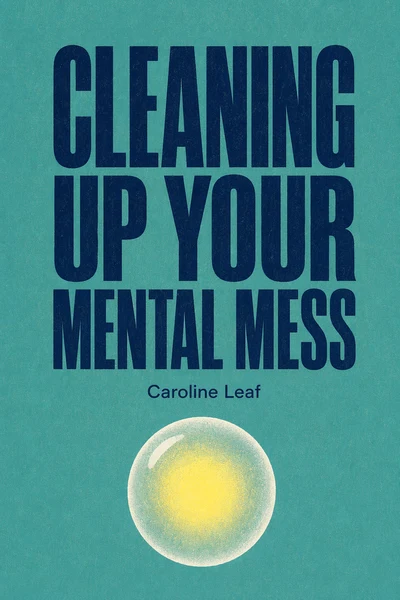
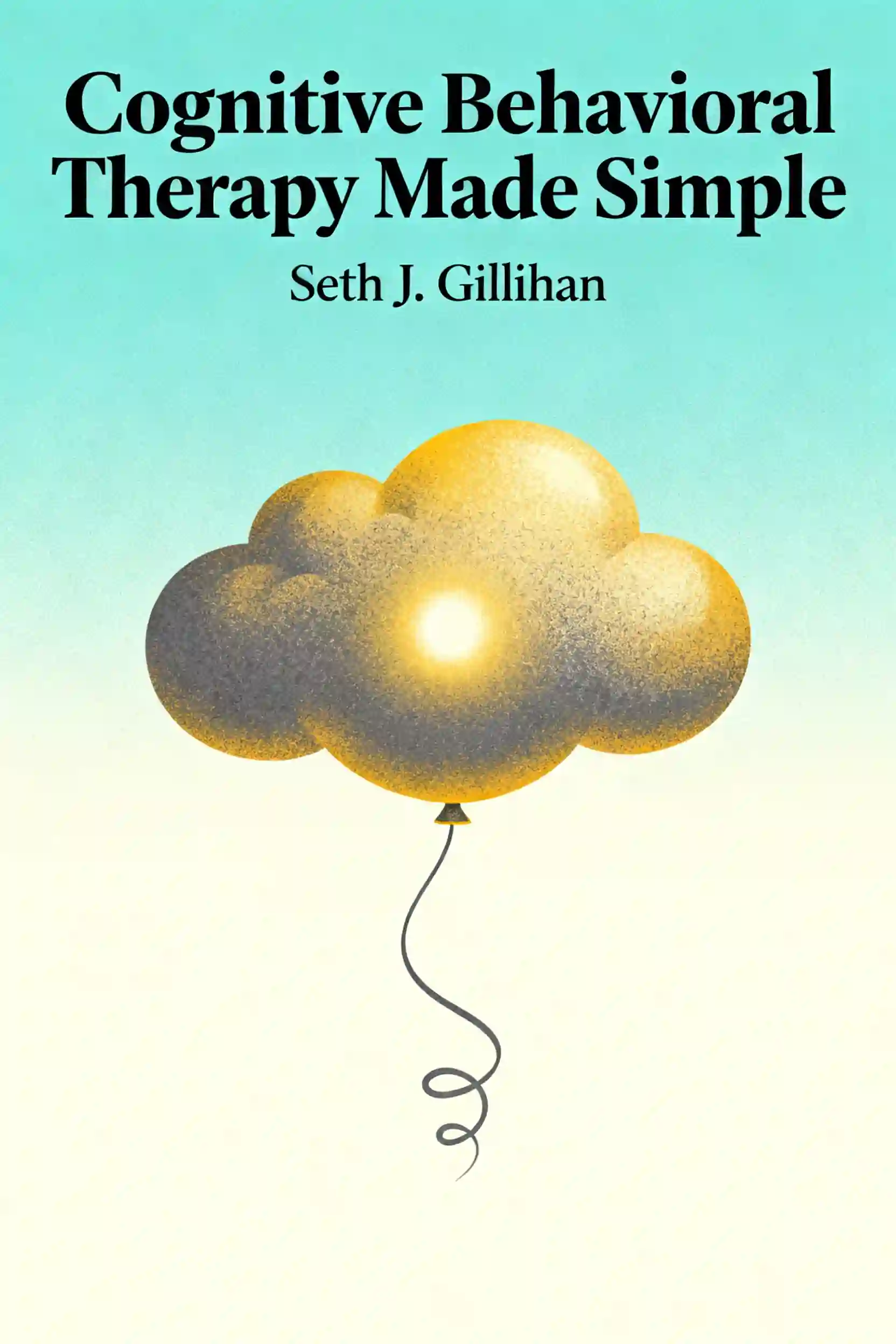
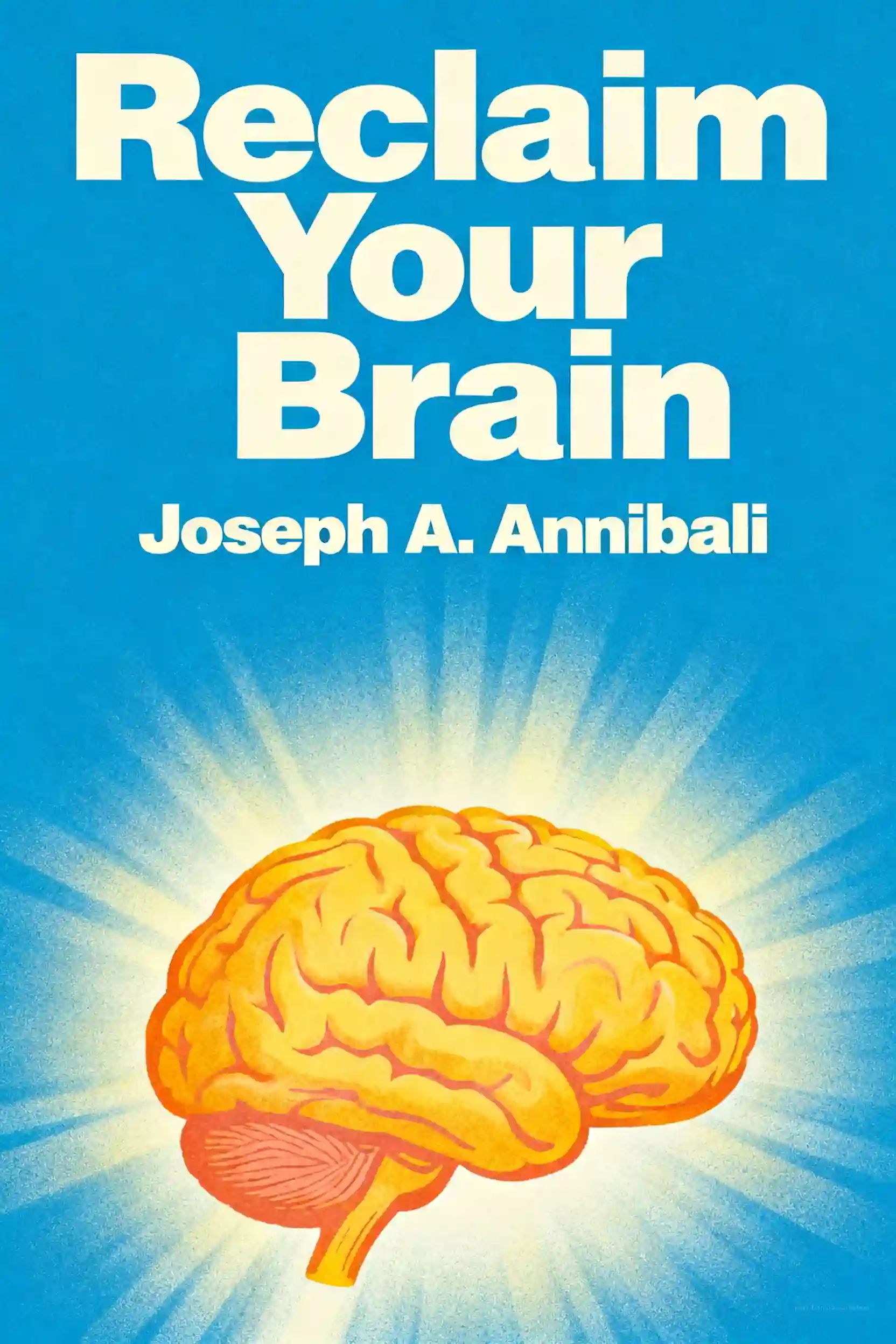
常见问题
The primary distinction lies in the goal and the emotional outcome. Problem-solving is focused on a specific objective and leads to a concrete decision or action, after which the thinking stops. In contrast, rumination—often called "perseverative cognition"—is circular, repetitive, and usually focuses on "why" questions that lead to self-criticism. A key indicator is how you feel afterward; if a thinking session leaves you feeling emotionally drained, anxious, and more trapped than when you started, you are likely ruminating rather than problem-solving.
The brain often initiates rumination as a misguided coping mechanism or "insurance policy" to prevent future mistakes. It targets things we value deeply, such as work or relationships, because the brain is hyper-vigilant about threats to our safety or self-image. Neurobiologically, this happens when the Default Mode Network (DMN)—the area of the brain active during mind-wandering—becomes hyper-connected or "stuck," causing a constant crosstalk between memory and emotion that re-triggers distress over and over.
"Name it to tame it" is a technique where you consciously label a thought pattern as rumination the moment you notice it. By saying to yourself, "I am ruminating right now," you shift brain activity from the amygdala (the fear center) to the prefrontal cortex (the logical center). This creates "observer space," allowing you to view the thought as a mental event rather than an instruction or an absolute fact, which helps calm the body's stress response.
Scheduling worry time is a technique used to contain anxiety rather than letting it bleed into the entire day. By designating a specific 10-to-15-minute window for worrying, you can acknowledge intrusive thoughts when they arise earlier in the day and tell yourself you will deal with them during your "appointment." This postponement often causes the emotional intensity of the worry to fade, and the time limit forces you to be more efficient, often shifting the brain from circular thinking into actual problem-solving.
Rumination pulls the mind into the past or a hypothetical future, while grounding techniques like the "5-4-3-2-1" method force the brain to process real-time sensory data, pulling it back into the present. Similarly, changing your physical environment or engaging in an "absorbing task" acts as a circuit breaker. Because the brain has limited processing power, it cannot easily maintain a complex thought loop while simultaneously focusing on a new recipe, a difficult puzzle, or the sensory experience of a walk in nature.
由哥伦比亚大学校友创建 源自旧金山
BeFreed 汇聚全球求知若渴的学习者


"Instead of endless scrolling, I just hit play on BeFreed. It saves me so much time."


"I never knew where to start with nonfiction—BeFreed’s book lists turned into podcasts gave me a clear path."


"Perfect balance between learning and entertainment. Finished ‘Thinking, Fast and Slow’ on my commute this week."
"Crazy how much I learned while walking the dog. BeFreed = small habits → big gains."
"Reading used to feel like a chore. Now it’s just part of my lifestyle."

"Feels effortless compared to reading. I’ve finished 6 books this month already."
"BeFreed turned my guilty doomscrolling into something that feels productive and inspiring."

"BeFreed turned my commute into learning time. 20-min podcasts are perfect for finishing books I never had time for."
"BeFreed replaced my podcast queue. Imagine Spotify for books — that’s it. 🙌"

"It is great for me to learn something from the book without reading it."
"The themed book list podcasts help me connect ideas across authors—like a guided audio journey."
"Makes me feel smarter every time before going to work"
由哥伦比亚大学校友创建 源自旧金山
BeFreed 汇聚全球求知若渴的学习者
"Instead of endless scrolling, I just hit play on BeFreed. It saves me so much time."
"I never knew where to start with nonfiction—BeFreed’s book lists turned into podcasts gave me a clear path."
"Perfect balance between learning and entertainment. Finished ‘Thinking, Fast and Slow’ on my commute this week."
"Crazy how much I learned while walking the dog. BeFreed = small habits → big gains."
"Reading used to feel like a chore. Now it’s just part of my lifestyle."
"Feels effortless compared to reading. I’ve finished 6 books this month already."
"BeFreed turned my guilty doomscrolling into something that feels productive and inspiring."
"BeFreed turned my commute into learning time. 20-min podcasts are perfect for finishing books I never had time for."
"BeFreed replaced my podcast queue. Imagine Spotify for books — that’s it. 🙌"
"It is great for me to learn something from the book without reading it."
"The themed book list podcasts help me connect ideas across authors—like a guided audio journey."
"Makes me feel smarter every time before going to work"
"Instead of endless scrolling, I just hit play on BeFreed. It saves me so much time."
"I never knew where to start with nonfiction—BeFreed’s book lists turned into podcasts gave me a clear path."
"Perfect balance between learning and entertainment. Finished ‘Thinking, Fast and Slow’ on my commute this week."
"Crazy how much I learned while walking the dog. BeFreed = small habits → big gains."
"Reading used to feel like a chore. Now it’s just part of my lifestyle."
"Feels effortless compared to reading. I’ve finished 6 books this month already."
"BeFreed turned my guilty doomscrolling into something that feels productive and inspiring."
"BeFreed turned my commute into learning time. 20-min podcasts are perfect for finishing books I never had time for."
"BeFreed replaced my podcast queue. Imagine Spotify for books — that’s it. 🙌"
"It is great for me to learn something from the book without reading it."
"The themed book list podcasts help me connect ideas across authors—like a guided audio journey."
"Makes me feel smarter every time before going to work"
"Instead of endless scrolling, I just hit play on BeFreed. It saves me so much time."
"I never knew where to start with nonfiction—BeFreed’s book lists turned into podcasts gave me a clear path."
"Perfect balance between learning and entertainment. Finished ‘Thinking, Fast and Slow’ on my commute this week."
"Crazy how much I learned while walking the dog. BeFreed = small habits → big gains."
"Reading used to feel like a chore. Now it’s just part of my lifestyle."
"Feels effortless compared to reading. I’ve finished 6 books this month already."
"BeFreed turned my guilty doomscrolling into something that feels productive and inspiring."
"BeFreed turned my commute into learning time. 20-min podcasts are perfect for finishing books I never had time for."
"BeFreed replaced my podcast queue. Imagine Spotify for books — that’s it. 🙌"
"It is great for me to learn something from the book without reading it."
"The themed book list podcasts help me connect ideas across authors—like a guided audio journey."
"Makes me feel smarter every time before going to work"