Rebuilding Self-Trust After Loss
Explore the hidden link between grief and shattered self-confidence as we discuss practical ways to restore your identity and sense of self.

Rebuilding Self-Trust After Loss最佳语录
When you lose a loved one, you don’t just lose a person—you lose a mirror. That person reflected who you were back to you, and without that reflection, your sense of self can feel completely unraveled.
Generated by Robert
Grief, selfasteem

常见问题
Grief often causes what researchers call "identity disruption." When you lose a loved one, you lose a "mirror" that reflected who you were and helped define your daily roles. This loss shatters your internal compass, leading to "brain fog" as your neurobiology undergoes a massive recalibration. Your brain is literally trying to rewrite its internal map of reality, which makes even small, practical decisions feel like heavy, identity-defining choices.
Guilt is focused on behavior, often manifesting as "I did something bad" or "I should have called more." Shame is more global and targets the core of your self-esteem, leading to the belief that "I am bad" or "I am unworthy." Shame is particularly dangerous because it can lead to a cycle of rumination—playing "what if" scenarios over and over—which acts as a mechanism that traps a person in their pain and prevents healthy processing of the loss.
Prolonged Grief Disorder is a formal diagnosis for the 5 to 10 percent of people whose grief remains intense and debilitating rather than subsiding over time. It is characterized by persistent yearning, identity disturbance, emotional numbness, and an inability to experience a positive mood. Clinical guidelines typically use a threshold of six months (ICD-11) or twelve months (DSM-5-TR) of pervasive distress to distinguish PGD from the standard grieving process.
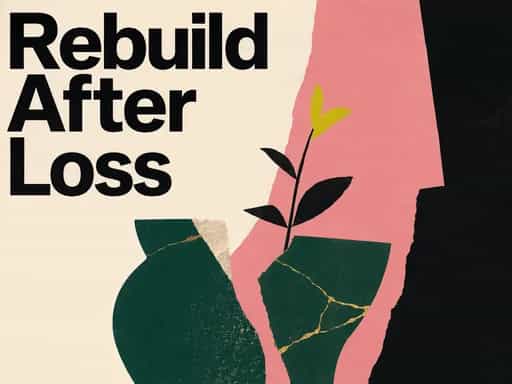
Rebuilding begins with "re-authoring" your life story through a process called meaning reconstruction. This involves making small, values-based choices that help you establish a separate identity from the "we" that existed before the loss. Practical steps include creating new solo routines, engaging in "behavioral activation" by doing small activities even when you don't feel like it, and finding a "community of mirrors"—social support groups or friends who can reflect your worth back to you as you navigate your new reality.
"Instead of endless scrolling, I just hit play on BeFreed. It saves me so much time."


"I never knew where to start with nonfiction—BeFreed’s book lists turned into podcasts gave me a clear path."


"Perfect balance between learning and entertainment. Finished ‘Thinking, Fast and Slow’ on my commute this week."
"Crazy how much I learned while walking the dog. BeFreed = small habits → big gains."
"Reading used to feel like a chore. Now it’s just part of my lifestyle."

"Feels effortless compared to reading. I’ve finished 6 books this month already."
"BeFreed turned my guilty doomscrolling into something that feels productive and inspiring."

"BeFreed turned my commute into learning time. 20-min podcasts are perfect for finishing books I never had time for."
"BeFreed replaced my podcast queue. Imagine Spotify for books — that’s it. 🙌"

"It is great for me to learn something from the book without reading it."
"The themed book list podcasts help me connect ideas across authors—like a guided audio journey."
"Makes me feel smarter every time before going to work"
"Instead of endless scrolling, I just hit play on BeFreed. It saves me so much time."
"I never knew where to start with nonfiction—BeFreed’s book lists turned into podcasts gave me a clear path."
"Perfect balance between learning and entertainment. Finished ‘Thinking, Fast and Slow’ on my commute this week."
"Crazy how much I learned while walking the dog. BeFreed = small habits → big gains."
"Reading used to feel like a chore. Now it’s just part of my lifestyle."
"Feels effortless compared to reading. I’ve finished 6 books this month already."
"BeFreed turned my guilty doomscrolling into something that feels productive and inspiring."
"BeFreed turned my commute into learning time. 20-min podcasts are perfect for finishing books I never had time for."
"BeFreed replaced my podcast queue. Imagine Spotify for books — that’s it. 🙌"
"It is great for me to learn something from the book without reading it."
"The themed book list podcasts help me connect ideas across authors—like a guided audio journey."
"Makes me feel smarter every time before going to work"
"Instead of endless scrolling, I just hit play on BeFreed. It saves me so much time."
"I never knew where to start with nonfiction—BeFreed’s book lists turned into podcasts gave me a clear path."
"Perfect balance between learning and entertainment. Finished ‘Thinking, Fast and Slow’ on my commute this week."
"Crazy how much I learned while walking the dog. BeFreed = small habits → big gains."
"Reading used to feel like a chore. Now it’s just part of my lifestyle."
"Feels effortless compared to reading. I’ve finished 6 books this month already."
"BeFreed turned my guilty doomscrolling into something that feels productive and inspiring."
"BeFreed turned my commute into learning time. 20-min podcasts are perfect for finishing books I never had time for."
"BeFreed replaced my podcast queue. Imagine Spotify for books — that’s it. 🙌"
"It is great for me to learn something from the book without reading it."
"The themed book list podcasts help me connect ideas across authors—like a guided audio journey."
"Makes me feel smarter every time before going to work"
"Instead of endless scrolling, I just hit play on BeFreed. It saves me so much time."
"I never knew where to start with nonfiction—BeFreed’s book lists turned into podcasts gave me a clear path."
"Perfect balance between learning and entertainment. Finished ‘Thinking, Fast and Slow’ on my commute this week."
"Crazy how much I learned while walking the dog. BeFreed = small habits → big gains."
"Reading used to feel like a chore. Now it’s just part of my lifestyle."
"Feels effortless compared to reading. I’ve finished 6 books this month already."
"BeFreed turned my guilty doomscrolling into something that feels productive and inspiring."
"BeFreed turned my commute into learning time. 20-min podcasts are perfect for finishing books I never had time for."
"BeFreed replaced my podcast queue. Imagine Spotify for books — that’s it. 🙌"
"It is great for me to learn something from the book without reading it."
"The themed book list podcasts help me connect ideas across authors—like a guided audio journey."
"Makes me feel smarter every time before going to work"