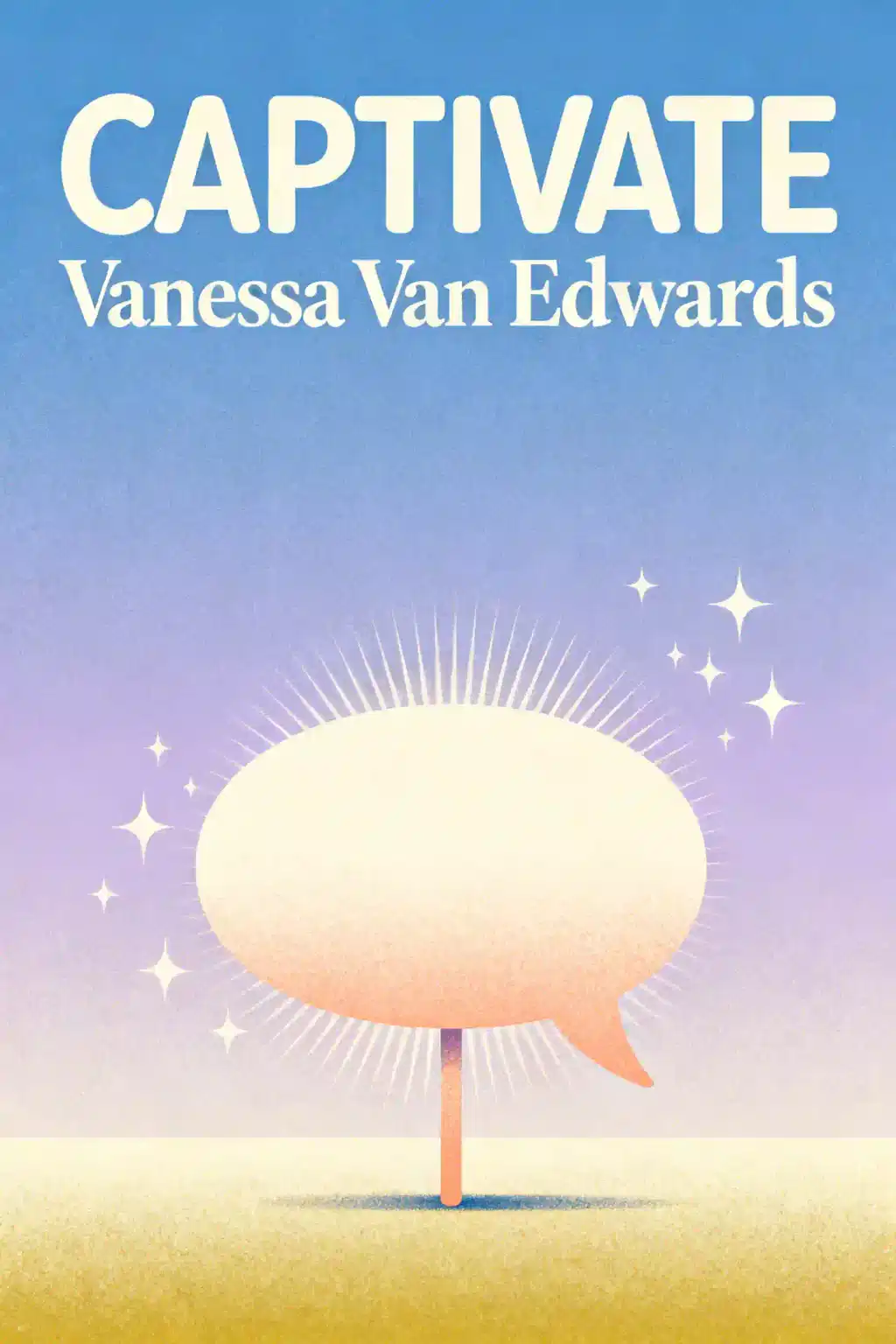
Mastering the Art of Meaningful Small Talk
Stop fearing the awkward silence and learn to turn brief encounters into genuine connections through expert techniques, active listening, and curiosity-driven conversation.

Mastering the Art of Meaningful Small Talk最佳语录
Strive for mediocrity so that you can achieve greatness. When we lower the bar and 'dare to be dull,' we stop being our own worst critic and free up the mental energy to actually be present with others.
Generated by Shannon
How to succeed at small talk

常见问题
This concept, shared by Stanford lecturer Matt Abrahams, encourages speakers to abandon the "perfection trap." When we pressure ourselves to say something brilliant or perfect, we consume mental energy that should be used for listening and being present. By lowering the bar and allowing ourselves to be "mediocre" or "dull," we reduce anxiety and become more authentic, which actually makes it easier to connect with others.
To handle the physical symptoms of anxiety, such as a racing heart, you can use the "rule of lung" technique by breathing out for twice as long as you breathe in to signal safety to your nervous system. Mentally, it helps to reframe the interaction from a "test" you might fail into an "opportunity" to be human. Recognizing that 85% of people feel nervous in high-stakes communication can also help you be kinder to your inner critic.
This is a three-part framework designed to help you avoid overexplaining or "building the clock" when you speak. First, you state your main point (the What). Second, you explain why that point matters to your listener (the So what). Finally, you suggest a next step or a takeaway (the Now what). This structure ensures clarity and keeps the conversation moving forward without unnecessary backstory.
Introverts can manage their social energy by building a "communication pantry," which is a pre-prepared collection of stories, facts, or examples to use so they don't have to be brilliant on the fly. It is also helpful to focus on quality over quantity by aiming for one or two deep conversations rather than trying to talk to everyone. Taking "recharge breaks" and using a "social wingman" are also effective strategies for maintaining energy.
Instead of standard questions, use "contextual openers" that comment on a shared experience, such as the music playing or the speed of a line. You can also use the "Story Gap" technique, where you hint at the end of a story to create curiosity, or ask "tiny specifics" like "What’s been the best part of your week so far?" These methods provide a "soft landing" for the conversation and encourage more meaningful engagement.
"Instead of endless scrolling, I just hit play on BeFreed. It saves me so much time."


"I never knew where to start with nonfiction—BeFreed’s book lists turned into podcasts gave me a clear path."


"Perfect balance between learning and entertainment. Finished ‘Thinking, Fast and Slow’ on my commute this week."
"Crazy how much I learned while walking the dog. BeFreed = small habits → big gains."
"Reading used to feel like a chore. Now it’s just part of my lifestyle."

"Feels effortless compared to reading. I’ve finished 6 books this month already."
"BeFreed turned my guilty doomscrolling into something that feels productive and inspiring."

"BeFreed turned my commute into learning time. 20-min podcasts are perfect for finishing books I never had time for."
"BeFreed replaced my podcast queue. Imagine Spotify for books — that’s it. 🙌"

"It is great for me to learn something from the book without reading it."
"The themed book list podcasts help me connect ideas across authors—like a guided audio journey."
"Makes me feel smarter every time before going to work"
"Instead of endless scrolling, I just hit play on BeFreed. It saves me so much time."
"I never knew where to start with nonfiction—BeFreed’s book lists turned into podcasts gave me a clear path."
"Perfect balance between learning and entertainment. Finished ‘Thinking, Fast and Slow’ on my commute this week."
"Crazy how much I learned while walking the dog. BeFreed = small habits → big gains."
"Reading used to feel like a chore. Now it’s just part of my lifestyle."
"Feels effortless compared to reading. I’ve finished 6 books this month already."
"BeFreed turned my guilty doomscrolling into something that feels productive and inspiring."
"BeFreed turned my commute into learning time. 20-min podcasts are perfect for finishing books I never had time for."
"BeFreed replaced my podcast queue. Imagine Spotify for books — that’s it. 🙌"
"It is great for me to learn something from the book without reading it."
"The themed book list podcasts help me connect ideas across authors—like a guided audio journey."
"Makes me feel smarter every time before going to work"
"Instead of endless scrolling, I just hit play on BeFreed. It saves me so much time."
"I never knew where to start with nonfiction—BeFreed’s book lists turned into podcasts gave me a clear path."
"Perfect balance between learning and entertainment. Finished ‘Thinking, Fast and Slow’ on my commute this week."
"Crazy how much I learned while walking the dog. BeFreed = small habits → big gains."
"Reading used to feel like a chore. Now it’s just part of my lifestyle."
"Feels effortless compared to reading. I’ve finished 6 books this month already."
"BeFreed turned my guilty doomscrolling into something that feels productive and inspiring."
"BeFreed turned my commute into learning time. 20-min podcasts are perfect for finishing books I never had time for."
"BeFreed replaced my podcast queue. Imagine Spotify for books — that’s it. 🙌"
"It is great for me to learn something from the book without reading it."
"The themed book list podcasts help me connect ideas across authors—like a guided audio journey."
"Makes me feel smarter every time before going to work"
"Instead of endless scrolling, I just hit play on BeFreed. It saves me so much time."
"I never knew where to start with nonfiction—BeFreed’s book lists turned into podcasts gave me a clear path."
"Perfect balance between learning and entertainment. Finished ‘Thinking, Fast and Slow’ on my commute this week."
"Crazy how much I learned while walking the dog. BeFreed = small habits → big gains."
"Reading used to feel like a chore. Now it’s just part of my lifestyle."
"Feels effortless compared to reading. I’ve finished 6 books this month already."
"BeFreed turned my guilty doomscrolling into something that feels productive and inspiring."
"BeFreed turned my commute into learning time. 20-min podcasts are perfect for finishing books I never had time for."
"BeFreed replaced my podcast queue. Imagine Spotify for books — that’s it. 🙌"
"It is great for me to learn something from the book without reading it."
"The themed book list podcasts help me connect ideas across authors—like a guided audio journey."
"Makes me feel smarter every time before going to work"