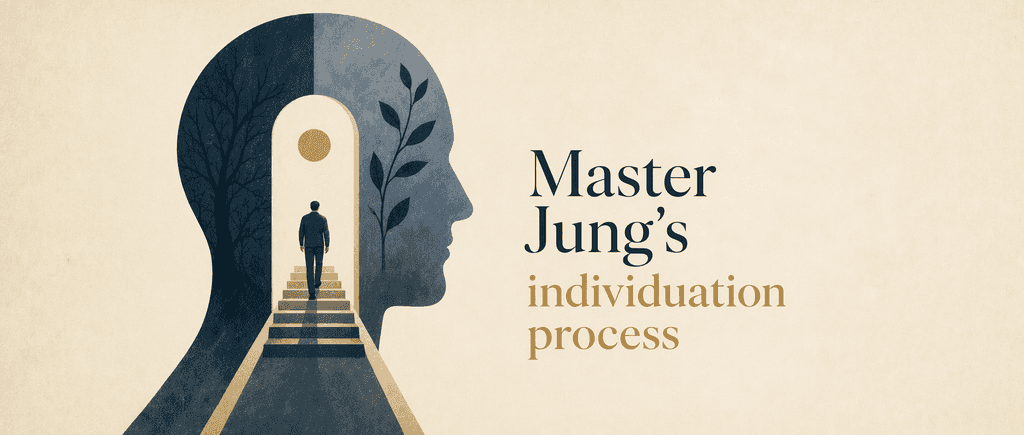
Struggling with a career that feels hollow? Explore how Jungian archetypes and the 'unlived life' can turn professional success into true satisfaction.

The shadow isn't our failures; it’s actually the totality of our unlived life. When we align our career with our dominant archetype, work stops feeling like effort and starts feeling like expression.
"Instead of endless scrolling, I just hit play on BeFreed. It saves me so much time."
"I never knew where to start with nonfiction—BeFreed’s book lists turned into podcasts gave me a clear path."
"Perfect balance between learning and entertainment. Finished ‘Thinking, Fast and Slow’ on my commute this week."
"Crazy how much I learned while walking the dog. BeFreed = small habits → big gains."
"Reading used to feel like a chore. Now it’s just part of my lifestyle."
"Feels effortless compared to reading. I’ve finished 6 books this month already."
"BeFreed turned my guilty doomscrolling into something that feels productive and inspiring."
"BeFreed turned my commute into learning time. 20-min podcasts are perfect for finishing books I never had time for."
"BeFreed replaced my podcast queue. Imagine Spotify for books — that’s it. 🙌"
"It is great for me to learn something from the book without reading it."
"The themed book list podcasts help me connect ideas across authors—like a guided audio journey."
"Makes me feel smarter every time before going to work"


Jackson: You ever have those Monday mornings where the alarm goes off and, before you're even fully awake, this tiny voice in your head asks, "Is this really what I’m supposed to be doing?" It’s that feeling of wearing shoes that are technically the right size but just don't fit.
Lena: I know that feeling exactly. It’s what Carl Jung would call a "one-sided" life, where our professional persona—the competent expert or the reliable leader—starts to exclude everything else. We spend decades building these serious careers, but Jung’s radical insight is that the "shadow" isn't our failures; it’s actually the totality of our unlived life.
Jackson: That’s a heavy thought—that our success might actually be hiding our true purpose. It’s like we’ve traded our original idealism for pragmatic rewards and now we’re left with a hollow kind of satisfaction.
Lena: Exactly, and today we’re looking at how to conduct a business life that actually feels like home. We’re going to explore how identifying your dominant archetype can turn work from a struggle into a natural expression of who you are. So, let’s dive into the twelve archetypes and see which ones resonate with your professional path.
Jackson: You know—Lena—that idea of the "one-sided" life really sticks with me. It’s like we’ve spent twenty years building this incredible skyscraper of a career—the "Professional Persona"—but we forgot to check if we actually wanted to live on the top floor. Or if the foundation was even ours to begin with.
Lena: That’s a perfect way to put it. Jung’s whole framework for the second half of life is really about that architectural audit. In the first half—roughly until our late thirties or early forties—we’re supposed to build the skyscraper. We develop the ego—we learn the rules—we gain the credentials. We create that Persona—which—by the way—Jung says is a functional necessity. It’s not a "fake" self—it’s a bridge between our inner world and the social world. The problem starts when we mistake the bridge for the destination.
Jackson: Right—like when someone asks "Who are you?" and the only answer you have is your job title. If that title disappears—suddenly you’re looking at an existential void. I’ve seen so many people—especially in tech and corporate leadership—who are terrified of that void.
Lena: And that’s exactly where the Twelve Archetypes come in. They aren’t just personality labels—they’re universal patterns of energy. Think of them as different "operating systems" for how we find meaning in work. When you’re running a "Sage" operating system in a "Jester" environment—or a "Caregiver" system in a "Ruler" world—that’s when you get that feeling of shoes that don't fit. You’re literally speaking a different psychological language than your surroundings.
Jackson: It’s fascinating because it explains why two people can have the exact same job—say—Project Manager—and one of them is thriving while the other is miserable. The "thriving" one might be a "Ruler" archetype who loves creating order from chaos—while the "miserable" one is an "Explorer" who feels like they’re being suffocated by the routine.
Lena: Exactly! The Explorer needs variety and autonomy. For them—the "order" of project management feels like a cage. Jung believed that these archetypes are part of the "Collective Unconscious"—meaning these aren't just quirks—they’re deep—recurring patterns in the human psyche. When we align our career with our dominant archetype—work stops feeling like "effort" and starts feeling like "expression." It’s the difference between swimming with the current and trying to move a boulder uphill.
Jackson: So—if I’m listening to this and I’m feeling that Monday morning dread—the first step isn't necessarily a new resume—it’s an internal inventory. We need to figure out which "character" we’ve been playing and whether that character actually matches our internal blueprint.
Lena: Absolutely. And it’s often a combination. Most of us aren't just one thing. You might be a "Sage-Creator"—someone who wants to do deep research but also needs to build something new from that knowledge. If you’re only doing the research—the Sage is happy—but the Creator is starving. That "starvation" is what we experience as burnout or a midlife crisis. It’s not that the work is too hard—it’s that the work is too narrow.
Jackson: It reminds me of what you said earlier about the shadow being the "totality of the unlived life." If I’m a "Hero" archetype—driven by challenge and achievement—but I’m in a role that’s purely about "Caregiving" and maintenance—my inner Hero goes into the shadow. And from the shadow—that Hero energy doesn't just go away. It turns into irritability—or it starts creating "battles" at work just to have something to overcome.
Lena: You’ve hit the nail on the head. That’s the "Shadow Side" of the archetype. Every one of the twelve has a light and a dark. The "Ruler" in the light creates a stable—visionary organization. The "Ruler" in the shadow becomes a tyrant who can't delegate. Awareness is the only thing that moves us from the shadow back into the light. It’s about asking—"Who is actually making this decision right now? Is it my authentic self—or is it a suppressed part of me acting out?"
Jackson: It seems like a lot of what we call "professionalism" is actually just a very polished way of suppressing these archetypes. We’re told to be "even-keeled"—which kills the "Lover’s" passion—or to "follow the process"—which kills the "Outlaw’s" drive for disruption. We’re basically asked to leave our humanity at the door.
Lena: And that’s the cost of the Persona. But as we’re seeing today—especially with the rise of AI—the "mask" of expertise is being commoditized. What’s left is the human essence—the unique archetypal flavor we bring to the table. Jung’s work suggests that our "purpose" isn't some destination we find—it’s the process of letting these internal patterns breathe in the world. It’s about conducting our business life in a way that honors the blueprint—not just the skyscraper.
Jackson: So—if we accept that we have these archetypes driving us—we have to talk about the "Shadow Archetypes" you mentioned earlier. You’ve identified five specific ones that seem to haunt professionals—especially in midlife. I’d love to dig into those—because I suspect a lot of our listeners will recognize themselves in at least one of them.
Lena: Oh—definitely. These aren't theoretical categories—they’re patterns I’ve seen in over fifty coaching engagements with tech leads—directors—and consultants. The first one is the "Suppressed Creative." This is the person who—in their twenties—made a perfectly rational trade. They set aside the art—the writing—the "impractical" passion—for professional security.
Jackson: That sounds like almost everyone I know! We’re taught that creativity is a hobby—not a career. So we bury it. But you’re saying it doesn't stay buried?
Lena: Never. It accumulates energy in the dark. Decades later—it surfaces as this inexplicable contempt for the work that used to be engaging. You’re successful—you have the title—but you’re envious of anyone doing something "real." The "Suppressed Creative" doesn't necessarily need to quit and become a painter—but they need to find a space where that creative capacity can exist without needing to justify its existence economically.
Jackson: I can see how that leads right into the second one—the "Resentful Expert." I see this a lot with people whose industries are being disrupted. They’ve spent twenty years becoming the best at a specific thing—and suddenly—the world doesn't value that expertise the same way.
Lena: Exactly. The Resentful Expert has built their entire identity around their competence. When that competence is commoditized—it feels like an existential threat. They start seeing leadership as "corrupt" and colleagues as "incompetent." The resentment becomes a worldview. The Jungian shift there is realizing that the identity built around the expertise is the problem—not the loss of the expertise itself. You have to find the self that existed *before* the credentials.
Jackson: That’s a tough pill to swallow—asking someone to let go of the very thing that made them "successful." But it makes sense—if the "Expert" is just a mask—you’re basically grieving a costume. What about the "Approval-Seeking Leader?" That feels like it would be common in high-pressure corporate environments.
Lena: It’s rampant. These are the people who climbed the ladder by being incredibly perceptive—reading what authority figures wanted and delivering it. But now they *are* the authority—and they realize they have no inner compass. I’ve watched them in sessions—they’ll make a statement and then do this tiny—almost imperceptible scan of the room to see if it "landed" right. Their shadow is the absence of a self that can trust its own truth without external ratification.
Jackson: It’s like they’re waiting for a permission slip that’s never going to come. And then you have the "Abandoned Idealist"—which feels like the tragic version of the "Suppressed Creative."
Lena: It is. The Idealist entered the field with genuine values—a vision for impact. But they made a thousand small "pragmatic compromises" over twenty years. Eventually—they stop noticing the absence of meaning. They have a "flat affect." They deliver results—but the "why" is long gone. Shadow work here is about going back into the "room" where those values were stored—sitting with the pain of having abandoned them—and renegotiating how to live them now.
Jackson: And that leads to the final one—the "Performance-Masked Self." This sounds like the "Final Boss" of career shadows.
Lena: It really is. This is when the performance *becomes* the self. There is no distinction. These professionals don't experience failure as a setback—they experience it as existential terror. If they aren't "producing"—they don't exist. The shadow here is everything they’ve suppressed to maintain the output: vulnerability—uncertainty—even the capacity for rest. The integration starts with the embarrassingly simple discovery that you still exist when you’re doing absolutely nothing.
Jackson: That’s such a powerful—and honestly—terrifying list. It’s not about "fixing" a career—it’s about a psychological reckoning. It’s asking—"What have I been refusing to see—and what has that refusal cost me?"
Lena: Precisely. Jung’s "Individuation" process isn't about becoming "perfect"—it’s about becoming "whole." It’s about bringing those five shadows into the light so they stop sabotaging your leadership and your life. It’s moving from a "borrowed existence"—as Nietzsche might call it—to a life that is genuinely your own.
Jackson: We’ve talked a lot about the conscious side of this—the archetypes we can name—the shadows we can identify in coaching. But you mentioned something that feels almost like a secret weapon in Jungian thought: the "Nightly Report." You’re talking about dreams—right?
Lena: I am. And I know for some people—the word "dreams" sounds a bit… airy-fairy. But for Jung—dreams were the most practical—straightforward communications from the unconscious. He called it the "compensatory function." Basically—if your conscious life is "one-sided"—if you’re performing 100% confidence all day—the psyche has to balance the scales at night.
Jackson: So if I’m the "Approval-Seeking Leader" by day—projecting total authority—my dreams are going to show me something completely different?
Lena: Exactly. The dream doesn't give you what you *want*—it gives you what your conscious mind is systematically *excluding*. If you’re rigidly in control—the dream gives you chaos. I actually have a great example from late 2025—around November. A professional I know was at the height of his authority—very "Persona-heavy." He dreamed he was back in a classroom—naked at a blackboard—trying to solve a problem in a language he didn't understand while a rival watched him.
Jackson: Ouch. That’s a classic "exposure" dream. But you’re saying it wasn't just "anxiety"—it was a "correction?"
Lena: Right! The psyche was saying—"Hey—you’re pretending you have all the answers—but inside—you’re still that vulnerable student who doesn't know the instructions." The unconscious wasn't being mean—it was being *accurate*. It was trying to return him to a state of wholeness—reminding him that his vulnerability is still part of him. If he ignores that—it turns into a shadow that makes him a brittle—defensive leader.
Jackson: It’s like the psyche is a self-regulating system—like a thermostat. If the "ego" gets too hot and full of itself—the "unconscious" blows in some cold air through a dream. But why do we ignore it? Why do we wake up—say "That was weird"—and check our email?
Lena: Because we’ve been trained to value only what is "productive" and "measurable." Dreams are images—not spreadsheets. They require a different quality of attention—what Jung called "amplification." It’s not about looking up a symbol in a "dream dictionary"—like—"Oh—a snake means a secret." It’s about sitting with the image. What does it *feel* like to be naked at that blackboard? What does the "rival" represent to you?
Jackson: That reminds me of the "Authority Figure" pattern you’ve talked about. I’ve had those dreams where my old boss—someone I haven't seen in ten years—shows up and starts judging my work. I always thought it was just residual stress.
Lena: It could be. But look closer at the pattern. Across years of dream journaling—one pattern that emerged for many is that the "Authority Figure" starts to change. In one dream from late 2025—a man dreamed of his former CEO—the ultimate symbol of his "success" standard—but the CEO was sitting at a secretary’s desk—crying. He told the dreamer he was unhappy and envied the dreamer’s freedom.
Jackson: That’s a total flip of the power dynamic!
Lena: Exactly! The psyche was finally "updating the records." Even though the dreamer had consciously left that corporate world—some part of him was still seeking that CEO’s approval. The dream was showing him that the "God" he was worshipping was actually miserable. It was a massive—liberating "correction." It allowed him to finally stop measuring himself against that old standard.
Jackson: It seems like the goal of this "Nightly Report" isn't to make us feel bad—but to make us feel *real*. To show us the parts of ourselves we’ve exiled. You’ve mentioned things like "forgotten talents" or "hidden rooms" appearing in dreams.
Lena: Yes! Finding a "hidden room" in a building is one of the most hopeful symbols. It’s your unconscious saying—"Hey—there’s more to this house than you’re using." There are capacities—interests—paths you haven't even explored yet. For someone in a midlife career plateau—that dream is a direct invitation to look beyond the current floor plan.
Jackson: So—if we’re talking about "purpose" and "conduct" in business—it’s not just about what we do between 9 and 5. It’s about how we listen to the 24-hour cycle of the psyche. The "Irreducibly Human" part of us that isn't concerned with the "Professional Persona" at all.
Lena: Absolutely. The "Last Man"—as Nietzsche called him—is the one who refuses this encounter. He wants everything to be small—comfortable—and measurable. But the "Individuating" professional—the one seeking true satisfaction—is the one who is willing to look at the "naked figure at the blackboard" and ask—"What is this trying to return to me?"
Jackson: Lena—there was a phrase in the materials that really stopped me in my tracks. "Whose career is this—actually?" That feels like a question that could dismantle a lot of lives if people really sat with it.
Lena: It’s the most uncomfortable question in shadow work. We often think our career choices are "rational"—"I chose law because I’m good at arguing"—or "I chose tech because I like systems." But Jung observed a deeper mechanism: the "Unlived Life" of the parent. He believed that children are often unconsciously burdened with the ambitions—the fears—or the "could-have-beens" of their parents.
Jackson: So—I might be a high-powered executive not because *I* wanted it—but because my father wanted to be one and failed? Or because he *was* one and I’m just repeating the script?
Lena: Exactly. It’s what we call the "Generational Shadow." It’s not about blame—it’s about a mechanism. If a father suppressed his own "Explorer" archetype to provide stability—that "Explorer" energy doesn't just vanish. It gets projected onto the child. The child then "succeeds" at the stability—but feels this profound—inexplicable hollowness. They’ve become a vehicle for someone else’s unlived story.
Jackson: I’ve heard people say—"I’ve done everything I was supposed to do—and I feel nothing." That "supposed to" is the smoking gun—isn't it?
Lena: It really is. That "nothingness" is actually a sign of health. It’s the psyche refusing to be absent from its own life anymore. I’ve seen this over and over in mentoring sessions. A professional will be tracing their career history and suddenly they’ll just go quiet. It’s that "moment of recognition." They realize they didn't *choose* this path—they *inherited* it. It was a response to a father’s frustrated ambition or a family’s financial trauma.
Jackson: And then the grief hits—right? Because you realize you’ve spent twenty years living "borrowed existence."
Lena: Yes—the grief is huge. But it’s also the beginning of "Individuation." Jung said the "Individuation Imperative" becomes urgent in midlife. It’s the demand to become who you *actually are*—not a more polished version of what was expected of you. Nietzsche talked about this as the "Revaluation of Values." You have to ask—"Whose values am I living? Are these mine—or were they given to me?"
Jackson: It’s interesting how this connects to what’s happening in the world right now—like with AI. If your "Professional Persona" is built on credentials and expertise that an algorithm can now approximate—the "Armor" you’ve been wearing is becoming irrelevant. And when the armor comes off—the "Unlived Life" is standing right there waiting for you.
Lena: That’s a brilliant connection. AI is commoditizing the "Persona." It’s forcing the question—"If I’m not my expertise—who am I?" For many—the answer is "I don't know—because I’ve been living my father’s story." This is why shadow work for career clarity is so essential right now. It’s about "Retrieval." You don't necessarily have to burn the skyscraper down—but you have to "consciously choose" it for the first time. Or—maybe—you realize the "Explorer" in you is actually the one who should be driving.
Jackson: There was a specific question you suggested asking to test this: "If your father had lived the life he wanted—would you have chosen this?"
Lena: It’s a powerful diagnostic. Sit with it. Don't go to the defensive "of course I chose this" answer. Go to the quieter part of the reflection. If he had been the artist he wanted to be—would you still be in finance? If the answer is "no"—then you’ve found a "Generational Shadow."
Jackson: And once you see the mechanism—you can't "unsee" it. But what do you do with it? If I realize I’m living his unlived life—how do I "conduct myself" in business tomorrow?
Lena: You start by "Self-Authorship." You begin to distinguish between "Inherited Values" and "Authentic Values." Maybe you stay in the same field—but you change *how* you do it. You stop seeking the external validation that was meant for him and start seeking the "Satisfaction" that is meant for you. You bring your "Caregiver" or your "Creator" or your "Magician" into the work. You move from being a "vehicle" to being an "author."
Jackson: It’s the difference between "Success"—which is often external and borrowed—and "Significance"—which is internal and authentic. It’s a journey from "Success to Significance."
Lena: Exactly. And that "Significance" is where true pleasure and satisfaction in work come from. It’s not about the "pursuits of man" in a competitive sense—it’s about the "expression of man" in an archetypal sense. The hollowness isn't a failure—it’s an invitation to finally start your own story.
Jackson: We’ve been talking about the internal work—the shadows—the dreams—the fathers. But how does this actually show up in leadership? In the way a man "conducts himself" in the boardroom or on a team? Jung seems to suggest that our "blind spots" are actually our biggest leadership threats.
Lena: Absolutely. Jung’s "Shadow in Leadership" concept is—honestly—the most practical leadership advice I’ve ever encountered. He believed that the greatest threat to your leadership isn't the market or your competitors—it’s the part of yourself you refuse to see. Because—as he famously said—"Until you make the unconscious conscious—it will direct your life and you will call it fate."
Jackson: So—the leader who "prides himself on humility" but then undermines anyone who outshines him—that’s the shadow at work?
Lena: Precisely. Or the leader who values "honesty" but creates an environment where everyone is "walking on eggshells." If you weren't allowed to express anger as a child—you might become a leader who projects an "atmosphere of suppressed rage." You think you’re being "professional"—but everyone else is reacting to the shadow you’re refusing to acknowledge.
Jackson: It’s that idea of "Projection"—right? We cast our rejected qualities onto others. If I hate "laziness" in a colleague—it might be because I’ve suppressed my own need for rest and "carefree play."
Lena: You’ve hit the nail on the head. Jung’s mentor—Freud—called it the "Film Projector." The wall isn't the image—the projector is. If you find yourself having a "disproportionate reaction" to someone—rage—jealousy—contempt—that’s your shadow-signal. It’s not about *them*—it’s about *you*. It’s showing you a part of yourself you’ve labeled "unacceptable."
Jackson: That’s a tough way to live—constantly looking in the mirror of other people’s behavior. But what’s the "Gift" inside that? You’ve mentioned there’s a "Gold" in the shadow.
Lena: Yes! The "Golden Shadow." We don't just bury the "bad" stuff—we bury the "too good" stuff. The artist you decided was "impractical"—the ambitious self you were told was "arrogant"—the playful self that got buried under "responsibility." When a leader integrates these parts—they become "Whole." People trust a whole person much more than they trust a "Persona."
Jackson: I’ve noticed that. There’s a certain "presence" some leaders have—it’s not that they’re perfect—it’s that they seem "integrated." They can admit uncertainty. They can be vulnerable without losing authority.
Lena: Exactly! That’s the "Magician" or the "Wise Old Man" archetype showing through. They don't need the "Hero" mask 24/7. They can "conduct themselves" with a kind of "Authentic Presence" because they aren't spending 80% of their energy trying to hide their shadow. Jung called this "Individuation for Leaders." It’s moving from "Tactics" to "Self-Understanding."
Jackson: It’s fascinating how organizations often suppress certain energies—like the "Trickster." Every great team needs a disruptor—someone who challenges the "status quo." But most corporate cultures try to kill that energy—don't they?
Lena: They do. And that’s where "Culture" becomes the "Organizational Unconscious." If an organization refuses to acknowledge its shadow—it will eventually "act it out" through burnout—stagnation—or ethical failures. A "Whole" leader is someone who can look at the "Collective Shadow" of their team and say—"What are we refusing to see here?"
Jackson: It seems like "purpose" in work—then—isn't just about the "mission statement." It’s about the "inner work of moving people to action." It’s conducting oneself in a way that encourages *everyone* to bring their whole selves to the table.
Lena: "Werde der du bist"—Become who you are. That’s the ultimate leadership "conduct." If you’re living a story worth living—other people will want to be part of it. But if you’re just a "Persona" living a "borrowed existence"—you’re just a manager. To be a leader—you have to be a person first.
Jackson: Lena—we’ve been through the "Shadows" and the "Generational Ghosts." Let’s move toward the "Pleasure and Pursuits" part of the listener’s goal. Jung talks about when work feels like "speaking your native language." I love that metaphor. It’s that "Flow State" where time just disappears.
Lena: That is the "Archetypal Flow." When your work aligns with your dominant archetype—it doesn't feel like "work"—it feels like "expression." Think of the "Sage" who gets paid to research and share knowledge—or the "Creator" who Sketches building ideas on napkins at dinner because they just *can't help it*. For them—the effort is the reward.
Jackson: I love the idea of the "Jester" trainer—the one who takes a boring "Compliance Training" and actually makes it funny and engaging. They aren't just "doing a job"—they’re bringing "joy and lightness" to a space that desperately needs it.
Lena: Exactly! And the "Caregiver" nurse who remembers not just the medical history—but the *life* of the patient. They aren't "treating conditions"—they’re "tending to people." That’s where "True Satisfaction" comes from. It’s not about the "Success Myth" of titles and salaries—it’s about the "Deep Fit" between your internal blueprint and your daily tasks.
Jackson: But what if you’re in a "Mismatch?" What if you’re an "Explorer" trapped in a "Ruler" role? You said earlier you don't necessarily have to quit—right?
Lena: Not always! Sometimes it’s about "Small Alignment Shifts." If you’re an Explorer—maybe you negotiate for remote work—or you take on projects in different departments. If you’re a "Magician" stuck in "maintenance mode"—you look for ways to bring "transformation" into your current role. It’s about "Mindset Engineering"—understanding your internal drivers and then "systematically" designing your career to honor them.
Jackson: That’s a much more empowered way to look at it. Instead of "waiting for the perfect job"—you’re "creating the fit." It’s asking—"Does this opportunity let me express my natural strengths—or will it require me to constantly work against my nature?"
Lena: And that’s the key to "Sustainable Success." You can work against your nature—we all do it—but it’s *exhausting*. It’s the difference between swimming with the current and swimming against it. Both might get you to the same destination—but one leaves you energized—and the other leaves you depleted.
Jackson: It reminds me of the "Hero" archetype. The Hero *needs* a battle. If there are no challenges left at work—the Hero starts "creating drama" just to have something to overcome. That’s a classic sign of "Archetype Starvation."
Lena: Oh—absolutely. Or the "Lover" who feels "numb" because their work has become purely "transactional" and "metric-driven." They’ve lost the "human connection" and "beauty" that fuels them. For them—"pleasure" in work comes from "meaningful moments"—not just "outputs."
Jackson: So—for the man looking for "purpose in work"—the question isn't "What job pays the most?" but "What tasks make time disappear?" What were you doing in "Childhood Play?" Were you organizing the other kids—like a "Ruler?" Or exploring the woods—like an "Explorer?" Or building complex Lego structures—like a "Creator?"
Lena: Those childhood clues are "pure archetype." They haven't been "domesticated" by the "Professional Persona" yet. If you can find the "thread" that connects your childhood play to your professional life—you’ve found your "True Calling."
Jackson: And that calling isn't just about "productivity"—it’s about "Legacy." As one of the materials put it—"Your actions will echo throughout time." When you work from your "Authentic Self"—you leave a "beneficial legacy" because you’re contributing something that only *you*—with your specific archetypal blend—can contribute.
Lena: That’s the "Abundance and Love" mindset versus the "Fear and Scarcity" mindset. When you’re in your archetype—you’re operating from abundance. You have more than enough energy—creativity—and passion to go around. That’s the "resourceful—empowered you" that Jung wanted everyone to discover.
Jackson: Okay—Lena—we’ve covered a lot of ground. If someone is listening to this and they’re feeling that "Visceral Recognition"—that "Quiet Moment" where they realize they’re living in a shadow—or their father’s unlived life—what’s the "Playbook?" How do they start the "Inner Work" without blowing up their whole career?
Lena: The first step is "Awareness without Action." I know—in our "hustle-culture"—that sounds counter-intuitive. We want to "fix" it immediately. But Jungian work requires "sitting with the recognition." Let the truth of what you’ve discovered land in your body. Don't convert it into a "to-do list" yet.
Jackson: So—just acknowledge it. "I am a Suppressed Creative." Or—"I am living my father’s dream." Just say it out loud?
Lena: Yes. And then—start the "Nightly Report." Keep a "Dream Journal" by your bed. Record the fragments—the images—the "hidden rooms." Don't worry about "interpreting" them yet—just "document the pattern." Over time—the "Compensatory Function" of your psyche will become undeniable. It will show you exactly what’s missing.
Jackson: And what about during the day? You mentioned "Noticing your strongest reactions."
Lena: That’s the "Shadow-Detective" work. When someone triggers you—write down the "Three Qualities" you most dislike in them. Then ask—"Is there any version of these qualities living in me?" It’s an "uncomfortable—honest" exercise—but it’s where the "Gold" is hidden.
Jackson: And then—the "External Audit." Ask the people closest to you—your partner—a trusted colleague—"What do you see in me that I don't seem to see in myself?" You might not like the answer—but it’s a direct window into your "Blind Spots."
Lena: Precisely. And then—look for "Voluntary Discomfort." It doesn't have to be a "12-day fast"—but find ways to "break the routine." When we remove the "Comfort Layers"—the "Social Media"—the "Over-Working"—the "Emotional Eating"—the "Shadow Material" surfaces. Boredom and discomfort are actually "gateways" to "Self-Discovery."
Jackson: It’s like clearing the "static" so you can finally hear the "radio station" of the unconscious. And what about "Archetype Alignment?"
Lena: Make an "Energy Inventory." List your tasks from last week. Mark which ones "energized" you and which ones "drained" you. Look for the "Archetypal Patterns." Are you most alive when you’re "Helping" (Caregiver)—"Solving" (Sage)—"Creating" (Creator)—or "Leading" (Ruler)? Then—look for "Small Resets." Can you shift 10% of your time toward the "Energizing" tasks?
Jackson: It’s the "10% Rule." You don't have to quit your job—you just have to "re-author" your role. And then—the "Generational Question." Sit with that one: "If my father had lived the life he wanted—would I have chosen this?" If the answer is "no"—then your task is "Self-Authorship." You have to "consciously choose" your values for the first time.
Lena: And finally—"Practice Authenticity." Bring "Small Doses" of your real self into your work. Share a "Real Opinion"—admit you "don't know" something—let your "actual personality" show through the "Professional Mask." It’s "de-commoditizing" your Persona. It’s showing the world your "Human Essence" in the age of AI.
Jackson: This feels like a "Lifelong Process"—not a "Quick Fix." Jung called it "Individuation"—not "Optimization."
Lena: Exactly. It’s the journey from "Success to Significance." It’s about becoming "Whole." And the reward isn't just a better career—it’s a "Relationship with Yourself" that is no longer mediated by "Professional Performance." It’s the feeling of "Coming Home to Yourself"—even in your work.
Jackson: Lena—this has been a deep dive. We’ve looked at the Twelve Archetypes—the Five Career Shadows—the Nightly Report of dreams—and the Generational Shadow of the father. It all points back to one central idea: that our "Business Life" is actually a mirror for our "Internal Self."
Lena: It really is. The "Purpose of Work" isn't just to "Produce"—it’s to "Express." It’s to provide a stage for the "Individuation Process" to play out. True "Satisfaction and Pleasure" don't come from "Winning"—they come from "Alignment." They come from knowing that the "Shoes Fit"—because you’re finally the one who chose them.
Jackson: I’m struck by the idea that "Hollowness" isn't a sign of failure—but a sign of "Potential." It’s the "Hidden Room" in the building that we haven't entered yet. If you’re feeling that "Monday Morning Dread"—maybe it’s not a "Crisis"—maybe it’s an "Invitation."
Lena: "Werde der du bist." Become who you are. The "Unlived Life" doesn't disappear—it waits with "Considerable Patience" for you to acknowledge it. And when you do—when you start "Listening to the Shadow"—the world opens up in a way that "Spreadsheets and Performance Reviews" could never explain.
Jackson: So—to everyone listening—I hope you take a moment today to sit with that "Quiet Voice." Don't drown it out with "Productivity Tips" or "Hustle Culture." Just listen. What is the "Unlived Part" of you trying to say? What "Archetype" is starving for expression?
Lena: And remember—you’re not "Broken." You’re not "Too Much" or "Not Enough." You might just be "Misplaced." You might be trying to fit into a "Space" that wasn't designed for your "Particular Shape." The relief of understanding that—that you’re not the problem—just "Un-Integrated"—is profound.
Jackson: Thank you—Lena—for sharing these insights. It’s given me a lot to reflect on in my own "Skyscraper."
Lena: My pleasure—Jackson. It’s a "Work in Progress" for all of us. The "Shadow" is always there—but with "Honesty and Courage"—we can start to "Live" the life that’s actually ours.
Jackson: Thanks for joining us today. We hope this conversation helps you "Conduct your Conduct" with a little more "Awareness" and a lot more "Wholeness."
Lena: Take care of your "Inner World"—and the "Outer World" will follow. Reflect on those "Hidden Rooms" this week.
Jackson: And—as always—be "Authentically—Unapologetically Yourself." The world needs your "Particular Flavor of Genius."
Lena: Goodbye for now—and thank you for listening.
Jackson: Yes—thank you. Take a moment to reflect on your "Nightly Report" tonight. You might be surprised by what your "Unconscious" has to say.