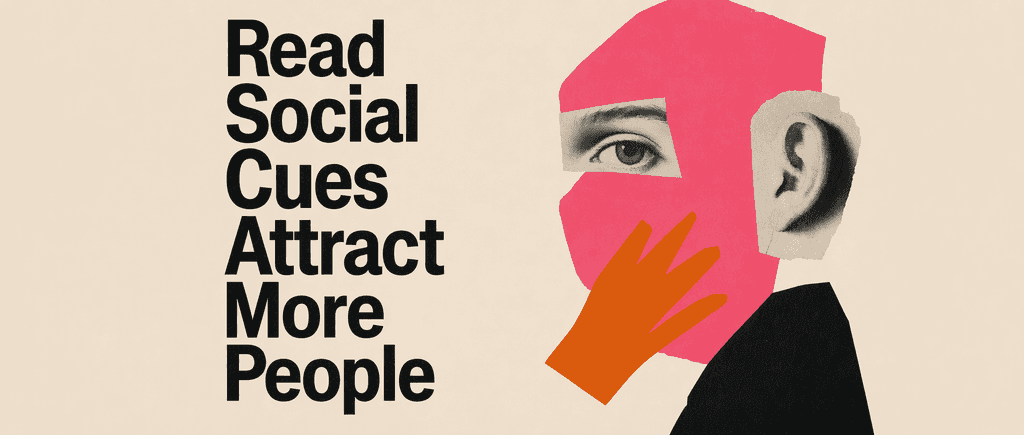
How to know a person deeply
We’re often surrounded by people we don't truly understand. Learn how to read unspoken cues and look past small talk to build genuine connections.

How to know a person deeply最佳语录
The ability to see someone deeply and make them feel understood is the single most important skill for a healthy life. It’s not about putting people in a box—it’s about seeing where they sit on a spectrum.
Generated by Randy
I want to know how to know a person


常见问题
The Big Five, often remembered by the acronym OCEAN, consists of Openness, Conscientiousness, Extraversion, Agreeableness, and Neuroticism. Developed through statistical factor analysis of thousands of descriptive terms, these traits represent the core "sliders" of human personality. They are considered the gold standard because they are remarkably stable over time, are 40% to 60% genetic, and can predict significant life outcomes such as job success and how a person handles stress.
While people are trained from childhood to control their facial expressions to mask their true feelings, they rarely think to control their feet. The feet and legs are governed by the limbic brain—the emotional center responsible for survival—and they react honestly to comfort or danger. For example, if someone’s feet are pointing toward the door during a conversation, their limbic brain is signaling a desire to leave, even if they are smiling and appearing engaged.
The HEXACO model is a more recent psychological framework that adds a sixth dimension to the original Big Five: Honesty-Humility. By studying languages beyond English, researchers identified this crucial factor which measures traits like modesty and greed avoidance. Including the "H" factor allows for a deeper understanding of a person's moral core and sincerity, helping to distinguish between those who are genuinely humble and those who might use flattery to manipulate others.
Pacifiers are self-soothing behaviors, such as touching the neck or rubbing the forehead, that the brain uses to restore calm after a stressful "limbic hijack." However, a single gesture can be misleading, which is why it is essential to look for clusters—multiple related behaviors occurring together. A cluster, such as crossing the arms while compressing the lips and shielding the torso, provides a much more reliable indication of "ventral denial" or discomfort than a single isolated movement.
This approach, used by FBI profilers, moves beyond simple factual questions to uncover a person's true character. Instead of asking "what" someone did, you ask "how" they did it and "why" they made those specific choices. By focusing on the process and the motivation behind actions, you reveal a person's values, cognitive style, and psychological map, moving the conversation from superficial small talk to deep personal insight.
"Instead of endless scrolling, I just hit play on BeFreed. It saves me so much time."


"I never knew where to start with nonfiction—BeFreed’s book lists turned into podcasts gave me a clear path."


"Perfect balance between learning and entertainment. Finished ‘Thinking, Fast and Slow’ on my commute this week."
"Crazy how much I learned while walking the dog. BeFreed = small habits → big gains."
"Reading used to feel like a chore. Now it’s just part of my lifestyle."

"Feels effortless compared to reading. I’ve finished 6 books this month already."
"BeFreed turned my guilty doomscrolling into something that feels productive and inspiring."

"BeFreed turned my commute into learning time. 20-min podcasts are perfect for finishing books I never had time for."
"BeFreed replaced my podcast queue. Imagine Spotify for books — that’s it. 🙌"

"It is great for me to learn something from the book without reading it."
"The themed book list podcasts help me connect ideas across authors—like a guided audio journey."
"Makes me feel smarter every time before going to work"
"Instead of endless scrolling, I just hit play on BeFreed. It saves me so much time."
"I never knew where to start with nonfiction—BeFreed’s book lists turned into podcasts gave me a clear path."
"Perfect balance between learning and entertainment. Finished ‘Thinking, Fast and Slow’ on my commute this week."
"Crazy how much I learned while walking the dog. BeFreed = small habits → big gains."
"Reading used to feel like a chore. Now it’s just part of my lifestyle."
"Feels effortless compared to reading. I’ve finished 6 books this month already."
"BeFreed turned my guilty doomscrolling into something that feels productive and inspiring."
"BeFreed turned my commute into learning time. 20-min podcasts are perfect for finishing books I never had time for."
"BeFreed replaced my podcast queue. Imagine Spotify for books — that’s it. 🙌"
"It is great for me to learn something from the book without reading it."
"The themed book list podcasts help me connect ideas across authors—like a guided audio journey."
"Makes me feel smarter every time before going to work"
"Instead of endless scrolling, I just hit play on BeFreed. It saves me so much time."
"I never knew where to start with nonfiction—BeFreed’s book lists turned into podcasts gave me a clear path."
"Perfect balance between learning and entertainment. Finished ‘Thinking, Fast and Slow’ on my commute this week."
"Crazy how much I learned while walking the dog. BeFreed = small habits → big gains."
"Reading used to feel like a chore. Now it’s just part of my lifestyle."
"Feels effortless compared to reading. I’ve finished 6 books this month already."
"BeFreed turned my guilty doomscrolling into something that feels productive and inspiring."
"BeFreed turned my commute into learning time. 20-min podcasts are perfect for finishing books I never had time for."
"BeFreed replaced my podcast queue. Imagine Spotify for books — that’s it. 🙌"
"It is great for me to learn something from the book without reading it."
"The themed book list podcasts help me connect ideas across authors—like a guided audio journey."
"Makes me feel smarter every time before going to work"
"Instead of endless scrolling, I just hit play on BeFreed. It saves me so much time."
"I never knew where to start with nonfiction—BeFreed’s book lists turned into podcasts gave me a clear path."
"Perfect balance between learning and entertainment. Finished ‘Thinking, Fast and Slow’ on my commute this week."
"Crazy how much I learned while walking the dog. BeFreed = small habits → big gains."
"Reading used to feel like a chore. Now it’s just part of my lifestyle."
"Feels effortless compared to reading. I’ve finished 6 books this month already."
"BeFreed turned my guilty doomscrolling into something that feels productive and inspiring."
"BeFreed turned my commute into learning time. 20-min podcasts are perfect for finishing books I never had time for."
"BeFreed replaced my podcast queue. Imagine Spotify for books — that’s it. 🙌"
"It is great for me to learn something from the book without reading it."
"The themed book list podcasts help me connect ideas across authors—like a guided audio journey."
"Makes me feel smarter every time before going to work"





![[77a8e2da-5e1f-4859-bc34-9c4c90eb967f:c0000] read-people-like-a-book.pdf p1-1](/_next/image?url=https%3A%2F%2Fd1y2du6z1jfm9e.cloudfront.net%2Fassets%2Fpodcast%2Fpurple.png&w=1024&q=50)