
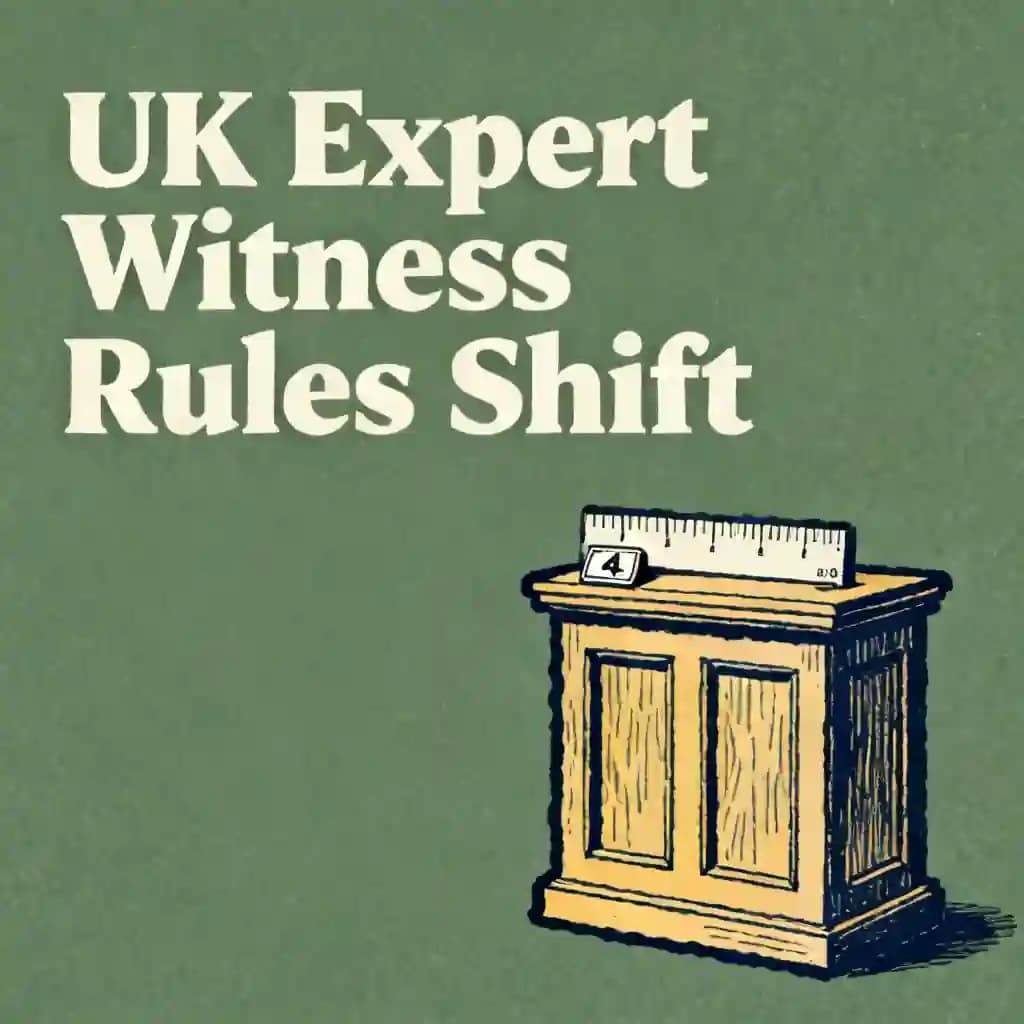
Expert witness rules are changing in the UK最佳语录
The court's expectation is that expert evidence must be the independent product of the expert, uninfluenced by the pressures of the proceedings. You are not there to win for your client; you are there to be the objective, unbiased voice of your expertise.

此音频课程由 BeFreed 社区成员创建
Create a lecture on the latest changes to become an expert witness in the court in the UK




常见问题
The core principle, reinforced by Practice Direction 3-2025, is that an expert witness’s primary duty is to the Court or Tribunal, not to the party paying their fees. This duty overrides any obligation to the person instructing them. Experts must remain objective and unbiased, acting as a "friend of the court" rather than an advocate for their client. This independence must be maintained even under the pressure of legal proceedings, and experts are expected to change their minds if new facts emerge that challenge their initial conclusions.
Reports must be concise, focused strictly on the issues in dispute, and written in plain English for a non-expert judge. Technical jargon and complex data should be moved to a technical annex to keep the main narrative clear. The report must include a formal Statement of Truth and a Declaration of Duty, which serve as legal promises of the expert's integrity. Furthermore, experts must disclose all assumptions, identify the facts they relied upon, and even include initial analyses that may have produced results contrary to their client’s interests to ensure full transparency.
An Expert Meeting is a formal process where experts from opposing sides meet—usually without their lawyers—to narrow the points of dispute. The goal is to be constructive and concede ground where appropriate rather than maintaining an entrenched position. Following this meeting, the experts produce a Joint Statement of agreed and disputed points. Lawyers may only provide guidance on the format or factual accuracy of this statement and are strictly forbidden from influencing the substantive professional views expressed within it.
"Hot Tubbing," or concurrent evidence, involves all experts sitting together in the witness box to answer questions from the judge simultaneously. It is a dynamic, live debate moderated by the court to identify differences in professional thinking. Unlike traditional cross-examination, which is often an adversarial "memory test" where notes are prohibited, experts in the "hot tub" are generally encouraged to have their reports and notes available so they can provide the most accurate technical answers possible.
The consequences of bias or procedural failure are severe and can include the court disregarding the expert's evidence "wholly or in part." Beyond the immediate case, judicial criticism is often published in public transcripts and judgments, creating a permanent "digital footprint" that can damage an expert's reputation for the rest of their career. Additionally, if an expert is found to have knowingly ignored key facts or acted as a "hired gun," they may face serious legal trouble regarding their signed Statement of Truth.
发现更多

Become a better lawyer
This comprehensive program is designed for legal professionals seeking to bridge the gap between academic knowledge and elite practice. It combines timeless advocacy skills with modern technological insights, making it ideal for both junior associates and seasoned attorneys looking to modernize their practice.

Learn to audit compliance like an expert
Compliance auditing expertise is increasingly vital as organizations face growing regulatory complexity and scrutiny. This learning plan equips professionals with the technical knowledge and strategic perspective needed to conduct thorough audits, mitigate compliance risks, and advance their careers in audit and compliance roles.

Pass UK driving theory test
This plan is designed for aspiring drivers who want to move beyond rote memorization and truly understand the road. It combines legal knowledge with cognitive science and performance psychology to ensure both mental readiness and academic success.

Inspire trust & win clients
In today's competitive marketplace, technical expertise alone is insufficient—clients choose professionals they trust. This learning plan is essential for consultants, service providers, salespeople, and any professional who needs to build credibility quickly and convert prospects into loyal clients. Whether you're an entrepreneur building your practice or a seasoned professional looking to elevate your client relationships, these skills are foundational to sustainable business growth.

I want to be an expert in Criminal psychology
This learning plan is essential for anyone pursuing a career in forensics, law enforcement, or behavioral science. It provides a comprehensive bridge from foundational theories to the advanced analysis of dangerous personalities and real-world criminal investigations.

Executive Presence and Strategic Q&A
In high-stakes corporate environments, technical expertise is insufficient without the ability to influence leadership and handle scrutiny. This plan is designed for emerging leaders and senior managers who need to project authority, synthesize information for executives, and remain unshakable under fire.

Master Persuasion for Jury Trials
This learning plan is essential for trial attorneys and legal professionals looking to bridge the gap between legal theory and courtroom victory. It combines psychological insights with classical rhetoric to transform how practitioners present evidence and interact with a jury.

Top Lawyer, Global Impact & Better Speaking
This learning plan is designed for ambitious legal professionals seeking to transition from technical expertise to global leadership. It bridges the gap between foundational legal excellence and the executive communication skills required to influence systemic change on an international scale.
"Instead of endless scrolling, I just hit play on BeFreed. It saves me so much time."


"I never knew where to start with nonfiction—BeFreed’s book lists turned into podcasts gave me a clear path."


"Perfect balance between learning and entertainment. Finished ‘Thinking, Fast and Slow’ on my commute this week."
"Crazy how much I learned while walking the dog. BeFreed = small habits → big gains."
"Reading used to feel like a chore. Now it’s just part of my lifestyle."

"Feels effortless compared to reading. I’ve finished 6 books this month already."
"BeFreed turned my guilty doomscrolling into something that feels productive and inspiring."

"BeFreed turned my commute into learning time. 20-min podcasts are perfect for finishing books I never had time for."
"BeFreed replaced my podcast queue. Imagine Spotify for books — that’s it. 🙌"

"It is great for me to learn something from the book without reading it."
"The themed book list podcasts help me connect ideas across authors—like a guided audio journey."
"Makes me feel smarter every time before going to work"
"Instead of endless scrolling, I just hit play on BeFreed. It saves me so much time."
"I never knew where to start with nonfiction—BeFreed’s book lists turned into podcasts gave me a clear path."
"Perfect balance between learning and entertainment. Finished ‘Thinking, Fast and Slow’ on my commute this week."
"Crazy how much I learned while walking the dog. BeFreed = small habits → big gains."
"Reading used to feel like a chore. Now it’s just part of my lifestyle."
"Feels effortless compared to reading. I’ve finished 6 books this month already."
"BeFreed turned my guilty doomscrolling into something that feels productive and inspiring."
"BeFreed turned my commute into learning time. 20-min podcasts are perfect for finishing books I never had time for."
"BeFreed replaced my podcast queue. Imagine Spotify for books — that’s it. 🙌"
"It is great for me to learn something from the book without reading it."
"The themed book list podcasts help me connect ideas across authors—like a guided audio journey."
"Makes me feel smarter every time before going to work"
"Instead of endless scrolling, I just hit play on BeFreed. It saves me so much time."
"I never knew where to start with nonfiction—BeFreed’s book lists turned into podcasts gave me a clear path."
"Perfect balance between learning and entertainment. Finished ‘Thinking, Fast and Slow’ on my commute this week."
"Crazy how much I learned while walking the dog. BeFreed = small habits → big gains."
"Reading used to feel like a chore. Now it’s just part of my lifestyle."
"Feels effortless compared to reading. I’ve finished 6 books this month already."
"BeFreed turned my guilty doomscrolling into something that feels productive and inspiring."
"BeFreed turned my commute into learning time. 20-min podcasts are perfect for finishing books I never had time for."
"BeFreed replaced my podcast queue. Imagine Spotify for books — that’s it. 🙌"
"It is great for me to learn something from the book without reading it."
"The themed book list podcasts help me connect ideas across authors—like a guided audio journey."
"Makes me feel smarter every time before going to work"
"Instead of endless scrolling, I just hit play on BeFreed. It saves me so much time."
"I never knew where to start with nonfiction—BeFreed’s book lists turned into podcasts gave me a clear path."
"Perfect balance between learning and entertainment. Finished ‘Thinking, Fast and Slow’ on my commute this week."
"Crazy how much I learned while walking the dog. BeFreed = small habits → big gains."
"Reading used to feel like a chore. Now it’s just part of my lifestyle."
"Feels effortless compared to reading. I’ve finished 6 books this month already."
"BeFreed turned my guilty doomscrolling into something that feels productive and inspiring."
"BeFreed turned my commute into learning time. 20-min podcasts are perfect for finishing books I never had time for."
"BeFreed replaced my podcast queue. Imagine Spotify for books — that’s it. 🙌"
"It is great for me to learn something from the book without reading it."
"The themed book list podcasts help me connect ideas across authors—like a guided audio journey."
"Makes me feel smarter every time before going to work"


