Deep work strategies for the distracted office
Constant notifications make it hard to focus. Learn how to reclaim your attention and build a deep work habit to solve complex problems faster.

Deep work strategies for the distracted office最佳语录
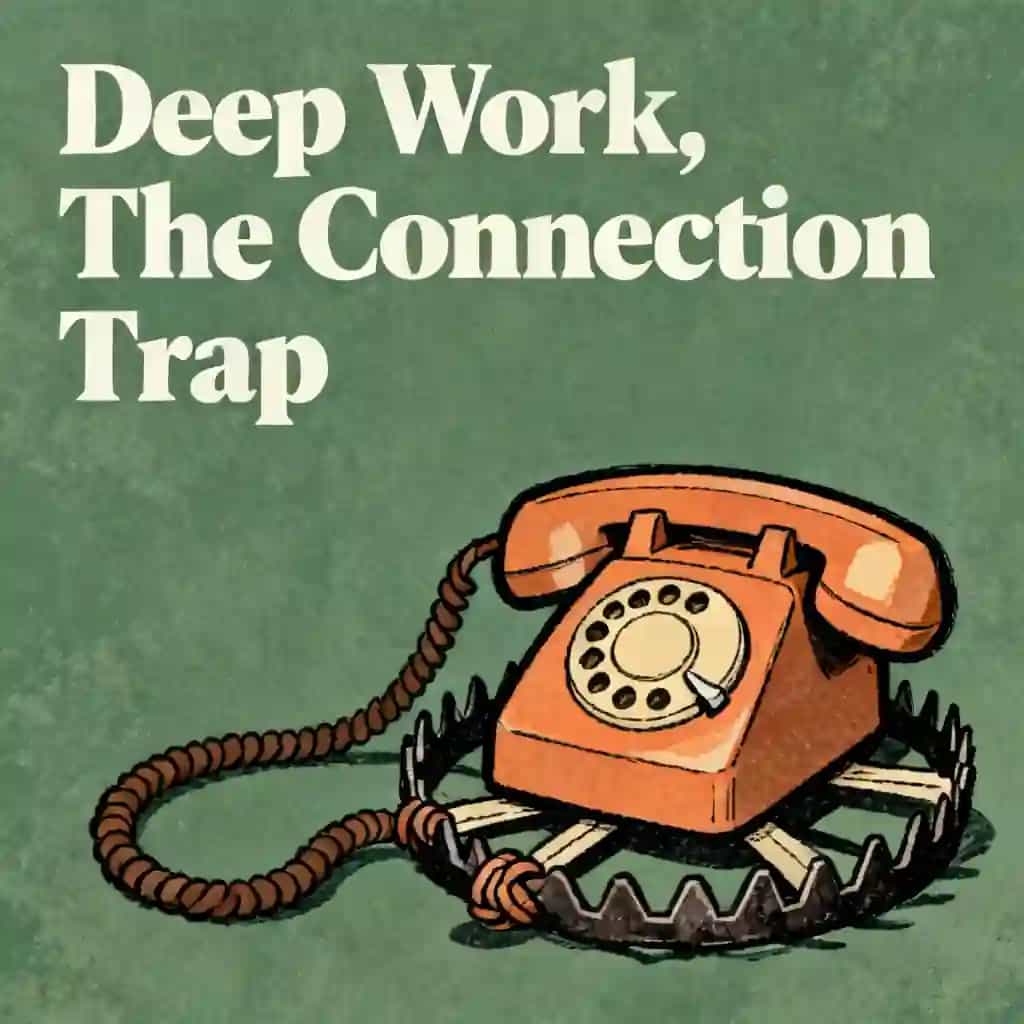
We think we’re just glancing at a notification, but we’re actually triggering attention residue, where a literal residue of your focus stays stuck on the first task. It takes an average of 23 minutes and 15 seconds to fully refocus after a single interruption.
Generated by Dhanush
Deep work strategy at office

常见问题
Attention residue is a cognitive phenomenon where your focus remains partially stuck on a previous task after you have switched to a new one. Research suggests that when you perform a "quick check" of an email or a notification, your brain does not immediately transition; instead, it continues to process the previous information. This "mental thrashing" can be incredibly costly, as it takes an average of over 23 minutes to fully refocus after a single interruption. Consequently, frequent task-switching leaves workers feeling scattered and can reduce overall productivity by as much as 32%.
While there are four main philosophies—Monastic, Bimodal, Rhythmic, and Journalistic—the Rhythmic philosophy is generally considered the most effective for office workers. This approach involves creating a consistent daily habit by carving out the same block of time each day for undistracted focus. By establishing this regular rhythm, your brain learns to expect deep work at specific times, and colleagues eventually learn to respect these "off the grid" hours, making it more sustainable than trying to find spontaneous gaps or disappearing for weeks at a time.
To combat the distractions of an open-plan office, you should focus on sensory control and environmental "hacking." Using noise-canceling headphones with pink noise can mask disruptive sounds and improve memory consolidation. Additionally, maintaining a clean desk by following the "arms-reach rule"—keeping only essential items within reach—reduces the extraneous cognitive load caused by visual clutter. Incorporating natural light or even a small desk plant can also help, as nature provides "soft fascination" that allows the brain’s directed attention to recover from fatigue.
A shutdown ritual is a specific sequence of actions performed at the end of the workday to signal to your brain that work is over. This involves reviewing your to-do list, checking the next day's calendar, and making a plan for unfinished tasks, often concluding with a verbal cue like "shutdown complete." This practice is essential because it provides psychological closure and prevents work-related "attention residue" from following you home. By formally ending the cognitive processing of work, you allow your brain to rest fully, which helps prevent burnout and ensures you are recharged for the next day.
"Instead of endless scrolling, I just hit play on BeFreed. It saves me so much time."


"I never knew where to start with nonfiction—BeFreed’s book lists turned into podcasts gave me a clear path."


"Perfect balance between learning and entertainment. Finished ‘Thinking, Fast and Slow’ on my commute this week."
"Crazy how much I learned while walking the dog. BeFreed = small habits → big gains."
"Reading used to feel like a chore. Now it’s just part of my lifestyle."

"Feels effortless compared to reading. I’ve finished 6 books this month already."
"BeFreed turned my guilty doomscrolling into something that feels productive and inspiring."

"BeFreed turned my commute into learning time. 20-min podcasts are perfect for finishing books I never had time for."
"BeFreed replaced my podcast queue. Imagine Spotify for books — that’s it. 🙌"

"It is great for me to learn something from the book without reading it."
"The themed book list podcasts help me connect ideas across authors—like a guided audio journey."
"Makes me feel smarter every time before going to work"
"Instead of endless scrolling, I just hit play on BeFreed. It saves me so much time."
"I never knew where to start with nonfiction—BeFreed’s book lists turned into podcasts gave me a clear path."
"Perfect balance between learning and entertainment. Finished ‘Thinking, Fast and Slow’ on my commute this week."
"Crazy how much I learned while walking the dog. BeFreed = small habits → big gains."
"Reading used to feel like a chore. Now it’s just part of my lifestyle."
"Feels effortless compared to reading. I’ve finished 6 books this month already."
"BeFreed turned my guilty doomscrolling into something that feels productive and inspiring."
"BeFreed turned my commute into learning time. 20-min podcasts are perfect for finishing books I never had time for."
"BeFreed replaced my podcast queue. Imagine Spotify for books — that’s it. 🙌"
"It is great for me to learn something from the book without reading it."
"The themed book list podcasts help me connect ideas across authors—like a guided audio journey."
"Makes me feel smarter every time before going to work"
"Instead of endless scrolling, I just hit play on BeFreed. It saves me so much time."
"I never knew where to start with nonfiction—BeFreed’s book lists turned into podcasts gave me a clear path."
"Perfect balance between learning and entertainment. Finished ‘Thinking, Fast and Slow’ on my commute this week."
"Crazy how much I learned while walking the dog. BeFreed = small habits → big gains."
"Reading used to feel like a chore. Now it’s just part of my lifestyle."
"Feels effortless compared to reading. I’ve finished 6 books this month already."
"BeFreed turned my guilty doomscrolling into something that feels productive and inspiring."
"BeFreed turned my commute into learning time. 20-min podcasts are perfect for finishing books I never had time for."
"BeFreed replaced my podcast queue. Imagine Spotify for books — that’s it. 🙌"
"It is great for me to learn something from the book without reading it."
"The themed book list podcasts help me connect ideas across authors—like a guided audio journey."
"Makes me feel smarter every time before going to work"
"Instead of endless scrolling, I just hit play on BeFreed. It saves me so much time."
"I never knew where to start with nonfiction—BeFreed’s book lists turned into podcasts gave me a clear path."
"Perfect balance between learning and entertainment. Finished ‘Thinking, Fast and Slow’ on my commute this week."
"Crazy how much I learned while walking the dog. BeFreed = small habits → big gains."
"Reading used to feel like a chore. Now it’s just part of my lifestyle."
"Feels effortless compared to reading. I’ve finished 6 books this month already."
"BeFreed turned my guilty doomscrolling into something that feels productive and inspiring."
"BeFreed turned my commute into learning time. 20-min podcasts are perfect for finishing books I never had time for."
"BeFreed replaced my podcast queue. Imagine Spotify for books — that’s it. 🙌"
"It is great for me to learn something from the book without reading it."
"The themed book list podcasts help me connect ideas across authors—like a guided audio journey."
"Makes me feel smarter every time before going to work"






![[deep-work-by-cal-newport:c0000] Deep Work p1-1](/_next/image?url=https%3A%2F%2Fd1y2du6z1jfm9e.cloudfront.net%2Fassets%2Fpodcast%2Fgreen.png&w=1024&q=50)
![[deep-work-by-cal-newport:c0003] Deep Work p1-1](/_next/image?url=https%3A%2F%2Fd1y2du6z1jfm9e.cloudfront.net%2Fassets%2Fpodcast%2Fblue.png&w=1024&q=50)