Building confidence through small daily actions
Waiting to feel confident before acting is a trap. Learn how to use neuroscience and simple habits to train your brain and build lasting self-assurance.

Building confidence through small daily actions最佳语录
Confidence isn't a personality trait you're born with—it’s actually a trained state of being. It is built through small, daily actions that prove to your nervous system that you’re capable.
Generated by Freedee_49B346F6
I want to be more confident

常见问题
No, research indicates that confidence is not an innate trait, but rather a trained state of being. It is described as a "muscle" that can be strengthened through neuroplasticity. Real confidence is built through small, daily actions and keeping tiny promises to yourself, which eventually proves to your nervous system that you are capable.
This reaction is rooted in biology, specifically the amygdala-prefrontal axis. The amygdala acts as an internal smoke alarm scanning for danger; for those with low social confidence, this alarm is hyper-reactive and views social evaluation as a mortal threat. Historically, social rejection meant a lack of survival, so the brain evolved to be hypersensitive to it. In modern times, this results in the "Spotlight Effect," where we systematically overestimate how much others are noticing our flaws.
You can manually activate your parasympathetic nervous system (the "rest-and-digest" mode) using the vagus nerve. One effective method is the 4-7-8 breathing technique: inhale for four seconds, hold for seven, and exhale for eight. The long exhale sends a biological signal to the brain that you are safe. Other physical "reset" buttons include splashing cold water on your face to trigger the diving reflex or using the 3-3-3 grounding rule to pivot your attention from internal sensations to the external environment.
Safety behaviors are subtle actions taken to "protect" oneself from anxiety, such as checking a phone to look busy, avoiding eye contact, or rehearsing sentences before speaking. While they provide temporary relief, they are actually maintenance mechanisms for anxiety. They prevent "disconfirmation," meaning your brain never learns that you would have been safe without the shield. To build true confidence, you must engage in "behavioral experiments" where you deliberately drop these shields to prove to your nervous system that the feared catastrophe will not happen.
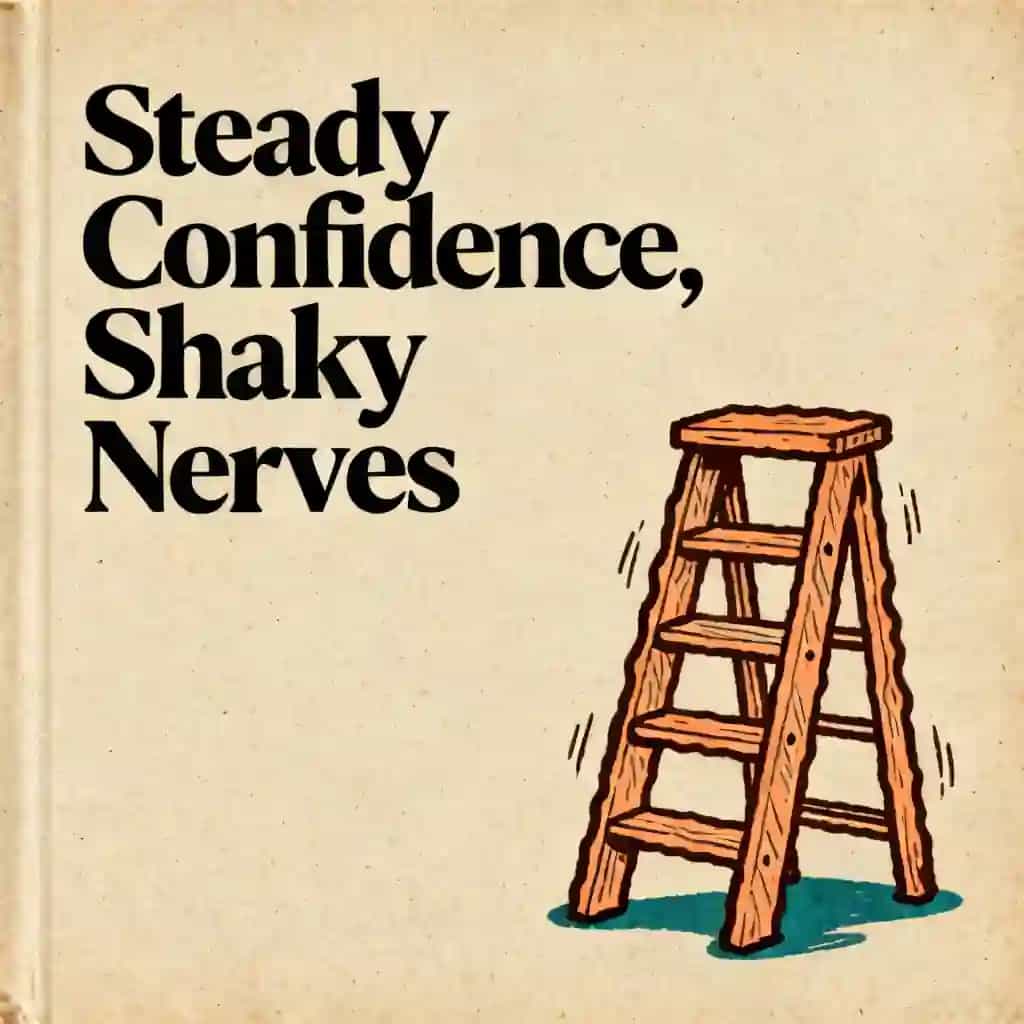
An Exposure Ladder (or Hierarchy) is a tool used to face social fears in a graduated way. You list your social fears and rate them on a distress scale from 0 to 100. You start at the bottom with a "challenging but manageable" task (around 30 or 40) and practice it repeatedly until the anxiety drops. Only then do you move to the next rung. The key is to stay in the situation long enough for your anxiety to decrease naturally, rather than escaping while your heart is still racing, which would only reinforce the fear.
"Instead of endless scrolling, I just hit play on BeFreed. It saves me so much time."


"I never knew where to start with nonfiction—BeFreed’s book lists turned into podcasts gave me a clear path."


"Perfect balance between learning and entertainment. Finished ‘Thinking, Fast and Slow’ on my commute this week."
"Crazy how much I learned while walking the dog. BeFreed = small habits → big gains."
"Reading used to feel like a chore. Now it’s just part of my lifestyle."

"Feels effortless compared to reading. I’ve finished 6 books this month already."
"BeFreed turned my guilty doomscrolling into something that feels productive and inspiring."

"BeFreed turned my commute into learning time. 20-min podcasts are perfect for finishing books I never had time for."
"BeFreed replaced my podcast queue. Imagine Spotify for books — that’s it. 🙌"

"It is great for me to learn something from the book without reading it."
"The themed book list podcasts help me connect ideas across authors—like a guided audio journey."
"Makes me feel smarter every time before going to work"
"Instead of endless scrolling, I just hit play on BeFreed. It saves me so much time."
"I never knew where to start with nonfiction—BeFreed’s book lists turned into podcasts gave me a clear path."
"Perfect balance between learning and entertainment. Finished ‘Thinking, Fast and Slow’ on my commute this week."
"Crazy how much I learned while walking the dog. BeFreed = small habits → big gains."
"Reading used to feel like a chore. Now it’s just part of my lifestyle."
"Feels effortless compared to reading. I’ve finished 6 books this month already."
"BeFreed turned my guilty doomscrolling into something that feels productive and inspiring."
"BeFreed turned my commute into learning time. 20-min podcasts are perfect for finishing books I never had time for."
"BeFreed replaced my podcast queue. Imagine Spotify for books — that’s it. 🙌"
"It is great for me to learn something from the book without reading it."
"The themed book list podcasts help me connect ideas across authors—like a guided audio journey."
"Makes me feel smarter every time before going to work"
"Instead of endless scrolling, I just hit play on BeFreed. It saves me so much time."
"I never knew where to start with nonfiction—BeFreed’s book lists turned into podcasts gave me a clear path."
"Perfect balance between learning and entertainment. Finished ‘Thinking, Fast and Slow’ on my commute this week."
"Crazy how much I learned while walking the dog. BeFreed = small habits → big gains."
"Reading used to feel like a chore. Now it’s just part of my lifestyle."
"Feels effortless compared to reading. I’ve finished 6 books this month already."
"BeFreed turned my guilty doomscrolling into something that feels productive and inspiring."
"BeFreed turned my commute into learning time. 20-min podcasts are perfect for finishing books I never had time for."
"BeFreed replaced my podcast queue. Imagine Spotify for books — that’s it. 🙌"
"It is great for me to learn something from the book without reading it."
"The themed book list podcasts help me connect ideas across authors—like a guided audio journey."
"Makes me feel smarter every time before going to work"
"Instead of endless scrolling, I just hit play on BeFreed. It saves me so much time."
"I never knew where to start with nonfiction—BeFreed’s book lists turned into podcasts gave me a clear path."
"Perfect balance between learning and entertainment. Finished ‘Thinking, Fast and Slow’ on my commute this week."
"Crazy how much I learned while walking the dog. BeFreed = small habits → big gains."
"Reading used to feel like a chore. Now it’s just part of my lifestyle."
"Feels effortless compared to reading. I’ve finished 6 books this month already."
"BeFreed turned my guilty doomscrolling into something that feels productive and inspiring."
"BeFreed turned my commute into learning time. 20-min podcasts are perfect for finishing books I never had time for."
"BeFreed replaced my podcast queue. Imagine Spotify for books — that’s it. 🙌"
"It is great for me to learn something from the book without reading it."
"The themed book list podcasts help me connect ideas across authors—like a guided audio journey."
"Makes me feel smarter every time before going to work"