Breaking the Trauma Bond: Reclaiming Your Life After Betrayal
Understand the biological addiction of trauma bonding and learn practical strategies to break the cycle of intermittent reinforcement, even when shared social circles and lingering advances make moving on feel impossible.

Breaking the Trauma Bond: Reclaiming Your Life After Betrayal最佳语录
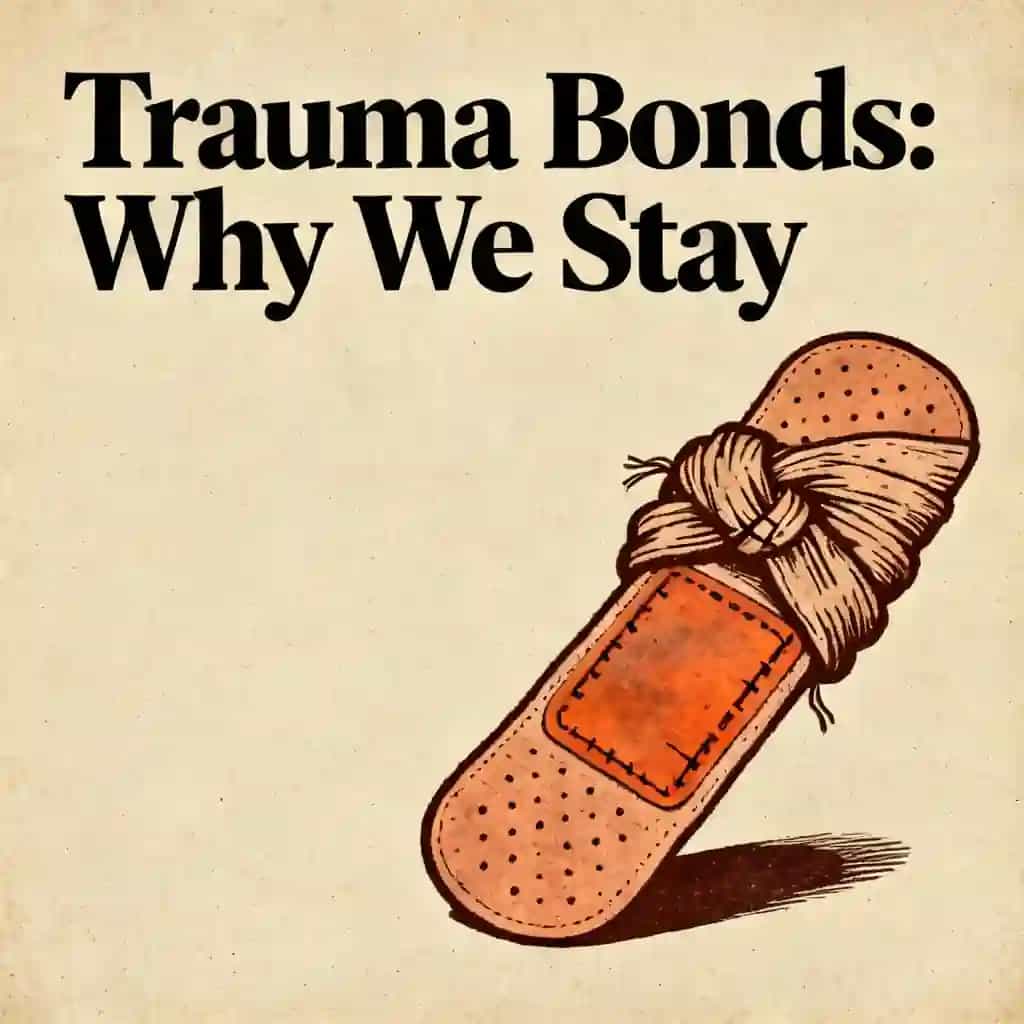
A trauma bond is a cycle where the toxic partner is both the source of the wound and the only person who can provide the bandage. It’s not about love; it’s about a biological hook.
Generated by Michelle
Advice for breaking the trauma bond with somebody you’ve had an affair with you both got divorced. He did not end up choosing me. He dated other women and now he’s proposed and engaged to someone new. We have mutual friends we work out together and do the same Sport and he continues to flirt with me make advances toward me however he has a fiancé I get wrapped up and all the emotions I felt throughout the years for him. Please help.

常见问题
A trauma bond is a physiological state where the brain responds to a volatile partner in the same way it responds to a drug. During the "highs" of the relationship, the brain releases dopamine and oxytocin, while the "lows" trigger a spike in cortisol. This creates a cycle where the person causing the stress becomes the only perceived source of relief, trapping the individual in a neurochemical loop that makes it physically painful to leave.
Intermittent reinforcement is a psychological concept where rewards are given unpredictably rather than consistently. Much like a slot machine that pays out just often enough to keep a player seated, a partner who provides occasional "breadcrumbs" of affection or flirting amidst coldness creates an obsession. The uncertainty makes the brain's motivation circuits light up more intensely than they would in a stable, healthy relationship, conditioning the victim to find peace boring and chaos exciting.
The bond typically progresses through a specific cycle: it begins with "love bombing" (intense validation), followed by the establishment of trust and dependency. In the third stage, the partner begins to withdraw love and offer criticism, leading to the fourth stage, gaslighting, where the victim doubts their own reality. This results in the fifth stage of established control and the sixth stage of "loss of self," where the victim settles for any small scrap of peace. The final stage is full-blown addiction, where the victim stays despite knowing the relationship is destructive.
Breaking the bond requires a "Fortress" approach to protect one's emotional space. This includes a "Digital Cleanse" by blocking or muting the individual and a "Social Sabbatical" or "Information Diet" where mutual friends are asked not to share news about the ex-partner. At shared locations like a gym, one should use a "Polite Exit" script to avoid engagement and shift the focus from the ex-partner back to their own physical sensations and personal goals.
This struggle is often driven by the "Sunk Cost Fallacy," where an individual feels they must stay to justify the massive life upheavals and sacrifices they already made. Admitting the new relationship is toxic feels like admitting the divorce was a mistake. To heal, the individual must realize that walking away is the only way to honor their past self and protect their future, rather than continuing to invest in a "potential" that does not exist in reality.
"Instead of endless scrolling, I just hit play on BeFreed. It saves me so much time."


"I never knew where to start with nonfiction—BeFreed’s book lists turned into podcasts gave me a clear path."


"Perfect balance between learning and entertainment. Finished ‘Thinking, Fast and Slow’ on my commute this week."
"Crazy how much I learned while walking the dog. BeFreed = small habits → big gains."
"Reading used to feel like a chore. Now it’s just part of my lifestyle."

"Feels effortless compared to reading. I’ve finished 6 books this month already."
"BeFreed turned my guilty doomscrolling into something that feels productive and inspiring."

"BeFreed turned my commute into learning time. 20-min podcasts are perfect for finishing books I never had time for."
"BeFreed replaced my podcast queue. Imagine Spotify for books — that’s it. 🙌"

"It is great for me to learn something from the book without reading it."
"The themed book list podcasts help me connect ideas across authors—like a guided audio journey."
"Makes me feel smarter every time before going to work"
"Instead of endless scrolling, I just hit play on BeFreed. It saves me so much time."
"I never knew where to start with nonfiction—BeFreed’s book lists turned into podcasts gave me a clear path."
"Perfect balance between learning and entertainment. Finished ‘Thinking, Fast and Slow’ on my commute this week."
"Crazy how much I learned while walking the dog. BeFreed = small habits → big gains."
"Reading used to feel like a chore. Now it’s just part of my lifestyle."
"Feels effortless compared to reading. I’ve finished 6 books this month already."
"BeFreed turned my guilty doomscrolling into something that feels productive and inspiring."
"BeFreed turned my commute into learning time. 20-min podcasts are perfect for finishing books I never had time for."
"BeFreed replaced my podcast queue. Imagine Spotify for books — that’s it. 🙌"
"It is great for me to learn something from the book without reading it."
"The themed book list podcasts help me connect ideas across authors—like a guided audio journey."
"Makes me feel smarter every time before going to work"
"Instead of endless scrolling, I just hit play on BeFreed. It saves me so much time."
"I never knew where to start with nonfiction—BeFreed’s book lists turned into podcasts gave me a clear path."
"Perfect balance between learning and entertainment. Finished ‘Thinking, Fast and Slow’ on my commute this week."
"Crazy how much I learned while walking the dog. BeFreed = small habits → big gains."
"Reading used to feel like a chore. Now it’s just part of my lifestyle."
"Feels effortless compared to reading. I’ve finished 6 books this month already."
"BeFreed turned my guilty doomscrolling into something that feels productive and inspiring."
"BeFreed turned my commute into learning time. 20-min podcasts are perfect for finishing books I never had time for."
"BeFreed replaced my podcast queue. Imagine Spotify for books — that’s it. 🙌"
"It is great for me to learn something from the book without reading it."
"The themed book list podcasts help me connect ideas across authors—like a guided audio journey."
"Makes me feel smarter every time before going to work"
"Instead of endless scrolling, I just hit play on BeFreed. It saves me so much time."
"I never knew where to start with nonfiction—BeFreed’s book lists turned into podcasts gave me a clear path."
"Perfect balance between learning and entertainment. Finished ‘Thinking, Fast and Slow’ on my commute this week."
"Crazy how much I learned while walking the dog. BeFreed = small habits → big gains."
"Reading used to feel like a chore. Now it’s just part of my lifestyle."
"Feels effortless compared to reading. I’ve finished 6 books this month already."
"BeFreed turned my guilty doomscrolling into something that feels productive and inspiring."
"BeFreed turned my commute into learning time. 20-min podcasts are perfect for finishing books I never had time for."
"BeFreed replaced my podcast queue. Imagine Spotify for books — that’s it. 🙌"
"It is great for me to learn something from the book without reading it."
"The themed book list podcasts help me connect ideas across authors—like a guided audio journey."
"Makes me feel smarter every time before going to work"