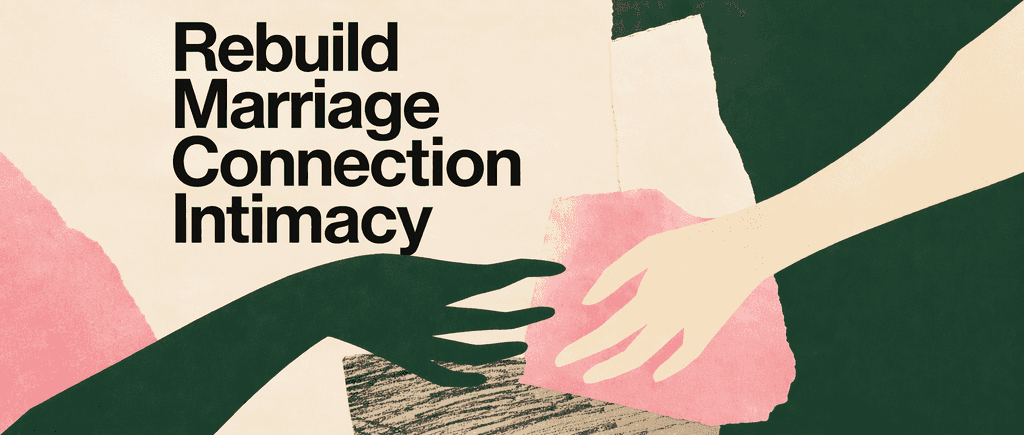
Beyond the Roommate Phase: Reclaiming Sexual Desire
Discover how to bridge the gap between deep love and physical intimacy by understanding responsive desire, managing 'desire downers,' and using the Dual Control Model to reignite your connection.

Beyond the Roommate Phase: Reclaiming Sexual Desire最佳语录
We think desire has to magically appear for it to be 'real' or 'authentic,' but choosing to engage—what we call the 'willingness window'—is just as valid. You aren't forcing a performance; you’re just creating the context for the embers to catch fire.
Generated by Martyna
How to get back sexual desire which is not there even tho I deeply care for the person.



常见问题
This phenomenon is known as the paradox of desire. While a healthy relationship is built on seeking a partner who feels like "home"—providing safety, predictability, and reliability—desire actually thrives on mystery, distance, and the unknown. When a couple becomes too "fused" and loses their individual edges, desire has no room to breathe. Seeing a partner as an independent individual, such as when they are focused on a hobby or excelling at work, helps recreate the "gap" necessary for one person to want the other.
Spontaneous desire is the "Hollywood version" of intimacy where a person is hit with a sudden, out-of-the-blue urge for sex. However, for a large majority of people in long-term bonds, desire is actually responsive. This means the "wanting" does not appear until after physical touch or arousal has already begun. Using the "willingness window" to engage in affectionate touch or kissing can "preheat" the body, eventually signaling the brain that it wants to continue, even if the person didn't feel "in the mood" initially.
The Dual Control Model suggests that sexual response functions like a car with two pedals. Accelerators are the stimuli that turn a person on, while brakes are the Sexual Inhibition System that tells the brain it isn't a safe or good time for sex. Common brakes include chronic stress, fatigue, body image insecurities, and the mental load of household management. Often, the key to reviving a sex life is not adding more "gas" or new turn-ons, but rather identifying and removing the "brakes" that are keeping the system suppressed.
The process starts with lowering the pressure and rebuilding the "oxytocin pathway" through non-sexual touch. Practices like a six-second hug or sitting close together without the expectation of sex help signal safety to the nervous system and lower cortisol levels. Additionally, introducing novelty into the relationship—such as trying a new hobby or visiting an unfamiliar place together—can trigger dopamine and disrupt the routine that leads to boredom. Structured communication, like a twenty-minute check-in where each partner listens without interrupting, also helps rebuild the emotional connection.
"Instead of endless scrolling, I just hit play on BeFreed. It saves me so much time."


"I never knew where to start with nonfiction—BeFreed’s book lists turned into podcasts gave me a clear path."


"Perfect balance between learning and entertainment. Finished ‘Thinking, Fast and Slow’ on my commute this week."
"Crazy how much I learned while walking the dog. BeFreed = small habits → big gains."
"Reading used to feel like a chore. Now it’s just part of my lifestyle."

"Feels effortless compared to reading. I’ve finished 6 books this month already."
"BeFreed turned my guilty doomscrolling into something that feels productive and inspiring."

"BeFreed turned my commute into learning time. 20-min podcasts are perfect for finishing books I never had time for."
"BeFreed replaced my podcast queue. Imagine Spotify for books — that’s it. 🙌"

"It is great for me to learn something from the book without reading it."
"The themed book list podcasts help me connect ideas across authors—like a guided audio journey."
"Makes me feel smarter every time before going to work"
"Instead of endless scrolling, I just hit play on BeFreed. It saves me so much time."
"I never knew where to start with nonfiction—BeFreed’s book lists turned into podcasts gave me a clear path."
"Perfect balance between learning and entertainment. Finished ‘Thinking, Fast and Slow’ on my commute this week."
"Crazy how much I learned while walking the dog. BeFreed = small habits → big gains."
"Reading used to feel like a chore. Now it’s just part of my lifestyle."
"Feels effortless compared to reading. I’ve finished 6 books this month already."
"BeFreed turned my guilty doomscrolling into something that feels productive and inspiring."
"BeFreed turned my commute into learning time. 20-min podcasts are perfect for finishing books I never had time for."
"BeFreed replaced my podcast queue. Imagine Spotify for books — that’s it. 🙌"
"It is great for me to learn something from the book without reading it."
"The themed book list podcasts help me connect ideas across authors—like a guided audio journey."
"Makes me feel smarter every time before going to work"
"Instead of endless scrolling, I just hit play on BeFreed. It saves me so much time."
"I never knew where to start with nonfiction—BeFreed’s book lists turned into podcasts gave me a clear path."
"Perfect balance between learning and entertainment. Finished ‘Thinking, Fast and Slow’ on my commute this week."
"Crazy how much I learned while walking the dog. BeFreed = small habits → big gains."
"Reading used to feel like a chore. Now it’s just part of my lifestyle."
"Feels effortless compared to reading. I’ve finished 6 books this month already."
"BeFreed turned my guilty doomscrolling into something that feels productive and inspiring."
"BeFreed turned my commute into learning time. 20-min podcasts are perfect for finishing books I never had time for."
"BeFreed replaced my podcast queue. Imagine Spotify for books — that’s it. 🙌"
"It is great for me to learn something from the book without reading it."
"The themed book list podcasts help me connect ideas across authors—like a guided audio journey."
"Makes me feel smarter every time before going to work"
"Instead of endless scrolling, I just hit play on BeFreed. It saves me so much time."
"I never knew where to start with nonfiction—BeFreed’s book lists turned into podcasts gave me a clear path."
"Perfect balance between learning and entertainment. Finished ‘Thinking, Fast and Slow’ on my commute this week."
"Crazy how much I learned while walking the dog. BeFreed = small habits → big gains."
"Reading used to feel like a chore. Now it’s just part of my lifestyle."
"Feels effortless compared to reading. I’ve finished 6 books this month already."
"BeFreed turned my guilty doomscrolling into something that feels productive and inspiring."
"BeFreed turned my commute into learning time. 20-min podcasts are perfect for finishing books I never had time for."
"BeFreed replaced my podcast queue. Imagine Spotify for books — that’s it. 🙌"
"It is great for me to learn something from the book without reading it."
"The themed book list podcasts help me connect ideas across authors—like a guided audio journey."
"Makes me feel smarter every time before going to work"