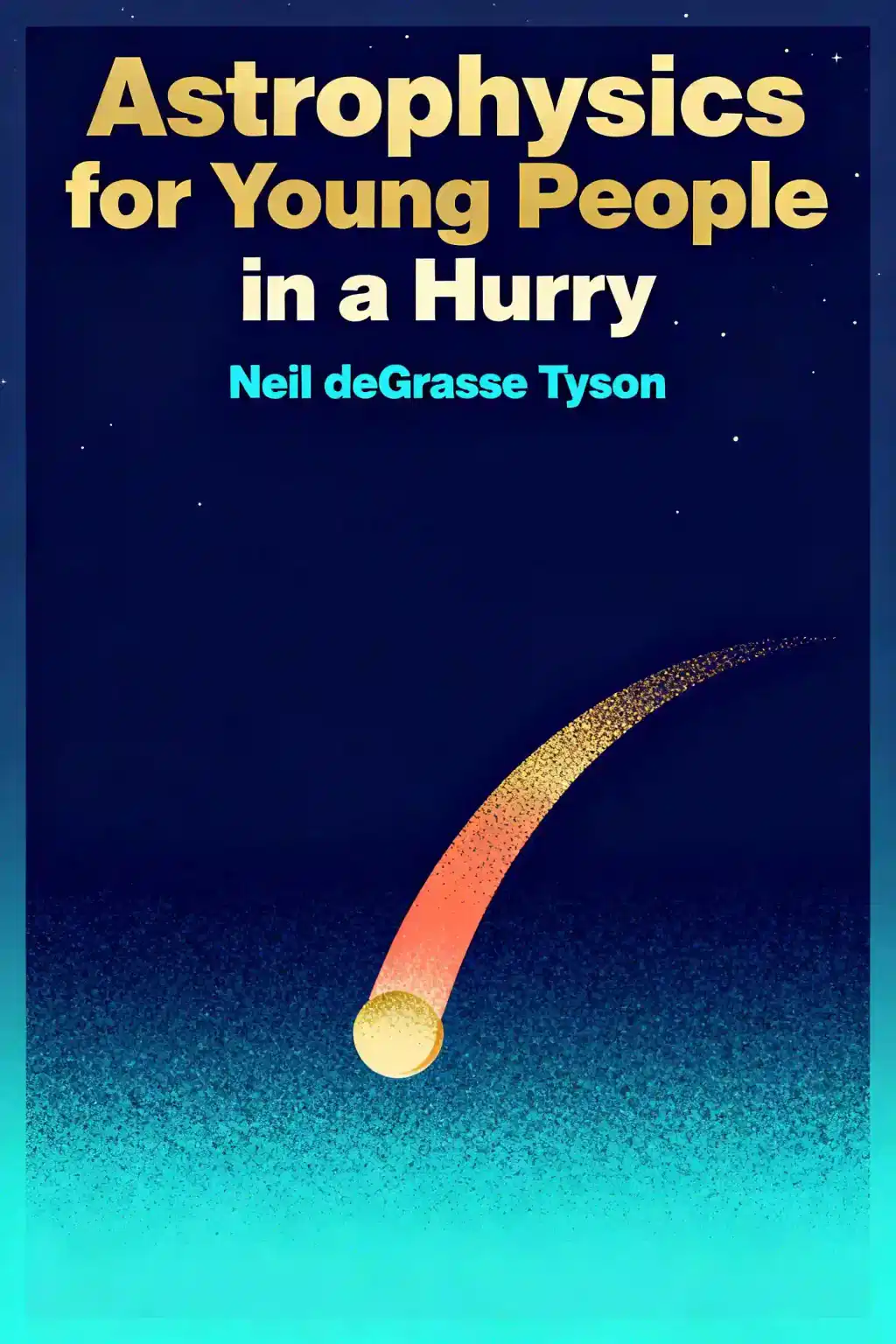
Astrophysics for People in a Hurry
Struggling with a frantic schedule? Discover your cosmic genealogy and how universal laws turn the vast night sky into a mirror of our own origins.

Astrophysics for People in a Hurry最佳语录
The cosmic perspective offers a radical form of relief—the realization that the universe is under no obligation to make sense to you or conform to your deadlines.
Generated with BeFreed
An audio lesson about the book Astrophysics for People in a Hurry, covering its key ideas and takeaways.






常见问题
Dark matter acts as a "cosmic glue" or invisible scaffolding that provides the extra gravity needed to hold galaxies together. It accounts for about 85 percent of all gravity in the universe but does not emit or reflect light. In contrast, dark energy acts as a "cosmic crowbar" that pushes the universe apart. Making up about 68 percent of the cosmos, dark energy exerts a negative pressure that causes the expansion of the universe to accelerate rather than slow down.
The universality of physical laws is confirmed through tools like spectroscopy, which allows scientists to analyze light from distant stars. By breaking down this light, researchers have discovered that the chemical elements found in the sun and distant galaxies—such as helium—are the exact same elements found on Earth. This consistency in the behavior of light, gravity, and chemical elements across billions of light-years proves that the cosmos operates as a unified system with a "universal grammar."
In the earliest moments following the Big Bang, the universe was a high-energy environment where matter and antimatter constantly collided and destroyed one another, a process governed by Einstein’s equation E=mc². This "war" would have left the universe filled only with light if not for a slight asymmetry that allowed a tiny fraction of matter to survive. This remaining matter provided the raw material necessary to form all the galaxies, stars, and planets that exist today.
An observer from another star system would likely use spectroscopy to analyze the light passing through Earth's atmosphere. They would look for "biomarkers," specifically the simultaneous presence of oxygen and methane, which generally do not coexist unless biological life is constantly replenishing them. They might also detect industrial pollutants in the atmosphere, which would serve as a chemical signature of a technological civilization.
The Cosmic Microwave Background (CMB) is the "afterglow" of the Big Bang, consisting of light that began its journey roughly 380,000 years after the start of the universe. Over billions of years, the expansion of space has stretched this light into the microwave range of the electromagnetic spectrum. By detecting and mapping these invisible signals, astrophysicists can see a "snapshot" of the infant universe, helping them understand its earliest structures and history.
"Instead of endless scrolling, I just hit play on BeFreed. It saves me so much time."


"I never knew where to start with nonfiction—BeFreed’s book lists turned into podcasts gave me a clear path."


"Perfect balance between learning and entertainment. Finished ‘Thinking, Fast and Slow’ on my commute this week."
"Crazy how much I learned while walking the dog. BeFreed = small habits → big gains."
"Reading used to feel like a chore. Now it’s just part of my lifestyle."

"Feels effortless compared to reading. I’ve finished 6 books this month already."
"BeFreed turned my guilty doomscrolling into something that feels productive and inspiring."

"BeFreed turned my commute into learning time. 20-min podcasts are perfect for finishing books I never had time for."
"BeFreed replaced my podcast queue. Imagine Spotify for books — that’s it. 🙌"

"It is great for me to learn something from the book without reading it."
"The themed book list podcasts help me connect ideas across authors—like a guided audio journey."
"Makes me feel smarter every time before going to work"
"Instead of endless scrolling, I just hit play on BeFreed. It saves me so much time."
"I never knew where to start with nonfiction—BeFreed’s book lists turned into podcasts gave me a clear path."
"Perfect balance between learning and entertainment. Finished ‘Thinking, Fast and Slow’ on my commute this week."
"Crazy how much I learned while walking the dog. BeFreed = small habits → big gains."
"Reading used to feel like a chore. Now it’s just part of my lifestyle."
"Feels effortless compared to reading. I’ve finished 6 books this month already."
"BeFreed turned my guilty doomscrolling into something that feels productive and inspiring."
"BeFreed turned my commute into learning time. 20-min podcasts are perfect for finishing books I never had time for."
"BeFreed replaced my podcast queue. Imagine Spotify for books — that’s it. 🙌"
"It is great for me to learn something from the book without reading it."
"The themed book list podcasts help me connect ideas across authors—like a guided audio journey."
"Makes me feel smarter every time before going to work"
"Instead of endless scrolling, I just hit play on BeFreed. It saves me so much time."
"I never knew where to start with nonfiction—BeFreed’s book lists turned into podcasts gave me a clear path."
"Perfect balance between learning and entertainment. Finished ‘Thinking, Fast and Slow’ on my commute this week."
"Crazy how much I learned while walking the dog. BeFreed = small habits → big gains."
"Reading used to feel like a chore. Now it’s just part of my lifestyle."
"Feels effortless compared to reading. I’ve finished 6 books this month already."
"BeFreed turned my guilty doomscrolling into something that feels productive and inspiring."
"BeFreed turned my commute into learning time. 20-min podcasts are perfect for finishing books I never had time for."
"BeFreed replaced my podcast queue. Imagine Spotify for books — that’s it. 🙌"
"It is great for me to learn something from the book without reading it."
"The themed book list podcasts help me connect ideas across authors—like a guided audio journey."
"Makes me feel smarter every time before going to work"
"Instead of endless scrolling, I just hit play on BeFreed. It saves me so much time."
"I never knew where to start with nonfiction—BeFreed’s book lists turned into podcasts gave me a clear path."
"Perfect balance between learning and entertainment. Finished ‘Thinking, Fast and Slow’ on my commute this week."
"Crazy how much I learned while walking the dog. BeFreed = small habits → big gains."
"Reading used to feel like a chore. Now it’s just part of my lifestyle."
"Feels effortless compared to reading. I’ve finished 6 books this month already."
"BeFreed turned my guilty doomscrolling into something that feels productive and inspiring."
"BeFreed turned my commute into learning time. 20-min podcasts are perfect for finishing books I never had time for."
"BeFreed replaced my podcast queue. Imagine Spotify for books — that’s it. 🙌"
"It is great for me to learn something from the book without reading it."
"The themed book list podcasts help me connect ideas across authors—like a guided audio journey."
"Makes me feel smarter every time before going to work"