第 1 章
The Power of Purpose: Napoleon Hill's Blueprint for Prosperity
In a world obsessed with overnight success, Napoleon Hill's "Your Right to Be Rich" stands as a timeless beacon of wisdom. This isn't just another get-rich-quick scheme-it's a comprehensive science of achievement that has influenced millions, including business titans and cultural icons from Warren Buffett to Oprah Winfrey. What makes this work particularly remarkable is that Hill spent over 20 years researching success by directly interviewing more than 500 of the world's most accomplished individuals, including Thomas Edison, Henry Ford, and Andrew Carnegie. The resulting philosophy doesn't merely aim for financial wealth but for richness in all aspects of life-personally, spiritually, and financially.
第 2 章
The Foundation: Definiteness of Purpose
The journey to true wealth begins with absolute clarity about what you want. Hill emphasizes that definiteness of purpose is the starting point of all achievement-not vague wishes or general hopes, but a crystal-clear vision backed by unwavering determination.
This principle requires three key elements: a definite purpose, a concrete plan, and immediate action. The magic happens when you commit your purpose to writing, sign it, and repeat it daily as a personal affirmation. This physical act of translating thought to paper creates a powerful psychological contract with yourself.
What makes this approach so effective is how it leverages the subconscious mind. When you hold a dominating idea in your mind through repetition and emotionalize it with burning desire, your subconscious begins working toward its realization through whatever natural means available. As Hill discovered, the subconscious doesn't distinguish between positive and negative thoughts-it simply accepts what you repeatedly tell it.
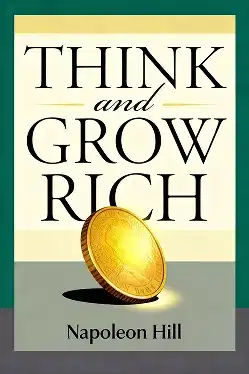
Consider how this played out in Hill's own life. When seeking a title for his book, he commanded his subconscious to produce a million-dollar title. At 2 AM, he awoke with "Think and Grow Rich" fully formed in his mind-a title that ultimately generated over twenty-three million dollars.
The principle also works by heightening your alertness to opportunities related to your purpose. Rather than merely waiting for circumstances to align, you begin actively creating them. As Napoleon Bonaparte famously said when told conditions weren't right for an attack: "Circumstances not right? Hell, I make circumstances! Attack!"
Perhaps most importantly, definiteness of purpose frees your mind from fear, doubt, and indecision. When you're laser-focused on a clear objective, negative thoughts cannot coexist with your positive mindset. You become what Hill calls "success conscious"-your thoughts predominantly focus on possibilities rather than limitations.
第 3 章
The Power of Collective Minds: The Mastermind Principle
No great achievement is accomplished alone. The Mastermind principle-described by Hill as the hub of his entire philosophy-involves an alliance of two or more minds working in perfect harmony toward a definite objective.
This principle operates on two levels. First, it allows you to access others' experience, training, education, and specialized knowledge as if their minds were your own. Even innovators like Thomas Edison and Andrew Carnegie succeeded not through personal expertise but by coordinating mastermind alliances. Carnegie himself admitted he knew nothing about making or marketing steel-his genius was keeping his twenty-person mastermind group working in perfect harmony.
Second, when minds unite in perfect harmony, each individual experiences heightened courage and energy. Like charging a dead battery, a proper mastermind relationship energizes you when depleted. This energy exchange fundamentally transforms your capabilities and outlook.
Hill's own early mastermind consisted of just three people: Andrew Carnegie, his stepmother, and himself. This alliance sustained him through years of criticism while developing his philosophy. His stepmother's unwavering belief that he would become the richest Hill family member gave him strength when he "didn't have two nickels to rub together."
The mastermind alliance must be active, with every member fully engaged mentally, spiritually, physically, and financially. Perfect harmony-not just ordinary cooperation-is essential but rare. Hill defines perfect harmony as a relationship where "if he wanted everything you have, you'd willingly turn it over to him."
There are two primary types: personal alliances with relatives, friends, and religious advisors (with marriage potentially being the most powerful mastermind alliance possible), and business alliances formed for material advancement. Both require careful selection of members based on six essential qualifications: dependability, loyalty, ability, positive mental attitude, willingness to go the extra mile, and applied faith.
第 4 章
Faith in Action: Applied Faith
Applied faith represents an active state of mind connecting with universal forces, functioning as a dynamic bridge between thought and achievement. Unlike passive belief, which merely accepts without action, applied faith is purposefully directed toward achieving a definite purpose. It works in powerful synergy with the first two principles to form what Hill calls the "big three" of his seventeen principles, creating a foundation for all personal achievement.
This faith requires daily affirmation of your definite purpose in prayer form, as the subconscious mind accepts and acts upon whatever thoughts consistently dominate your thinking patterns. The practice involves specific, focused meditation each morning and evening, where you clearly visualize your goals and affirm your ability to achieve them. It also means recognizing the existence of Infinite Intelligence that gives order to the universe and understanding that our minds have no limitations except those we accept through our own beliefs and self-imposed boundaries.
Hill illustrates this principle through his son's hearing disability, a powerful personal example that demonstrates applied faith in action. Rather than accepting his son's condition as permanent, Hill refused to label him as disabled or allow him to develop a victim mentality. Instead, he taught his son to view his lack of ears as a unique blessing that evoked compassion from others. This reframing of what could have been a devastating limitation became a powerful advantage, helping his son excel as a salesman by developing extraordinary empathy and communication skills.
The principle extends beyond individual circumstances to universal application. Hill documents numerous cases where seemingly impossible obstacles were overcome through unwavering faith, including Helen Keller's remarkable achievements and Thomas Edison's persistence through thousands of failed experiments. He reveals that his greatest achievements came not from brilliance or special talent but from unwavering belief despite adversity, noting that all great achievers - from Henry Ford to Andrew Carnegie - were tested through opposition and defeat.
When you maintain faith in the face of challenges, you tap into powers beyond ordinary comprehension. This involves developing what Hill calls a "burning desire" coupled with unshakeable faith. He advises creating a personal council of invisible counselors - historical figures whose qualities you admire - and holding mental meetings with them for guidance and inspiration. This practice strengthens your faith while providing creative solutions to challenges.
The practical application of faith requires several key elements: clear definition of purpose, persistent visualization, absolute belief in achievement, and decisive action despite temporary setbacks. Hill emphasizes that faith becomes a self-fulfilling prophecy - those who believe in their ability to achieve specific goals inevitably find ways to overcome obstacles and manifest their desires.
第 5 章
The Extraordinary Power of Extra Effort: Going the Extra Mile
The principle of going the extra mile-rendering more and better service than you're paid for with a pleasant attitude-operates on what Hill calls the Law of Increasing Returns. Whatever you give out comes back multiplied in kind.
This principle works through several mechanisms. First, it naturally elicits favorable attention. In any organization, those who consistently exceed expectations receive promotions without asking. Employers actively seek such people, allowing them to become indispensable.
Second, it develops a keen imagination as you constantly seek new ways to render service. When facing an unsolvable problem, Hill recommends finding someone with an equal or greater problem and helping them-this mysteriously unlocks solutions to your own challenges.
Third, it cultivates the habit of finding useful things to do without being told. This helps overcome procrastination and transforms work into joy. One of life's greatest pleasures is engaging in what you love most, and even mundane tasks gain dignity when done with this spirit.
Nature itself demonstrates this principle by producing not merely enough but a surplus-from tree blossoms to fish in the seas. Throughout the universe, nature's budget remains balanced through the law of compensation. Everything has its opposite equivalent-positive and negative energy, day and night, success and failure.
Hill observed thousands who applied this principle and those who didn't, confirming that nobody rises above mediocrity without going the extra mile-there are no exceptions. The greatest compensation he received from twenty years of going the extra mile was peace of mind-a rare treasure many never find because they look in the wrong places.
第 6 章
The Art of Connection: Developing a Pleasing Personality
Every interaction-whether meeting someone, explaining an idea, or giving an opinion-involves selling your most valuable asset: yourself. A pleasing personality makes the difference between a salesperson and an order-taker, between a leader and an ordinary worker. This fundamental truth applies across all professions and social situations, from the boardroom to casual social gatherings.
Hill identifies twenty-five personality traits to develop, beginning with a positive mental attitude. Nobody wants to associate with negative people. Even in challenging situations, maintaining optimism creates magnetic attraction. When faced with setbacks, positive individuals find opportunities where others see only obstacles. No matter what other qualities you possess, without positivity when interacting with others, you cannot be considered to have a pleasing personality.
Flexibility ranks second-the ability to bend and adjust to life's varying circumstances without breaking. Many people are so rigid in their habits and attitudes that they cannot adapt to anything unpleasant. This inflexibility often manifests in resistance to new ideas, inability to accept criticism, and difficulty working with different personality types. Hill cites Franklin D. Roosevelt's remarkable ability to be "all things to all people"-turning hostile senators and congressmen into admirers by adjusting his mental attitude to theirs. Roosevelt would study his opponents' perspectives, find common ground, and adapt his communication style to match their preferences.
Other critical traits include a pleasing tone of voice (which requires feeling pleasant inside first), as the way we speak often matters more than what we say. Tolerance means having an open mind on all subjects toward all people, regardless of their background or beliefs. A sense of humor helps adjust to unpleasant circumstances and diffuses tension in difficult situations. Common courtesy, especially toward those on a lower social or economic plane than yourself, demonstrates true character and builds genuine connections.
Hill particularly emphasizes the importance of humility as the cornerstone of a pleasing personality. Even when criticizing others, he silently says to himself, "God pity us all," knowing that but for grace, he could be the one being criticized. This perspective helps maintain empathy and understanding in all interactions. He acknowledges that any success he achieved came entirely from the love, affection, and cooperation of others-he could never have spread his influence worldwide without them. This recognition of interdependence and gratitude towards others creates authentic relationships and lasting influence.
The development of these traits requires constant self-awareness and deliberate practice. Hill suggests daily self-evaluation and conscious effort to improve each aspect of one's personality, understanding that true change comes from consistent, small improvements over time.
第 7 章
The Catalyst for Achievement: Personal Initiative
Personal initiative functions as the action-producing aspect of Hill's philosophy-like a car's starter motor that gets everything moving. It's the twin of going the extra mile, and the value you'll get from this philosophy depends entirely on what you do with it, not just what you learn.
Hill identifies several key attributes of personal initiative, beginning with a definite major purpose. Without a clear objective, you can't have much personal initiative. For those employed, your purpose could be increasing your income from current services. After a year, review your progress and establish bigger goals.
Adequate motive is equally important-it inspires continuous action toward your purpose. Having multiple motives is even better. The stronger your motive, the more likely you'll act on personal initiative. You don't need exceptional intelligence or education to succeed-you simply need to use whatever abilities you have and put them into action.
Self-discipline and persistence are crucial when facing adversity. The true test comes not when everything is going well, but during tough times when the outlook seems bleak. Hill considers persistence his most outstanding asset-he stuck hardest when the going got toughest. Without these traits, he never would have completed his philosophy or introduced it so widely.
Other essential attributes include directed imagination (controlled and focused on constructive ends), decisiveness (making prompt decisions when you have all the facts), fact-based opinions (researching before forming judgments), and controlled enthusiasm (knowing when to turn it on and off).
Perhaps most importantly, personal initiative requires accepting full responsibility for tasks without making alibis. Most people excel at creating excuses for failure rather than succeeding. If people invested half the energy they spend explaining failure into attempting success, they'd achieve far more.
第 8 章
The Mental Foundation: Positive Mental Attitude
A Positive Mental Attitude is one of the most important principles of success-you cannot fully utilize the other principles without understanding and applying this one. Nature severely penalizes both emptiness and idleness. An empty mind becomes fertile ground for negative thoughts, while success attracts more success and failure attracts more failure.
Hill outlines a progression from wishes to achievement. Everyone has wishes, but merely wishing produces no results. Hope represents wishes taking more concrete form, incorporating the beginnings of faith. When hopes are transmuted into burning desire, you've reached an intensified, obsessional desire based on definiteness of purpose. Beyond burning desire comes applied faith-the transmutation of wishes, hopes, and desires into something higher. Applied faith is synonymous with action.
There's a method to transmute failure into success, poverty into riches, sorrow into joy, and fear into faith. When failure occurs, think of it as if it had been a success-visualize the successful outcome and look for the seed of equivalent benefit that comes with every failure. When facing poverty, think of it as riches, visualizing what you would do with actual wealth.
Hill recommends creating in your imagination an army of invisible guides who take care of all your needs and desires. His system includes eight guides: physical sound health, financial prosperity, peace of mind, hope and faith, love and romance, and overall wisdom. While acknowledging these guides are creations of his imagination, he treats them as real entities performing specific duties.
He warns that "eternal vigilance is the price one must pay to maintain a positive mental attitude" due to twelve major obstacles, including the tendency of the negative self to maneuver for power, accumulated fears, negative influences, worry over lack of money, and lack of a definite major purpose.
Finally, Hill reveals the twelve great and enduring riches that create a well-balanced life, noting that money ranks last in importance: positive mental attitude, sound physical health, harmony in human relations, freedom from fear, hope of future achievement, applied faith, willingness to share one's blessings, being engaged in a labor of love, an open mind, complete self-discipline, wisdom to understand people, and money.
第 9 章
The Ultimate Control: Self-Discipline
Self-discipline means taking possession of your own mind-the only thing over which you have complete, unchallenged control. Developing control over your thoughts is essential to achieving success, as it allows you to focus on what you want while ignoring what you don't want.
Hill shares his essay "A Challenge to Life," written after one of his worst defeats, demonstrating how to transmute unpleasant circumstances into something useful. Instead of seeking revenge against those who wronged him, he chose to express himself constructively. The essay, which declares that life cannot subdue him because he refuses to take its discipline seriously and responds with laughter instead of grief, influenced millions including Mahatma Gandhi.
Self-discipline means complete control over both body and mind-not changing them, but controlling them. Hill notes that sexual energy causes more trouble than all other emotions combined, yet it's also the most creative and divine when properly controlled and transmuted.
He describes his three mental walls of protection against outside influences. The first wide wall stops casual contacts unless they have good reason to see him. The second, higher wall requires that interactions be mutually beneficial. The third wall is "as high as eternity"-his inner sanctuary where only he and his Creator commune. Here he does his best work, writes books, and seeks guidance.
Hill cites Gandhi as exemplifying self-discipline through his nonviolent liberation of India. Gandhi employed definiteness of purpose, applied faith, going the extra mile, and formed a mastermind alliance of 200 million people. His self-discipline was unparalleled as he endured insults and imprisonment without striking back.
The reward for mastering self-discipline is control of your destiny and direct contact with Infinite Intelligence. The penalty for not taking possession of your mind is becoming "victim of the stray winds of circumstance" and every influence you encounter.
第 10 章
The Universal Law: Cosmic Habit Force
The Law of Cosmic Habit Force is both the most difficult principle to understand and the simplest. It's the controlling force that maintains universal order through established habits-from galaxies to seasons. While the universe operates on fixed patterns, humans uniquely possess the ability to establish, change, and control their own habits.
Through this principle, you create individual habits that become fixed parts of your character, leading either to success or failure. The previous sixteen principles were designed to help establish habits that lead to financial security, health, and peace of mind.
The law of cosmic habit force controls all natural laws of the universe, which work automatically without suspension. Those who understand and adapt to these laws can advance far in life, while those who don't understand them face defeat.
Man uniquely possesses control over developing, changing, and refining his habits. Unlike other creatures bound by instinct, humans can direct their willpower and mind toward any objective and form whatever habits needed to achieve their goals. We're not limited by instinct but only by our imagination and willpower.
While individual thoughts aren't fixed, thought habits become automatically fixed by cosmic habit force. The thoughts you repeatedly express become habits. The law takes these patterns and makes them permanent unless you consciously break or change them.
To apply cosmic habit force, start with physical health. Your thinking creates the foundation for health. A positive mind develops a "health consciousness"-a continuous awareness of health rather than disease. Cosmic habit force will carry out these positive thought patterns, but will just as readily manifest an ill-health consciousness created by hypochondriac thought patterns.
Creating a thought habit requires repetition in everything you do, think, and say. Make a habit of thinking positively until cosmic habit force makes your mental attitude predominantly positive. Most people remain predominantly negative, but you must maintain positivity to receive responses from Infinite Intelligence, which won't help during states of anger or negativity.
All positive thought habits are under your control through repetition of thought. Keep repeating them over and over, but remember that word without deeds is dead-put action behind your thoughts. Develop fixations only on what you want, not what you don't want. Most people go through life getting everything they don't want and few things they do want.
第 11 章
The Path to True Wealth
Napoleon Hill's "Your Right to Be Rich" offers far more than financial strategies-it presents a comprehensive philosophy for living. The seventeen principles work synergistically, each one drawing from and building upon the others. By understanding and applying these principles, you can achieve riches in all aspects of life-personally, spiritually, and financially. These principles form an interconnected web of success habits that, when implemented together, create a powerful foundation for lasting achievement.
The journey begins with definiteness of purpose-knowing exactly what you want and developing a plan to achieve it. This means writing down specific goals with deadlines, creating detailed action plans, and reviewing them daily. For example, instead of saying "I want to be successful," you might specify "I will build a $1 million business in the healthcare sector within five years by developing innovative patient care solutions."
Through the mastermind principle, you harness the power of collective minds working in harmony. This involves creating or joining a group of like-minded individuals who meet regularly to share ideas, provide feedback, and hold each other accountable. Successful mastermind groups might include weekly meetings where members share challenges, brainstorm solutions, and leverage each other's networks and expertise.
Applied faith transforms your beliefs into action, while going the extra mile ensures you receive more than you give. This means consistently delivering more value than expected-staying later at work to complete a project, helping colleagues without being asked, or providing additional services to clients at no extra charge. A pleasing personality helps you connect with others through genuine interest, active listening, and emotional intelligence, while personal initiative drives you forward despite obstacles, encouraging you to take action without waiting for perfect conditions.
A positive mental attitude keeps you focused on possibilities rather than limitations, training your mind to see opportunities in every challenge. For instance, viewing a market downturn as a chance to acquire assets at lower prices rather than a disaster. Self-discipline gives you control over your thoughts and actions, enabling you to maintain productive habits even when motivation wanes. This might mean sticking to your morning routine, maintaining your exercise schedule, or continuing to make sales calls despite rejection.
Through the law of cosmic habit force, you establish patterns that lead to lasting success. This principle suggests that repeated actions become automatic behaviors, much like compound interest in finance. Small, consistent actions-like reading for 30 minutes daily, making three new business connections each week, or saving 10% of your income-accumulate into significant results over time.
These principles have stood the test of time because they align with fundamental truths about human nature and achievement. Successful individuals throughout history, from industrialists to inventors, have demonstrated their effectiveness. By applying them consistently, you can unlock your full potential and claim your right to be rich in every sense of the word-financially prosperous, spiritually fulfilled, and personally accomplished.