第 1 章
Unleashing Your Creative Potential: The Battle Against Self-Doubt
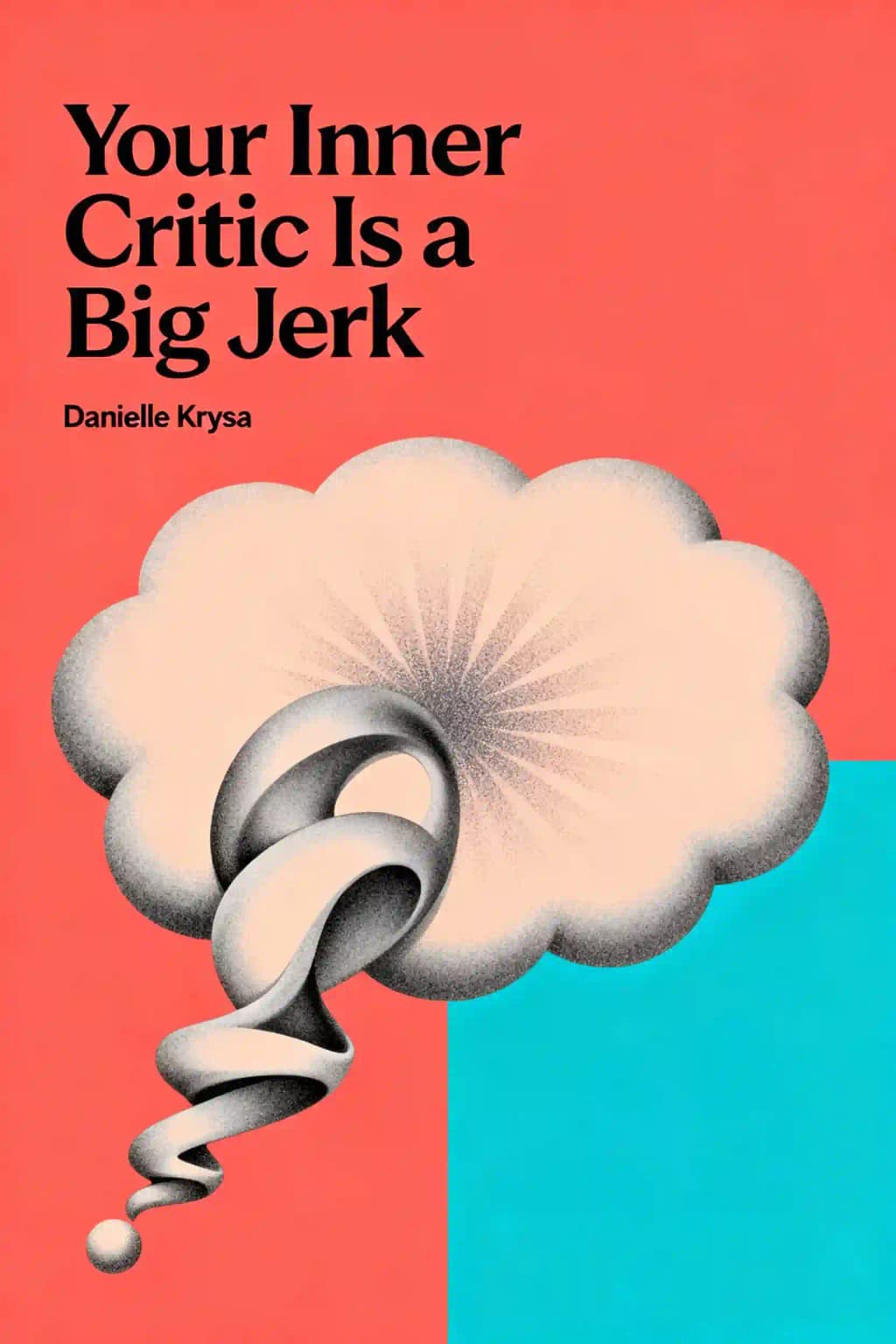
In a world where creativity is often stifled by self-criticism, Danielle Krysa's "Your Inner Critic is a Big Jerk" arrives like a breath of fresh air. This transformative guide has become a creative lifeline for thousands, including celebrities like Elizabeth Gilbert and Brene Brown, who recommend it as essential reading for anyone battling creative blocks. Born from Krysa's own artistic journey and her popular blog "The Jealous Curator," the book has sparked a movement of creative recovery across industries from tech to fine arts. What makes this work particularly powerful is how it normalizes the universal experience of creative self-doubt while providing practical tools to overcome it. As Austin Kleon, bestselling author of "Steal Like an Artist" notes, "This book is like having the most encouraging friend in your corner, cheering you on, helping you get past the finish line of your own expectations."
第 2 章
Everyone Is Born Creative (Until They're Told Otherwise)
"Every child is an artist. The problem is how to remain an artist once we grow up." This Picasso quote captures a fundamental truth: creativity isn't a rare gift bestowed upon a select few-it's our natural birthright. We enter the world bursting with imagination and the primal urge to make things. Yet somewhere along the way, many of us become convinced we're "not creative."
The contrast between children and adults is striking. Ask a six-year-old if they're an artist, and they'll respond with immediate, unquestioning confidence. Ask an adult the same question, and you'll likely witness hesitation, qualifications, or outright denial. Even professional, successful artists struggle with claiming the title "artist" without feeling like impostors.
What happened? For most of us, our creative confidence was undermined by judgment and criticism. Perhaps a teacher dismissed your work, or a parent suggested more "practical" pursuits. These moments, often forgotten consciously but remembered by our inner critics, convince us to abandon creativity.
Reconnecting with your creative self means rediscovering the pure joy of creation. Remember making macaroni masterpieces as a child? You weren't worried about gallery representation or critical acclaim-you created simply because it felt amazing. That freedom still exists within you.
The good news is that it's never too late to reclaim your creativity. Vincent van Gogh didn't start painting until his late twenties. Julia Child began cooking in her late thirties and published her first cookbook at fifty. Aboriginal artist Minnie Pwerle started painting at eighty and became internationally renowned. Your creative window hasn't closed-it's waiting for you to look through it again.
Creativity also extends far beyond traditional arts. Perhaps your medium is cake decorating, photography, or gardening. The form doesn't matter-what counts is reconnecting with that childlike joy of making something from nothing. As six-year-old Esme wisely observed, "Art is fun." Carry that simple truth with you whenever self-doubt creeps in.
第 3 章
Excuses: The Creativity Killers
"I'll start painting when my house is organized." "I need better equipment before I can take serious photos." "I'll write when I have more time." Sound familiar? Our minds generate endless excuses to avoid creative work, and when our inner critic senses this procrastination, it pounces with a million reasons not to create.
These excuses generally fall into four buckets: Fear ("I'm afraid of failing," "It won't turn out as I imagined"), The Blame Game ("My workspace is too small," "My iPhone is holding me captive"), Environment Issues ("My house is too messy," "The light isn't right"), and Time problems ("I need more than thirty minutes to make anything worthwhile," "It's too late in the day to start").
Ironically, coming up with these elaborate excuses actually requires significant creativity. Imagine if we redirected that imaginative energy toward our art instead!
If you're serious about creativity, you must take control and make time for it. Don't let daily busyness push your creative life to the back burner until it evaporates. Keep it simmering by deliberately choosing to prioritize creativity:
Block off specific times dedicated solely to creative work. Whether it's declaring Thursdays as "art days" or setting your alarm for early morning sessions, treat these creative appointments as non-negotiable. Find your most creative time of day and protect it fiercely.
Carve out a dedicated creative space, even if it's just a corner or closet. Arrange it so essential supplies are within reach and surround yourself with inspiring objects. If home space is impossible, look into affordable community studio spaces.
Commit to small daily creative practices like hand-lettering newspaper quotes or taking a daily photo. These habits make you more present and observant while integrating creativity into your everyday life.
Experience creativity beyond your studio by attending art shows, theater, poetry readings, and classes. These outings provide inspiration and help build your creative community, leaving you energized to make your own work.
When creativity feels blocked, engage in "creative housekeeping" like cutting images from thrift-shop books or organizing supplies. These meditative activities often jumpstart inspiration without pressure.
The truth is simple: we're all liars when it comes to making excuses. It's time to stop the self-deception and get on with being creative. Your creative life deserves time too, and if you tell yourself creativity isn't important, that's the biggest lie of all.
第 4 章
Breaking Free from Limiting Labels
Labels are sticky and great for organizing cupboards, but when people put clingy, hard-to-remove labels on themselves, it prevents creative growth. Your inner critic may have slapped on limiting labels like "Imposter," "Just a Mom," or "Cubicle-Dweller." It's time to peel those off and see what's actually inside.
Being a parent is all-consuming and exhausting, but it doesn't mean you can't be creative too. You'll be a happier, better parent if you make space for creativity. The key is speed! Quick creative hits like a daily Instagram photo can work wonders. Give yourself one hour a week just for you-not for errands or sleep, but to feed your creative needs.
Similarly, you can work in a cubicle AND be insanely creative! Plenty of people have "noncreative desk jobs" and burst with creativity after five o'clock. Schedule creative time like you would meetings-thirty minutes or an hour a day. Treat your studio practice like a job-it's not frivolous, it's important.
The "I'm a fraud" feeling isn't unique to creative fields. Anytime you push beyond your comfort zone, you risk feeling like an imposter. So what if people discover you weren't trained at the best culinary school? Work hard, love what you're doing, and eventually the imposter label slides right off.
The self-taught versus formally trained debate creates unnecessary insecurity. How can teaching yourself something new possibly be bad? It shows gumption, drive, and a desire to learn! Yet many talented people diminish their work by saying, "Well, I didn't go to school for this." Nonsense! Learning happens anywhere if you're open to it-just look at self-taught greats like Paul Gauguin, Vincent van Gogh, Ernest Hemingway, and Prince.
Conversely, those with formal education sometimes let their diploma become a stop sign, preventing them from trying anything outside their degree. Even successful painters with BFAs say things like "I take photos, but I'm not a photographer-I didn't go to school for it." Don't let your degree dictate your future creative boundaries.
Whether self-taught or formally educated, the School of Life offers a long, exciting road of learning with no exams to pass or fail. The common thread connecting every successful creative person is hard work. Whatever path you choose, success requires commitment and never quitting-even when your inner critic tells you to.
第 5 章
Conquering the Intimidating Blank Page
Blank paper holds endless possibilities-which is precisely the problem. Without rules or constraints, deciding what to put on that pristine white space can be paralyzing. Even with countless ideas, transferring them from your head onto that precious whiteness intimidates almost everyone.
Perfect white canvases can be terrifying to "ruin" with the first stroke. Artist Martha Rich solves this by painting on found paper and old book pages, removing the preciousness. This approach creates a starting point and transforms studies into final works.
Abstract painter Lola Donoghue approaches blank canvases with freedom, working on about ten at once. Her process involves putting down marks with whatever's at hand, being expressive without overthinking, and following "creative accidents" that dictate the direction. She's not precious about her work, often painting over parts she loves most to renew creativity.
The fear of creating something "bad" haunts many creatives. Kim Werker suggests facing this fear head-on by intentionally making something terrible. By creating something "grotesque" first, you prove you're capable of spectacularly failing, which frees you to start over knowing whatever comes next will be better.
Even after liberating yourself through intentionally bad art, you might still freeze when facing a blank page. The endless possibilities of a blank page are what make it scary. Creating constraints gives you focus and a plan. Most creative professionals set constraints for every project, giving themselves parameters to play within-like an assignment in school.
Try these approaches to conquer blank paper anxiety: Keep a big stack of cheap paper to remove preciousness; start with surfaces that already have something on them; cut up existing images to create new compositions; work with a single color you love; use random sentences as starting points; write secret messages to your inner critic before painting over them; collaborate with someone else for the first mark; try negative space or black paper instead of white; use unconventional surfaces like paper plates or lunch bags; cut precious paper into tiny pieces to create small works without pressure.
By making your own rules, you take control of the creative process and transform that intimidating blank page into an exciting starting point.
第 6 章
Transforming Jealousy into Creative Fuel
Jealousy is a powerful emotion that can either paralyze your creativity or propel it forward. Instead of letting jealousy consume you, face it head-on and transform it into admiration and action. When you're jealous of someone doing what you wish you were doing, use that feeling as a green light to move in the direction you truly want to go.
Before starting The Jealous Curator, I experienced crippling jealousy toward other artists. Discovering work I loved created a conflicting reaction-initial inspiration followed by total defeat as my inner critic whispered that I could never measure up. This bitter jealousy stopped me from living the creative life I wanted until I decided to confront it directly. By writing about artists I admired, I transformed my jealousy into something positive and liberating.
Simply acknowledging your jealousy aloud transforms it. Telling someone you're jealous of them makes them feel great, converts your jealousy into admiration, and often reveals they might be jealous of you too! My first in-person "jealousy confession" to a coworker led to her surprising admission that she'd been jealous of me all along-we both had amazing qualities neither fully recognized in ourselves.
When you can't say it directly to someone-perhaps they're a celebrity or historical figure-write a letter you don't send. This helps articulate what's bothering you and prepares you for the next step in transforming jealousy.
Create a practical action list based on what makes you jealous about others. If someone's balanced lifestyle triggers jealousy, add morning meditation or walks to your list. If you admire someone's daily creative practice, include that too. Break down each jealousy trigger into actionable items that work for you specifically.
Success rarely happens overnight. When jealous of someone's achievements, investigate what they actually did to get there-the early morning work sessions, years of hustling, showing art in coffee shops before landing gallery shows. What they have triggers your jealousy, but what they do should become part of your action plan.
It's natural to want to copy work you admire, but this leads to constantly changing styles with no personal point of view. Even when you think you've created something completely original, you may discover others have done it before. This isn't failure but an opportunity to push yourself creatively. Being influenced by others is wonderful, but challenge yourself to transform those inspirations into something uniquely yours.
第 7 章
Taming Your Inner Critic
Your inner critic is the root of creative blocks, appearing with cruel comments and reasons to quit before you even begin. This voice plants seeds of self-doubt and prevents talented people from creating amazing things. The good news: your inner critic isn't in charge-you are. With effort, you can transform this manipulative voice into a trusted ally.
To overcome your inner critic, first investigate where it came from-it wasn't present when you were happily gluing macaroni to paper as a child. Determine who your inner critic sounds like-an unsupportive teacher? Discouraging parent? Professional critic? Recognizing that this voice originated from external sources, not from within you, is crucial.
Notice exactly when your inner critic appears. It may surface during writing but remain quiet when you're cooking, or vice versa. The critic preys on insecurity, slinking away when you're engaged in activities you enjoy and excel at.
Inner critics often disguise themselves as guilt-parental guilt, family guilt, work guilt-convincing you that creative pursuits are frivolous wastes of time. Imagine if Leonardo da Vinci had felt painting the Mona Lisa was wasteful, or if J.K. Rowling had let "mom guilt" stop her from writing Harry Potter. When you unmask this guilt, you'll find your sneaky inner critic hiding behind it.
Treat your inner critic like the bully it is! Write down one of its typical jabs and read it aloud. Would you EVER say this to someone else? Of course not! So why speak to yourself this way? If someone said these things to a friend, you'd leap to their defense. This is bullying, plain and simple.
Even the most accomplished creative professionals have inner critics and self-doubt. When interviewing fifty visual artists for my book Creative Block, I discovered they ALL confirmed hearing those little whispers. The difference? They don't let these voices stop them. What makes professionals excel is their dedication (they create daily regardless of outcome), time prioritization (creativity comes first), and trust (they've learned when to listen to that voice as a helpful guide).
Even jerks are occasionally right-the trick is learning to translate their harsh delivery into useful feedback. When your inner critic speaks, take a deep breath and search for any nugget of truth beneath the nastiness. Instead of giving up, transform cruel comments into constructive guidance: "This feels busy" rather than "How many unrelated images can one person put on a collage?"
Pay attention to when your inner critic speaks up. I'm confident with my blog and "Jealous Curator" work, occasionally hear criticism when making collages, but when painting, all I hear is "You should never paint again." We often discount skills that come easily (they don't count if we're not suffering, right?). Maybe your critic has a point-forcing yourself down an unenjoyable path just to prove something isn't wise.
Why doesn't that little voice ever celebrate your successes? Instead of "Way to go!" after an achievement, it stays silent-until you start something new, then returns with "Sure that last thing was okay, but what are the chances you can pull that off twice?" This voice wields tremendous influence, so why not flip it around and make it cheer for you instead?
Try rebranding your inner critic with a friendlier name. When it says something mean or negative, stop what you're doing and write those words down. Directly below, write the positive opposite. Read the positive version aloud at full volume. Choose consciously to listen to that comment instead.
Never speak badly about your own work. When someone compliments you, simply say "thank you"-even if you're secretly itching to list all its flaws. If a friend says "I love that drawing" and you respond with "Well, I don't love that top part, and I didn't have the right pencil," your inner critic will be in heaven, rolling around in all that negativity. Instead, smile, say thank you, and practice being proud-even if you're totally faking it!
第 8 章
Rising Above Criticism and Rejection
Criticism-"the act of passing severe judgment; censure; faultfinding"-sounds painful, and it often is. While constructive feedback from trusted sources can be invaluable, the harsh criticism that stops you in your tracks is purely damaging.
I used to think I was among the few crushed by criticism, but I was wrong. While discussing Creative Block, I heard countless "me too" stories. Some featured professional critics, but most involved devastating words from trusted sources like parents and teachers. These authority figures are crucial in either building or destroying creative confidence. Constructive criticism at the right moment can inspire growth, while negative criticism at the wrong moment can permanently damage creative self-image.
I was always the art kid-painting, sewing, writing stories, putting on plays, and gluing beads on everything. When choosing my university path, I picked marine biology, feeling it was more "responsible" than art. Near the end of my first year, my dad surprised me: "I think you should switch into fine arts. It's who you are." When I worried about paying rent, he said, "Do what you love, and the money will come. And if it doesn't, you won't care, because you'll be happy."
I switched to the BFA program-only to discover I didn't fit in at art school. For three years I struggled through critiques, developing a thicker skin-though not thick enough for what happened six weeks before graduation. My professor, who usually hated my work, suddenly loved my new series. When a visiting New York artist came the following week, I volunteered to show the same pieces. Thirty excruciating minutes later, I sat stunned as my entire class tore my work apart-my professor leading the attack, saying "You should never paint again." I graduated feeling broken, and it would be fifteen years before I felt confident enough to make art again.
In all these stories of criticism, there's a common thread: If you don't let devastating criticism stop you, you can use it as fuel to propel yourself forward. Eventually, we can all say, "Thank you, harsh critics. Without your jarring words, I never would have found this new path."
When you receive unwanted feedback, your defenses naturally rise. But lower your guard long enough to listen for valuable gems. Is there any truth to the criticism? Listen carefully for truths, take them, and move on swiftly.
Many of us feel ashamed of our criticism stories and tuck them away where they repeat inside our heads. Negative criticism has power there, but you can take that power away. Share your story with someone you trust. As soon as you say it aloud, it's not nearly as upsetting, and you might even find humor in it.
Put this on your fridge: Criticism of your work is not criticism of you. It's easy to equate yourself with your work, but when someone gives feedback, whether helpful or harsh, it's not a comment on you as a person. It's simply someone's subjective opinion on a painting, performance, or piece of writing.
The internet is a vast source of cruel, faceless criticism from people who would never have the courage to say such things to your face. You may want to defend yourself against that faceless critic as you read their mean words at 2 a.m. Don't. Just click delete. There's no point in engaging.
These wise words from Canadian painter/designer Amanda Happe are among my favorite bits of advice: "No one can wrestle the pencil out of your hand. You get to keep going in absolute defiance." When I first read this, my heart skipped a beat. I immediately thought about that defining critique in my last year of university and had a major aha moment. I had always blamed my professor for the drastic halt in my artistic life. But he didn't put my pencil down. I did. It was my responsibility to pick it back up.
第 9 章
Embracing Failure as a Stepping Stone to Success
When I started writing this book, I was frozen with fear, in a full-on panic attack. I was absolutely terrified to fail. Then a wonderful friend sent me this quote: "An artist cannot fail; it is a success to be one." -Charles Horton Cooley. So true. I had already succeeded just by showing up at my keyboard. Failing would be letting fear win, closing my laptop, and walking away.
Quitting something you're passionate about-or being too scared to start it-is the only true failure. Everything else, all those crumpled papers on the floor, isn't failure; it's a beginning. A whole floor full of beginnings. Those papers are experiments, in-progress ideas, exciting mistakes that might become something brilliant. Thomas Edison created 10,000 prototypes of the lightbulb before getting it right; if he'd quit at prototype 9,999, he would have failed. The moral: Keep going!
Charles Horton Cooley's inspiring quote is among hundreds about putting failure into perspective. "Failure is a bruise, not a tattoo," "The master has failed more times than the beginner has ever tried," and "There is no innovation and creativity without failure" remind us that temporary setbacks are learning opportunities, not endpoints.
It's time to stop talking about "failure." When your creative work doesn't turn out as planned, that's not failure-it's learning, experimenting, and creating a jumping-off point for tomorrow. With the right perspective, setbacks become gifts that propel you forward rather than stopping you.
When something goes wrong creatively, you can view it two ways: as inspiration to keep trying if you're passionate about mastering it, or as a gift showing you that certain paths aren't for you. The author shares her personal experience with painting-after her professor's devastating critique, she eventually realized that collage brought her joy while painting was a struggle. She finally embraced collage fully, finding that childlike creative joy that doesn't worry about others' opinions.
When others deem your work a failure-your play is panned, your novel rejected, your paintings don't sell-it's not failure but feedback. Listen carefully, take what strengthens your work, and discard the rest. Remember that even the Impressionists were initially rejected by the Paris Salon but created their own exhibition and became one of art history's most celebrated movements.
Margaret Kilgallen's quote about the beauty in wavering hand-drawn lines reminds us that perfection doesn't exist in creative work. The beauty lies in the imperfection. Holding ourselves to impossible standards only results in ideas that never make it onto paper. Even if you end up with crumpled attempts, you've spent a day being creative-a victory in itself.
Andy Warhol advised: "Don't think about making art, just get it done. Let everyone else decide if it's good or bad... While they are deciding, make even more art." Be willing to try things daily while embracing imperfection. Not every idea becomes a masterpiece, but all projects lead somewhere-teaching something useful or pointing toward your next creation.
第 10 章
Finding Your Creative Community
Vacuums are dark and dusty places where creativity can't flourish, yet many artists insist on hiding their work there. Your sunny studio becomes a dust-filled vacuum when you protect your work from the world. But that vacuum has an Off switch-creative tribes and encouraging friends await when you step into the light.
When did our reluctance to share work begin? As children, we proudly displayed drawings on fridges and sang loudly without hesitation. Somewhere along the way, creativity became a solo act and hiding work seemed safer. If no one sees it, no one can criticize it. Whether from harsh art school critiques, gallery rejection, or unsupportive family comments, we retreat to work alone. But keeping work hidden and gathering dust ultimately sucks too-and it's your responsibility to stay out of that vacuum.
Enjoy your creative alone time, but don't keep your work hidden forever. Creativity needs sunshine to grow-not just daylight, but the warmth of trusted sources. Share strategically: first with the universe by writing down specific goals, then by owning your creative identity even if you don't fully believe it yet, and finally by showing your work to trusted humans who'll provide constructive feedback.
Finding your creative tribe delivers enormous rewards. When I was blocked before a gallery show, two local artists I barely knew listened, shared their experiences, and talked me out of my creative paralysis. To build your own tribe: write down three people you trust creatively and invite them for feedback sessions; start a creative group that meets regularly (like a "Bad Art Night" where you intentionally create terrible work); or form a critique group like painter Leah Giberson did with her friends after art school. These groups create accountability, provide support when you feel like quitting, and give you regular deadlines that keep your creative practice alive-especially valuable when juggling full-time jobs or family responsibilities.
While sharing is vital, there are two important exceptions: First, don't share big ideas with small thinkers-negative people will only fuel your inner critic and potentially stop your progress. Second, don't feel pressured to share everything on social media before you're ready. Share when you're proud and want genuine feedback from your tribe, not when you're seeking validation from internet strangers who might not be supportive.
第 11 章
Breaking Through Creative Blocks
Creative blocks are simply part of the process-not something to be ashamed of, but rather a membership badge in the club of creative people worldwide. Once you accept that blocks are an inevitable part of the process, they become far less frightening.
Through interviewing countless artists, I discovered three common block-breaking antidotes that every creative should keep handy: embrace imperfection, get into the great outdoors, and make rules. You can combine these into one solution or use them individually.
Forget perfection-it doesn't exist. Instead, celebrate imperfection, which is usually far more interesting anyway. Embrace happy accidents, as they might lead to something completely new and unexpected.
When blocked, staring at a blank page in your studio rarely brings inspiration. Open the door and head outside, even just for an hour. Fresh air and new surroundings can work wonders for breaking through creative barriers.
Successful creative people swear by constraints. Setting rules and playing within them provides structure that can free your creativity. Refer back to Chapter 4's "Top Ten Rules to Play Within" for specific guidance.
Even when doing everything right-taming your inner critic, sharing with trusted sources, accepting blocks as part of the process-it's still distressing when your idea tank is empty. This frustration is normal; creativity doesn't flow like turning on a tap. Don't beat yourself up for feeling this way, but don't get stuck there either. As artist Amanda Happe wisely notes, creative blocks might just be times to "keep creatively quiet"-we shouldn't expect "an uninterrupted procession of meaningful creation."
When creative blocks strike, identifying the source is crucial. Like a plumber unclogging a pipe, you need to get in there and find what's causing the obstruction before things get messy. Common culprits include your inner critic (the loudest block-maker), outside criticism (which can feel like boulders in your path), deadlines (terrifying but potentially motivating), commissions (scary because they limit freedom), and life itself (breakups, moves, stress). For life-related blocks, continuing creative work might actually help you through tough times, much like exercise when you're overwhelmed-it seems counterintuitive but ultimately energizes you.
Beyond blocks lies the magical, time-defying "zone"-where ideas flow freely, you forget to eat, and interruptions feel criminal. Sometimes you stumble into this state unexpectedly; other times you must push harder to enter. You might start with something simple or silly before creative sparks fly, music gets louder, and suddenly it's 3 a.m. These perfect creative moments are what it's all about. Relish them, and during blocks, trust that this magical zone awaits on the other side.
The creative life is an intricate tapestry woven from experimenting, carving out time, finding your tribe, and making criticism work for you. There will be snags, but imperfections make the journey more beautiful. Being creative isn't simple-it's emotional, exciting, rewarding, and challenging. But it doesn't have to be lonely. By owning our "I am creative" labels, we join a worldwide club of all ages and skill levels. Even the greats have days when ideas don't show up, but they simply try again tomorrow. This creative tribe is there when you need to bounce ideas, cry after criticism, or celebrate successes. Remember the joy in creating for creation's sake, embrace imperfection, and tell your inner critic to take it down a notch, or it won't make it through the clubhouse door.