第 1 章
America's Unraveling Tapestry: How Our Nation Lost Its Way
In the summer of 2018, a simple act sparked catastrophe. California rancher Glenn Kile, attempting to seal a wasp nest with a metal stake, inadvertently created a spark that ignited the bone-dry grass around him. Despite desperate attempts to extinguish the flames, the resulting Mendocino Complex Fire consumed an area twice the size of New York City. Though Kile struck the spark, deeper forces had primed the land to burn after decades of warming and drought.
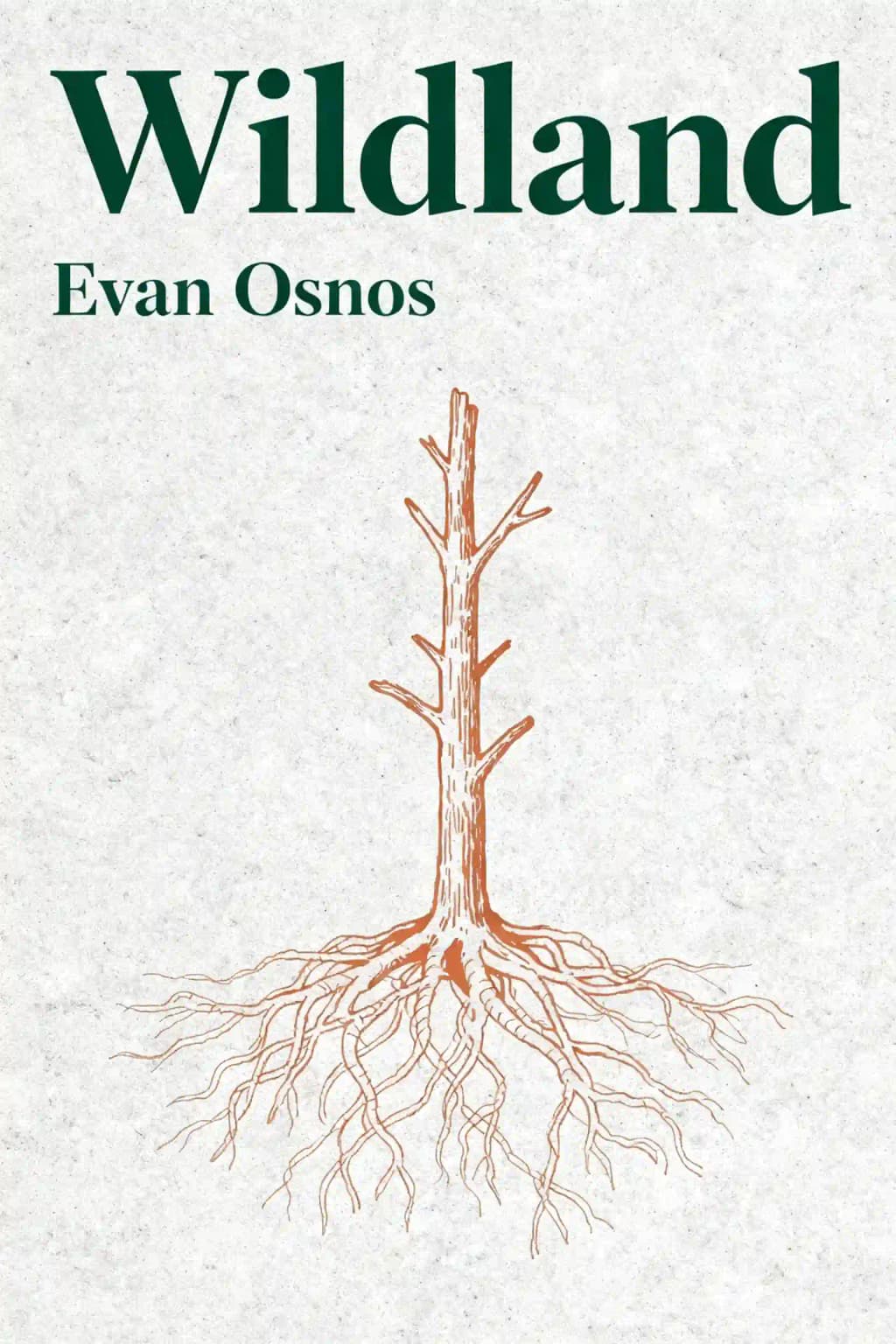
This wildfire serves as both literal fact and powerful metaphor for America's political landscape during the Trump era-a parable for a time when land and people seemed to mirror each other's rage. Evan Osnos' "Wildland" has become required reading in political science departments nationwide, with figures from Barack Obama to Bill Gates citing it as essential for understanding America's fractured condition. The book's genius lies in its intimate portraits of everyday Americans across the socioeconomic spectrum, revealing how the same forces that set California ablaze had been gathering in our politics, economy, and culture for decades.
第 2 章
The Geography of American Division
When Osnos returned to America in 2013 after years abroad as a foreign correspondent, he found a nation transformed. In Washington DC, stark contrasts abounded-from the comforts of clean water and air to profound inequality, with the average white family being eighty-one times richer than the average Black family. Most disturbing was Americans' adaptation to regular mass shootings, with public service announcements teaching survival tactics while political action failed to materialize after tragedies like Sandy Hook.
To understand this transformation, Osnos returned to three places he had previously lived-Clarksburg, West Virginia; Chicago; and Greenwich, Connecticut-examining how wealth inequality, segregation, and economic liberty had transformed American lives and beliefs. These locations formed a triangulation of American experience: the coal country of Appalachia, the segregated urban landscape of Chicago, and the hedge fund capital of America.
The political machinery connecting these places had broken down. Public trust in government had collapsed from 77% in 1964 to just 18% by 2014. Congress had become disconnected from the country it represented: 82% men, 83% white, and 50% millionaires. Meanwhile, media fragmentation had created separate information universes-by 2014, Fox News had triple CNN's ratings and had introduced a new political vocabulary around immigration, security, race, and government.
Through thousands of conversations over seven years, Osnos explored fundamental questions about responsibility, truth, government, safety, and citizenship. He sought to understand how Americans had lost their talent for "the rational approach, reason, the meeting of minds in honorable agreement after open argument," and whether America's basic moral commitments to rule of law, truth, and opportunity still held true.
第 3 章
The Hedge Fund Capital and Its Discontents
Greenwich, Connecticut has played a recurring role in American wealth older than the republic itself. From its early fortunes in farming and quarrying to Gilded Age mansions rivaling European palaces, the town has embodied the tension between Puritan morality and economic ambition, between service and profit, restraint and greed.
By the mid-20th century, Greenwich had become home to executives fleeing New York taxes, but displaying wealth was considered declasse-Morgan Stanley executives competed to wear the cheapest watch. The town's coat of arms declared "fortitudine et frugalitate"-courage and thrift.
This changed dramatically when hedge funds transformed Greenwich in the early 2000s. After the dot-com bubble burst and 9/11, the Fed slashed interest rates, pushing large investors toward "alternative investments." By 2003, hedge funds received $72 billion-quadruple the previous year's level. Greenwich became a hedge fund mecca, controlling one-tenth of the $1.2 trillion global industry. Funds dominated two-thirds of local commercial real estate, driving prices to $80 per square foot-double Manhattan rates.
The transformation was physical and cultural. Throughout town, imposing "Greenwich walls"-tall barriers of chiseled stone-replaced the traditional low stone walls of New England farms. Reverend William Evertsberg noted, "I've never worked in a place where the local culture is so dominated by one industry. Almost literally, every breadwinner in my congregation worked on Wall Street. Money was on the tip of everyone's tongue all the time."
This wealth concentration had profound consequences. As Greenwich wealth soared, American inequality reached historic heights. Between 1979-2009, average worker pay rose just 8%, while the top 1% amassed wealth at levels unseen since 1928. The wealthy lived longer, were healthier, and experienced less stress. This wasn't about some being "left behind"-the rich had raced ahead, primarily through investment returns rather than salaries.
Despite rhetoric about the American Dream, upward mobility was declining. Only 50% of children now earned more than their parents (down from 90% for those born in 1940). Economist Raj Chetty showed how opportunity varied dramatically by zip code. This inequality actually hurt economic growth, but many in Greenwich remained focused on pushing boundaries to maximize profits.
第 4 章
The Politics of Resignation
While money in politics ballooned to unprecedented levels, most elected officials responded with mere "thoughts and prayers"-ritual expressions of concern without action. Lawrence Lessig, a Harvard legal theorist, called this the "politics of resignation" and believed the system needed the political equivalent of an "atomic bomb" to prevent these corrupt "bones" from setting permanently.
In 2014, Lessig launched a quixotic experiment: a super PAC called Mayday designed to elect candidates who would pass campaign finance reform-essentially "a super PAC designed to drive its own species into extinction." Though political professionals dismissed it as "performance art," Lessig traveled the country warning audiences about the emergency facing American democracy.
Living in Beijing, Osnos often told Chinese people that America minimized corruption through rule of law and a free press. After a year in Washington, he was less certain. The line between legal influence and criminal corruption had blurred dangerously. When Virginia Governor McDonnell was convicted on corruption charges, Representative Jim Cooper told Osnos, "I think members will be secretly terrified. Those sorts of favors are astonishingly commonplace on the Hill."
Meanwhile, Mitch McConnell had mastered the filibuster, enabling senators representing just one-tenth of Americans to block legislation. During Obama's presidency, McConnell deliberately fostered congressional dysfunction, betting voters would blame the White House. He cast Democrats as illegitimate opponents worth defeating at any cost, even threatening to default on national debt as "a hostage worth ransoming."
As Americans recused themselves from governance, economic and political elites refined systems ensuring their success while insulating themselves from accountability. In Washington, this meant fundraising, gerrymandering, and influence peddling; in Greenwich, declining taxes and deregulation. By 2014, only 7 percent of Americans reported having confidence in Congress-the lowest level Gallup had ever recorded for any institution.
第 5 章
Local News and Democracy's Decline
In 1998, fresh from college, Osnos joined The Exponent Telegram in Clarksburg, West Virginia as a photography intern. This small city of 16,400 nestled in northern West Virginia's green highlands had ambitious origins dating to 1785, when settlers envisioned creating "the Athens of Allegheny." The city flourished through coal shipping and later natural gas and glass manufacturing, attracting European craftsmen who gave it a cosmopolitan atmosphere despite its size.
The Exponent Telegram operated from a stone headquarters with columns, publishing morning and afternoon editions daily. The papers traced their roots to 1861, originally representing fierce partisan positions-the Exponent leaning left, the Telegram right. By mid-century, economic incentives had moderated the papers' politics. Editor Bill Sedivy ran the operation with ambition to make it West Virginia's best newspaper. Rather than cutting staff to boost profits, he convinced owners to expand to twenty journalists.
Appalachia had always supported numerous small newspapers due to practical geography-mountain roads made distribution difficult beyond twenty miles. These papers formed what Arthur Miller called "a nation talking to itself," providing the scrutiny essential to democracy that Alexander Hamilton recognized in 1788. Studies showed local newspaper readers were more likely to vote and run for office, while creating an "imagined community" through shared experiences.
Yet local news faced existential threats. As news moved to television and the Internet, political effects aligned with Neil Postman's warnings of a world "populated by strangers" with only "superficial facts about each other." Digital news organizations abandoned nonpartisanship for provocative politics. Jeffrey Berry and Sarah Sobieraj described how commentators relied on "overgeneralizations, sensationalism, misleading information, ad hominem attacks, and belittling ridicule" because emotional responses kept audiences engaged.
This shift altered Americans' mental geography-they learned less about local communities and more about distant national politics. Daniel Hopkins found that Americans increasingly couldn't name their governors while vice-presidential recognition remained steady. By 2012, most political donations went outside voters' states, and when asked to name disliked politicians, only 15% named someone from their state.
Between 2005-2020, over 2,100 American newspapers closed, with newsrooms losing 45% of staff-what journalist Farai Chideya called a "mass extinction event." Most Americans remained unaware of this crisis, with 75% believing local news outlets were financially sound. The consequences were significant: research showed that without local journalism, government officials operated with less integrity and efficiency, citizens voted less frequently, were less informed, and corporate wrongdoing went unchecked.
第 6 章
Chicago's Tale of Two Cities
On April 23, 1905, Osnos' twenty-one-year-old great-grandfather Albert Sherer was walking home after midnight on Chicago's South Side when armed men ambushed him. Despite dismissing them as boys playing a prank, they shot him twice-once in the chest near his heart and again in the back-before stealing just eighty cents.
In 1905, Chicago had more homicides than any other American city, earning Lincoln Steffens' description as "first in violence, deepest in dirt; loud, lawless, unlovely." The shooting made front-page news because Albert was a University of Chicago student, and the school was a source of civic pride.
Chicago embodied America's spirit of reinvention. To escape swampy conditions, the city spent two decades raising streets and buildings up to fourteen feet, even relocating entire mansions across town. Robert Herrick's 1898 novel celebrated the city as a "stupendous piece of blasphemy against nature." In 1909, architects Daniel Burnham and Edward Bennett proposed an ambitious plan to connect people to Lake Michigan, declaring "the lakefront by right belongs to the people" and emphasizing public space as essential to democracy.
The Great Migration beginning in 1914 brought over 7 million Black people from the South seeking safety and opportunity, transforming Chicago's demographics from 2% Black to 33% by 1970. The city became known optimistically as the "Promised Land." However, this migration triggered fierce backlash-white neighborhoods formed restrictive covenants barring Black residents, confining them to the "Black Belt" on the South Side. Federal "redlining" policies prevented mortgages in Black neighborhoods, making Chicago more segregated than Richmond, Virginia by 1940.
A decade into the twenty-first century, Chicago's veneer of prosperity masked profound inequality. Richard M. Daley had transformed downtown with Millennium Park's twenty-five acres of grass, trees, and art on former rail lines. White-collar Chicago thrived as international companies moved in and unemployment dropped to 4.1 percent. The Economist even praised the city for "humming with prosperity" and "exuding vitality."
But this prosperity was confined to a city within the city. Chicago had become a quintessential case of American inequality, driven by two fundamental factors: the collapse of industrial jobs and persistent segregation. Once-mighty employers like Western Electric (43,000 workers), International Harvester (14,000), and Sears (10,000) had vanished, devastating predominantly Black and Latino neighborhoods.
The demolition of notorious housing projects like Cabrini-Green and Robert Taylor Homes hadn't improved integration. Paul Fischer tracked thousands of families who moved out of public housing and found virtually all wound up in heavily Black census tracts. Segregation cut Black residents off from economic opportunity-while North Side residents had 700,000 jobs within a thirty-minute commute, South Siders had just 50,000.
The disparities between Chicago's high-income white communities and low-income Black communities had become so extreme that Harvard sociologist Robert Sampson concluded they represented "a difference of kind, not of degree." In measures from low birth weight to homicide, the gaps were staggering. While homicide rates had dropped by at least 70 percent since 1990 in cities like New York and Los Angeles, violence remained concentrated in specific Chicago neighborhoods.
第 7 章
The Culture of Financial Corruption
From 2007 to 2010, hedge fund manager Chip Skowron earned $31 million while building a lavish Greenwich hilltop home featuring seven bedrooms, eleven bathrooms, a wine cellar, billiards room, spa, pool house, and eight-car garage surrounded by a handsome stone wall. His collection of rare sports cars included a Ferrari 458, an Aston Martin Vanquish, an Alfa Romeo 8C Spider, and an Ariel Atom II.
The transformation of Greenwich and the American economy into a finance-dominated system stemmed from specific decisions that reshaped wealth in America. For two centuries, Wall Street occupied a narrow slice of the economy, but everything changed when the NYSE scrapped partnership requirements in 1969, allowing banks to go public and access vast pools of capital. Meanwhile, Milton Friedman's 1970 doctrine that "the social responsibility of business is to increase its profits" gained traction, followed by Michael Jensen's influential "Theory of the Firm" advocating shareholder primacy.
In late 2007, Skowron was betting big on Human Genome Sciences, accumulating $65 million in shares of the biotech company developing Albuferon, a promising hepatitis C drug. To gain "informational edge," he cultivated Dr. Yves Benhamou, a liver specialist on the drug's steering committee, lavishing him with gifts-5,000 euros, luxury hotel stays, and personal tours. When the drug trial hit setbacks with one patient dead and another hospitalized, Benhamou tipped off Skowron, who immediately sold 46% of his holdings. After the public announcement, the stock plummeted 44%, allowing Skowron to avoid $30 million in losses.
Skowron's life was unraveling despite his wealth. During business trips, he regularly hired prostitutes and picked up women in bars, always carrying $2,000 in his wallet and sometimes spending triple that amount. He barely noticed when he started bribing Benhamou, rationalizing that "$5,000 was just like my wallet, plus a little more." His behavior oscillated between shame and cynical justification, comparing his actions to everyday transactions like Tinder.
Financial ethics had deteriorated dramatically, with industry icon John Bogle lamenting the shift from "there are some things one simply doesn't do" to "if everyone else is doing it, I can do it too." A quarter of financial professionals admitted they would engage in insider trading for $10 million if they could avoid consequences.
The increase in white-collar crime partly reflected expanded criminalization of previously legal activities. But the deeper issue was the growing "psychological distance" between perpetrators and victims in modern business transactions. As one Greenwich executive noted, modern financiers made money by "trading on money" where legal lines blurred: "If they're making hundreds of millions, somebody is making billions... they want to win at all costs."
第 8 章
From Gangster Disciples to Systemic Barriers
To understand power in Chicago requires examining the Gangster Disciples, the city's largest criminal gang that evolved from street-corner drug dealers in the 1960s to a 30,000-member organization by the mid-1990s. By the end of the century, federal arrests and public housing demolition fragmented the gang into dozens of smaller cliques, triggering increased violence as they competed for territory.
Maurice "Reese" Clark, a 44-year-old former Gangster Disciple who spent his twenties in prison for attempted murder, kept a photo album filled with funeral programs of neighborhood shooting victims. Each death compounded community trauma, driving middle-class families away-Chicago lost 181,000 Black residents between 2000-2010.
Clark's family history traced back to enslaved ancestors near Birmingham. His grandmother Lillian migrated to Chicago, where she married mechanic Floyd Sanders who opened an auto shop. The family eventually bought a brick bungalow in South Shore, a proud Black neighborhood near Lake Michigan. Born in 1971, Clark grew up with a stepfather who worked for the Department of Streets and Sanitation, while his biological father lived nearby but remained estranged.
When Clark tried to meet his father as a child, he was turned away by a woman who answered the door. Growing up in West Pullman on Chicago's far South Side, Clark experienced a stable Black community with block clubs and multi-generational gatherings. His mathematical talents emerged early-he'd calculate grocery totals including tax before reaching the cashier. His mother, seeing the deteriorating conditions at his neighborhood school, enrolled him in Mount Greenwood, a predominantly white Irish Catholic area where Black students faced hostile protests and racial slurs.
By 1987, when Clark was sixteen, Chicago's public schools were declared the nation's worst by the U.S. education secretary. At Fenger High, Clark encountered non-student gang members using the school as a base, while budget cuts decimated supervision, sports programs, and teaching staff. Even his math teacher seemed defeated, telling Clark to "put your head down" and promising to pass him regardless.
After serving eight years in prison, Clark emerged in 2001 calling his release date his "new birthday"-the day he "came out a grown man." Despite his eagerness to rebuild his life, Clark found minimal support from his overwhelmed parole officer. Through a temp agency, he secured warehouse work in suburban Bolingbrook where his mathematical aptitude helped him excel at inventory management. Just as he approached permanent employment after his 90-day probation period, management pulled him aside with devastating news: corporate policy prohibited hiring felons, illustrating the systemic barriers faced by the formerly incarcerated.
第 9 章
The Politics of Fear and Division
America's gun culture wasn't rooted in frontier history but emerged only in the 1970s. Previously, even NRA president Karl Frederick testified against "promiscuous toting of guns" in 1934, and Ronald Reagan opposed public carrying of loaded weapons in 1967. The shift began with Jeff Cooper's 1972 book promoting a "Combat Mindset" for civilians amid perceived rising dangers.
Facing declining hunting participation and stagnant sales, the gun industry turned to politics. In 1977, conservatives led by Harlon Carter took control of the NRA, transforming it from a recreational organization into a political force. They successfully lobbied for relaxed concealed-carry laws starting in Florida in 1987, creating new markets despite America becoming statistically safer.
The gun industry learned to exploit moments of fear to drive sales. The 1992 Los Angeles riots, broadcast live, created a new self-defense market. After 9/11, survivalist fantasies "crossed over from being the lunatic fringe to more serious," with fears of terrorists "taking out the electrical grid."
A profound shift had occurred: while gun ownership declined from over half of households in 1977 to less than a third by 2014, total gun sales continued climbing. The average gun owner now possessed eight firearms. The division between armed and unarmed Americans had become so stark that surveys showed more Americans feared "gun control" than "loved ones dying."
Donald Trump's political persona emerged from a vision of America as perpetually victimized. As early as 1987, the forty-one-year-old developer told New Hampshire voters that America was getting "kicked around" by allies who "laugh at us." He promised Americans would "make one hell of a lot of money" from countries that had "taken advantage." By 2011, Trump embraced birtherism, falsely claiming Obama wasn't a U.S. citizen despite available evidence.
At campaign rallies, Trump deployed powerful set pieces about Mexican criminals "roaming around, shooting people"-describing it as a hidden scourge "nobody wants to talk about." He embellished his Laredo visit with dramatic flourishes, claiming he told pilots to "fly a little bit away from the border" for safety and that his wife greeted him in tears upon his safe return. Trump transformed the border from a welcoming threshold into a symbol dividing chaos from security, "them" from "us."
Trump's candidacy electrified America's far-right groups who had been searching for a standard-bearer since the Tea Party's decline. Neo-Nazi site The Daily Stormer endorsed him twelve days after his announcement, urging white men to "vote for the first time in our lives for the one man who actually represents our interests." Richard Spencer, a self-described "identitarian" with degrees from prestigious universities, believed Trump tapped into white Americans' unconscious fear that "their grandchildren might be a hated minority in their own country."
第 10 章
The Assault on Truth and Democracy
In Washington, Trump's presidency introduced its own version of radical self-reliance through what Steve Bannon called the "deconstruction of the administrative state." This approach treated federal institutions not as implementation tools but as defeated enemies requiring occupation. The administration systematically reduced federal functions through tactics that Nancy McEldowney, a 30-year Foreign Service veteran, recognized from hostile takeovers: "you decapitate the leadership, you compartmentalize the power centers, you engender fear and suspicion."
Trump expected extraordinary devotion from his advisers, who competed to demonstrate their loyalty. Cabinet meetings became showcases of sycophancy, with officials like Agriculture Secretary Sonny Perdue telling Trump, "I just got back from Mississippi. They love you there." The administration's refusal to consider Democrats or even anti-Trump Republicans led to appointing novices to critical positions, including a car care branch manager as an assistant to the energy secretary.
The administration deliberately left hundreds of critical jobs unfilled, fulfilling Trump's campaign promise to "cut so much your head will spin." In his first nine months, 79,000 full-time workers quit or retired-42 percent more than during the same period under Obama. This hollowing culminated in the longest government shutdown in history when Trump demanded $5.7 billion for his border wall.
Trump's administration undermined the very notion of verifiable reality. From Sean Spicer's inauguration crowd claims to Kellyanne Conway's "alternative facts," they rejected the concept of a common truth. By declaring the press "the enemy of the people" and telling supporters "what you're seeing and what you're reading is not what's happening," Trump dismantled the idea of an empirical commons. For an already atomized population, this offered an exhilarating antidote to loneliness-solidarity defined by doubt. Steve Bannon revealed the strategy plainly: "The real opposition is the media. And the way to deal with them is to flood the zone with shit."
As Americans became less physically and socially mobile, ideas raced around without traditional gatekeepers. People voted less in local elections while adopting fierce positions on distant issues. The political and economic changes strained belief systems, with conspiracy theories like Pizzagate and QAnon finding audiences among those feeling excluded from American prosperity. These delusions offered both a reason to distrust elites and the satisfaction of having "special access to the truth."
第 11 章
The Reckoning and Resistance
The Trump era exposed Washington's poisonous personal ambition, punctured the folklore that decisiveness trumped expertise, and awakened Americans from electoral apathy. Trump unwittingly demonstrated Elihu Root's wisdom: "Men must either govern or be governed." By 2018, only 47 percent of Americans reported being "extremely proud" to be American, the first time this figure fell below majority. The era generated political antibodies and shook Washington politics so forcefully that issues frozen for a generation began to thaw, often under horrific pressure.
In February 2018, a shooter killed seventeen people at Marjory Stoneman Douglas High School in Parkland, Florida. Unlike previous school shootings, Parkland students-relatively prosperous and well-connected-used social media to force the country to witness their trauma. When politicians offered "thoughts and prayers," the students publicly confronted them. In a televised town hall, seventeen-year-old Cameron Kasky repeatedly pressed Senator Marco Rubio about accepting NRA donations, exposing the senator's evasiveness and political cynicism.
By 2019, gun politics were transforming dramatically. The new Democratic House majority passed universal background checks-the first major gun-control bill in 25 years. Meanwhile, the NRA descended into internal feuding amid corruption allegations. Leaked records showed CEO Wayne LaPierre had billed the organization for $275,000 in luxury clothing purchases and another quarter-million in personal travel expenses, triggering an investigation by New York's attorney general.
As the pandemic paralyzed America in 2020, it forced a national reckoning about the public good and whom we were willing to help or ignore. The crisis exposed the nation's weakened public health infrastructure and widened America's economic chasms. Employment dropped to its lowest level since 1975, with the bottom quarter of wage earners losing 11 million jobs-triple the losses of the top quarter.
Unlike after 9/11, when Americans united in shared purpose, the pandemic broke open existing fault lines in American society. Decades of eroded trust in institutions fueled resistance to public health measures, with some viewing restrictions as assaults on freedom. The virus devastated vulnerable communities with surgical precision, revealing America's dependence on "faceless" essential workers-grocery clerks, warehouse staff, mail carriers, and healthcare workers.
第 12 章
America's Uncertain Future
The insurrection of January 6, 2021 saw protesters using stolen police barricades as ladders to scale the Capitol, smashing windows with flagpoles and fire extinguishers before pouring inside. Officer Eugene Goodman heroically lured rioters away from the Senate chamber, allowing Congress members to escape as the mob chanted "Where is Pence?" and "Hang Mike Pence!"
Seven Americans died in the mayhem and aftermath. Police officers suffered severe injuries-one tasered into a heart attack, another losing an eye. The most symbolically powerful death was Ashli Babbitt, a 35-year-old Air Force veteran shot while climbing through a broken window with a Trump banner around her shoulders. Like many insurrectionists, Babbitt had military service (as did nearly 20% of those arrested) and financial troubles (like 60% of those arrested).
Democracy survived through "scattered points of resistance"-principled judges, Georgia's secretary of state, and the bravery of Officer Goodman. Though some Republicans briefly condemned Trump, most quickly returned to defending him, including Lindsey Graham who declared "we can't do it without him."
Despite Biden's victory, the election revealed a deeply divided nation-74 million Americans remained loyal to Trump. In Greenwich, Trump actually gained support compared to 2016, especially in the wealthy Golden Triangle district where he extended his lead from two to thirteen percentage points. Jim Campbell, a Trump supporter, praised the president's accomplishments but admitted his affection came down to Trump's combative style: "I have always admired Trump's willingness to lead the fight."
For Clarksburg's newspaper editor John Miller, the pandemic brought both personal tragedy and community disconnection as he watched friends die and social bonds fray. Biden's inauguration emphasized democracy's fragility, calling for unity while Reverend Barber reminded him that justice must precede tranquility.
Americans like Chicago's Tenesha Barner found unexpected strength in community connections during their darkest moments, discovering that even the "forgotten people" were not forgotten by those who truly mattered. As Tenesha reflected on her eighteen years in the same apartment, she expressed a desire for peace away from conflict-perhaps in the woods, though she laughed at her own aversion to bugs and rain. She felt her work wasn't done yet in her community, believing that when God made her financially stable enough to leave, she wouldn't be coming back.