第 1 章
A Library Where Dreams Find Their Way
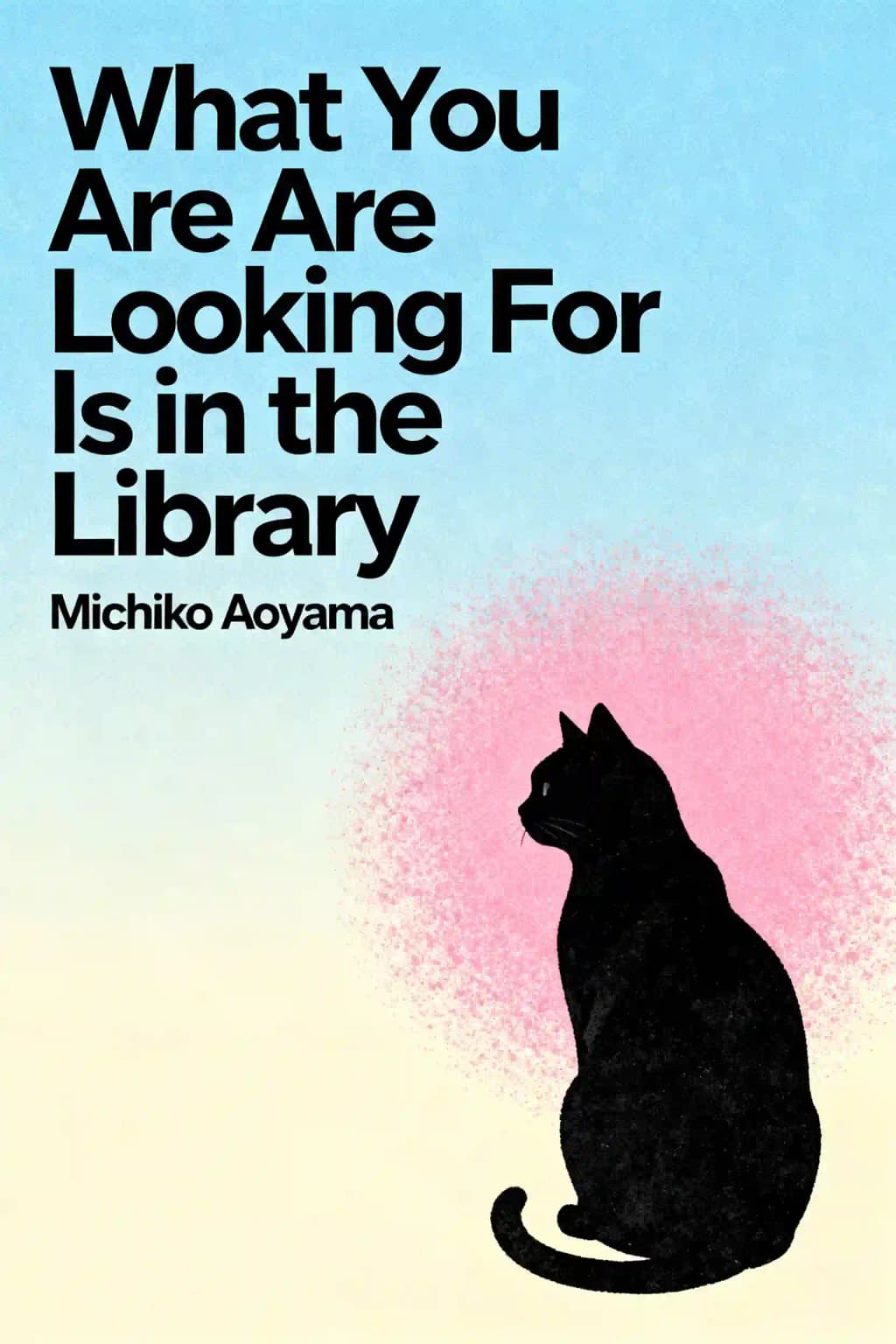
What if the answer to your most pressing life question was waiting for you on a library shelf? In Michiko Aoyama's heartwarming novel "What You Are Looking For Is in the Library," this possibility becomes a transformative reality for five lost souls in Tokyo. The book has captured the imagination of readers worldwide since its 2018 publication, becoming a global phenomenon with translations in over 20 languages. Beloved by celebrities like Emma Watson, who called it "a gentle reminder of literature's healing power," the novel has sold over 2 million copies and inspired a Japanese television adaptation. Aoyama, formerly a librarian herself, crafted this story during Japan's period of economic uncertainty, offering a beacon of hope through the power of books and human connection. Through the mysterious librarian Ms. Komachi, who seems to know exactly which book each visitor needs, we discover that sometimes the path forward isn't about finding answers but asking better questions.
第 2 章
The Art of Seeing Beyond Job Titles
Tomoka's story begins in the women's clothing section of Eden department store, where she feels trapped in a life that doesn't match her Tokyo dreams. At 21, she's painfully aware of her limitations-no special skills, no prestigious education, and worst of all, no clear direction. The tight black skirt and coral pink blouse of her uniform feel like a prison, a constant reminder that this job was the only offer she received after thirty rejections.
Her only workplace friend is Kiriyama from the eyeglass shop, who challenges her when she describes wanting a new job with "no uniform" and "weekends off"-pointing out she's only listing perks, not actual work responsibilities. When he shows her a career-change website, the required skills and qualifications only highlight how little she has to offer.
The turning point comes through an unexpected source: Mrs. Numauchi, the 55-year-old part-timer Tomoka has secretly looked down upon. When an angry customer brings in a shrunken sweater, Tomoka watches in amazement as Mrs. Numauchi transforms the situation. She empathizes with the customer's mistake while gently noting the hand-wash tag, offers a solution using hair conditioner to restore the garment, and cleverly reframes the "mulberry" color as fashionable "magenta." When the customer mentions an upcoming lunch with a friend, Mrs. Numauchi even recommends a perfectly matching scarf and demonstrates how to tie it.
"Customers in that situation like to feel they've been listened to, and understood," Mrs. Numauchi explains kindly afterward. The interaction forces Tomoka to confront her own arrogance-she's been on an ego trip, thinking herself superior to this "just a part-timer" who clearly possesses skills she lacks.
This revelation coincides with Tomoka's visit to the community library, where the enigmatic librarian Ms. Komachi hands her a children's book, "Guri and Gura," and a felt frying pan. Inspired by the story of two mice who find a giant egg and bake a castella cake, Tomoka attempts to make one herself. Her first try is disastrous-burned edges with a sunken, rubbery center-but rather than give up, she laughs and commits to learning.
For a week, she practices daily, researching tips, buying proper equipment, and gradually improving her technique. By the seventh day, she achieves the perfect fluffy castella. This cooking journey transforms more than just her baking skills-she starts preparing proper meals, making rice balls for lunch, and cleaning her apartment.
When she shares her successful castella with Mrs. Numauchi, they connect over childhood memories of "Guri and Gura," discussing different interpretations of the story. Mrs. Numauchi values how the mice cooperate to solve problems, while Kiriyama remembers animals sharing cake. Through this simple children's story, Tomoka begins to see that skills develop through practice and that finding one's path isn't about grand epiphanies but small, consistent steps forward.
第 3 章
Parallel Paths: When Neither Job Is Secondary
Ryo's story begins with workplace injustice. At 35, he's established in the accounts department of a furniture manufacturer when Miss Yoshitaka, the president's niece, falsely accuses him of harassment after he confronts her about doctoring an expense receipt. The situation leaves him questioning his entire career path and wondering if there's more to life than corporate politics.
The strain follows him home, where he snaps at his girlfriend Hina during dinner when she excitedly discusses her online shop success. "It's just a hobby," he dismisses, triggering their first real argument when she retorts sharply, "It's not a hobby." Left alone for the weekend, Ryo finds himself drawn to the community library where the mysterious Ms. Komachi hands him "How Do Worms Work?"-a book he never would have chosen himself.
The chapter about plant root systems reveals a profound insight: plants maintain equal focus above and below ground, with neither aspect being secondary. This connects to a concept he'd heard about called "parallel careers," where a person pursues two professional paths simultaneously, neither subordinate to the other.
Intrigued, Ryo visits Cats Now Books in Sangenjaya, a cozy shop with new books near the entrance and secondhand volumes beyond a lattice door where three cats roam freely. There he meets Yasuhara, the owner who embodies this parallel career philosophy, balancing his bookshop with freelance editing work.
"Neither job is secondary," Yasuhara explains, stroking a mackerel tabby. "I get more from the shop in emotional satisfaction than monetary profit." His wisdom about turning "don't" into goals and the importance of connections strikes Ryo deeply. When Ryo expresses concern about starting something new at his age, Yasuhara counters with examples of people who found success later in life, including a 65-year-old who opened a popular cafe.
This perspective shift emboldens Ryo to pursue his dream of opening an antique shop while keeping his day job. When he visits Hina to share his spreadsheet for this plan, she surprises him by proposing marriage first: "Let's get married. The sooner the better." When he worries about failure, she dismisses his concerns and immediately starts planning their crowdfunding campaign.
"Trust makes the world go round," she explains, noting how it underlies all transactions from credit cards to business relationships. This insight parallels Ryo's workplace situation, which unexpectedly resolves when the president apologizes to him-Miss Yoshitaka admitted her fault after Mr. Taguchi defended Ryo.
To prepare for his parallel career, Ryo creates a troubleshooting manual to streamline his accounting work. With Hina contacting experts and Ryo meeting Mr. Nasuda about shop locations, they set themselves in motion toward a future that honors both security and passion. As Yasuhara had told him, "One day is going to become tomorrow"-a reminder that small steps today create new possibilities for the future.
第 4 章
The Merry-Go-Round of Life's Expectations
Natsumi's breakdown at her daughter's daycare center marks the beginning of her story. At 40, the former magazine editor finds herself trapped between her professional aspirations and the demands of motherhood, feeling like she's failing at both. After retrieving her daughter Futaba, whose temperature has returned to normal, she struggles with the child's defiant "no" phase while trying to maintain some semblance of order in their messy apartment.
When her husband Shuji returns home smelling of alcohol, their argument escalates quickly as Natsumi unleashes her frustrations about shouldering the burden of childcare and housework while sacrificing her career. "I'm the only one who loses out," she tearfully exclaims. The fight stops abruptly when they notice Futaba watching them, trying to "tidy up" to make them stop fighting. Seeing her daughter's quivering face, Natsumi is overwhelmed with guilt for blaming the child for her life's disappointments.
The next day brings an unexpected visit from Madam Mizue, an author whose work Natsumi had edited before leaving her position at Mila Publishing. Over lunch, Mizue shares how writing her novel was both stressful and joyful, likening it to having children again. She thanks Natsumi for being the "midwife" to her book, which releases Natsumi's pent-up emotions about career jealousy and maternal guilt.
Mizue wisely describes this as "the merry-go-round" where everyone envies someone else's life circumstances: "I envy you your child and husband. You envy me my freedom to write. Someone else envies me my success, while I envy their youth." She explains that "nothing is better or worse-there is no definitive state," encouraging Natsumi to see changed plans not as failures but as opportunities for unexpected wonderful things.
This conversation prepares Natsumi for her visit to the community library, where Ms. Komachi recommends "Door to the Moon." Reading the chapter "The Two Eyes of the Heart," Natsumi learns about the rational "Sun Eye" and the intuitive "Moon Eye"-different ways of perceiving that must work in harmony. Playing with Ms. Komachi's felted globe, she has an epiphany about her victim mentality: like geocentrism, she's been seeing herself as the stationary center with everything revolving around her.
This realization helps Natsumi identify what she truly wants-to be a literary-fiction editor-and discover that Cherry Peach Books is recruiting. The path forward becomes clear not through abandoning her responsibilities but through finding a workplace that values both her professional skills and her role as a mother.
When she returns to thank Ms. Komachi, Nozomi accidentally reveals that the librarian was formerly a school nurse and special needs teacher. Ms. Komachi smiles at Natsumi's gratitude for the book recommendation and wisely notes that "it's how you read a book that is most valuable, rather than any power it might have itself." This insight encapsulates Natsumi's journey-finding value not in perfect circumstances but in how she chooses to interpret and respond to life's challenges.
第 5 章
Finding Your Voice in a World That Doesn't Listen
Hiroya's story reveals the painful reality of a 30-year-old NEET (Not in Employment, Education, or Training) whose creative potential has been stifled by repeated disappointments and family comparisons. His chance encounter with Seitaro at the community library offers a glimpse of hope when Seitaro shares his approach to pursuing his writing dream despite age concerns, finding inspiration in late-blooming authors like Haruki Murakami (who debuted at 30) and Jiro Asada (at 40).
"Everybody has their own personal timing," Seitaro explains, a concept that resonates deeply with Hiroya who has spent years feeling left behind. Their connection prompts Hiroya to install LINE messaging for the first time-a small step toward reconnecting with the world.
At the library, Ms. Komachi silently provides him with "Evolution: A Visual Record." Reading about Darwin and Wallace's parallel discoveries of natural selection, Hiroya grows irritated at how Wallace published first yet Darwin received all historical recognition. This mirrors his painful design school experiences where classmates copied his ideas but received praise while he remained unacknowledged.
The turning point comes when he sees a fossilized Confuciusornis bird photo and feels a creative urge he hasn't experienced in years. Almost unconsciously, he begins drawing the bird transformed into a fantastical creature with moral principles and weapons against evil-a character that reflects his own desire to fight against the injustices he's experienced.
To his surprise, Nozomi praises his work as "lovely" and Ms. Komachi calls it "wonderfully original." When he tries discarding the drawing, embarrassed by its rough quality, Nozomi rescues it, appreciating its grotesque yet lovable qualities. For perhaps the first time, Hiroya experiences someone valuing his creative expression exactly as it is, without comparison or criticism.
This validation creates space for connection as Hiroya learns more about the library staff. Mrs. Muroi shares her love for his character (whom she names "Monger") and reveals she's leaving soon to help with her daughter's baby. Nozomi later confides that she once couldn't enter her classroom due to anxiety around loud noises, spending time in the nurse's office where Ms. Komachi (then a special-needs teacher) encouraged her writing. This connection eventually led Nozomi to pursue library work.
The fragile hope Hiroya builds at the library crumbles when he returns home to news that his successful brother is returning from Germany to work at the Tokyo head office. The announcement deflates him completely as he recalls their difficult childhood after their parents' divorce, his brother's academic achievements, and his own employment failures that left him unable to function.
Yet the seed planted at the library-the experience of creating something uniquely his and having it valued-remains. Through his drawing of Monger, Hiroya has begun to reclaim his voice and identity. The character becomes a symbol of resilience, fighting against the evil of societal expectations and family comparisons that have kept Hiroya trapped in self-doubt. Though his journey forward remains uncertain, he has found in Ms. Komachi's library a space where his unique perspective is not just tolerated but celebrated.
第 6 章
Retirement: The End or a New Beginning?
After forty-two years of diligent work, Masao retired at sixty-five with a ceremony marked by applause and good wishes. Though his career had no outstanding achievements, it was unblemished-a record of consistent reliability rather than brilliance. In the six months since retiring, he's made three surprising discoveries: sixty-five isn't as old as he expected, he lacks hobbies, and without his job, he's no longer acknowledged by society.
This last realization hits hardest when New Year's brings no cards or gifts, revealing his relationships were merely professional connections. The emptiness of his post-retirement life becomes painfully clear during an encounter with a young policeman who treats him as a suspicious "Grandpa" watching schoolchildren. The incident leaves Masao too embarrassed to attend his Go class, suddenly aware of how society now perceives him.
Walking home with his wife Yoriko afterward, she points out that his appearance-a cap pulled down over his eyes, tatty polo shirt and sweatshirt paired incongruously with leather work shoes-naturally aroused suspicion. Masao is shocked to realize Yoriko has always disliked his fashion choices, making him briefly worry about divorce like his former colleague Mr. Yakita experienced after retirement.
The turning point comes through an unexpected conversation with their building superintendent Mr. Ebigawa. When Masao delivers pomelos as a gift, Mr. Ebigawa invites him into his office and shares his varied career history-osteopath, bicycle shop owner, factory worker, insurance agent, ramen shop proprietor, and antique dealer. Unlike Masao who worked at one company his entire life, Mr. Ebigawa followed his passions: "I do whatever moves me-that's all the reason I need."
This philosophy strikes Masao deeply, especially when he laments becoming "superfluous to society" after retirement. Mr. Ebigawa offers profound wisdom: "Society? What is society? Is the company the whole of society for you?" He explains that every human connection forms part of society, transcending the present moment, like waves that "draw close" and "pull back" against stone walls-echoing a poem Masao has been contemplating.
The next day, Masao visits his daughter Chie at Meishin bookshop. During their lunch break, Chie passionately defends the importance of bookshops despite industry struggles: "Books will always be essential for some people. And bookshops are a place for those people to discover the books that will become important to them. I will never allow bookshops to vanish from this world."
Her dedication impresses Masao, who apologizes for his own lack of passion. Chie counters that his loyalty to Kuremiyado was admirable, and when Masao dismisses his contribution because he "didn't make" the Honeydome cookies his company was famous for, she explains that publishing, like cookie-making, involves many people in bringing joy to others. This perspective helps Masao see value in his forty-two years of work.
The chapter ends with Chie showing interest in the same "Window" poem that has captivated Masao, creating a moment of connection between father and daughter. Through this conversation, Masao begins to understand that retirement isn't the end of his contribution to society but an opportunity to redefine what society means to him-moving beyond the narrow confines of corporate identity to embrace the broader human connections that have always been present in his life.
第 7 章
The Librarian's Secret: Healing Through Stories
Throughout the novel, Ms. Komachi remains an enigmatic figure-a librarian with an uncanny ability to recommend exactly the right book for each visitor's unspoken needs. Her quiet presence and thoughtful selections guide the characters toward self-discovery without imposing solutions. Only gradually do we learn fragments of her own story, which adds depth to her seemingly magical intuition.
Nozomi reveals that Ms. Komachi was formerly a school nurse and special needs teacher who helped her through a period of severe anxiety. "I couldn't enter my classroom because I was so sensitive to loud noises," Nozomi explains. "I spent all my time in the nurse's office where Ms. Komachi encouraged my writing." This connection eventually led Nozomi to pursue library work alongside her mentor.
This revelation transforms our understanding of Ms. Komachi's gift. Her ability to match people with the perfect book isn't supernatural but stems from years of experience helping vulnerable individuals find their way. As a school nurse and special needs teacher, she learned to observe closely, listen deeply, and respond to unspoken needs-skills she now applies in her library role.
The felt crafts she creates-a frying pan for Tomoka, a globe for Natsumi-serve as tactile companions to the books she recommends, bridging the gap between abstract ideas and concrete experience. These handmade objects become talismans for the characters, physical reminders of insights gained through reading.
When Natsumi thanks Ms. Komachi for recommending the book that inspired her to change her life, the librarian smiles and wisely notes that "it's how you read a book that is most valuable, rather than any power it might have itself." This insight reveals the true nature of Ms. Komachi's work-not performing magic but creating conditions where people can discover their own answers.
The community library itself becomes a character in the story-a sanctuary where different lives intersect and transform. Unlike the competitive, hierarchical outside world where value is determined by productivity and status, the library operates on principles of curiosity, connection, and contemplation. Here, a retired man's questions carry the same weight as a successful author's; a NEET's drawings receive the same attention as a businesswoman's concerns.
Through Ms. Komachi's example, we see that healing often comes not from direct intervention but from creating spaces where people feel seen and supported as they navigate their own paths. Her approach embodies the Japanese concept of "ma"-the meaningful space between things-as she allows silence and reflection to do work that words alone cannot accomplish.
By the novel's end, we understand that Ms. Komachi's greatest gift is not finding the right book but believing in each person's capacity to grow and change when given the right conditions. The library becomes not just a repository of knowledge but a living laboratory for human potential-a place where dreams find their way back to those who had forgotten how to dream.
第 8 章
Books as Bridges: Connecting Past, Present, and Future
The novel's extensive reading list-spanning children's books like "Guri and Gura," poetry collections such as "Genge and Frogs," gardening manuals, astrological texts, and numerous manga titles-serves as more than a bibliography. These books function as bridges connecting characters to their past selves, to each other, and to future possibilities.
For Tomoka, "Guri and Gura" reconnects her to childhood joy and creativity that adult disappointments had buried. The story of two mice who find a giant egg and bake a castella cake becomes a metaphor for her own journey of discovering untapped potential. When she shares her successful castella with Mrs. Numauchi, they bond over different interpretations of the same beloved story-Mrs. Numauchi values how the mice cooperate to solve problems, while Kiriyama remembers animals sharing cake.
This moment illustrates how books create community across generations and life circumstances. The children's story that delighted them decades earlier continues to offer wisdom relevant to their adult challenges. As Tomoka reflects, "I never know when I might find my own giant egg"-acknowledging that opportunities often appear in unexpected forms that require preparation and openness.
For Natsumi, "Door to the Moon" provides a framework for understanding her conflicted feelings about motherhood and career. The chapter "The Two Eyes of the Heart" describes the rational "Sun Eye" and the intuitive "Moon Eye"-different ways of perceiving that must work in harmony. This concept helps her recognize that she's been privileging logical considerations over emotional wisdom, trying to force her life into society's prescribed patterns rather than finding her own rhythm.
The book becomes a tool for self-reflection, allowing Natsumi to step outside her immediate frustrations and view her situation from a broader perspective. When she realizes that writing engages the Moon Eye while editing requires the Sun Eye, she finds a way to honor both aspects of herself in her professional life. The book doesn't solve her problems directly but offers a language and framework for understanding them differently.
For Hiroya, "Evolution: A Visual Record" triggers both painful memories of being unacknowledged and a creative breakthrough. The fossilized Confuciusornis bird photo inspires him to draw again after years of creative dormancy. His fantastical creature with moral principles and weapons against evil becomes a projection of his own desire to fight against injustice-a character that Mrs. Muroi immediately connects with and names "Monger."
This interaction demonstrates how books can catalyze creative expression that leads to human connection. The scientific text about evolution becomes the unlikely starting point for Hiroya's artistic revival, suggesting that inspiration often comes from crossing disciplinary boundaries and seeing familiar subjects in new contexts.
For Masao, poetry becomes a lens for understanding his post-retirement identity crisis. The "Window" poem that captures his attention uses the metaphor of waves drawing close and pulling back against stone walls-an image that Mr. Ebigawa references when explaining that human connections transcend professional roles. When Masao's daughter Chie shows interest in the same poem, it creates a bridge between them, suggesting that their relationship can deepen now that he's no longer defined primarily by his corporate identity.
Throughout the novel, books function not as escape but as tools for engagement-with oneself, with others, and with life's fundamental questions. They provide both mirrors reflecting characters' inner states and windows opening to new possibilities. As Ms. Komachi suggests, their power lies not in magical solutions but in how they're read-the active process of interpretation and application that transforms abstract ideas into lived experience.
第 9 章
Finding Your Place in the World's Story
The five protagonists of "What You Are Looking For Is in the Library" begin their journeys feeling displaced-unsure of their value and purpose in a world that seems to have no clear role for them. Tomoka at 21 feels trapped in a job that doesn't utilize her potential; Ryo at 35 questions whether corporate life is all he can aspire to; Natsumi at 40 struggles to reconcile motherhood with professional ambition; Hiroya at 30 has withdrawn from society after repeated rejections; and Masao at 65 wonders if retirement means becoming "superfluous."
Their paths to finding their place unfold not through dramatic external changes but through subtle shifts in perspective. For Tomoka, watching Mrs. Numauchi expertly handle a difficult customer reveals that true skill lies not in job titles but in how one approaches any task. Her journey of learning to make castella cake teaches her that mastery comes through persistence rather than innate talent. By the story's end, she hasn't changed jobs but has begun developing skills and habits that will serve her regardless of her career path.
Ryo discovers that fulfillment doesn't require choosing between security and passion but can come through integrating both in a "parallel career." His plan to open an antique shop while maintaining his accounting job represents not a compromise but an expansion of possibilities. With Hina's support and practical wisdom about trust as the foundation of all transactions, he begins moving toward a future that honors multiple aspects of his identity.
Natsumi's realization that she's been caught in "the merry-go-round" of envy-where everyone desires someone else's circumstances-frees her to appreciate her unique position. Her understanding of the "Sun Eye" and "Moon Eye" helps her recognize that different parts of life require different approaches, and that neither rational planning nor intuitive feeling alone is sufficient. Her new position at Maple Publications, where children are welcomed rather than seen as obstacles, allows her to integrate her maternal and professional identities.
Hiroya's creative breakthrough with his drawing of "Monger" represents a reclaiming of his voice after years of silence. Though his path forward remains uncertain, the validation he receives at the library offers a counterpoint to the criticism and comparison he's experienced elsewhere. His fantastical creature becomes a symbol of resilience-fighting against the evil of societal expectations that have kept him trapped in self-doubt.
Masao's conversation with Mr. Ebigawa challenges his equation of "society" with "company," opening him to a broader understanding of how human connections create meaning. His daughter Chie's passionate defense of bookshops and appreciation for his years of service help him see value in consistency and support roles rather than just innovation and leadership. Their shared interest in the "Window" poem suggests new possibilities for connection beyond his former professional identity.
Throughout these diverse journeys, Ms. Komachi's library serves as a constant-a space where questions are welcomed, silence is respected, and each person's story is valued. The books she recommends don't provide answers directly but offer frameworks for characters to discover their own wisdom. Her approach embodies the novel's central insight: that finding one's place in the world isn't about fitting into predetermined roles but about recognizing the unique contribution each person can make through their particular combination of experiences, talents, and perspectives.
As Natsumi reflects while holding Ms. Komachi's felted globe, we are not the stationary center with everything revolving around us, but participants in a vast, interconnected system where each element affects all others. Finding our place means recognizing both our limitations and our potential-understanding that we are neither everything nor nothing, but essential threads in the world's ongoing story.