第 1 章
When Magic Meets Reality: A Tale of Transformation and Discovery
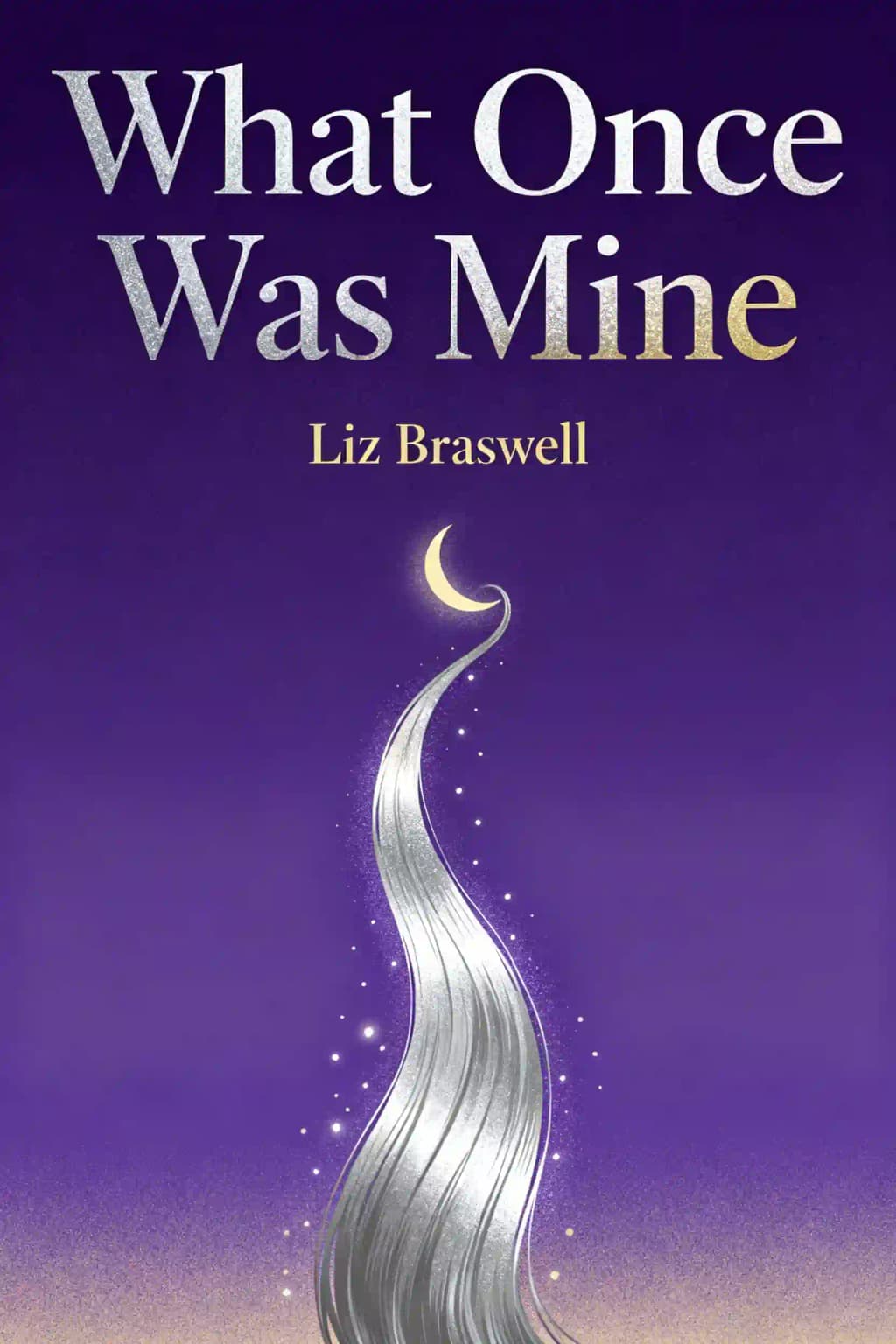
Have you ever wondered what would happen if fairy tales collided with the harsh realities of life? "What Once Was Mine" by Liz Braswell offers exactly this collision, reimagining the beloved story of Rapunzel through a contemporary lens. The novel has garnered a cult following among young adults seeking deeper meaning in classic tales, with celebrities like Emma Watson citing it as a favorite modern fairy tale retelling. Unlike traditional Disney adaptations, Braswell's work doesn't shy away from darker themes-illness, betrayal, and the complex nature of love-making it particularly relevant in today's world where we crave stories that acknowledge life's complications while still offering hope. What makes this retelling truly special is how it frames the classic tale within a modern story of siblings facing cancer, creating a powerful narrative about the healing power of storytelling itself.
第 2 章
A Tale Within a Tale: The Power of Storytelling During Crisis
In a sterile hospital room illuminated by fairy lights and the soft glow of medical monitors, we meet Brendan and his twin sister Daniella, who is undergoing her third round of chemotherapy. After watching Tangled for the third time that week - their mother's iPad propped against the adjustable bed tray - Daniella asks her brother to tell her a different version of Rapunzel's story. Though reluctant at first, doubting his storytelling abilities, Brendan begins crafting a unique retelling that will serve as both escape and comfort during this difficult time.
This framing device isn't just clever storytelling - it's a profound commentary on how narratives help us process trauma and find meaning in suffering. Throughout history, from ancient healing rituals to modern bibliotherapy, stories have provided frameworks for understanding pain and cultivating resilience. In Indigenous cultures, healing ceremonies often center around storytelling, while contemporary psychologists use narrative therapy to help patients reframe their experiences. Brendan's improvised tale becomes a lifeline between siblings, a way to discuss fear and hope obliquely when direct conversation might be too painful. The hospital scenes punctuate the fairy tale, creating a rhythm between fantasy and reality that mirrors how we use imagination to cope with difficult circumstances.
What's particularly moving is how Daniella interrupts and shapes the narrative, demanding better female characterization and insisting on the inclusion of her beloved horses. She questions why the princess can't rescue herself, suggests plot twists, and adds details from her own life into the story. These moments reveal how stories can become collaborative healing spaces where even the listener holds power. The tale evolves into a shared universe where both siblings can safely explore their fears and hopes.
When Brendan begins sketching characters from his tale in the margins of his school notebook, transforming ephemeral words into tangible images, we see another dimension of how creativity creates bridges between people during their darkest hours. These drawings become treasured artifacts, taped to the hospital walls alongside medical charts and get-well cards. Other young patients stop by to hear installments of the story, creating an impromptu community bound together by imagination. The nurses notice how Daniella's vital signs improve during storytelling sessions, demonstrating the tangible healing power of narrative connection.
Through their shared storytelling, both siblings discover that fiction isn't merely escapism - it's a vital tool for processing reality, building resilience, and maintaining hope. The story becomes their private language for discussing the uncertain future, with each happy ending serving as a promise of possibility.
第 3 章
A Flower's Mistake: The Origin of Rapunzel's Power
Brendan's tale begins with a crucial twist to the familiar story: instead of finding the golden Sundrop Flower to heal the pregnant queen, the kingdom's searchers mistakenly retrieve the silver Moondrop Flower. This single error becomes the catalyst for everything that follows, illustrating how profoundly our lives can be altered by simple mistakes. In the darkness of night, amidst desperate searching, the guards mistake silver for gold - a confusion that will reshape not just a princess's destiny but an entire kingdom's future.
The Moondrop Flower represents the mysterious, transformative power of the moon - changeable, cyclical, and sometimes dangerous - in contrast to the straightforward healing power of the sun. This duality reflects ancient cultural associations: the sun representing masculine, direct energy while the moon embodies feminine, intuitive power. Throughout mythology and folklore, the moon has been associated with transformation, mystery, and hidden knowledge. By giving Rapunzel moon magic instead of sun magic, Braswell subverts the traditional passive princess narrative, creating a heroine whose power is complex and requires understanding rather than suppression. The silver hair becomes a physical manifestation of this lunar energy - beautiful yet unpredictable, powerful yet misunderstood.
When Princess Rapunzel is born with strange silver hair several inches long, the kingdom initially rejoices, seeing it as a mark of divine blessing. The celebrations are cut tragically short when a devastating accident reveals its deadly potential. During what should have been a routine morning ritual, a maid named Lettie pulls Rapunzel's hair while combing it and instantly drops dead - her life force seemingly drained in mere seconds. The incident throws the castle into chaos, and the king, queen, and their advisors conclude that Rapunzel's silver hair possesses dangerous magic that must be controlled, setting in motion her removal from the castle.
This scenario brilliantly explores how fear drives decision-making, particularly regarding things we don't understand. Rather than investigating the nature of Rapunzel's power - whether it might be controlled, channeled, or even used for good - the royal court immediately assumes the worst. The kingdom's scholars and magic users are never consulted, and no attempts are made to understand the true nature of the Moondrop's gift. How often do we similarly react to differences with fear rather than curiosity? The king's decision to separate from his daughter - ostensibly for the greater good - raises questions about sacrifice, protection, and whether isolation is ever truly the answer to perceived danger. This choice echoes through generations, creating ripples of consequence that shape not only Rapunzel's life but the entire kingdom's future.
第 4 章
The Prison of Lies: Gothel's Manipulation
Mother Gothel emerges as one of literature's most fascinating villains precisely because her evil is so recognizable. When she takes infant Rapunzel from the castle, she demonstrates her ability to handle the child without triggering her deadly power, positioning herself as the only one who can safely raise the princess. She negotiates for compensation and promises the heartbroken parents occasional secret visits where they can observe their daughter without her knowledge.
What makes Gothel's villainy so insidious is how she weaponizes love. She creates a prison not just of stone but of narrative-convincing Rapunzel that she killed her parents as an infant and that the outside world would reject her. This psychological manipulation is far more effective than any lock or key. Gothel's controlling behavior-from forcing Rapunzel to kill chickens with her hair to reinforce the idea of her dangerous nature, to the ritualistic "I love you more" exchanges-exemplifies how abusers maintain control through alternating affection and cruelty.
The tower itself becomes a powerful metaphor for how limiting beliefs can confine us more effectively than physical barriers. Rapunzel's extensive daily routine-unbinding and brushing her hair for six hours weekly, applying special powder, checking the placement of charms and bells-represents the elaborate systems we sometimes build around our perceived limitations. The most heartbreaking aspect is how Rapunzel internalizes Gothel's lies, believing herself inherently dangerous and unworthy of freedom.
When we later discover that Gothel plans to auction Rapunzel to the highest bidder among the nobility, we see the ultimate commodification of a person-treating Rapunzel not as a daughter but as an investment finally ready to yield returns. This commercialization of relationships feels disturbingly relevant in our age of personal branding and influence marketing.
第 5 章
Breaking Free: The Journey Beyond the Tower
Rapunzel's first taste of freedom comes when she daringly descends her tower using her hair as a rope - a moment that represents both physical and psychological liberation. The sensation of grass beneath her feet overwhelms her with joy, and she discovers the wonders of nature with childlike wonder: tiny wildflowers dotting the meadow, a curious bumblebee dancing from bloom to bloom, and a small green lizard she names Pascal who becomes her first true friend. Most importantly, she makes a revolutionary discovery: her deadly hair doesn't kill unless she actively wills it to - the first significant crack in Gothel's carefully constructed web of lies.
This pivotal moment of liberation captures both the exhilaration and terror of challenging long-held beliefs. Rapunzel's discovery about her hair's true nature mirrors the transformative realization many people experience when testing boundaries they've accepted as unchangeable truths. Her tentative steps on the grass, her fearful glances back at the tower, and her gradual building of courage perfectly illustrate the internal struggle between the safety of the familiar and the allure of the unknown. Each small discovery - from the feel of wind on her face to the sound of birds overhead - reinforces that the world isn't as dangerous as she's been led to believe.
When Rapunzel encounters Flynn Rider and discovers he's stolen the crown of the lost princess, she demonstrates remarkable resourcefulness and determination. Rather than shrinking from this unexpected intrusion, she seizes the opportunity to negotiate - hiding the crown and offering its return in exchange for guidance to see the floating lights. This calculated bargain marks her first true assertion of agency, using her resources strategically to pursue her own desires rather than following Gothel's prescribed path. The addition of Gina, an unconventional thug from the Snuggly Duckling tavern who dreams of becoming a concert pianist, creates an unlikely trio of societal outcasts. Each member of this group challenges conventional expectations in their own way: Flynn defies his predetermined path as an orphan, Gina refuses to let her rough exterior define her artistic aspirations, and Rapunzel questions the limitations placed upon her by her supposed protector.
Their journey through the forest becomes a rich metaphor for Rapunzel's expanding worldview and growing consciousness. Each new experience forces her to reconsider everything she thought she knew: sleeping under the vast starry sky reveals the artificial constraints of her tower walls; encountering village children who casually mention winter hunger exposes the complexity of freedom versus security; watching street performers and merchants shows her the vibrancy of community life she's been denied. The stark contrast between her materially comfortable but isolated tower existence and the freedom but uncertainty of the outside world raises profound questions about the nature of privilege, protection, and what truly constitutes a meaningful life. Through these experiences, Rapunzel begins to understand that true safety isn't found in isolation, but in the ability to face challenges with courage and adaptability.
第 6 章
The Truth in Moonlight: Discovering Her True Power
The revelation about Rapunzel's true powers unfolds dramatically at an ancient stone circle in the Five-Claw Hills, where she discovers her profound connection to the Moondrop Flower. Unlike the sun's steady, consistent healing energy that marked her golden hair, moon magic proves to be dynamic and cyclical - transforming during crescent phases, offering profound healing capabilities during the full moon, and harboring lethal potential during the new moon. This complex nature of her power presents a far more sophisticated understanding of strength than the simplistic good/evil dichotomy that Gothel had used to manipulate and control her.
The first demonstration of her evolved abilities occurs when Rapunzel brings her now-silvery glowing hair to Pascal, her longtime companion. The magic flows through her friend, transforming him into an enhanced version of himself - a different species of lizard with independently moving eyes, a strong prehensile tail, and advanced color-changing abilities that extend beyond simple camouflage. This transformation proves pivotal, showing that her hair contains not just destructive power but profound transformative potential - a revelation that fundamentally reshapes her self-perception and hints at possibilities she never imagined.
The moon's changing nature serves as a powerful metaphor for the complexity of human potential and personal growth. Just as the moon waxes and wanes through its predictable yet ever-changing cycle, our own capabilities aren't fixed but evolve with circumstances, experience, and internal growth. Rapunzel's detailed chartwork, tracking how her powers might shift with the lunar cycle, represents more than scientific inquiry - it symbolizes her actively claiming ownership of her abilities rather than remaining paralyzed by fear of them. Each careful notation and observation marks another step away from the helpless tower prisoner and toward the confident wielder of natural forces.
This portion of the narrative delivers a compelling message about embracing our complete selves, including those aspects that might initially seem frightening or dangerous. The Goodwife's wisdom that "magic is neither good nor evil - it simply is, like the wind or rain" but rather a natural force whose morality depends entirely on its application, echoes ancient philosophical traditions from multiple cultures that recognize the duality inherent in any significant power. Through learning to understand and work with her abilities rather than suppress them, Rapunzel undergoes a crucial transformation from victim to agent of her own destiny. Her journey reflects the universal challenge of accepting and integrating all aspects of oneself - both light and shadow - to achieve genuine empowerment and self-actualization.
This newfound understanding also challenges the traditional fairy tale tropes of absolute good and evil, presenting instead a more nuanced view of power and responsibility that resonates with modern sensibilities. Each phase of the moon brings its own gifts and challenges, much like life itself, requiring wisdom to navigate rather than simple rules to follow.
第 7 章
Royal Blood and Bitter Truths: Unraveling Identity
The revelation that Rapunzel is actually Crown Princess Rapunzel, daughter of King Frederic and Queen Arianna, shatters her understanding of herself. Learning that her parents are still alive-that she never killed them as Gothel claimed-forces her to confront the magnitude of Gothel's deception. This identity crisis is compounded by the realization that Gothel has been planning to auction her to the highest bidder among the nobility, treating her as property rather than a daughter.
This section explores the disorientation that comes with discovering fundamental truths about ourselves have been lies. Rapunzel's struggle to reconcile the mother who both loved her and manipulated her with devastating lies reflects the complex reality of abusive relationships, where genuine affection often coexists with exploitation. Her inability to immediately process these contradictory versions of Gothel feels painfully authentic-emotional bonds don't dissolve instantly, even when we recognize their toxic nature.
The story also examines the different types of power wielded by women like Gothel, Countess Bathory, and Rapunzel herself. Gothel's power comes from manipulation and exploitation, Bathory's from cruelty and wealth, while Rapunzel must discover a different path-using her unique position as both crown princess and witch to help others. This contemplation of how power can be exercised differently offers readers a framework for considering their own influence in the world.
When Rapunzel learns that Flynn and Gina have come to rescue her from Bathory's castle, her joy at discovering she has real friends who came for her represents another crucial realization-that authentic connection exists beyond the distorted relationship with Gothel. The moment she throws her glittering hair out the window as a signal marks her active participation in her own rescue, no longer a passive princess awaiting salvation.
第 8 章
Battles Within and Without: Confronting the Past
The battle at Castle Bathory serves as both literal and metaphorical confrontation with the forces that sought to control Rapunzel. Countess Bathory, who kidnapped Rapunzel for her magical hair and threatened to bathe in her blood for its youth-preserving properties, represents the ultimate commodification of female power-reducing a woman to her physical attributes that can be harvested for another's benefit.
When trapped in Bathory's tower, Rapunzel struggles to summon her magic until Magda, a servant, helps by reciting a children's moon rhyme. This moment of connection between women-one privileged despite her imprisonment, one who has suffered silently for years-highlights how solidarity can unlock potential. Rapunzel's promise to take Magda with her if she escapes demonstrates her growing awareness of her responsibility toward others.
The climactic scene where Rapunzel's magic causes the tower walls to shift between existing and not existing brilliantly symbolizes the dissolution of mental barriers. Just as the solid walls become permeable, the limitations Rapunzel accepted as immutable reality reveal themselves as constructs that can be transformed through courage and connection.
Outside the castle, the mismatched army of nobles attacking Bathory's forces represents another kind of battle-the conflict between those who want to possess Rapunzel's power and those fighting to protect her freedom. The arrival of the Snuggly Duckling thugs to help defeat Bathory's forces shows how community can form around shared values rather than shared backgrounds. Hook Hand's explanation that they're helping because she was an innocent girl they failed to assist earlier acknowledges how we can choose to rectify past failures of courage.
Rapunzel's final magical act, transforming the dying Captain Tregsburg into a magnificent white horse named Maximus, demonstrates her growing comfort with her transformative powers. This act of compassion-giving new life rather than taking it-marks her full reclamation of abilities once feared as purely destructive.
第 9 章
Coming Home: Reconciliation and New Beginnings
Rapunzel's return to the castle marks a profound moment of emotional reconciliation that resonates far beyond a simple homecoming. The queen's immediate recognition of her daughter - despite eighteen years of separation - speaks to the enduring power of maternal bonds. Their reunion unfolds in layers of complex emotion: tears of joy mingled with grief for lost years, the queen's heartfelt apologies echoing through the castle halls, and the physical embrace that bridges decades of forced separation. This poignant scene acknowledges the deep wounds of their past while offering a path toward healing and renewal.
The royal parents' acceptance of Flynn Rider - despite his notorious reputation as the kingdom's most wanted thief - demonstrates how love can transcend rigid social hierarchies and past transgressions. Their willingness to look beyond Flynn's criminal history to see Eugene Fitzherbert, the man their daughter loves, reflects a broader theme of redemption through authentic connection. The palace guards, who once hunted Flynn relentlessly, must now adjust to calling him "Your Highness," creating moments of both humor and profound social commentary.
The revelation that Eugene and Gina likely shared origins in the same orphanage adds unexpected depth to their relationship, transforming them from mere allies into potential siblings. This discovery redefines the meaning of family beyond biological ties, suggesting that true kinship can be found in shared experiences and chosen connections. Their shared background as orphans influences Rapunzel's first acts as princess - establishing comprehensive education programs and reforming the kingdom's orphanages through innovative apprenticeship initiatives that give children practical skills and hope for the future.
Gina's decision to pursue her own path rather than settle into castle life demonstrates mature love's capacity to embrace independence. Her choice honors both her adventurous spirit and her deep connections to Rapunzel and Eugene, proving that meaningful relationships can thrive even across distance. Their tearful farewell includes exchanged promises, secret signals, and plans for future reunions - showing how modern relationships can balance autonomy with lasting commitment.
The epilogue's subtle hint about Crespin the spy potentially delivering final justice to Gothel provides a nuanced conclusion to that dark chapter. Rather than depicting a simplistic punishment scene, this ambiguous ending acknowledges the complicated nature of abuse's aftermath. The uncertainty surrounding Gothel's fate mirrors the reality of recovering from toxic relationships - there may be closure, but the emotional impact continues to echo through survivors' lives in complex ways. This approach respects the gravity of abuse while focusing on healing and growth rather than vengeance.
Through these various threads of reconciliation, the story weaves together traditional fairy tale elements with modern psychological insight, creating a richer tapestry of what "happily ever after" can mean. It suggests that true happiness comes not from perfect resolution but from honest confrontation with past pain, acceptance of complex emotions, and the courage to forge new paths while maintaining meaningful connections.
第 10 章
The Healing Power of Stories: Returning to Reality
The story concludes where it began-in the hospital with Brendan and Daniella. Despite being tethered to tubes, Daniella expresses interest in visiting the Cloisters to see tapestries and armor, showing how stories can inspire engagement with the world even during illness. Her playful interaction with Brendan, telling him to "shut up" with a smile before sincerely thanking him, captures the authentic complexity of sibling relationships-irritation and gratitude coexisting in the same moment.
The author's personal note reveals that the framing story draws from her own experience with her sister's cancer battle. This revelation transforms our understanding of the entire narrative, highlighting how fiction can process and transform personal trauma. The detail about her sister choosing a magnificent platinum blonde wig during chemotherapy rather than one resembling her pre-cancer hair connects directly to Rapunzel's magical silver locks-both representing how we might choose to redefine ourselves during crisis rather than simply trying to maintain the status quo.
The sister's recovery and new motherhood offers a real-world happy ending that feels earned rather than imposed. The mention of her "chocolate egg cream addiction" adds a touch of humanizing imperfection to this resolution, acknowledging that healing doesn't mean perfection.
Through this layered narrative, Braswell demonstrates that stories aren't mere escapism-they're essential tools for processing reality. By reimagining Rapunzel's tale within the context of modern illness, she creates a powerful meditation on how we face limitations, challenge destructive narratives, and find transformation even in our darkest hours. The magic in this retelling isn't just in Rapunzel's moonlit hair, but in the connection between siblings, the courage to question what we've been told, and the human capacity to create meaning through narrative even when facing the most difficult circumstances.