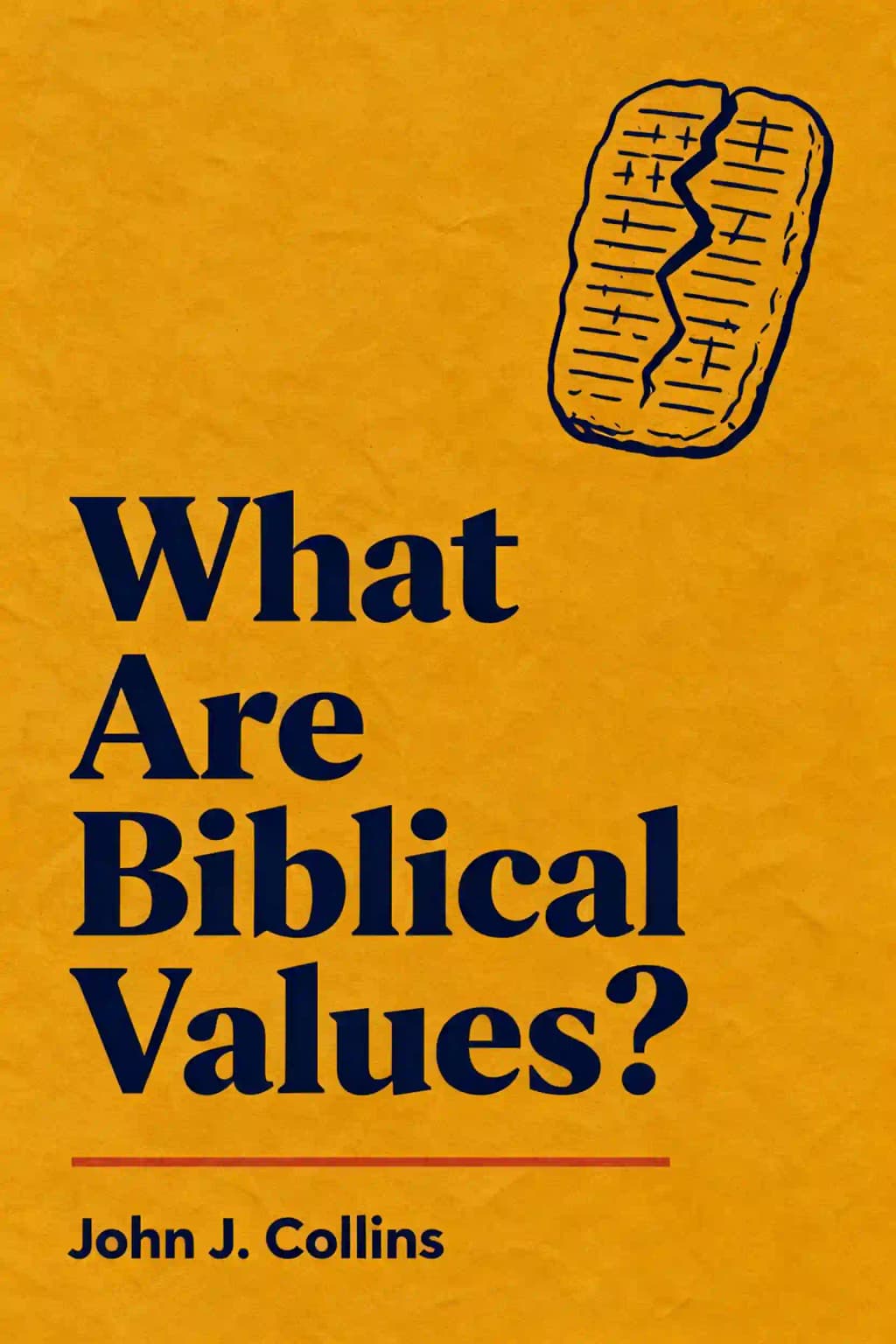
What Are Biblical Values?
What the Bible Says on Key Ethical Issues
《What Are Biblical Values?》概述
Collins challenges our assumptions about "biblical values" with scholarly precision and surprising insights. Endorsed by Oxford's John Barton as "wise and insightful," this provocative exploration reveals why the Bible isn't a "magic book of answers" but something far more fascinating.

《What Are Biblical Values?》核心主题
- scriptural interpretation
- ancient near eastern context
- ethical pluralism
- textual foundationalism
- biblical covenantalism
《What Are Biblical Values?》经典语录
Texts don't speak for themselves but require interpreters.
Biblical support alone doesn't establish a value's validity.
Biblical creation accounts aren't factual records.
The Bible fundamentally conflicts with modern ethical frameworks.
To forbid birth is only quicker murder.
《What Are Biblical Values?》主要人物
- John J. CollinsAuthor and Yale professor of Old Testament
- ShakespeareWriter quoted regarding the use of Scripture
关于作者
《What Are Biblical Values?》作者介绍
John J. Collins, Holmes Professor of Old Testament Criticism and Interpretation at Yale Divinity School and a leading scholar of ancient Judaism, explores the intersection of scripture and ethics in What Are Biblical Values?. Renowned for his expertise in Hebrew Bible studies, apocalyptic literature, and the Dead Sea Scrolls, Collins anchors his analysis in decades of academic rigor, including previous faculty roles at the University of Chicago and Notre Dame.
His work frequently bridges biblical scholarship and contemporary ethical debates, evidenced in earlier acclaimed titles like The Invention of Judaism and Introduction to the Hebrew Bible, which are widely used in theological education globally.
As general editor of the Anchor Yale Bible series and past president of the Society of Biblical Literature, Collins combines editorial authority with groundbreaking research. His books, translated into over a dozen languages, have shaped academic discourse on Jewish identity and scriptural interpretation. What Are Biblical Values? distills his career-long examination of how ancient texts inform modern moral frameworks, cementing his reputation as a vital voice in bridging historical scholarship and timeless ethical questions.
下载《What Are Biblical Values?》摘要
免费获取《What Are Biblical Values?》摘要的 PDF 或 EPUB 版本。可打印或随时离线阅读。
关于本书的常见问题
What Are Biblical Values? examines how biblical texts address modern ethical issues like gender roles, environmental stewardship, and social justice. John J. Collins analyzes contradictions and historical context within scripture, arguing against simplistic "biblical values" claims. The book emphasizes critical engagement with texts to navigate complex moral dilemmas, blending scholarly rigor with accessibility for general readers.
This book suits theologians, students of religious studies, and anyone exploring biblical ethics’ relevance to contemporary debates. It’s ideal for readers seeking a historically grounded analysis of scripture’s stance on issues like slavery, marriage, and violence, written by a leading Yale scholar.
Yes—readers praise Collins’ objective scholarship and ability to clarify complex biblical ethics. While some critique its depth on specific topics, the book’s analysis of textual contradictions and modern applicability makes it a thought-provoking resource for addressing today’s moral challenges.
Collins frames Genesis as establishing humanity’s responsibility to care for creation while acknowledging diverse interpretations. He links these narratives to environmental ethics and gender roles, showing how ancient frameworks inform modern debates about stewardship and equality.
The book highlights conflicting biblical views on gender, noting passages affirming women’s dignity alongside patriarchal norms. Collins argues against oversimplification, showing how contextual analysis reveals progressive insights relevant to contemporary equality discussions.
Collins identifies social justice as a central theme, citing prophetic critiques of oppression and calls to uplift marginalized groups. He connects these ancient principles to modern movements, urging ethical engagement with economic inequality and systemic injustice.
The book ties environmental responsibility to creation narratives and wisdom literature, arguing for biblically grounded stewardship. Collins critiques exploitative interpretations, advocating for ecological ethics aligned with scripture’s emphasis on creation care.
He contrasts biblical acceptance of slavery with liberation themes in Exodus and prophetic texts. The book underscores ethical tensions, showing how abolitionist movements later reinterpreted scripture to oppose slavery, demonstrating evolving moral applications.
Collins examines zealotry and divinely sanctioned violence, contextualizing them within ancient Near Eastern norms. He argues against literal modern applications, emphasizing the need for critical moral evaluation of these narratives.
The book advocates using biblical frameworks—creation, covenant, and eschatology—to navigate issues like abortion or climate change. Collins stresses adapting ancient principles through scholarly interpretation rather than seeking direct answers.
Collins acknowledges accusations of cherry-picking scripture to justify modern biases. He counters by demonstrating the Bible’s inherent complexity, urging readers to confront uncomfortable passages while prioritizing justice-oriented interpretations.
Like his earlier scholarship, this book applies historical-critical methods to ancient texts but focuses specifically on ethics’ modern relevance. It complements his studies on apocalyptic literature by addressing practical moral decision-making.