第 1 章
Behind the Badge: Stories from America's Thin Blue Line
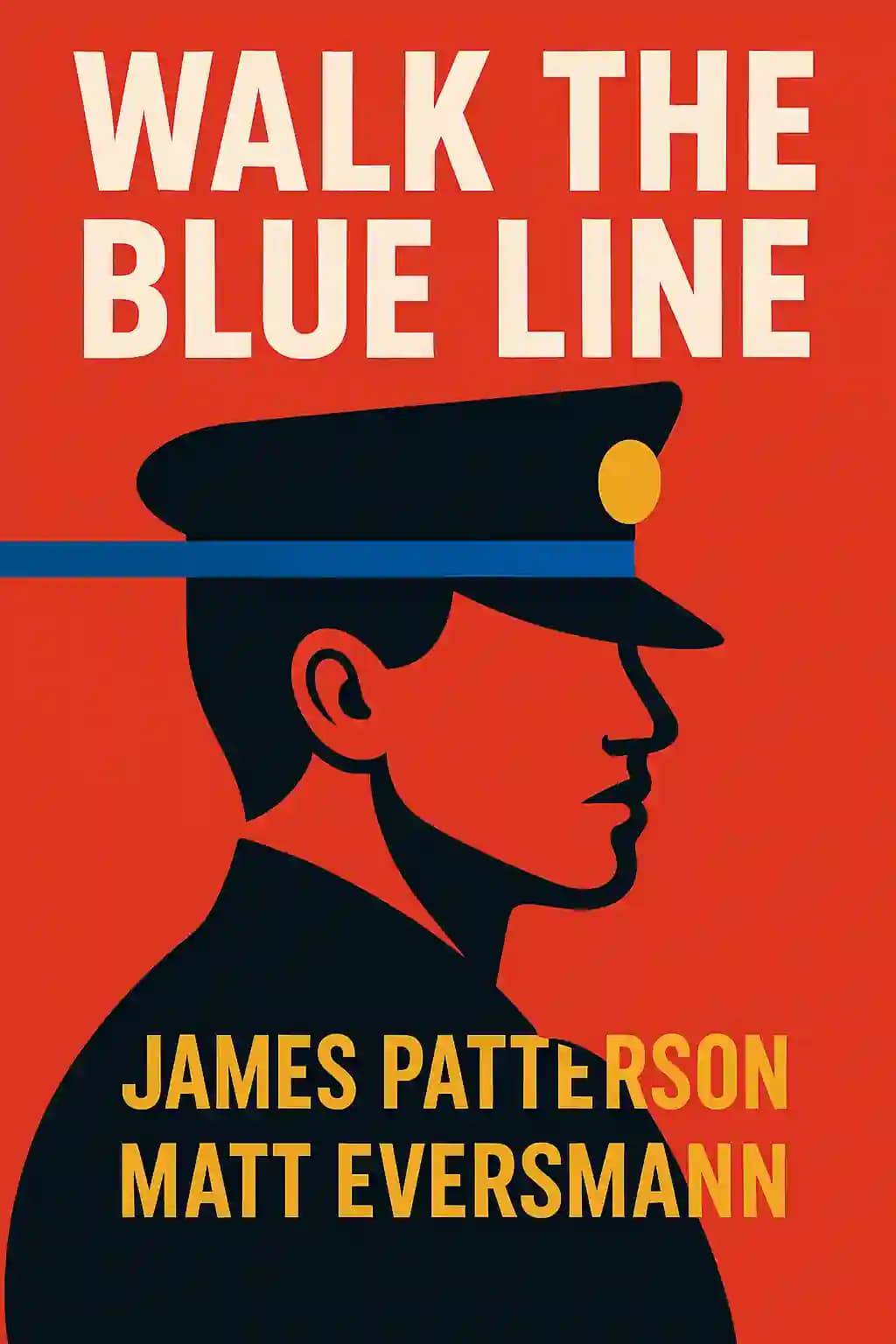
In a world where police officers are often portrayed as either heroes or villains, "Walk the Blue Line" offers something far more nuanced-the raw, unfiltered truth from those who live it daily. This collection of first-person accounts from law enforcement officers across America has become a cultural touchstone, praised by both police advocates and those seeking reform. James Patterson and his co-authors Matt Eversmann and Chris Mooney have created what The New York Times called "an unflinching look at the impossible choices facing those who wear the badge." The book has resonated deeply with readers seeking to understand the complex realities behind policing in America, becoming a favorite among celebrities like Mark Wahlberg and Matthew McConaughey, who cited it as providing "the human perspective we desperately need in today's conversation about law enforcement."
第 2 章
The Thin Blue Line: Where Courage Meets Vulnerability
The men and women who patrol our streets live in a world where routine traffic stops can turn deadly in seconds. This reality shapes every aspect of their professional lives, from morning briefings to end-of-shift reports. Jake, a second-generation officer who joined SWAT seeking the most elite position in law enforcement, learned this lesson during his first mission. What began as a standard narcotics warrant quickly escalated when someone fired an AK-47 through a door. The team evacuated neighbors from adjacent houses, established a secure perimeter, and spent hours negotiating while developing multiple tactical options. Eventually, they used a robot to breach remaining doors - a decision that likely saved lives. The shooter, whose weapon had malfunctioned after the initial burst, ultimately surrendered without further violence.
"I could have died that day if we'd breached differently," Jake reflects. "He was waiting under a bed with his rifle aimed at the door. That experience changed how I approach every operation now. There's no such thing as a routine call."
This reality-where split-second decisions determine who lives and dies-shapes officers' perspectives in profound ways. They operate with a set of priorities that few civilians understand: hostages first, then civilians, officers, and finally suspects. Every bullet fired must be accounted for, every action justified through extensive paperwork and review boards. Officers must maintain razor-sharp focus while simultaneously managing their own adrenaline responses and considering potential legal ramifications of their actions.
For Jock Condon, who began his career in Scotland's police force before moving to America, these high-stakes moments are complicated by personal trauma. After serving in diplomatic security in Afghanistan and losing several close friends to insurgent attacks, he struggled with PTSD flashbacks triggered by seemingly routine incidents, including putting down an injured deer during a midnight shift. "I finally sought help," he admits. "I learned that asking for help makes you stronger, not weaker. Too many of us try to tough it out alone, and that's when we start making mistakes."
This vulnerability-rarely seen in media portrayals of police-emerges as a common thread throughout officers' stories. Behind their badges and bulletproof vests are human beings processing trauma while continuing to serve communities that often view them with suspicion or outright hostility. Many officers describe a complex emotional balancing act: maintaining the necessary vigilance for survival while remaining approachable and compassionate to the public they serve.
Department psychologists report increasing numbers of officers seeking support for stress-related issues, particularly following high-profile incidents that affect public trust. Modern police training now increasingly emphasizes emotional intelligence and mental health awareness alongside tactical skills. Senior officers like Captain Maria Rodriguez actively mentor younger colleagues about the importance of processing trauma healthily: "We're finally breaking down the old stigmas," she explains. "Being mentally fit is just as important as being physically fit in this job."
第 3 章
From Rookies to Veterans: The Evolution of a Police Officer
The journey from academy graduate to seasoned officer involves far more than learning procedures and laws - it's a profound transformation that reshapes both professional identity and personal worldview. Tim O'Brien, who left the mortgage industry at thirty to pursue his lifelong dream of becoming a police officer, explains: "The academy teaches procedures, but real policing requires life experience and judgment. What looks black and white in the classroom becomes countless shades of gray on the street."
This sentiment echoes throughout the accounts of officers at various stages in their careers. Tara Dawe, a new member of Manhattan's Warrant Squad, describes the investigative challenges she faces while hoping to work her way up to the prestigious "Worst of the Worst" team. Her daily reality includes subjects trying to escape-like the man who jumped from a third-story window only to break his ankle-and confronting the constant hatred directed at officers. "Every day tests not just your physical abilities but your emotional resilience," she notes. "You learn to read people, anticipate their moves, and stay three steps ahead while maintaining your composure."
For many, the transition from rookie to veteran involves painful lessons that no amount of training can fully prepare them for. Matt Burroughs, a 27-year-old military veteran who impulsively applied for a police position, found his military background gave him an advantage in tactical training and weapons handling. But nothing prepared him for his first day of field training, when he encountered a severe traffic accident with a driver ejected through a windshield. Despite applying his trauma training, he watched helplessly as someone died before his eyes. "That moment changed everything," he recalls. "It taught me that being a good cop means accepting that sometimes your best isn't enough."
These formative experiences shape officers' approaches to policing in profound and lasting ways. Some, like Louie Aguilera, are driven by childhood trauma-witnessing gang members murder his neighborhood ice cream man when he was nine years old. This experience instilled in him a deep commitment to community policing and youth outreach programs. Others, like Orlando Sanchez, grew up navigating gangs and drugs on Chicago's West Side before deciding to become an officer patrolling those same violent neighborhoods. His background gives him unique insights into the community dynamics and helps him build trust with local residents.
The evolution from rookie to veteran also involves developing a sixth sense for danger while maintaining compassion. Veteran officer Sarah Chen describes it as "learning to be simultaneously suspicious and empathetic." After fifteen years on the force, she can spot potential threats in seemingly routine situations while still treating each person with dignity. "The key," she says, "is never letting experience make you cynical."
What emerges is a portrait of law enforcement as a calling rather than merely a job-one that transforms those who answer it, for better or worse. The badge becomes not just a symbol of authority but a reminder of the profound responsibility they carry and the countless experiences that have shaped their journey from rookie to veteran.
第 4 章
The Daily Reality: Between Heroism and Heartbreak
For helicopter pilot Corey Green with the Maryland State Police Aviation Command, each shift brings life-and-death scenarios that test both skill and emotional resilience. One winter morning, he treated a seven-year-old girl mauled by a neighbor's pit bull, her small face requiring over 200 stitches. Hours later, he was hovering over snow-covered mountains, searching for a 73-year-old woman with dementia who had wandered from her assisted living facility. These high-stakes situations demand split-second decisions-like breaking protocol to immediately transport a hypothermic patient rather than waiting for ground medics, knowing that every minute could mean the difference between life and death.
Drew Nicoletti, an Army helicopter pilot who transitioned to become a sheriff's deputy pilot, describes the whirlwind nature of his role: "I never know what each day will bring-suspect chases, missing person searches, or high-level surveillance." During one particularly intense carjacking call, he transported an injured officer to the hospital in just six minutes, navigating through dangerous weather conditions and potentially saving the officer's life. Another day might involve tracking fleeing suspects through dense urban areas or coordinating with ground units during complex search operations.
But alongside these moments of heroism are countless heartbreaking encounters that leave lasting psychological scars. Veteran officer Keith Broughton still vividly recalls the night he tackled a desperate father to prevent him from rushing into a burning apartment to save his two sons, ages 4 and 6, who were later found dead inside. Though his actions prevented another death, Broughton struggles daily with having physically stopped a parent from attempting to rescue his children. "That father's screams still wake me up at night," he admits. "I did what protocol demanded, but the human cost haunts me."
For homicide detectives, these traumatic experiences accumulate over time, creating deep emotional connections with cases and victims' families. Detective Louie Aguilera, with fifteen years in homicide, describes forming lasting bonds with victims' families, though he never promises "closure"-only answers and justice. "For homicide detectives," he explains, "you become part of each victim's story, staying connected with their families for years. You're there for their birthdays, holidays, court dates. Their loss becomes part of your life story too."
The psychological toll becomes evident in Brad Wagner's raw confession about his emotional detachment when responding to his fifth suicide scene in two weeks: "What disturbs me most is my own coldness. When my sergeant asks what we have, I reply matter-of-factly, 'A dead guy.' I'm ashamed of my callousness-I handle death scenes like routine auto theft reports." His experience reflects a common pattern among veterans of the force who develop emotional armor as a survival mechanism.
This numbing effect-a psychological defense mechanism against constant trauma-represents one of the profession's hidden costs. Many officers report similar experiences: laughing at crime scenes, making dark jokes at tragic moments, or feeling emotionally disconnected from family members. Department psychologists note that this emotional distancing, while protective in the short term, often leads to long-term psychological challenges, including PTSD, depression, and strained personal relationships.
第 5 章
Beyond the Headlines: The Unseen Side of Policing
While media coverage often focuses on officer-involved shootings and controversial arrests, the majority of police work involves civil matters and helping people in crisis. Hana Batit, who served in both military and police roles in the Middle East before becoming an officer in California, emphasizes this reality: "Contrary to public perception, most police work involves civil matters and helping people in crisis."
These everyday interactions rarely make headlines but represent the heart of community policing. Rachel Tolber describes working in a program helping parolees reenter society, including her experience with Jimmie, a meth-addicted electrician with a long criminal record. After arresting him, Tolber helped get him into drug court and treatment instead of prison. A decade later, Jimmie invited her to his AA meeting where he received his ten-year sobriety coin, crediting her for "treating him with respect while holding him accountable."
Jim Foster built relationships with the homeless and addicted population on the Pacific Coast Highway, including Tiffany Hall, a crack addict with a troubled past whom he consistently encouraged to change her life. Years later, he was invited to a press conference where he reunited with Tiffany-now sober, educated, and raising her grandchildren. She credited his consistent respect and compassion for helping transform her life.
These success stories contrast sharply with the frustrations officers face when the system fails. Brad Wagner describes a neighborhood where people call 911 constantly yet refuse to cooperate with investigations. In one case, a killer named Todd Robinson stood watching in the crowd after a shooting, but no witnesses would identify him. The street code against "snitching" protects criminals and perpetuates violence.
This disconnect between police and communities creates a painful paradox for officers committed to public service but increasingly viewed with suspicion.
第 6 章
The Psychological Battlefield: Trauma and Resilience
Twenty-one-year-old officer Tom Vento faced profound trauma when responding to a call about a man who had taken his own life with a rifle. The horror deepened when Vento discovered one of the victim's teeth stuck in the sole of his boot. Despite attending a debriefing session, Vento said little, adhering to the prevailing attitude that "real cops don't speak up" about mental health issues.
Ten years later, his wife noticed his peculiar habit of systematically turning off lights, which he realized stemmed from the incident. With encouragement, Vento sought help from the department's social worker, who recommended EMDR therapy to process his long-buried trauma. After just five sessions, he felt as though the twenty-one-year-old version of himself and the haunting incident "walk right out of my life."
This journey toward healing represents a shift in how law enforcement addresses mental health. Vento reflects that while he knows only one officer killed in the line of duty, he knows five who died by suicide. He notes that police departments are finally making progress, with some agencies now mandating annual counseling sessions.
Ashley Smith serves as a suicide prevention officer in her department's wellness program, offering anonymous peer support to fellow officers struggling with the job's emotional toll. She finds balance through exercise and community service events that remind her why she became an officer.
The psychological impact extends beyond individual officers to their families. Jared Arceneaux describes struggling with PTSD and hypervigilance after a shootout with a drug dealer who fired at him. Despite being charged with attempted murder of a peace officer, the shooter was released on a mere $10,000 bond. For years afterward, Arceneaux internalized his trauma until his SWAT work helped him realize the importance of reaching out to fellow officers for support.
These stories reveal a profession slowly acknowledging that psychological wounds require the same attention as physical ones.
第 7 章
When Force Becomes Necessary: The Reality of Confrontation
Jackie Deen, a 24-year-old female officer working rural areas with distant backup, relies on CrossFit and her faith for strength. Responding alone to a call about a threatening ex-prisoner, she confronted a large man who punched her and tried to flee. During their violent struggle, he straddled her, repeatedly striking her face. Fearing he'd take her weapon, she drew her Glock, but he knocked it aside as she fired. When he heard approaching sirens, he fled, but she pursued him relentlessly through the desert until another deputy helped apprehend him.
Despite suffering a broken nose and hematomas, Deen remains committed to policing as a worthy cause. Her experience illustrates the physical dangers officers face, particularly female officers who may be at a size disadvantage against larger assailants.
Keith Broughton describes drawing his weapon on a man charging at him with a two-by-four and butcher knife. With his finger on the trigger and screaming commands to stop, the suspect finally halted just fifteen feet away, narrowly avoiding what would have been a justified shooting.
These confrontations highlight the split-second decisions officers must make about using force. Jim Herring responded to a possible suicide attempt and found a distraught woman holding a revolver. When she threatened to shoot him, his training took over-he drew his weapon instinctively while simultaneously disarming her. "I know we both survived that night," he reflects, "even if I can't recall exactly how my sidearm ended up in my hand."
For SWAT commander Tom Hausner, these decisions carry even greater weight. During a hostage situation, he had to decide whether to send his team into a potentially deadly ambush after seeing the suspect carrying what appeared to be an unconscious woman. Despite the risks, his team successfully rescued the hostage, who later told them: "I knew I would live when I heard the flash-bangs and saw your men rush in. I knew God had sent His angels."
第 8 章
Building Trust: The Heart of Effective Policing
Sheriff Leon Lott of Richland County, South Carolina, believes the foundation of effective policing lies in community relationships. As police chief in St. Matthews, he encountered residents who called officers "cops without legs" because they never left their vehicles. His approach emphasizes officers building relationships through school programs, crime watches, and simply talking with community members.
"You can't build a relationship with anyone during a crisis," Lott explains. This philosophy-that trust must be established before emergencies occur-guides many successful officers' approaches to their communities.
Lieutenant Colonel Amy Dehner demonstrates this principle during a tense traffic stop involving an extremely large man who becomes increasingly agitated about not wearing a seatbelt. Drawing on her maturity and patience-qualities she attributes to joining law enforcement after college, professional basketball in Europe, and military service-Dehner calmly listens before sharing her firsthand experience with fatal accidents involving unbelted drivers. Her compassionate approach resonates with the man, who immediately relaxes and acknowledges his overreaction.
FBI agent Dave Mitchell applies similar principles when tracking dangerous fugitives. After treating a criminal named Harris Adams respectfully despite suspecting he was lying about a fugitive's whereabouts, Mitchell receives an unexpected collect call weeks later. Adams admits he lied because Mitchell was "the first cop who ever treated him decently" and provides crucial information that leads to capturing a dangerous Dixie Mafia fugitive planning to assassinate a police chief.
Lou Delli-Pizzi demonstrates this approach when he buys food from a vending machine for a suspect he just arrested for shooting a gun in public. Despite another officer's disapproval, this simple act of human decency helps build trust. Later, information gleaned from this interaction proves crucial when the case goes to trial and witnesses commit perjury.
These examples illustrate how treating people with dignity-even those who have committed crimes-can yield both practical results and fulfill the deeper purpose of policing: serving communities with integrity.
第 9 章
Cold Cases and Closure: The Pursuit of Justice
For cold case detectives like William Springer, the pursuit of justice never ends. Despite returning from retirement to work on unsolved cases, particularly the 1990 murder of fourteen-year-old Rachel Hurley, Springer continues exploring new technologies like the M-Vac system that uses vacuum suction to extract DNA from clothing. This advanced DNA collection method can retrieve genetic material from porous surfaces like fabric, concrete, and rope - materials that traditionally yielded little forensic evidence using conventional methods.
"I've had success with other cases," he explains, "including identifying a Jane Doe through social media outreach and solving a 1975 murder when we discovered a previously unknown rape kit that matched a man already on death row." These breakthroughs keep him going in his quest for justice for Rachel and other victims. Springer's dedication exemplifies how modern forensic techniques, combined with traditional investigative work, can crack cases that have remained dormant for decades. He regularly reviews cold case files, re-interviews witnesses, and explores new angles that might have been overlooked in initial investigations.
Homicide detective Doyle Burke's investigation into missing four-year-old Samantha Ritchie from Dayton, Ohio, demonstrates how experienced investigators rely on both physical evidence and behavioral analysis. When he saw her mother Jolynn crying on camera without actual tears and with eerily lifeless eyes, he immediately knew she was lying. His instincts, honed by years of interviewing suspects, detected the telltale signs of deception - inappropriate emotional responses, inconsistent statements, and subtle behavioral cues that didn't match genuine grief.
The subsequent investigation revealed Jolynn had killed her daughter by hitting her with her cast and then beating her with a pipe wrench when the child interrupted her having sex with her boyfriend. The case highlighted the devastating reality that sometimes the greatest threat to children comes from those meant to protect them. Forensic evidence, including blood spatter analysis and DNA testing, corroborated the eventual confession.
Throughout the trial, Jolynn showed no emotion, even during graphic descriptions of her daughter's murder. In his victim impact statement, Samantha's father told his ex-wife, "May God have mercy on your soul because I have none for you." The courtroom scene exemplified the profound emotional toll these cases take on families, investigators, and communities.
These cases represent both the darkest aspects of human behavior and the relentless determination of detectives to provide answers for victims' families. As veteran investigator Louie Aguilera noted, they can't offer "closure" - only answers and justice. Yet this pursuit becomes a calling that extends beyond professional duty to a deeply personal mission. For many investigators, these cases become part of their lives, haunting them during sleepless nights and driving them to continue searching for answers long after others have given up.
The evolution of forensic science, from DNA analysis to digital forensics, has given investigators new tools in their arsenal. However, it's the combination of these technical advances with old-fashioned detective work - the ability to read people, follow leads, and piece together complex puzzles - that ultimately brings justice to cold cases.
第 10 章
The Human Behind the Badge
At its core, "Walk the Blue Line" reveals the humanity behind the badge-the fears, doubts, triumphs, and tragedies that shape those who serve in law enforcement. Officer John Reilly captures this sentiment when describing a tense encounter with a young man he nearly shot, only to discover he was merely hiding marijuana: "The thin blue line has become a gray, fuzzy area-we're just family guys trying to do the right thing in an upside-down world."
This complexity emerges repeatedly throughout officers' accounts. They are simultaneously warriors and counselors, enforcers and protectors, witnesses to humanity's worst moments and catalysts for its redemption. They carry the weight of life-and-death decisions while facing public scrutiny that often lacks nuance or understanding of their daily realities.
Perhaps most poignantly, they continue serving despite the toll it takes. As Mitchell Wido, an ATF agent who responded to both Columbine and roadside bombs in Iraq, reflects: "Though emotionally devastated by these memories, I know I must continue my mission: get up, go to work, and help people."
Mike Solan articulates the fundamental paradox of police work: "I must serve everyone equally, whether they appreciate us or hate us." This commitment-to protect and serve all members of the community regardless of how they view law enforcement-represents the ideal that most officers strive to uphold, even as they acknowledge the profession's imperfections and their own human limitations.
In sharing these stories, "Walk the Blue Line" invites readers to move beyond simplistic narratives about policing and engage with the complex, messy reality of those who stand on the thin blue line between order and chaos, between safety and danger, between justice and injustice-not as perfect heroes or villains, but as flawed human beings doing their best in impossible situations.