第 1 章
The Vision That Transforms Businesses and Lives
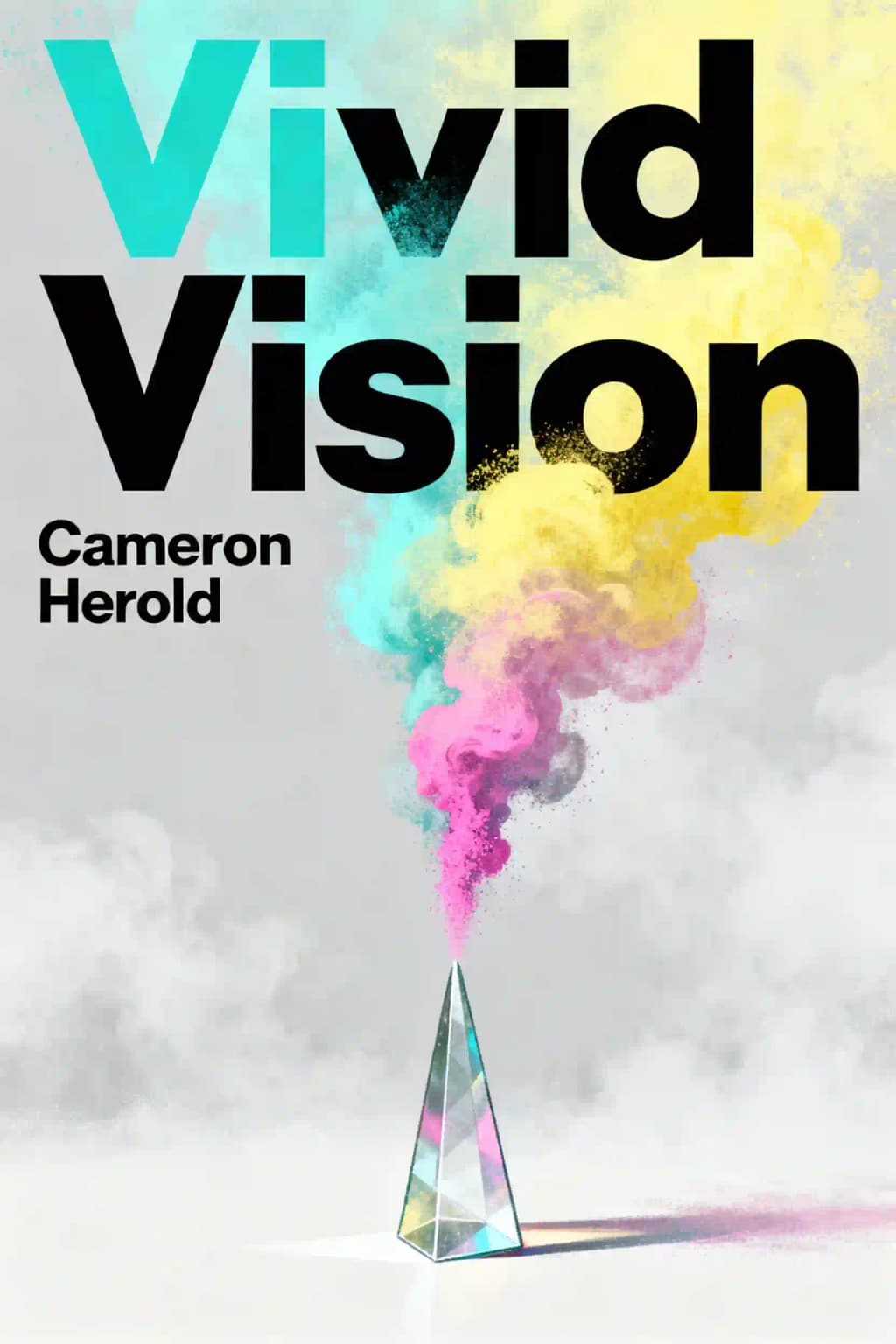
Ever found yourself in a meeting where everyone nods in agreement, only to discover later that each person walked away with a completely different understanding? This communication gap doesn't just happen in meetings-it's the silent killer of businesses everywhere. Cameron Herold's "Vivid Vision" tackles this universal problem with a revolutionary approach that has helped build multiple $100 million companies. The book has become a cornerstone text for scaling businesses, with endorsements from entrepreneurial heavyweights like the founders of 1-800-GOT-JUNK? and BackPocket COO. What makes this methodology so powerful is its simplicity: instead of abstract mission statements, Herold advocates creating a detailed, written description of your company three years in the future-as if it's already happened. This approach has transformed countless businesses, including Herold's own ventures, which have consistently doubled revenue year after year. In a business world obsessed with immediate results, Herold's three-year vision framework offers something refreshingly different: a practical roadmap to extraordinary growth that anyone can implement.
第 2 章
Why Traditional Vision Statements Fail
Have you ever tried to describe a movie to someone who hasn't seen it? No matter how eloquently you explain it, they'll never fully grasp what you experienced. This is precisely the problem with traditional business visions - they're crystal clear to leaders but remain frustratingly invisible to everyone else. Like describing the taste of an exotic fruit to someone who's never tried it, these visions often lose their essence in translation.
Most companies rely on vague mission statements cobbled together through committee voting exercises. These one-sentence wonders typically feature buzzwords like "excellence," "innovation," and "customer-focused" - terms so broad they could apply to virtually any business from a corner store to a Fortune 500 company. Such statements fail spectacularly at their primary purpose: providing clear direction. They don't tell marketing what campaigns to run, operations how to structure workflows, or sales teams which clients to pursue. When a software company declares its mission is "to empower global innovation," what does that actually mean for the developer writing code or the account manager handling client relationships? These statements are simply too abstract to guide real-world decisions.
This misalignment creates a cascade of problems throughout organizations. Teams build different pieces that don't fit together, like contractors constructing a house without detailed blueprints. One person builds Victorian-style windows while another constructs ultra-modern doorways. Marketing promotes features that development hasn't prioritized. Sales makes promises that operations can't fulfill. The result? Confusion, office politics, and wasted resources as management constantly puts out fires and realigns teams. Consider a manufacturing company whose vision statement promises "world-class quality" - without specific metrics or standards, quality control might focus on durability while engineering emphasizes aesthetic perfection.
The consequences are measurable and costly: companies spin their wheels, spending countless hours in meetings discussing what they're trying to accomplish rather than actually accomplishing it. Projects get derailed because different departments interpret goals differently. A retail chain's vision to "revolutionize customer experience" might lead one store to invest heavily in digital technology while another focuses on personal service - both valid interpretations but leading to inconsistent customer experiences. New hires struggle to understand the company's direction, leading to higher turnover and training costs, often taking 6-12 months before they feel aligned with the company's true objectives.
What's particularly frustrating is that most employees genuinely want to perform well. They aren't deliberately working against company goals - they simply lack clarity about what those goals actually are. Without a detailed map of the destination, they're forced to constantly ask for directions or, worse, make assumptions about where the company is heading. This creates a culture of second-guessing and micromanagement, as leaders must constantly correct course and clarify intentions.
This is where the Vivid Vision differs fundamentally from traditional approaches. Rather than distilling your company's future into a single sentence, it expands it into a comprehensive, immersive description that leaves no room for misinterpretation. It's the difference between saying "We're building a house" and providing detailed architectural plans, material specifications, and interior design concepts. The Vivid Vision includes specific metrics, describes the company culture in detail, outlines how customers experience the product or service, and paints a clear picture of what success looks like across all departments.
第 3 章
The Power of Three-Year Thinking
Why three years? This timeframe strikes the perfect balance between aspiration and practicality. One year is too short for transformative change - you're essentially limited to incremental improvements on what already exists. Five or ten years, conversely, ventures too far into an unpredictable future where technological shifts and market changes render specific plans obsolete. Consider how dramatically different the business landscape looked in 2013 versus 2023 - who could have accurately predicted the impact of remote work, artificial intelligence, or global supply chain disruptions?
Three years provides the ideal runway for meaningful transformation. It's distant enough to inspire creative thinking beyond current limitations, yet close enough to feel tangible and actionable. This timeframe gives you permission to imagine substantial changes without the pressure of immediate implementation. You can envision bold moves like entering new markets, developing revolutionary products, or completely restructuring your organization while maintaining enough clarity to create concrete action plans.
The three-year horizon creates psychological space for innovation and failure - a crucial element often overlooked in shorter planning cycles. When teams know they have three years to achieve ambitious goals, they're more willing to experiment with novel approaches rather than clinging to safe, proven methods. This encourages the kind of breakthrough thinking that leads to exponential rather than linear growth. Companies like Amazon have used this timeline effectively, allowing initiatives like AWS to evolve through multiple iterations before achieving market dominance.
Consider how Tesla approached electric vehicles. Rather than incrementally improving existing hybrid technology like the Prius, Elon Musk envisioned an entirely different kind of electric car - one that would be desirable not despite being electric but because of it. This represented a three-year vision that completely reimagined what was possible. From the Model S announcement to delivery took approximately three years, allowing time for both innovation and execution.
The three-year timeframe also allows organizations to work on different aspects simultaneously, like building a house where you can install custom doors while working on foundational elements. Teams can pursue parallel paths toward the vision rather than being constrained to sequential steps. This concurrent development approach has been particularly effective in technology companies, where hardware and software teams can work in parallel toward a unified goal.
Most importantly, three years stretches both time and imagination. It pushes you to think beyond the boundaries of what seems immediately possible while remaining close enough to feel achievable. This balance creates the perfect environment for what Jim Collins calls a "BHAG" - a Big, Hairy, Audacious Goal that's ambitious enough to inspire but not so far-fetched that people dismiss it as fantasy. Companies like SpaceX have mastered this approach, setting ambitious three-year milestones within longer-term visions.
The three-year framework also aligns well with human psychology and organizational dynamics. It's long enough to overcome initial resistance to change but short enough to maintain momentum and engagement. Research in organizational behavior shows that people are more likely to commit to and achieve goals when they can envision the end state while still feeling the urgency of time constraints.
第 4 章
Creating Your Vivid Vision: The Process
The creation of a Vivid Vision requires a fundamentally different mindset than day-to-day business operations. You need to temporarily step away from analytical thinking and embrace a more creative, expansive state of mind.
Start by physically removing yourself from your office environment. Find somewhere inspiring, preferably outdoors where nature can expand your thought spectrum. A vacation provides the ideal mental state-relaxed, open, and disconnected from daily pressures. One CEO wrote his Vivid Vision while sitting on a beach in Hawaii; another created hers during a weekend retreat in the mountains.
Importantly, avoid using computers or digital devices. These tools tempt you back into work mode with email notifications and the temptation to check facts or research details. Instead, grab a notebook and pen-writing by hand keeps you present and prevents the analytical business thinking that can hijack creativity.
Begin with a Mind Map technique. Start in the center of a blank page and branch outward, describing each area of your business three years from now. Capture everything: marketing, sales, culture, operations, finances, and what people are saying about your company. For each area, write 3-4 bullet points describing what success looks like in vivid detail.
Ask yourself expansive questions: How big do we want to get? What awards will we have won? What will our office look and feel like? What publications will have featured us? How will customers describe their experience? What new products or services will we offer?
Write everything in present tense, as if it's already happening three years from now. Instead of "We will have 100 employees," write "We have 100 employees working across three offices." This psychological trick helps you experience the future as if it's already real, making it easier to envision details.
After completing your initial draft, set it aside for a few days. Return with fresh eyes to refine and organize your thoughts into coherent sections. Then, have a professional writer polish the language without changing the substance of your vision. Finally, add design elements that reflect your brand identity, creating a compelling document under four pages that will become your company's guiding light.
Remember, as CEO, you must personally write this vision; it cannot be delegated or created by committee. Others may help refine it, but the core vision must come from you-the person ultimately responsible for the company's direction.
第 5 章
Rollout: Bringing Your Vision to Life
The most brilliantly crafted Vivid Vision is worthless if it sits in a drawer. Implementation begins with a carefully orchestrated rollout process, starting internally before expanding to external stakeholders.
Begin with an internal rollout, gathering your entire team in person if possible. Distribute hard copies of the document to everyone, then have the group read it aloud together, with different people reading different sections. This shared experience creates immediate alignment and generates excitement.
As CEO, observe reactions carefully. Those who appear skeptical or disengaged may become obstacles later in the implementation process. Have employees circle phrases that particularly inspire them and share their thoughts with the group. This identifies which aspects of the vision resonate most strongly with your team.
Save implementation discussions for separate meetings. The initial rollout should focus on understanding and embracing the vision rather than immediately diving into execution details. This gives everyone time to process the big picture before breaking it down into actionable steps.
After the initial rollout, revisit the document quarterly with your entire team. Highlight completed items in green and work-in-progress items in yellow. This visual tracking system shows progress and maintains momentum as the document gradually fills with color. During these quarterly reviews, determine the next steps needed to bring more elements of the vision to life.
Once your team has fully embraced the vision (typically after one quarter), begin the external rollout. Share your Vivid Vision with customers, potential employees, suppliers, bankers, lawyers, and media. When introducing it to external parties, clarify that while you're not there yet, this is what your company will look like in three years.
Distribute it widely and simultaneously through multiple channels-email blasts, website posts, newsletters, press releases-erring on the side of over-communication. The more people who see your vision, the more likely it will manifest into reality as others begin playing roles in making it come true.
Your vision should function like a magnet-attracting some while repelling others. If everyone merely likes it but nobody loves it, you've failed to create something truly distinctive. Be revolutionary, not evolutionary, like Apple launching the keyboard-less iPhone that created devoted followers while others thought it was absurd.
第 6 章
From Vision to Reality: Reverse Engineering Success
Three years can feel overwhelming when trying to implement an ambitious vision. The key is breaking it down into manageable pieces through reverse engineering-starting with your end goal and working backward to determine necessary steps.
Every sentence in your Vivid Vision represents a distinct goal requiring specific projects executed in sequence. Begin by identifying the foundational elements that must be in place before other aspects can be built. Like planning a dinner party where you calculate serving time first, then cooking time, then preparation, work backward from your desired outcome to create a logical sequence of actions.
Start with core initiatives that support everything else-your purpose, values, and overall direction. Ensure your team deeply connects with these foundational elements before moving to more specific goals. Next, focus on human resources to align your people systems with the vision, followed by establishing effective strategic thinking processes and efficient meeting structures.
Combat the inevitable discouragement by regularly revisiting your vision document and celebrating small wins. Break ambitious goals into smaller, achievable pieces that create momentum. For example, if your vision includes "Our company is recognized as the industry leader in sustainability," break this down into sequential steps: first conducting a sustainability audit, then implementing initial improvements, then pursuing certifications, and finally developing innovative practices that set industry standards.
Complement your Vivid Vision with tools that engage more team members in the process. Some companies create a "Can You Imagine?" wall where employees post inspirational goals they can envision happening. At 1-800-GOT-JUNK?, this included ideas like "Can you imagine getting our brand name on the side of a Starbucks cup?" and "Can you imagine our company being studied at Harvard Business School?"-both of which eventually happened. Crossing off these concrete, achievable goals builds confidence that the larger Vivid Vision is also attainable.
Maintain momentum by revisiting your vision quarterly, highlighting completed items in green and in-progress items in yellow. As the document becomes more colorful, it serves as a visual barometer of progress and a source of inspiration. Some companies read one paragraph at every meeting with three or more people, while others review the entire document at strategic planning sessions. This repetition ensures everyone maintains the same mindset and direction.
第 7 章
The Ripple Effect: How Your Vision Transforms Everything It Touches
A well-crafted Vivid Vision creates benefits that extend far beyond your organization's walls, generating a ripple effect that transforms relationships with all stakeholders.
Suppliers gain understanding of your trajectory and may scale up to meet your anticipated demands, streamline operations specifically for your business, or offer better pricing to secure their position in your growing future. At 1-800-GOT-JUNK?, sharing their vision with their truck supplier revealed the supplier wasn't prepared for their projected expansion, allowing them to adjust production accordingly-a win-win that prevented future supply chain issues.
Customers feel reassured seeing your long-term planning, which often leads to longer contracts and stronger relationships. This stability is crucial-customers make buying decisions based partly on where a company is heading, not just its current state. When I purchased a Saab shortly before the company went bankrupt, the lack of stability was deeply unsettling-I felt stranded with a car lacking company support. Your vision provides customers confidence that you'll be there for them long-term.
Investors, bankers, and financiers are already looking three years ahead-your Vivid Vision helps them see what you see rather than relying on their imagination. One entrepreneur secured a bank loan by walking the banker through their Vivid Vision, helping them understand the company's direction in a way spreadsheets couldn't convey. The banker was so impressed by the clarity of thinking that he approved financing on the spot.
Media coverage becomes more compelling when journalists can write about your future rather than just your present. People are naturally drawn to "the next big thing," making your vision more newsworthy than your current reality. When media validates your vision, it becomes a self-fulfilling prophecy as others begin to see your company through this future lens. Without providing this future narrative, media will either focus only on your current state or speculate about your future-as I often say, "in the absence of facts, people make up their own."
Perhaps most importantly, your vision creates a filtering mechanism for talent. The right candidates will be energized by your direction, while those who don't share your values or ambitions will self-select out during the hiring process. One client lost 15% of their staff after sharing their Vivid Vision-a painful short-term loss that ultimately strengthened their culture as those who remained were fully committed to the company's direction.
第 8 章
Beyond Business: Personal and Family Vivid Visions
The Vivid Vision concept isn't limited to business applications-it can transform personal and family life with equal power. Most people don't deliberately envision what they want their lives to look like years ahead-instead, they react to circumstances as they arise, living unconsciously rather than intentionally.
Creating a personal Vivid Vision allows you to live more consciously by setting clear intentions for your future. When crafting this document, focus on what I call the five F's: Fitness, Faith, Finance, Family, and Friends.
For Fitness, envision your physical appearance and health three years from now. How much will you weigh? What activities will you enjoy? What will your daily energy levels be like? For Faith, consider your spiritual development regardless of religious belief-how will you find meaning and purpose? With Finance, set specific financial goals and career advancement milestones. For Family, imagine improved relationships with your spouse, children, parents, and siblings. And with Friends, envision the quality and quantity of friendships you'll maintain.
Unlike a business Vivid Vision, your personal version functions more as a contract with yourself and those close to you. Share it with friends and family who can help hold you accountable. By identifying what you'd do with an extra day each week, you can better allocate your existing time toward meaningful activities that advance these five areas.
For couples and families, creating a family Vivid Vision goes beyond surface economic considerations to explore deeper questions: What does your family value? What activities will you do together? What will vacations look like? How would others describe you as parents or partners?
For couples raising children, it's crucial both partners are aligned, like co-CEOs of a company. However, each person should write their vision separately before merging them to avoid compromise or one person's vision dominating. The ideal time to write this is during vacation or at the start of a new year.
Unlike the business version, a family Vivid Vision only needs to be two or three pages, though some people create more detailed versions. This document makes an excellent foundation for a vision board with photos representing each sentence, which can be displayed for continuous inspiration.
第 9 章
The Future of Visioning
The Vivid Vision approach represents a fundamental shift in how organizations plan and communicate their futures. Traditional tools like mission statements and vision boards are gradually being recognized as insufficient for creating true alignment. They're simply too vague to guide complex organizations through rapidly changing environments, often resulting in disconnected teams and inconsistent execution. Where a mission statement might declare "We aim to be the industry leader in customer satisfaction," a Vivid Vision describes precisely what that leadership looks like in practice.
What makes the Vivid Vision different is its comprehensive nature. Rather than distilling a company's future into a single sentence or collection of images, it expands it into a detailed narrative that leaves no room for misinterpretation. This approach acknowledges the complexity of modern business while providing clarity through specificity. For example, instead of stating "We will expand globally," a Vivid Vision might detail which markets you'll enter, how many employees you'll have in each region, and what specific impact you'll make in those communities.
As more companies adopt this methodology and experience its benefits, we're witnessing the beginning of a transformation in strategic planning. Organizations like Tesla, SpaceX, and Amazon demonstrate how detailed future visions drive innovation and growth. The Vivid Vision will inevitably replace mission statements just as those once replaced simple mottos. Until that critical mass is reached, early adopters gain significant competitive advantages through superior alignment and focus, often seeing improvements in employee engagement, customer satisfaction, and operational efficiency.
The most powerful aspect of this approach is its simplicity. It doesn't require complex frameworks or expensive consultants - just the discipline to think deeply about where you want to go and the courage to share that vision broadly. This accessibility makes it a democratizing force in business, allowing organizations of any size to achieve the kind of alignment previously possible only in the most sophisticated companies. Small startups can compete with industry giants by creating clearer, more compelling visions of their future.
If you don't know where you're going, any road will take you there. We only get one life and one chance to build a great company or family. Simply working hard without direction won't give you the best results. With a Vivid Vision, you'll have better success, better luck, more fun, and everyone conspiring to help you reach your destination. This alignment creates a powerful momentum where opportunities seem to naturally present themselves.
Like a screenplay for a movie scene, your Vivid Vision maps out the future so everyone understands their role. Trust the process - plan three years out with ambitious but achievable goals. This timeframe is crucial because it's long enough to achieve significant change but short enough to maintain realistic planning. Don't just dip a toe in by thinking too small or planning only a year ahead. Equally, don't go too far out with impossible ten or twenty-year goals, which is merely daydreaming. The three-year horizon allows for both ambitious thinking and practical execution.
Follow this process properly, and your Big, Hairy, Audacious Goals will become reality, transforming not just your business but every aspect of your life. Companies that implement Vivid Visions often report increased innovation, better talent retention, and more effective decision-making at all levels of the organization. The clarity provided by this approach enables faster growth, smoother execution, and more meaningful achievements across both professional and personal domains.