第 1 章
The Science of Thriving: How College Can Transform Your Life
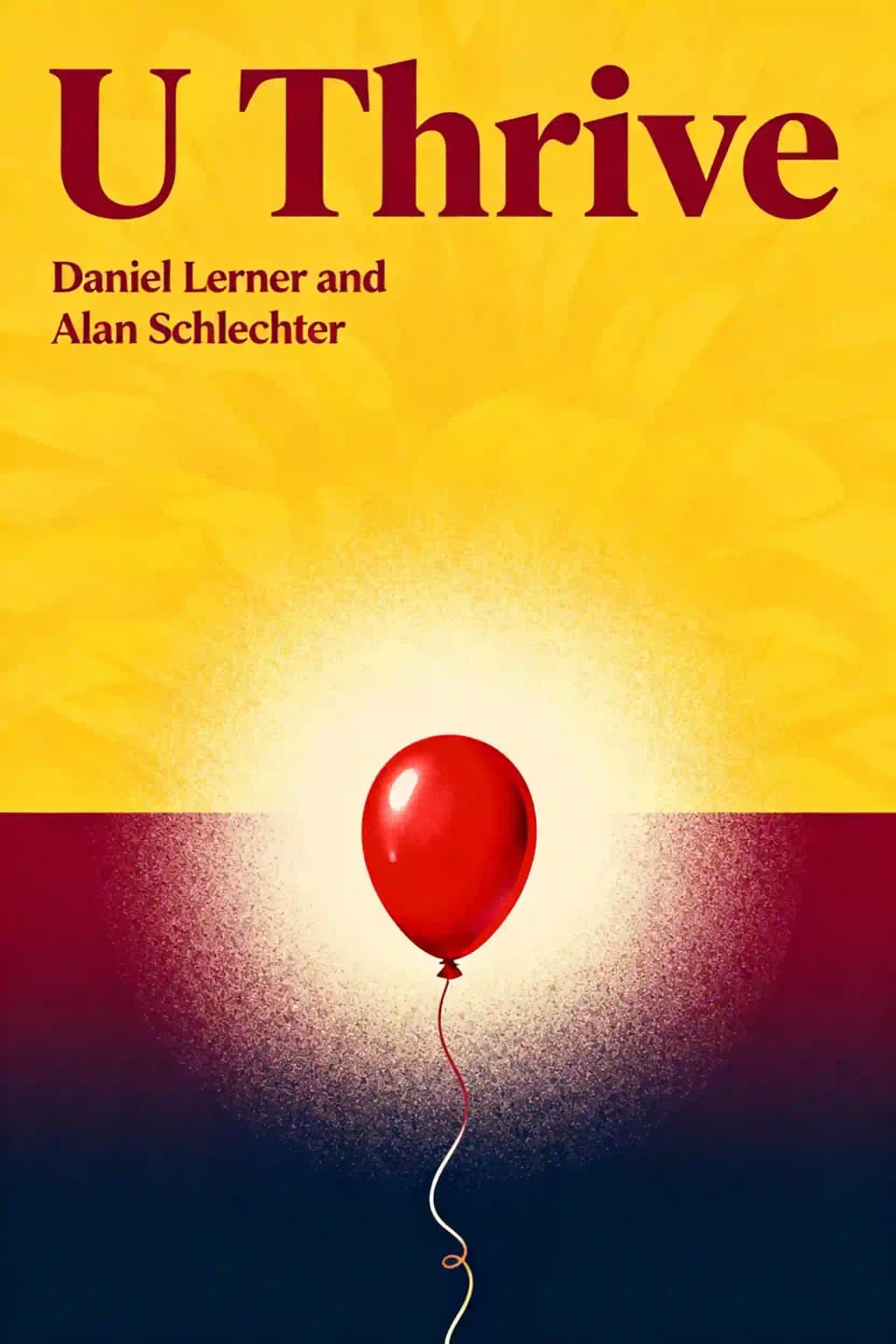
College represents one of life's most transformative journeys-a time of unprecedented freedom, challenge, and growth. "U Thrive" by Daniel Lerner and Alan Schlechter has become a sensation among students and educators alike, with its practical wisdom garnering praise from figures like Arianna Huffington, who called it "essential reading for every college student." Born from NYU's wildly popular "Science of Happiness" course-which consistently maintains waitlists in the hundreds-this book distills cutting-edge research into actionable strategies for not just surviving but genuinely thriving during these formative years. What makes this work particularly compelling is how it bridges rigorous science with relatable stories, offering a refreshing alternative to the stress-glorifying culture that dominates many campuses. As mental health concerns among college students reach alarming levels, this guide arrives at a critical moment, providing a science-backed roadmap to balance achievement with well-being.
第 2 章
Beyond Survival: The PERMA Framework for College Success
The transition to college marks an exhilarating yet daunting milestone. You've worked tirelessly for this moment-acceptance letters, tearful goodbyes, and the thrill of new beginnings. Yet beneath the excitement lurks anxiety: Will I make friends? Can I handle the workload? How will I navigate this unfamiliar world without my support system?
College represents more than just academic advancement-it's a complete environmental, social, and identity transformation. Suddenly, you're responsible for everything from laundry to life direction. This shift can be overwhelming, but with the right approach, it becomes an opportunity for extraordinary growth.
Martin Seligman's PERMA model offers a comprehensive framework for thriving: Positive emotions, Engagement, Relationships, Meaning, and Achievement. Think of these as essential "buckets" that need regular filling. When you're struggling, checking these areas often reveals which bucket needs attention.
Consider them interconnected pillars supporting your college experience. Positive emotions fuel resilience and creativity. Engagement through strengths creates flow and purpose. Relationships provide support during challenges. Meaning connects your actions to larger purposes. Achievement gives concrete validation of your efforts.
The beauty of this framework lies in its balance-overemphasizing achievement while neglecting relationships or positive emotions creates instability. Students who maintain all five elements don't just succeed academically; they develop as complete individuals prepared for life beyond graduation. This holistic approach transforms college from mere credential-gathering into a foundation for lifelong flourishing.
第 3 章
The Happiness Advantage: Why Positivity Precedes Success
We've long embraced the narrative that success leads to happiness-work hard, achieve goals, then enjoy the rewards. But research reveals a profound truth: happiness actually fuels success, not the other way around. This "happiness advantage" transforms how we approach college and life beyond.
Studies consistently show that positive emotions enhance performance across domains. Children given a "happiness boost" before tests score significantly higher. Doctors primed with positive feelings make faster, more accurate diagnoses. This isn't coincidence-positive emotions literally rewire our brains for better problem-solving, creativity, and resilience.
Why does this happen? Positive emotions broaden our perspective, allowing us to see connections and possibilities that stress and negativity obscure. They build psychological resources that help us bounce back from setbacks. And perhaps most importantly for students, they enhance learning and memory retention.
This advantage extends beyond academics. Happy students form social connections more quickly, build stronger support networks, and adapt better to new environments. They're more likely to participate in campus activities and take healthy risks that lead to growth opportunities. Even in professional settings, happiness predicts higher income and career advancement-prestigious business schools increasingly incorporate positive psychology into their curricula for this reason.
The implications are clear: waiting until after finals, graduation, or landing that perfect job to be happy is backward thinking. By cultivating positive emotions now, you create the optimal conditions for success. This doesn't mean forced cheerfulness or ignoring problems-rather, it's about building practices that generate authentic positivity even amid challenges.
第 4 章
Positive Emotions: Your Brain's Performance Enhancer
Positive emotions do more than just make life pleasant-they're powerful cognitive enhancers that transform how your brain functions. When you experience joy, gratitude, or contentment, your brain releases neurochemicals that improve memory, enhance learning, and boost creative problem-solving abilities.
This "broaden and build" effect, pioneered by psychologist Barbara Fredrickson, shows that positive emotions literally expand your mental capabilities. While negative emotions narrow focus (useful when facing immediate threats), positive emotions widen your perspective, allowing you to see connections and possibilities that stress blinds you to. This explains why students who maintain positive emotional states perform better academically-they're literally thinking more effectively.
The impact extends to physical health as well. Carnegie Mellon University research found that people who experience regular positive emotions show stronger immune function and greater resistance to illnesses like the common cold. Even in high-pressure situations like public speaking or exams, positive emotions help your body recover more quickly from stress responses, keeping you physiologically balanced.
What's particularly fascinating is how positive emotions affect resilience. When facing setbacks-a poor grade, rejection, or disappointment-those with higher positivity reserves bounce back faster. They're more likely to view challenges as temporary and specific rather than permanent and pervasive failures. This resilience creates a virtuous cycle where recovery from one challenge builds strength for the next.
For college students, this research offers a compelling reason to prioritize activities that generate positive emotions-not as indulgences, but as essential performance enhancers. Whether through gratitude practices, social connections, physical activity, or mindful enjoyment of daily experiences, cultivating positivity isn't just about feeling good-it's about creating the optimal conditions for excellence.
第 5 章
Balancing Positivity with Reality: The Power of Contrast
While positive emotions offer tremendous benefits, blindly pursuing positivity at the expense of acknowledging difficulties can backfire. The most effective approach combines optimistic vision with clear-eyed assessment of challenges-what researchers call "mental contrasting."
Negative emotions, though uncomfortable, serve essential evolutionary functions. Fear warns of danger, sadness signals loss, and anger mobilizes against injustice. These emotions typically carry more weight than positive ones-a phenomenon psychologists call "negativity bias." One criticism can overshadow multiple compliments; one setback can eclipse several victories. This isn't a design flaw in human psychology but a survival mechanism that helped our ancestors remain vigilant.
The key isn't eliminating negative emotions but balancing them with sufficient positive ones. Research suggests a ratio of about three positive emotional experiences to one negative creates optimal functioning. This balance allows you to benefit from both the broadening effects of positive emotions and the focusing effects of negative ones.
Mental contrasting offers a practical application of this balance. Rather than just visualizing success (pure optimism) or dwelling on obstacles (pure pessimism), this technique involves imagining a positive outcome, then systematically identifying potential barriers. Students who practice mental contrasting show improved academic performance, better time management, and more effective goal pursuit.
For example, rather than just visualizing an "A" on your final paper, you might also identify potential obstacles: procrastination, research challenges, or competing priorities. This realistic optimism leads to proactive planning rather than disappointment when idealized scenarios don't materialize.
The WOOP method (Wish, Outcome, Obstacle, Plan) provides a structured approach to mental contrasting. By acknowledging both desired outcomes and potential barriers, you develop more effective strategies and maintain motivation through difficulties. This balanced approach harnesses the motivational power of positive emotions while respecting the informational value of negative ones.
第 6 章
Relationships: The Foundation of College Success
While academic achievement often dominates conversations about college success, research consistently shows that relationships may be the single most powerful predictor of both happiness and achievement during these formative years. Students with strong social connections show better academic performance, higher retention rates, and greater life satisfaction than their isolated peers.
College presents an unprecedented social opportunity-a "candy store" of potential connections with diverse individuals from different backgrounds, perspectives, and interests. These relationships shape not just your social calendar but your developing identity, values, and even health outcomes. Through social contagion, the behaviors and attitudes of those around you subtly influence your own, making relationship choices particularly consequential.
During stressful periods-whether academic pressure, homesickness, or personal challenges-the instinct to connect with others, known as the tend-and-befriend response, provides powerful protection against anxiety and depression. Unlike the fight-or-flight response that narrows focus, tend-and-befriend broadens perspective and builds resources through shared experience. Students who reach out during difficulties recover more quickly and often discover unexpected sources of support.
Romantic relationships during college span a spectrum from casual encounters to committed partnerships. While hookup culture receives significant attention, research shows many students privately desire more meaningful connections. The key isn't following prescribed relationship scripts but understanding your own preferences and communicating them honestly. Regardless of relationship type, maintaining a positive interaction ratio of about 5:1 (five positive interactions for each negative one) predicts relationship satisfaction and longevity.
Perhaps most surprisingly, research challenges the primacy of physical attractiveness in relationship formation. While initial attraction matters, qualities like warmth, responsiveness, and active listening create more lasting impression and connection. Learning to be genuinely present with others-a skill called active constructive responding-strengthens bonds more effectively than appearance-based attraction.
第 7 章
Leveraging Your Unique Strengths for Engagement
True engagement emerges at the intersection of challenge and personal strengths. John's story illustrates this perfectly-after struggling through pre-med courses to please his parents, he discovered his natural talents in psychology, where learning felt energizing rather than depleting. His grades improved, his enthusiasm returned, and his path became clearer not by working harder but by aligning with his intrinsic strengths.
The concept of character strengths, developed by Martin Seligman and colleagues, provides a framework for understanding these personal attributes. Unlike talents (natural abilities) or skills (learned capabilities), character strengths represent core qualities that energize and define you. The VIA Character Strengths Survey identifies 24 universal strengths-from creativity and curiosity to kindness and leadership-with each person possessing a unique profile of "signature strengths" that feel authentic and energizing when expressed.
Identifying these signature strengths transforms how you approach college. Courses, activities, and career paths aligned with your strengths create natural engagement. A student with "love of learning" might thrive in research opportunities, while someone with "social intelligence" might excel in collaborative projects. Using strengths doesn't mean avoiding challenges-rather, it means approaching challenges through your natural aptitudes.
Interestingly, even seemingly unusual strengths prove valuable in unexpected contexts. Military academies discovered that cadets with strengths in love and humor-not typically associated with military excellence-showed outstanding leadership qualities and inspired loyalty in their units. This demonstrates how authentic expression of strengths creates unique paths to excellence.
When engaged through strengths, you can enter a state of "flow"-complete absorption in an activity where time seems to disappear and performance peaks. Flow emerges when your skills match the challenge level, creating neither boredom nor anxiety but optimal engagement. Unlike "junk flow" from passive activities like excessive TV watching, true flow leaves you energized rather than depleted.
By identifying your signature strengths and deliberately applying them to academic and extracurricular pursuits, you transform college from a series of requirements to a personally meaningful journey of engagement and discovery.
第 8 章
Mindset: The Power of How You Think About Abilities
The beliefs you hold about your abilities profoundly influence how you approach challenges, respond to setbacks, and ultimately perform in college. Stanford psychologist Carol Dweck's research on mindsets reveals two fundamental perspectives: fixed and growth.
A fixed mindset views abilities as static traits-you either have them or you don't. Intelligence, creativity, athletic ability-these qualities are perceived as innate and unchangeable. With this perspective, challenges become threats that might expose limitations, effort signals lack of natural talent, and feedback feels like personal judgment. Students with fixed mindsets often avoid challenges that might reveal inadequacy, give up quickly when obstacles arise, and feel threatened by others' success.
In contrast, a growth mindset sees abilities as developable through effort and strategy. Intelligence can expand, skills can improve, and talents can be cultivated. From this perspective, challenges become opportunities to develop, effort represents the path to mastery, and feedback provides valuable information for improvement. Students with growth mindsets embrace challenges, persist through difficulties, and find inspiration in others' accomplishments.
These mindsets shape academic trajectories in powerful ways. In one study, students with growth mindsets showed steadily improving grades throughout challenging courses, while fixed-mindset students' performance declined when material became difficult. The difference wasn't intelligence but response to challenge-growth-minded students increased effort and sought new strategies, while fixed-minded students withdrew effort to protect their self-image.
The good news? Mindsets themselves can change. Simple interventions that teach students about neuroplasticity-the brain's ability to form new connections through practice-significantly improve academic performance. Even brief exposure to growth-oriented ideas can shift behavior. In one experiment, students primed with growth concepts chose challenging tasks that would help them learn, while those primed with fixed concepts chose easier tasks that would make them look good.
Relationships also benefit from growth mindsets. Fixed-minded individuals often seek partners who will validate their qualities, while growth-minded people look for partners who will challenge them to develop. When problems arise, growth mindsets foster communication and problem-solving rather than blame and withdrawal.
第 9 章
Optimism and Pessimism: Explanatory Styles That Shape Outcomes
How you explain life events-particularly failures and setbacks-profoundly influences your resilience, performance, and well-being. This "explanatory style" operates largely beneath conscious awareness yet shapes your entire college experience.
Consider two students receiving the same disappointing grade. The pessimistic explainer thinks: "I'm just not smart enough for this subject (permanent), I'll probably fail other classes too (pervasive), and it's all because I lack ability (personal)." The optimistic explainer thinks: "I didn't prepare effectively for this specific exam (temporary), this particular class is challenging but others are going well (specific), and several factors contributed including my preparation approach (external)."
These different explanations create entirely different emotional states and behavioral responses. The pessimistic student feels helpless and may withdraw effort, while the optimistic student maintains confidence and adjusts strategy. Over time, these patterns compound-optimistic students bounce back from setbacks, persist through challenges, and ultimately achieve more.
Research consistently shows that optimistic explanatory styles predict better outcomes across domains. When Lee Stetson, Dean of Admissions at the University of Pennsylvania, noticed that some students with modest test scores thrived while others with perfect scores struggled, he discovered optimism was the differentiating factor. Optimistic students built stronger social networks, participated more actively in campus life, and showed greater resilience when facing inevitable college challenges.
However, pessimism isn't universally detrimental. "Defensive pessimism"-strategically anticipating problems to prepare for them-can be effective for certain personalities and situations. Some students perform better by imagining worst-case scenarios and preparing accordingly. The key is whether the pessimism mobilizes productive action or paralyzes with anxiety.
The most effective approach combines optimism's resilience with pessimism's preparedness-what researchers call "realistic optimism." Mental contrasting techniques help achieve this balance by encouraging positive visualization of goals while systematically identifying potential obstacles. Students trained in these techniques show better academic performance, more effective planning, and greater persistence toward meaningful goals.
Most importantly, explanatory styles can change through deliberate practice. The ABCDE method (Adversity, Beliefs, Consequences, Disputation, Energization) helps reframe negative explanations into more constructive ones. By recognizing and challenging pessimistic thought patterns, you develop greater cognitive flexibility and resilience-essential qualities for thriving amid college challenges.
第 10 章
Willpower: The Science of Self-Control
The freedom college offers-to choose your schedule, activities, and priorities-makes self-regulation more important than ever. Research on willpower provides crucial insights for managing this newfound autonomy effectively.
Walter Mischel's famous "marshmallow test" revealed the predictive power of delayed gratification. Children who could resist eating one marshmallow to receive two later showed better outcomes decades later-higher SAT scores, lower BMI, better stress management, and greater financial stability. This ability to postpone immediate rewards for larger future benefits proves especially valuable in college, where long-term goals require consistent daily choices.
Contrary to popular belief, willpower functions less like a fixed character trait and more like a muscle. Roy Baumeister's experiments demonstrate that self-control depletes with use-students who resisted freshly baked cookies performed worse on subsequent persistence tasks than those who hadn't exercised restraint. This "ego depletion" explains why maintaining discipline becomes harder throughout a demanding day and why stress makes temptations harder to resist.
Like physical muscles, willpower can be strengthened through regular exercise. Simple practices like maintaining good posture, using your non-dominant hand for routine tasks, or tracking expenditures build general self-regulatory capacity that transfers to academic contexts. Even brief daily meditation enhances the neural pathways associated with self-control.
Understanding willpower's limitations leads to smarter strategies. Rather than relying solely on moment-by-moment resistance, successful students create environments that minimize temptation. The marshmallow test's most successful children didn't stare down the treat using sheer willpower-they distracted themselves, covered their eyes, or pretended the marshmallow was something less appetizing. Similarly, studying in distraction-free environments, using website blockers during work sessions, or leaving your phone in another room conserves valuable willpower resources.
Procrastination-perhaps the greatest willpower challenge for students-stems from various patterns: mild impact procrastination (postponing small tasks), behavioral procrastination (starting many projects but finishing few), deadline procrastination (consistently missing timeframes), and hindrance procrastination (overcommitting socially). Recognizing your specific pattern allows for targeted interventions, whether through accountability partners, breaking tasks into smaller steps, or creating artificial deadlines with consequences.
Heart rate variability (HRV), a measure of autonomic nervous system flexibility, correlates strongly with willpower capacity. Practices that improve HRV-deep breathing, adequate sleep, regular exercise, and stress management-enhance self-regulatory abilities across contexts. This physiological perspective explains why self-control fluctuates with physical state and why holistic well-being supports academic discipline.
第 11 章
Choice Architecture: Designing Decisions for Success
Modern life bombards us with unprecedented choice-from 40,000 products in an average supermarket to countless majors, clubs, and social opportunities in college. While freedom of choice seems inherently positive, research reveals a paradox: too many options often reduce satisfaction and impair decision-making.
In a famous experiment, shoppers encountering a display of 24 jam varieties were less likely to purchase any jam than those seeing just 6 options. Similarly, employees offered numerous retirement plan options often make no selection at all, foregoing valuable benefits due to decision paralysis. This "choice overload" creates anxiety, regret, and often poorer outcomes.
College magnifies this challenge. Every day brings decisions about courses, activities, relationships, and time allocation. Each choice carries opportunity costs-saying yes to one option means saying no to countless others. This reality fuels FOMO (fear of missing out) and can undermine satisfaction with even good choices.
Barry Schwartz's research distinguishes two decision-making approaches: maximizing and satisficing. Maximizers seek the absolute best option, exhaustively comparing alternatives before deciding. While this sounds logical, it often leads to analysis paralysis, regret, and lower satisfaction. Satisficers, by contrast, establish personal criteria and choose the first option that meets them. Though this approach seems less thorough, it typically produces greater satisfaction and psychological well-being.
Interestingly, maximizers often achieve objectively "better" outcomes-higher-paying jobs, more prestigious opportunities-yet report less happiness with these achievements. Their tendency to continue comparing and wondering "what if" diminishes enjoyment of even excellent choices. This suggests that decision-making style influences subjective experience more than objective outcomes.
Practical strategies for managing choice include:
1. Establishing personal filters that automatically eliminate options not aligned with your values
2. Creating beneficial habits that reduce daily decisions
3. Making certain choices irreversible to prevent endless reconsideration
4. Selectively maximizing for truly important decisions while satisficing for routine ones
5. Setting time limits for decisions to prevent analysis paralysis
By deliberately structuring your decision-making process, you conserve cognitive resources for what matters most. The goal isn't eliminating choice but creating a decision architecture that enhances rather than undermines your college experience.
第 12 章
Stress: Transforming Challenge into Growth
Janet's experience with stress exemplifies a profound shift in understanding-what if stress isn't your enemy but potentially your ally? While popular culture portrays stress as universally harmful, research reveals a more nuanced reality: stress can either enhance or undermine performance depending largely on how you perceive it.
The Yerkes-Dodson law illustrates that performance follows an inverted U-curve relative to arousal. Too little stress creates boredom and disengagement; too much produces anxiety and impaired function. But the "sweet spot" in between-moderate, manageable stress-actually optimizes performance. This explains why many students perform better with appropriate deadline pressure or why athletes achieve personal bests during important competitions.
Stanford psychologist Kelly McGonigal's research demonstrates that your stress mindset-whether you view stress as enhancing or debilitating-significantly influences outcomes. In one study, students told that pre-exam anxiety improves performance scored higher than those told anxiety hurts performance. The physiological response was similar in both groups, but the interpretation transformed the experience from threat to challenge.
Understanding the biology helps explain this effect. The fight-or-flight response, while often portrayed negatively, evolved to help us perform at our peak during challenges. Increased heart rate delivers more oxygen to your brain, heightened awareness sharpens focus, and stress hormones mobilize energy reserves. These same responses that help athletes excel can enhance academic performance when properly framed.
The key distinction lies between the threat response and the challenge response. When stress feels overwhelming and beyond your capacity, it triggers a threat response characterized by constricted blood vessels, defensive posture, and impaired thinking. When stress feels challenging but manageable, it triggers a challenge response with increased blood flow, approach orientation, and enhanced cognition. The physiological difference is subtle but the performance impact is enormous.
Reframing anxiety as excitement-a cognitive shift from threat to challenge-produces measurable improvements in public speaking, test performance, and athletic achievement. This doesn't require denying feelings of arousal but reinterpreting them: "I'm not anxious; I'm energized and ready."
Even physical manifestations of stress can be reframed. That racing heart? It's delivering oxygen to your brain. Butterflies in your stomach? Your body is diverting resources to priority systems. Sweaty palms? Your body is cooling itself for optimal performance. By understanding these responses as adaptive rather than problematic, you transform your relationship with stress.
第 13 章
The Thriving Body: Physical Foundations of Success
Despite centuries of philosophical tradition separating mind and body, modern science reveals their profound interconnection. Physical well-being forms the essential foundation for cognitive performance, emotional regulation, and overall thriving in college.
Exercise represents perhaps the single most underutilized performance enhancer available to students. Beyond its well-known physical benefits, regular movement dramatically improves brain function. Physical activity increases production of BDNF (brain-derived neurotrophic factor)-essentially fertilizer for neural connections-enhancing learning, memory, and cognitive flexibility. Naperville Central High School demonstrated this connection dramatically: students who participated in morning exercise showed twice the academic improvement of control groups, particularly in complex subjects like math and science.
Many students avoid exercise due to negative associations from childhood sports or gym class. Reframing movement as a brain-boosting activity rather than athletic performance can help overcome this resistance. Even brief activity-a 10-minute walk before studying, standing while reading, or stretch breaks during long sessions-provides cognitive benefits. The goal isn't becoming an athlete but incorporating regular movement into your routine.
Nutrition similarly impacts cognitive function in ways most students underappreciate. The brain consumes approximately 20% of your body's energy despite representing only 2% of its weight. Research consistently shows that breakfast eaters outperform peers academically, and students consuming more fruits and vegetables report higher levels of curiosity, creativity, and engagement. Complex carbohydrates provide sustained energy for thinking, while protein supports neurotransmitter production essential for focus and memory.
Sleep completes this physical foundation, though it's often sacrificed in college culture that sometimes glorifies sleep deprivation. Sleep isn't merely rest but an active process essential for memory consolidation, emotional regulation, and cognitive restoration. Studies show that sleep-deprived students perform similarly to those who are legally intoxicated, with impaired judgment, reduced creativity, and compromised learning. Even a single all-nighter reduces the brain's ability to absorb new information by nearly 40%.
Understanding sleep cycles reveals why quality matters alongside quantity. During deep sleep, the brain consolidates factual knowledge and skills; during REM sleep, it integrates information and generates insights. Strategic napping (20-30 minutes) can provide significant cognitive refreshment without the grogginess of deeper sleep cycles.
These physical foundations-exercise, nutrition, and sleep-aren't luxuries to enjoy after academic demands are met. Rather, they create the physiological conditions that make academic excellence possible. By prioritizing physical well-being, you enhance every aspect of your college experience.
第 14 章
Passion and Purpose: Creating a Meaningful College Experience
College offers unprecedented freedom to explore interests and discover what truly engages you. Understanding the nature of passion-and distinguishing between its healthy and problematic forms-can help you create a meaningful and sustainable path.
Passion goes beyond mere interest or enjoyment. It involves deep engagement with an activity that becomes part of your identity, commanding significant time and energy. Passionate pursuits feel personally significant and worth investing in, even when challenging. Research shows that students with clear passions demonstrate greater persistence, creativity, and overall achievement than those pursuing activities with mere external motivation.
However, not all passion is created equal. Psychologist Robert Vallerand distinguishes between harmonious passion and obsessive passion. Harmonious passion integrates smoothly with other life aspects, enhances well-being, and remains within your control. You engage because the activity itself is rewarding. Obsessive passion, conversely, feels compulsive, creates conflict with other life domains, and often stems from external pressures or contingent self-worth. The activity controls you rather than vice versa.
This distinction explains why some passionate pursuits lead to fulfillment while others create burnout. Students with harmonious passions show better concentration, more flexible persistence, and greater life satisfaction. Their engagement energizes rather than depletes them. Those with obsessive passions often experience anxiety, rigid persistence, and conflict between their passion and other important life areas.
Finding meaningful passion often begins with identifying signature strengths and seeking activities where these strengths can be expressed. When Andrew struggled to find direction, Dan guided him to explore activities aligned with his natural strengths of creativity and perspective. This approach led to discovering a passion for architectural design that felt intrinsically rewarding rather than externally imposed.
Support from peers, professors, and mentors proves crucial in passion development. Studies show that autonomy support-encouragement without controlling behavior-significantly increases the likelihood of developing harmonious rather than obsessive passion. Finding communities that validate your interests while respecting your autonomy creates ideal conditions for passion to flourish.
Passion sometimes changes direction, as illustrated by Dan's mother, whose musical passion evolved from performance to teaching. Such transitions aren't failures but natural evolutions that often lead to deeper fulfillment. College provides the perfect laboratory for exploring multiple interests and allowing authentic passions to emerge organically.
By understanding these dynamics, you can cultivate passions that enhance rather than diminish your overall college experience-creating not just achievement but genuine meaning and purpose in your educational journey.