第 4 章
Masks and Appearances in Small-Town America
Echo Ridge epitomizes the dichotomy between appearance and reality that characterizes small-town America. The community maintains a veneer of perfection - from the pristine high school with its pine floors and arched windows to the carefully orchestrated homecoming traditions - while dark undercurrents flow beneath the surface. The town's obsession with appearances manifests in everything from the meticulously maintained Victorian homes on Main Street to the coordinated seasonal decorations that transform the town square. Even the local diner, with its chrome fixtures and red vinyl booths, seems frozen in an idealized 1950s aesthetic that the townspeople desperately try to preserve.
The Halloween attraction Fright Farm serves as the perfect metaphor for this dynamic. A place designed to provide controlled scares becomes the site of actual horror when Lacey is murdered there. The attraction's manufactured frights - plastic skeletons, strobe lights, and actors in masks - create an illusion of danger that ironically masks real threats lurking within the community. Similarly, the homecoming dance, meant to celebrate school spirit and community, becomes twisted into something sinister when threatening messages target the homecoming court. The traditional parade floats, with their paper flowers and glitter, take on a grotesque quality as they move through streets where young women have disappeared.
Social hierarchies in Echo Ridge are rigidly maintained through careful image management. Katrin Nilsson, the quintessential queen bee, maintains her status through calculated friendships and strategic social maneuvers. Her designer clothes, perfectly curated social media presence, and seemingly effortless academic achievements create an armor of perfection. When she invites the twins to lunch on their first day, it's not genuine friendliness but a power move to assess potential threats to her status. Her lunch table becomes a microcosm of the town's social structure - where seating arrangements carry the weight of political alliances and casual conversations mask careful reconnaissance.
The characters themselves wear masks, hiding their true feelings and motivations behind carefully constructed personas. Brooke Bennett presents herself as Katrin's loyal sidekick while harboring secrets that ultimately contribute to her demise. Her cheerleader uniform and perpetual smile serve as camouflage for deeper ambitions and resentments. Viv Cantrell poses as a serious journalist while manufacturing threats for her own career advancement, her professional demeanor concealing a willingness to sacrifice truth for sensation. Even Ellery and Malcolm maintain careful facades - she hiding her fear behind true-crime knowledge and quick wit, he concealing his resentment of his stepfamily behind polite compliance and self-deprecating humor.
The novel suggests that this culture of secrecy and image management creates the perfect environment for violence to flourish. When a community values appearance over truth, predators can hide in plain sight, their crimes obscured by collective denial. The town's reluctance to acknowledge its dark history - from domestic abuse hidden behind closed doors to economic disparities masked by carefully maintained lawns - creates blind spots where violence can breed unchecked. As Ellery reflects after discovering yet another layer of deception, "In Echo Ridge, nothing is ever what it seems." This observation extends beyond individual secrets to encompass the town's entire social fabric, where the pressure to maintain appearances has created a community-wide conspiracy of silence.
第 5 章
The Psychology of Secrets and Silence
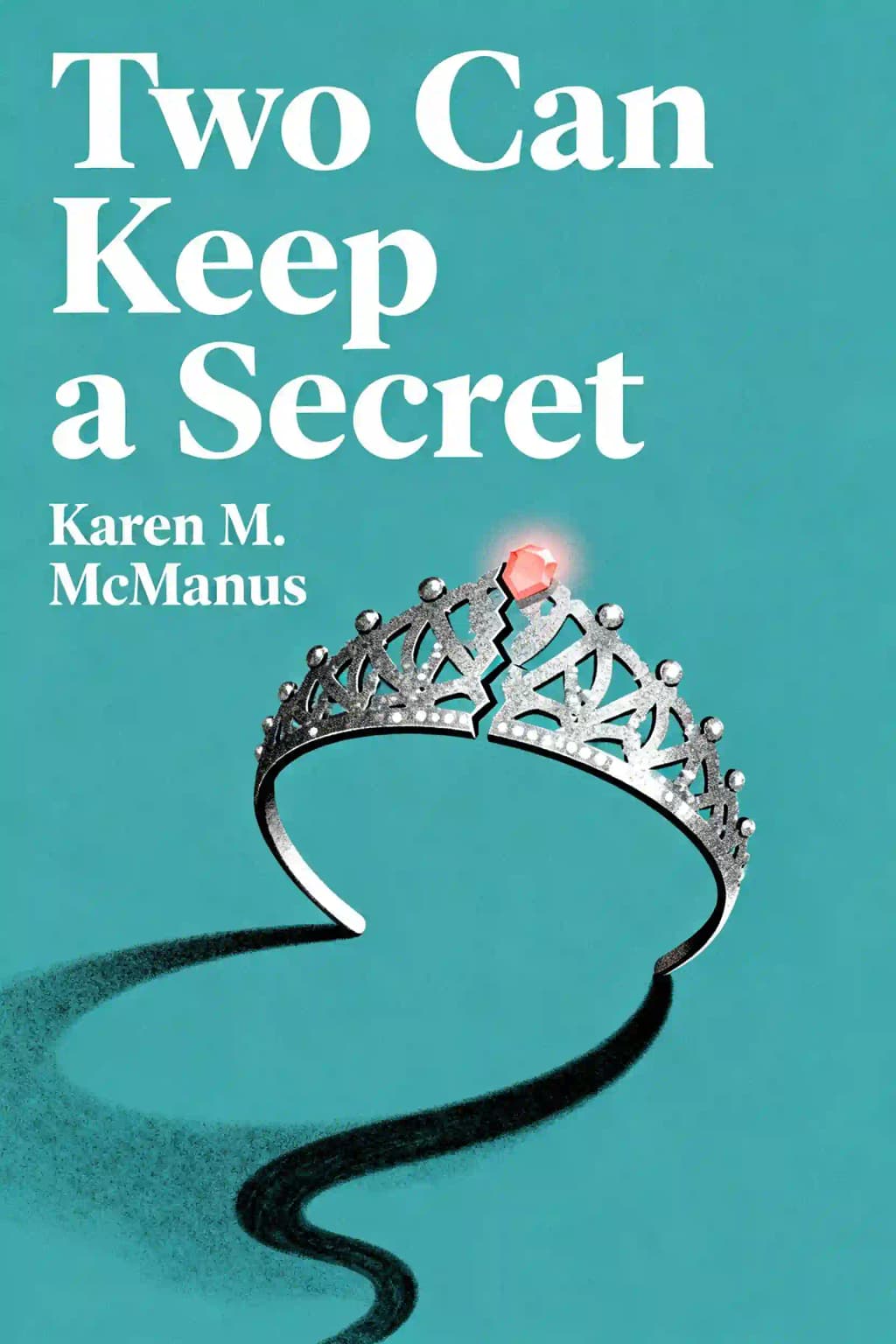
"Two Can Keep a Secret" delves deeply into the psychological toll of keeping secrets - both on individuals and communities. The title itself references the old adage "Two can keep a secret if one of them is dead," hinting at the deadly consequences of shared knowledge in Echo Ridge.
For Sadie Corcoran, the weight of her secrets has literally driven her to addiction. When she finally reveals to Ellery that she was supposed to meet Sarah the night her sister disappeared but skipped out to lose her virginity to her homecoming date, the confession comes through tears. "I've spent my whole life thinking that if I'd just been there, Sarah would still be alive," she admits. This secret has shaped every aspect of her life, including her relationship with her children.
Similarly, Daisy Wong carries the burden of her secret love for Declan Kelly and her guilt about Lacey's death. Her nervous breakdown in Boston wasn't random - it was the inevitable collapse of someone who had spent years maintaining a facade. When she finally confesses to having loved Declan while he was dating her best friend, the relief is palpable. "I've never told anyone that before," she says, the weight of years of silence evident in her voice.
The novel explores how secrets corrode relationships from within. Ellery and Sadie's strained mother-daughter dynamic stems directly from Sadie's refusal to discuss the past. Malcolm and Declan's brotherly bond has been fractured by years of unspoken suspicions and resentments. Even romantic relationships in Echo Ridge are poisoned by secrets - Lacey and Declan's seemingly perfect relationship was undermined by his feelings for Daisy, while Peter and Malcolm's mother built their marriage on a foundation of lies.
On a community level, Echo Ridge's culture of silence enables violence to continue unchecked. By refusing to fully reckon with Sarah's disappearance or properly investigate Lacey's murder, the town creates conditions where history can repeat itself with Brooke's disappearance. The novel suggests that collective silence is a form of complicity - that by prioritizing the town's image over truth, Echo Ridge's residents have blood on their hands.
第 6 章
The Dangerous Allure of True Crime
Through Ellery's character, McManus explores society's fascination with true crime and questions the ethics of turning real tragedies into entertainment. Ellery's obsession with true crime stems from personal trauma - her aunt's disappearance - but has evolved into something more complex and potentially problematic. She approaches Echo Ridge with the detached mindset of a detective, viewing the town's residents as potential suspects rather than complex individuals with their own stories and pain. "True crime has taught me three things," she explains early in the novel. "One, anyone is capable of murder under the right circumstances. Two, the killer is usually hiding in plain sight. And three, it's always the boyfriend." This mantra reveals both the wisdom and limitations of true crime conventions.
This investigative framework initially serves Ellery well, helping her notice subtle connections and patterns that others overlook. She picks up on inconsistencies in alibis, recognizes the significance of seemingly minor details, and understands the importance of establishing timelines. But the novel also shows the significant limitations and psychological dangers of this perspective. Her tendency to view everything through the lens of true crime leads her to make incorrect assumptions about Malcolm, Declan, and others, nearly destroying potential friendships and alliances. More troublingly, it sometimes causes her to forget the human cost of the tragedies she's investigating. When she digs through trash at Fright Farm looking for clues, she's treating Brooke's disappearance more like an intellectual puzzle to solve than a life hanging in the balance.
The character of Viv Cantrell serves as a dark mirror, representing the most extreme and troubling aspects of true crime obsession. Willing to manufacture threats, plant false evidence, and manipulate the homecoming election just to create a compelling story for her journalism portfolio, Viv embodies the ethical concerns about exploitation in true crime media. Her actions - from staging threatening scenes to orchestrating dramatic reveals - raise uncomfortable questions about the line between documenting and creating crime narratives. She represents the growing trend of true crime content creators who prioritize views and engagement over truth and ethical responsibility.
Yet the novel doesn't simply condemn true crime interest or dismiss its value entirely. Ellery's extensive knowledge of criminal behavior patterns and investigative techniques ultimately helps solve both current and past murders. Her understanding of victimology and criminal psychology provides valuable insights that aid the investigation. The book suggests that the problem isn't interest in true crime itself, but rather approaching it without empathy or ethical boundaries. As Ellery grows throughout the story, she learns to balance her investigative instincts with genuine concern for the people involved, representing a more thoughtful and responsible engagement with true crime. Her evolution demonstrates how true crime interest can be channeled constructively when combined with empathy and respect for victims.
The novel ultimately presents a nuanced view of true crime culture, acknowledging both its potential benefits - increased awareness of safety issues, understanding of criminal behavior, and tools for solving cold cases - while warning against the desensitization and exploitation that can occur when real tragedies are treated merely as entertainment. Through Ellery's journey, readers are challenged to examine their own relationship with true crime media and consider the ethical implications of consuming stories built on others' suffering.
第 7 章
The Complex Nature of Justice and Closure
"Two Can Keep a Secret" offers a nuanced exploration of justice and closure in the aftermath of violence. The novel resists simple narratives of good and evil, instead presenting a complex web of motivations, mistakes, and consequences that span generations.
For Declan Kelly, justice never truly arrived. Though he wasn't formally charged with Lacey's murder, the court of public opinion convicted him, destroying his future. When Malcolm encounters him at Bukowski's Tavern, Declan is a shell of his former self, unable to even order a drink without worrying about showing his ID. "I'm nobody," he tells a stranger who recognizes him - a heartbreaking statement from someone whose identity has been reduced to "suspected murderer." His situation raises uncomfortable questions about the presumption of innocence and the lasting damage of unproven allegations.
Conversely, Peter Nilsson represents justice delayed but eventually served. A respected lawyer and community leader, Peter hid his violent nature behind a veneer of respectability for decades. His eventual arrest brings a measure of justice for Brooke, Lacey, and potentially Sarah, but it can't undo the damage he's caused or bring back the dead. The novel acknowledges the bitter truth that perfect justice is impossible in the wake of murder - some wounds can never fully heal.
The concept of closure proves equally complex. When Brooke's body is discovered, Ellery reflects that she "knew intellectually how murder investigations typically end" but wasn't prepared for "how awful it would feel." This moment highlights the gap between abstract knowledge about crime and the devastating emotional reality of loss. For families like the Kilduffs and the Corcorans, closure isn't a single moment but an ongoing process of learning to live with unanswerable questions and permanent absence.
The novel's ending reinforces this complexity. While the main mystery is solved, Ellery chooses to keep Peter's final confession - that he killed Sarah thinking she was Sadie - to herself. This decision acknowledges that sometimes full disclosure doesn't serve justice or healing. Some secrets, the novel suggests, are better left buried when revealing them would only cause more pain without changing the fundamental reality of loss.
第 8 章
Finding Identity Beyond Trauma
Despite its dark themes, "Two Can Keep a Secret" ultimately offers hope through its portrayal of characters finding ways to forge identities beyond the traumas that have defined them. This journey toward selfhood represents the novel's most profound character development.
For Ellery, this process involves reconciling with her mother and embracing her expanded family. Though she begins the novel distant from Sadie, their shared experience of Peter's violence creates space for healing. When Sadie rushes to her hospital bedside, Ellery returns her mother's hug "with all her remaining strength" - a physical gesture that symbolizes her willingness to rebuild their relationship. Similarly, her cautious openness to knowing Ryan Rodriguez and his family represents a step toward defining herself by new connections rather than old losses.
Malcolm's journey involves breaking free from his brother's shadow and his stepfather's influence. Throughout the novel, he's defined himself in opposition to both Declan (the alleged murderer) and Peter (the wealthy stepfather). By the end, he's beginning to establish his own identity, reconnecting with Declan on more equal terms while planning a future separate from the Nilsson household. His growing relationship with Ellery represents another aspect of this self-definition - choosing connections based on genuine understanding rather than family obligation or social expectation.
Even secondary characters demonstrate this theme. Declan and Daisy, after years of defining themselves by their connection to Lacey's death, finally build a life together that acknowledges the past without being imprisoned by it. Sadie begins the difficult work of addressing her addiction and rebuilding relationships with her mother and children.
The novel's final image of Ellery and Malcolm walking hand in hand on a beautiful October day symbolizes this possibility of moving forward without forgetting the past. They carry their traumas and secrets - Ellery still holds Peter's final confession - but refuse to be defined solely by them. "I'm thinking about SATs, and college visits," Ellery reflects, "and getting to know my half siblings, and maybe more dates with Malcolm." This focus on future possibilities rather than past tragedies represents the novel's most hopeful message: that even in a town haunted by violence, new beginnings remain possible.
第 9 章
When the Past Refuses to Stay Buried
The novel's final revelation - that Peter killed Sarah thinking she was Sadie - brings the story full circle, connecting present violence to past crimes in a devastating way. This twist reinforces the novel's central theme that the past is never truly past, especially in a place like Echo Ridge where secrets fester beneath the surface for decades.
Peter's confession that "I thought she was your mother" carries a chilling implication: Ellery and Ezra shouldn't exist. If Peter had succeeded in killing Sadie instead of mistakenly murdering Sarah, the twins would never have been born. This realization forces Ellery to confront her own contingent existence - the fact that her life resulted from a case of mistaken identity in a murder plot. It's a psychological burden almost too heavy to bear, which explains why she chooses to keep this final secret even from those closest to her.
The novel's ending is deliberately ambiguous about whether keeping this secret is the right choice. On one hand, revealing it would only cause more pain to Sadie and wouldn't change what happened to Sarah. On the other hand, secrets have a way of poisoning relationships in Echo Ridge, and Ellery risks repeating the pattern of silence that enabled violence in the first place. This moral ambiguity reflects the novel's sophisticated approach to questions of truth and healing.
What remains clear is that Echo Ridge's cycle of violence stems directly from its refusal to honestly confront its past. Peter's crimes went undetected for decades because the community preferred comfortable lies to uncomfortable truths. The novel suggests that while individual healing is possible, true community healing requires collective reckoning with buried secrets. Until Echo Ridge can honestly face its history of violence against young women, the past will continue to haunt the present.
As Ellery walks hand in hand with Malcolm in the novel's final scene, she embodies this tension between moving forward and acknowledging the past. She plans for her future while carrying the weight of generations of secrets. The question that lingers beyond the final page is whether Echo Ridge will ever truly break its cycle of violence, or whether some secrets will remain buried until they inevitably resurface in new tragedy. After all, two can keep a secret - if one of them is dead.