第 1 章
A Prisoner's Path to Power: Love, Rage, and Royal Intrigue
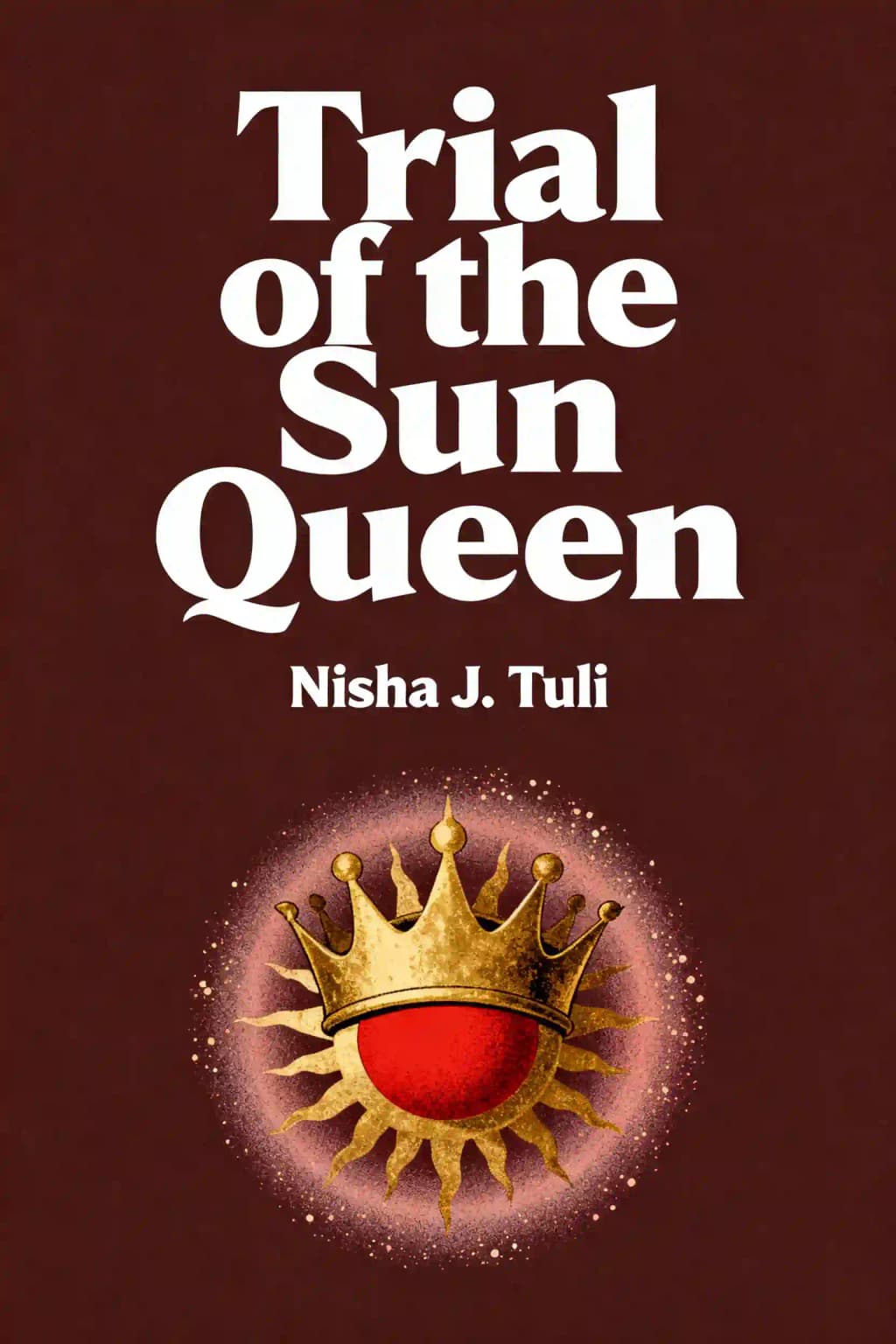
In a world where power shifts like the aurora borealis, Nisha J. Tuli's "Trial of the Sun Queen" has captivated readers with its blend of fantasy, political intrigue, and raw human emotion. This first installment in the Artefacts of Ouranos series has quickly become a BookTok sensation, with readers drawn to its complex female protagonist who navigates imprisonment, magical trials, and forbidden attraction. Celebrities like Florence Pugh have praised the novel's "perfect balance of vulnerability and fierce determination," while fantasy readers celebrate Tuli's fresh approach to the genre-creating a world where light and darkness battle not just in the skies, but in the hearts of its characters. As one reviewer noted, "It's like 'The Hunger Games' meets 'A Court of Thorns and Roses,' with a protagonist who refuses to be broken by her circumstances."
第 2 章
From Prison Rags to Palace Intrigue
Life in Nostraza prison is brutal and unforgiving. For Lor, our fierce protagonist, it's been her reality since childhood. When we meet her, she's engaged in a vicious fight over stolen soap with another prisoner named Jude. The fight ends with Jude's wrist snapped and Lor sentenced to two weeks in the Hollow-a punishment hole in the ground with no food or water that nearly killed her after just one week during a previous punishment.
The Hollow represents everything about Lor's existence: isolation, deprivation, and the constant threat of death. As she's thrown into this pit in the middle of the Void forest surrounding the prison, her only companions are her injuries and memories of her siblings, Tristan and Willow. The guards taunt her with threats of future assault when she returns, if she survives at all.
What makes Lor's character immediately compelling is her unflinching resilience. Despite the horror of her situation, her mind remains sharp, calculating her chances of survival while nursing her dislocated shoulder. She worries not primarily about herself but about her siblings and how they'll cope without her protection. This selflessness despite her circumstances reveals the core of who Lor is-someone whose capacity to care remains intact despite years of brutality.
When a monstrous creature appears above her prison hole during a storm, it seems Lor's fate is sealed. Yet a flash of lightning drives the creature away, only for the subsequent downpour to nearly drown her as the Hollow fills with water. Through days of delirium, hunger, and exposure, Lor drifts between consciousness and vivid dreams of her loved ones. Just as death seems certain, mysterious hands lift her from the pit-hands that belong to someone who will completely transform her fate.
This opening sequence establishes the harsh reality from which Lor emerges, making her subsequent journey all the more remarkable. Her prison experience has forged her into someone who sees opportunities where others might see only obstacles, a skill that will prove essential in the deadly competition awaiting her.
第 3 章
The Sun Palace's Golden Deception
Imagine waking from near-death to find yourself in a luxurious bed, attended by servants, and dressed in fine clothes woven with golden thread that catches the eternal daylight. This jarring transition is Lor's introduction to the Sun Palace of Aphelion, where she learns she's been selected as the "Final Tribute" for the Sun Queen Trials - a competition where ten females will face four potentially deadly challenges over eight weeks to determine who will rule as queen alongside King Atlas. The selection process itself remains shrouded in mystery, with some claiming the candidates are chosen by ancient magic, while others whisper of political maneuvering behind closed doors.
The Sun Palace represents everything Lor has been denied - abundance, beauty, and freedom. Its soaring crystal spires catch the light of the never-setting sun, creating rainbow cascades that dance across marble floors. Yet this golden paradise harbors dark secrets beneath its resplendent exterior. When Lor meets her "warder" Gabriel, a winged Fae warrior with storm-gray eyes and battle-scarred wings, he delivers the chilling truth: in nearly eight thousand years of the Sun Queen Trials, no Final Tribute - especially not a human from The Umbra (the mortal realm) - has ever survived. The previous tributes' fates remain unspoken, their names erased from palace records as if they never existed.
The contrast between Nostraza's stark deprivation and Aphelion's overwhelming opulence creates a disorienting reality for Lor. Gold adorns every surface in the palace, from soft buttery yellow to deep fiery orange, creating an atmosphere of perpetual sunset. Mirrors line corridors that seem to stretch infinitely, while gilt-edged portraits of past queens watch with knowing eyes. Thick woven rugs muffle footsteps, and rooms filled with ethereal music and tinkling laughter overwhelm her senses. Each meal features dozens of dishes she's never seen - exotic fruits that glow from within, pastries dusted with edible gold, and wines that taste like liquid starlight. Yet beneath this beauty lies cruelty - the other Tributes, daughters of noble houses and magical bloodlines, mock her prison origins and rough manners. Madame Odell, who oversees their training with rigid precision, expresses undisguised disgust at Lor's scars, calling them "marks of mortality's weakness."
When Lor meets the breathtaking Sun King Atlas - with his copper-streaked brown hair, aquamarine eyes that shift like ocean depths, and an aura of raw power that makes the air crackle - she experiences an immediate and unwanted attraction. Yet she remains clear-eyed about her purpose: to somehow survive these trials, gain power, and free her siblings from Nostraza's shadow-wrapped walls. As she tells herself: "With nothing to lose and everything to gain, I'll compete." Each night, she traces the scars on her wrists, a reminder of the prison she left behind and the promises she must keep.
This section establishes the central tension of the novel - Lor must navigate a world of beauty and privilege while never forgetting the harsh realities that shaped her. The palace's golden veneer masks deadly competitions and political machinations, creating a setting where appearances are rarely what they seem. Behind every smile lurks potential betrayal, and beneath every gilded surface lies the weight of centuries of tradition and sacrifice. The eternal sunlight of Aphelion casts deep shadows, and Lor must learn to navigate both the light and the darkness if she hopes to survive.
第 4 章
Trials of Blood and Deception
The Sun Queen Trials are designed not just to test skill but to break spirits. Each challenge reveals more about the brutal nature of Aphelion's selection process while forcing Lor to draw on resources she never knew she possessed.
The first trial tests historical knowledge-a seemingly impossible task for someone whose education was interrupted by imprisonment. When Madame Odell cruelly singles Lor out about her sexual history in front of everyone, humiliating her with insinuations about her past in Nostraza, we see how the trials extend beyond physical challenges to psychological warfare. Yet Lor finds unexpected allies in Halo and Marici, two Tributes who offer friendship and study techniques.
The knowledge challenge itself proves deadly when contestants are suspended by ropes over water filled with mermaid-like creatures with sharp teeth. Each wrong answer lowers their ropes until Solana falls and disappears beneath the water, her body never recovered. When Lor's rope breaks despite her correct answer about the king's favorite color being red, she plunges into the icy water and fights off one monster before noticing Marici has also fallen. Despite having already lost the challenge, Lor risks her life to save Marici-revealing her core values even in the midst of competition.
The gauntlet trial pushes physical limits as contestants navigate a deadly obstacle course with swinging bags, spinning swords, and other elements designed to knock them into a deep pit below. Lor's determination shines as she clings to a beam "like a crab," inching forward with her blood-soaked leg making slick sounds against the wood. The crowd's laughter confirms she looks ridiculous, but her internal response-"Fuck these people and this demeaning experience"-shows her unbroken spirit.
Most disturbing is the final challenge, where Lor and the remaining Tributes wake stranded on a mountainside with nothing but an endless drop before them. After days of cold and hunger, Lor realizes they must leap through what appears to be an illusion-a literal leap of faith that lands them in a maze where they encounter what seem to be their loved ones in danger. This cruel psychological manipulation reveals the depths of Atlas's deception, using their deepest attachments against them.
These trials demonstrate how Aphelion's beautiful exterior masks a system built on suffering. Each challenge strips away another layer of pretense, revealing the true cost of power in this realm. Yet through each ordeal, Lor's prison-forged resilience proves more valuable than any formal training or magical ability.
第 5 章
Forbidden Connections and Hidden Agendas
As Lor navigates the deadly trials, unexpected relationships form that complicate her singular focus on survival. Her initial antagonism with Gabriel gradually softens as he shows moments of support-bringing her food during marathon study sessions and admitting she would have succeeded without his help. Though their relationship remains complex, with Gabriel violently confronting her about the king's unusual interest, a grudging respect develops between them.
More surprising are the friendships Lor forms with fellow Tributes Halo and Marici, who reveal they're secretly in love-a treasonous offense during the Trials. Their confession that they entered the competition due to family pressure but hope to remain together as handmaidens creates another layer of emotional complexity. "If you become queen," they hint, "you might help us be together openly." This adds another weight to Lor's shoulders-not just her siblings but now these women counting on her unlikely victory.
Most complicated is Lor's relationship with King Atlas. Their attraction is immediate and intense, with Atlas demonstrating both tenderness and possessiveness. During a private dinner by the ocean, he listens to Lor's perspective on the poverty that drives crime in Nostraza, promising to meet with his advisors about improving conditions. This moment of connection makes Lor realize she might actually build a life with him: "My resolve to win the crown solidifies-not just for Tristan and Willow or revenge against the Aurora King, but because for the first time, I deserve happiness too."
Yet beneath these developing connections lie hidden agendas. When Lor overhears Gabriel confronting Atlas-"Who is she, Atlas? What is she doing here and why are you so interested in her?"-she realizes the king has been manipulating the trials to ensure her success. Atlas's insistence that "She's the right one" and his admission that he's "done his part" confirms her suspicions about receiving help during the challenges.
The plot thickens at the Sun Queen Trials ball when Lor encounters Prince Nadir of The Aurora-the son of the king who imprisoned her. Their meeting creates an inexplicable connection that threatens Atlas's plans, causing him to ban Nadir from Aphelion and arrest Gabriel for treason. This encounter sets up the central mystery: why is Atlas so determined that Lor specifically should win the trials?
These relationships reveal how power in Aphelion operates through manipulation and hidden motives. Even as Lor forms genuine connections, she must question whether anyone's interest in her stems from who she is or what she represents in larger political schemes.
第 6 章
The Mystery of Prisoner 3452
A parallel narrative follows Prince Nadir of The Aurora as he investigates the disappearance of Prisoner 3452 from Nostraza. His father, the Aurora King Rion, displays unusual concern about this specific prisoner, violently killing the warden Kelava when he reports her apparent death in the Hollow.
Nadir's investigation reveals inconsistencies in the official story. At the Hollow, he detects the girl's sweet scent but finds no evidence of the ozziller creature supposedly responsible for her death. Instead, he discovers another High Fae had been there-someone who took the girl his father seemed unusually concerned about.
The mystery deepens when Nadir confronts his father about lying regarding the prisoner's fate. Rion evasively calls her "a loose end I should have dealt with years ago" and orders Nadir to "eliminate her" if found, claiming "she is of no use to me or to anyone." This contradictory behavior-intense concern followed by dismissal-suggests the prisoner holds significance Rion wishes to conceal.
When Nadir attends the Sun Queen Trials ball in Aphelion, he immediately notices Lor's unusual presence among the Tributes. Their brief interaction creates an inexplicable connection before Gabriel accidentally exposes Lor's Nostraza prison tattoo-a revelation that clearly shocks Nadir.
Back in his chambers, Nadir becomes convinced Atlas has secret plans for this girl that hinge on her winning the Trials. Despite his sister's concern he's becoming obsessed, Nadir declares they must rescue her before the final round. When questioned what a mortal prisoner from Nostraza could possibly offer that a Fae couldn't, Nadir cryptically suggests his hunch "could change everything."
This mystery thread creates tension between the Aurora and Aphelion courts while suggesting Lor's identity holds significance beyond what she herself understands. The fact that both kings-bitter enemies-have intense interest in this seemingly ordinary prisoner hints at a larger political game where Lor is a crucial piece.
第 7 章
The Sun Mirror's Revelation
The climactic moment arrives when Lor, having survived the final trial alongside Apricia, is forced to face the Sun Mirror-the magical artifact that will choose the next Sun Queen. Despite her resistance and refusal to bond with Atlas, guards restrain her as she's brought before the Mirror.
In this moment, Atlas's facade of kindness completely drops as he declares, "I stole you from the Aurora King, and you are mine." This confirms the political manipulation behind her selection for the Trials and reveals her status as a pawn in the ongoing conflict between realms.
When Lor faces the Mirror, its surface ripples and melts away, revealing her most painful memories: her parents dying to protect her and her siblings, being captured by the Aurora King's soldiers, and his cruel declaration that she would be imprisoned at Nostraza, forgotten but potentially "useful" someday.
Then comes the Mirror's shocking revelation, speaking directly to Lor's mind and addressing her as "Your Majesty." It tells her she doesn't belong here and speaks cryptically of rumors, forbidden bonds, and a lost Crown that she must find. This suggests Lor's identity and heritage are far more significant than she's been led to believe.
In a strategic move, Lor lies to Atlas, claiming the Mirror rejected her. This forces him to let Apricia complete the trial, who transforms in a blaze of golden light to become the Sun Queen as everyone bows. Despite this outcome, Atlas refuses to let Lor go, ordering Gabriel to lock her up.
Alone in her cell, Lor examines the crimson jewel her mother entrusted to her twelve years ago-a family heirloom that now takes on new significance in light of the Mirror's revelation. Though imprisoned again, she smiles into the darkness, "finally seeing a clearer path forward-still a prisoner, but no longer caged."
This climactic sequence reveals that Lor's significance extends beyond the Sun Queen Trials to some greater destiny connected to her mysterious heritage. The Mirror's recognition of her as royalty suggests she may have legitimate claim to power independent of Atlas's machinations.
第 8 章
From One Prison to Another
Just as Lor begins to process the Mirror's earth-shattering revelations, her situation changes with explosive suddenness. She's jolted awake by the sounds of magical combat and shattering wards outside her cell - a group of shadow-cloaked Fae warriors systematically dismantling the Sun Palace's defenses. These mysterious rescuers, their faces obscured by enchanted masks that shift like smoke, break through her cell's enchantments with practiced efficiency. Despite her deep-seated suspicions about their true motives, Lor makes the calculated decision to accompany them. As a prisoner with the palace guard surely moments behind, her options are severely limited.
The epilogue delivers a masterfully crafted twist when Lor regains consciousness in a windowless chamber of black stone, coming face to face with the notorious Aurora Prince himself. "Hello, prisoner 3452," he smirks, casual arrogance masking something deeper in his expression. "Welcome back to The Aurora." This circular return to captivity - from the frozen wastes of Nostraza to the gilded cage of the Sun Palace and now to the legendary Aurora fortress - might appear to be a crushing defeat, but Lor's perspective has undergone a fundamental transformation.
"I am a prisoner," she acknowledges with quiet steel in her voice, "but I am no longer caged." This crucial distinction illuminates Lor's profound evolution throughout the novel. While her physical circumstances remain severely restricted, her understanding of her own significance and latent power has expanded exponentially. The Sun Mirror's shocking recognition of her as "Your Majesty" and the cryptic references to a lost Crown suggest her current imprisonment is merely temporary - one phase in an epic journey toward reclaiming her true heritage and birthright.
Nadir's intense, almost obsessive interest in her welfare, coupled with his father's deeply contradictory behavior regarding her importance to the realm, hints at connections to The Aurora that run far deeper than simple prisoner and captors. The prince's distinctive eyes - black as midnight but flickering with jewel-toned hues like trapped auroras - trigger memories she can't quite grasp, reminding her of all she's lost while simultaneously pointing toward secrets yet to be uncovered. She senses "a thread of possibility weaving through the ruins of her shattered legacy," a path forward through the darkness.
This masterfully constructed ending accomplishes multiple goals: it sets up tantalizing hooks for the sequel while reinforcing the novel's central theme - that true freedom begins in the mind and spirit rather than the body. Though Lor has moved from one form of captivity to another, she has gained crucial knowledge, potential allies, and most importantly, a sense of purpose and destiny that transcends her physical circumstances. Her journey from desperate prisoner fighting over basic necessities like soap to someone who recognizes her own inherent value and vast potential represents the most significant and compelling transformation in the story. The final pages leave readers with the distinct impression that Lor's next phase of captivity will be very different from her last - she may be imprisoned, but she is far from powerless.
第 9 章
The Politics of Light and Shadow
Throughout the novel, the political landscape of Ouranos reveals itself as a complex web of rivalries, alliances, and ancient grudges. The eight districts of the High Fae-Emerald, Crimson, Silver, Violet, Indigo, Teal, Amber, and Fuchsia-maintain an uneasy peace under various rulers.
The central conflict exists between Aphelion and The Aurora-realms representing opposing forces of warm light versus cold night. Atlas explains this rivalry stems from their fundamental natures, with each kingdom embodying different aspects of celestial power. Yet beneath this philosophical difference lie personal animosities and political ambitions.
The Sun Queen Trials themselves represent a political tradition with darker purposes than publicly acknowledged. While ostensibly designed to find the ideal queen, they serve as entertainment for Aphelion's citizens who cheer contestants' suffering while enjoying flowing ale and festival food. The trials maintain social hierarchy by reinforcing the message that power must be earned through suffering and sacrifice.
More disturbing is the fate of eliminated Tributes, who become handmaidens to the eventual Sun Queen, "forever bound to the king with no chance of freedom except through death." Rumors suggest past kings have taken failed Tributes to their beds whenever desired-revealing how the beautiful competition masks a system of sexual exploitation and servitude.
The mystery of Heart-a fallen kingdom whose queen's crown hasn't been found for centuries-adds another layer to the political landscape. The discovery of a single red rose growing at the otherwise dead Heart castle suggests this dormant power may be awakening, potentially shifting the balance between realms.
Through these political machinations, the novel explores how systems of power use beauty, tradition, and spectacle to disguise exploitation and control. Both Atlas and Rion, despite their enmity, share a willingness to use others as pawns in their larger games. Lor's growing awareness of these dynamics-and her potential to disrupt them-forms the backbone of her character development and sets the stage for larger confrontations to come.
第 10 章
The Power of Heritage and Identity
At its heart, "Trial of the Sun Queen" explores how our understanding of our own identity shapes our destiny. Lor begins the story defined by her imprisonment-her identity reduced to "prisoner 3452" with no family name recognized by the other Tributes. Her worth is measured only by her ability to survive and protect her siblings.
Yet throughout the novel, hints emerge that Lor's heritage contains secrets that could "change everything." The crimson jewel her mother entrusted to her, which she keeps in a golden locket around her neck, takes on increasing significance as the story progresses. When the Sun Mirror addresses her as "Your Majesty" and speaks of a lost Crown, we realize Lor's identity extends far beyond her prison background.
The revelation that both the Aurora King and the Sun King have specific interest in her suggests her bloodline carries political significance she's yet to fully understand. Nadir's fascination with her case and his cryptic suggestion that discovering her identity could transform the political landscape points toward a heritage with realm-altering implications.
Throughout her trials, Lor demonstrates qualities that set her apart-not just her prison-forged resilience, but moments of compassion and leadership that seem instinctive rather than learned. Her decision to save Marici despite having already lost the challenge reveals a natural nobility that transcends her circumstances.
As Lor moves from defining herself as a prisoner to recognizing her potential as someone who could rule, we see how discovering our true identity can transform our relationship with power. The novel suggests that authentic power comes not from external validation or competition, but from embracing our heritage and purpose.
In the final moments, when Lor acknowledges she remains a prisoner but is "no longer caged," we see the culmination of this identity journey. Physical circumstances no longer define her because she's glimpsed her true self-someone with a legitimate claim to power and purpose beyond survival. This transformation from prisoner to potential ruler forms the emotional core of the novel and sets the stage for her continued evolution in subsequent books.