第 1 章
Leadership Forged in the Deep: Life Lessons from America's Longest-Serving SEAL
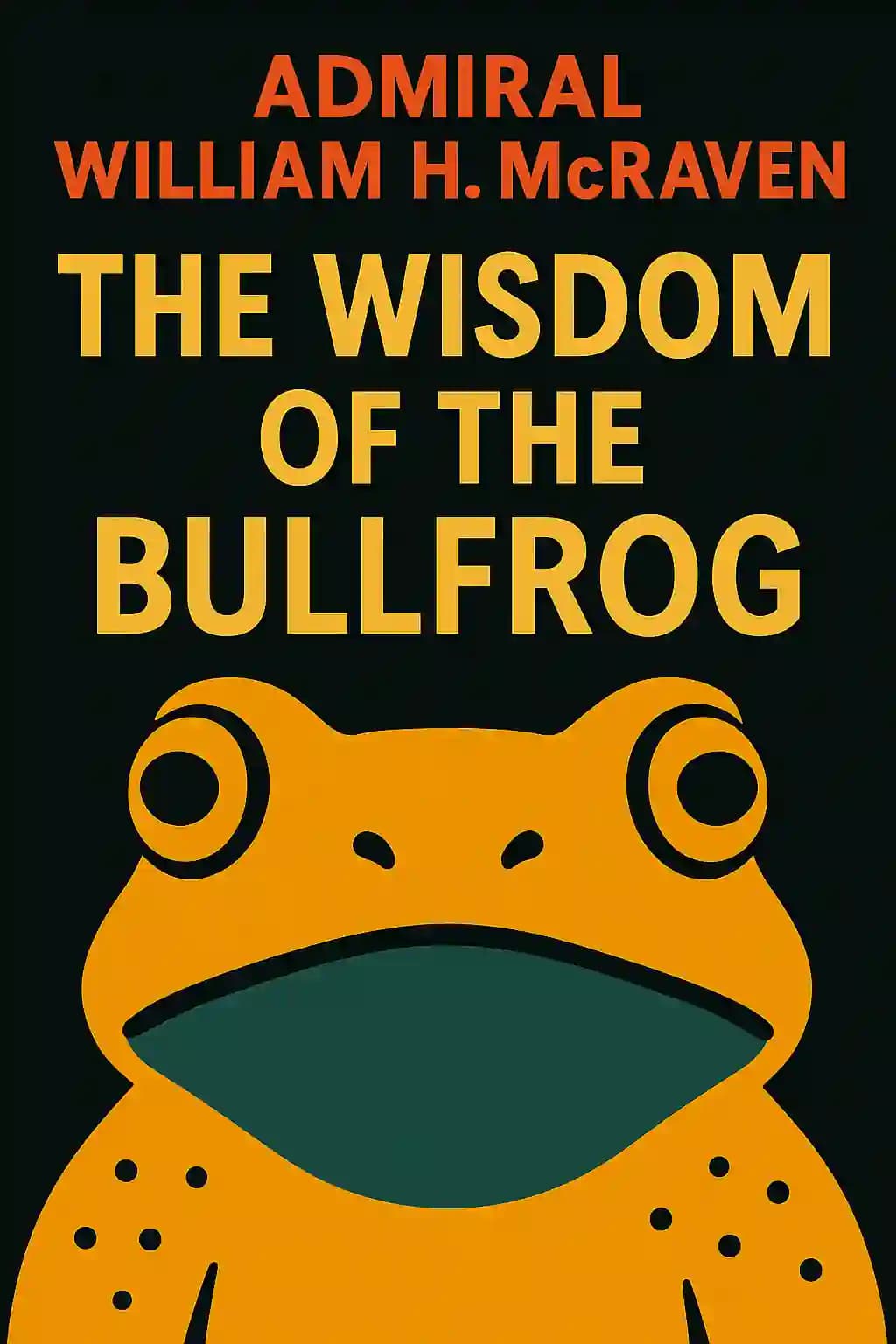
Standing at the entrance to BUD/S training in Coronado, California, a half-man, half-fish monster statue silently challenges every aspiring Navy SEAL. This bronze sentinel has witnessed thousands of hopefuls, but few make it through the crucible of training to earn the coveted Trident. Admiral William H. McRaven not only conquered this challenge but went on to become the "Bull Frog" - the longest-serving active-duty Navy SEAL in history. His wisdom, distilled from 37 years of military service including commanding the operation that killed Osama bin Laden, has made this book a favorite among Fortune 500 CEOs, military leaders, and even celebrities like Dwayne "The Rock" Johnson, who cited it as instrumental to his leadership philosophy. Since its publication, "The Wisdom of the Bullfrog" has become required reading at military academies and business schools alike, offering timeless principles that transcend battlefield tactics to address the universal challenges of leading with integrity in an increasingly complex world.
第 2 章
Death Before Dishonor: The Foundation of Leadership
In today's cynical world, honor might sound like an antiquated concept - something relegated to dusty history books and Hollywood period dramas. Yet for thousands of years, this principle has carried profound meaning for leaders across civilizations. The phrase "Death Before Dishonor" traces back to Greek Stoics, was echoed by Julius Caesar's legions, embraced by Japanese samurai through Bushido, and eventually adopted as a core tenet of the U.S. Marine Corps.
True honor - doing the right thing for the right reasons - forms the bedrock of exceptional leadership. When addressing West Point cadets at their 500th Night celebration in 2014, I reminded these future officers that the Army they were joining wasn't some idealized force from history books but today's Army with contemporary challenges. Leadership sounds deceptively simple in theory but proves immensely difficult in practice precisely because it involves human interaction in all its messy complexity.
The West Point Honor Code states plainly: "A cadet will not lie, cheat, steal, or tolerate those who do." This straightforward declaration serves as the foundation for the Academy's mission to produce "leaders of character" who "live above the common level of life." Such codes aren't mere words on paper but guiding principles that shape decisions under pressure.
Throughout my career, I witnessed generals fall from grace and heroes stumble. These experiences reinforced that without a personal code of conduct anchoring your decisions, you drift at the mercy of circumstance and temptation. In the SEAL Teams, even the toughest Vietnam veterans understood that integrity wasn't negotiable. Today's special operators - whether SEALs, Army Rangers, Green Berets, or Marine Raiders - uphold similar codes emphasizing honor and integrity as non-negotiable values.
Some might point to unscrupulous individuals who achieve success without moral compasses. But these exceptions prove the rule - lacking integrity typically leads to toxic organizational cultures and personal tragedies. Doing what's right isn't complicated in concept - it's just hard in execution because it often requires admitting failure or making decisions that don't benefit you personally. That's the essence of leadership: choosing the harder right over the easier wrong, even when no one is watching.
第 3 章
You Can't Surge Trust: Building Relationships Before Crisis
Trust forms the foundation of effective leadership, yet it can't be manufactured in an instant - it must be built methodically through consistent actions over time. This reality hit home when I first met CIA Director Leon Panetta at Langley headquarters. As we settled into his conference room, I realized I already knew his entire senior leadership team from years of joint operations combating terrorism. Panetta nodded knowingly and remarked, "When it hits the fan, we won't have time to build trust." That established relationship proved crucial a year later when planning the operation to capture or kill Osama bin Laden.
When I became chancellor of the University of Texas System in 2015, I arrived as what academics politely called a "nontraditional" leader - having no background in higher education. Faculty viewed me with understandable skepticism. How could a military officer possibly understand the nuances of academic freedom or scholarly research? I had to earn their trust using the same formula that had served me throughout my career: show up early, work harder than everyone else, stay late, have a clear plan, deliver on promises, share hardships, demonstrate genuine care, and admit mistakes promptly.
As Stephen Covey wisely explains in "The Speed of Trust," trust requires both character and competence. People may initially trust someone of sound character, but continued trust depends on competent performance. Without this foundation of trust, employees simply won't follow you when difficult decisions arise or crises emerge.
Consider what happens in organizations where trust is absent: Information gets hoarded rather than shared. Innovation stagnates because people fear punishment for failure. Productivity plummets as employees spend energy protecting themselves rather than advancing the mission. The time invested in building trust isn't just a nice-to-have - it's essential capital for effective leadership.
Remember three simple principles: First, engage with your team members on a personal level to demonstrate you're a leader of good character. Second, only promise what you can deliver - the quickest way to lose trust is to overpromise and underdeliver. Finally, recognize that trust builds gradually - don't rush the process or expect immediate results from relationship-building efforts.
第 4 章
When in Command, Command: The Power of Decisive Leadership
In the early days of World War II, Admiral Chester Nimitz faced a monumental decision at the Battle of Midway. Intelligence suggested the Japanese fleet was approaching, but the information wasn't conclusive. With the fate of the Pacific War hanging in the balance, Nimitz made the crucial decision to engage the enemy despite uncertainty. When his staff expressed concerns about the risk, Nimitz simply stated: "When in command, command." His decisive leadership led to one of history's most significant naval victories and a turning point in the Pacific theater.
Years later, as a four-star admiral commanding U.S. Special Operations Command (SOCOM), I found myself working at Nimitz's actual desk - a humbling reminder that leadership requires confidence and decisiveness even when facing overwhelming responsibility. The weight of command is real. During my time leading SOCOM, I was responsible for 70,000 personnel deployed in 90 countries, with decisions affecting national security and human lives. The pressure could be paralyzing if you let it.
Leadership positions come with inherent loneliness. While you should seek counsel and listen to advisors, ultimately, the decision - and responsibility - rests with you alone. This reality can feel isolating, but it's precisely what you signed up for when accepting the mantle of leadership. The team looks to you for direction, especially during crises when clarity matters most.
A leader must never appear beaten, regardless of circumstances. Your demeanor sets the tone for the entire organization. If you project confidence and resolve, your team will mirror that attitude. Conversely, if you display uncertainty or defeatism, that too will cascade throughout the ranks. Remember that you were chosen for your position because you demonstrated the necessary qualities to lead - trust in that selection and in your abilities.
Decisiveness doesn't mean recklessness. It means gathering available information, consulting appropriate experts, weighing options thoughtfully, and then making a clear decision without unnecessary delay. When the moment demands action, true leaders step forward and command - not with arrogance, but with the quiet confidence that comes from preparation and the willingness to accept responsibility for outcomes, both good and bad.
第 5 章
We All Have Our Frog Floats: Embracing Humility in Leadership
Early in my SEAL career, I faced a disappointing assignment. While my teammates prepared for exciting training exercises, I was tasked with building a "Frog Float" for a local parade - essentially a decorated trailer showcasing our unit. I made no effort to hide my frustration at what felt like a menial task beneath my abilities. That's when Master Chief Davis pulled me aside with wisdom that would shape my entire career: "Sooner or later we all have to do things we don't want to do. But if you're going to do it, then do it right. Build the best damn Frog Float you can!"
This simple advice carried profound implications. Taking pride in even the most mundane tasks demonstrates character that makes one worthy of greater responsibilities. I threw myself into the project, designing an elaborate display featuring frogmen emerging from water with authentic diving gear. To my surprise, our float won top prize in its category, with the photograph proudly displayed at UDT-11 headquarters for years afterward.
Throughout my career, I observed that truly exceptional leaders willingly tackle tasks beneath their status without complaint. General Colin Powell, despite being Chairman of the Joint Chiefs of Staff, would personally help junior officers with their presentations. Admiral Mike Mullen, another Chairman, would carry his own bags and refuse special treatment. These weren't calculated gestures but natural expressions of their character - they understood that no task was beneath them.
The lesson extends beyond military leadership. In corporate settings, I've watched CEOs who wouldn't hesitate to make coffee for a meeting or help rearrange furniture for a presentation. These small actions send powerful signals about organizational culture and values. Conversely, leaders who consider certain tasks beneath them create toxic environments where entitlement flourishes.
One of the most reliable ways to measure employees isn't through their handling of major projects but through their approach to small, seemingly insignificant tasks. Those who embrace such assignments with excellence and positive attitudes invariably prove themselves worthy of advancement. Remember that we all have our "Frog Floats" - those assignments we'd rather avoid. How we handle them reveals more about our leadership potential than our performance on high-profile projects ever could.
第 6 章
The Only Easy Day Was Yesterday: Sustaining Leadership Energy
The scene remains etched in my memory: a SEAL trainee, having survived the notorious Hell Week - five and a half days of constant physical activity with just four hours of sleep - stands before the brass bell at the BUD/S training compound. Despite enduring what many consider the world's most difficult military training, he rings the bell three times, signaling his decision to quit. As he walks away, the instructor's words echo across the grinder: "The Only Easy Day Was Yesterday."
This mantra, emblazoned above the SEAL training compound, serves as a constant reminder that leadership requires consistent effort every single day. There's no coasting, no resting on laurels, no point at which you've "arrived" and can stop pushing forward. The moment you believe leadership becomes easier is precisely when you begin to fail.
I witnessed this principle embodied by Admiral Chuck LeMoyne, who completely reorganized Naval Special Warfare despite fierce criticism. Years later, after losing his vocal cords to throat cancer, LeMoyne continued serving with a mechanical voice box - refusing to let physical limitations diminish his leadership presence. His example demonstrated that true leadership transcends personal comfort and convenience.
After suffering injuries from a parachute accident, I found myself struggling through physical training alongside much younger SEALs. A lieutenant approached me, asking why I pushed myself so hard when I had "nothing left to prove." The question revealed a fundamental misunderstanding of leadership. The moment you believe you have nothing left to prove - that you're entitled to special treatment or exemption from standards - is precisely when you're no longer fit to lead.
Leadership demands energy, stamina, and resilience day after day. Some mornings you'll wake up exhausted, facing problems that seem insurmountable. The easy path would be to delegate everything, close your office door, or call in sick. But true leaders push through these moments, finding reserves of energy not for themselves but for those they lead.
This doesn't mean every day requires superhuman strength. Rather, it means recognizing that leadership is a marathon requiring consistent effort. The teams you lead draw energy from your example. When they see you maintaining standards despite fatigue or challenges, they find inspiration to do likewise. Remember that in leadership, as in SEAL training, the only easy day was yesterday - and tomorrow will demand your best again.
第 7 章
Run to the Sound of the Guns: Facing Challenges Head-On
While deployed in Afghanistan, I dreamed of meeting my wife and daughter in Paris for a brief respite from war. As the departure date approached, a colonel reported a troubling incident - a night raid had resulted in civilian casualties. Though preliminary reports suggested our forces had followed proper procedures, the situation demanded immediate attention. Despite my wife's understandable disappointment, I canceled my leave and headed to the scene. Leadership means running toward problems, not away from them.
This principle finds powerful historical illustration in the Battle of Gettysburg. In July 1863, Colonel Joshua Chamberlain, a former college professor commanding the 20th Maine Infantry Regiment, defended the crucial left flank of the Union line at Little Round Top. As Confederate forces attacked relentlessly, Chamberlain's 386 men faced overwhelming odds. When ammunition ran critically low, Chamberlain, though wounded, made a bold decision - he ordered a desperate bayonet charge down the hill. This audacious move forced the Confederates to retreat, potentially saving the entire Union position at Gettysburg. Rather than seeking safety, Chamberlain literally ran toward the sound of guns.
Contrast this with the CEO of the company responsible for the Deepwater Horizon oil spill, who initially remained in London and downplayed the disaster. When finally visiting the Gulf Coast weeks later, he complained about wanting his "life back" - seemingly oblivious to the eleven workers who had lost their lives and the countless livelihoods destroyed. His failure to immediately take ownership of the crisis damaged both his reputation and his company's.
Leadership requires facing problems directly, not delegating difficult situations or hiding from accountability. When crises emerge - whether military conflicts, corporate disasters, or organizational challenges - true leaders move toward the problem. They become the face of solutions rather than distancing themselves from difficulties.
This principle extends beyond crisis management to everyday leadership. When team members struggle, when projects falter, when unexpected obstacles arise - run toward these challenges. Your willingness to engage directly with problems rather than avoiding them demonstrates commitment that inspires confidence throughout the organization.
Remember that leadership isn't about personal comfort or convenience - it's about responsibility. The sound of metaphorical guns will echo throughout your career. Your response to these moments - whether advancing toward difficulties or retreating from them - defines your leadership legacy.
第 8 章
Sua Sponte: Taking Initiative Without Being Ordered
In November 1950, during the Korean War, Army Ranger Lieutenant Ralph Puckett led his men toward Hill 205. As they advanced across an open field, they encountered heavy Chinese fire. Rather than seeking cover, Puckett repeatedly exposed himself to enemy fire, deliberately drawing attention to help his Rangers locate enemy positions. This selfless initiative allowed his men to identify targets and eventually take the hill, though they later suffered heavy casualties defending it. Puckett's actions, which earned him the Medal of Honor, exemplified the principle of "Sua Sponte" - "Of Your Own Accord."
Great leaders don't wait for instructions or permission to address problems - they act when action is needed. During a ceremony honoring paralyzed SEAL Lieutenant Commander Moki Martin, I witnessed this principle in action through a young SEAL's simple gesture. As Martin struggled to speak into a poorly positioned microphone, the young SEAL broke formation without orders, walked to the podium, and adjusted the microphone. When later asked why he'd done this, he simply replied, "Sir, something had to be done and no one else was doing it. So I thought it was up to me."
This mindset distinguishes exceptional organizations from mediocre ones. In environments where initiative is valued, problems get solved before they escalate. When people feel empowered to act rather than waiting for explicit instructions, the entire organization becomes more responsive and effective. Conversely, cultures that punish initiative or require multiple approvals for basic actions inevitably struggle with inefficiency and missed opportunities.
Leadership isn't always about being formally in charge during crises. It's about recognizing when something needs to be done and taking responsibility for doing it, regardless of your position. The best leaders foster cultures where initiative is celebrated rather than stifled, where mistakes of action are preferred to mistakes of inaction.
Creating such an environment requires clear communication about boundaries - team members need to understand where they have autonomy to act and where consultation remains necessary. It also demands tolerance for well-intentioned mistakes. If people fear punishment for imperfect execution of good ideas, initiative will quickly disappear.
Remember that leadership opportunities emerge constantly in unexpected moments. The question isn't whether you hold formal authority but whether you're willing to step forward when circumstances demand action. By embodying "Sua Sponte" and encouraging it in others, you build an organization capable of addressing challenges proactively rather than reactively - a critical advantage in any competitive environment.
第 9 章
Who Dares Wins: Calculated Risk-Taking in Leadership
As we prepared for Operation Neptune's Spear - the mission to capture or kill Osama bin Laden - twenty-four SEALs gathered around a fire pit in Jalalabad. Command Sergeant Major Chris Faris addressed the team with words that captured the essence of special operations: "Who Dares Wins." This motto, originated by British Special Air Service founder David Stirling in 1942, encapsulates what differentiates great leaders from average ones - the willingness to take calculated risks.
President Obama demonstrated this principle when authorizing the bin Laden raid despite having only 50% confidence that bin Laden was actually in the compound. This wasn't reckless gambling but calculated risk-taking - understanding the potential benefits alongside possible consequences. The President dared greatly while fully comprehending what was at stake.
Hollywood often portrays special operations as spontaneous adventures where commandos simply grab guns and charge into danger. The reality couldn't be more different. For the bin Laden raid, our team spent 75% of our time planning the mission, developing 165 distinct phases and contingencies. When one of our helicopters crashed during the operation, backup plans immediately activated. This illustrates the crucial distinction between daring and recklessness - thorough preparation transforms the latter into the former.
My research at Naval Postgraduate School revealed that successful special operations require more than boldness - they demand extensive planning and preparation. Great leaders must be bold but not brash, audacious but not impudent. They understand that meaningful achievement often requires venturing beyond comfort zones into uncertainty.
Risk-taking extends beyond military contexts to all leadership domains. Business innovations, organizational transformations, and personal growth all demand stepping beyond established patterns. Playing it safe might avoid failure, but it also prevents extraordinary success. As Theodore Roosevelt eloquently stated, the credit belongs to those "who spend themselves in a worthy cause; who at the best know in the end the triumph of high achievement, and who at the worst, if they fail, at least fail while daring greatly."
Three simple rules can guide your approach to risk-taking: First, actively seek opportunities to take calculated risks rather than defaulting to the status quo. Second, mitigate risks through thorough planning and preparation. Finally, learn from mistakes without letting failures define you or diminish your willingness to take future risks.
Remember that "Who Dares Wins" isn't about recklessness - it's about the courage to pursue meaningful objectives despite uncertainty. Leaders who embody this principle inspire their teams to achieve what others might consider impossible.
第 10 章
Hope Is Not a Strategy: Turning Vision Into Reality
In February 2004, General Stan McChrystal outlined his vision to build a global network of special operations and intelligence operators to counter al Qaeda. When participants in the video conference expressed doubt about the feasibility of this ambitious goal, simply "hoping for the best," McChrystal demonstrated a fundamental leadership principle: hope alone is insufficient - it must be paired with concrete planning and disciplined execution.
Over the next five years, McChrystal methodically built one of history's most effective military organizations. By strategically placing personnel at every point where terrorist organizations had presence, his Joint Interagency Task Force created a network that saved thousands of lives by disrupting terrorist plots, thwarting pirates, and displacing dictators. This achievement didn't result from wishful thinking but from translating vision into actionable strategy.
While vision provides essential direction, execution proves extremely difficult because it requires a leader's complete focus and persistence. Leaders can realistically accomplish only two or three major tasks during their tenure, as stretching attention too widely prevents meaningful progress on any front. This reality demands careful prioritization - identifying what truly matters and concentrating resources accordingly.
Hope serves as a powerful motivator - it inspires teams and empowers individuals to persevere through challenges. However, without sound strategy, detailed planning, and consistent hard work, hope remains merely wishful thinking. The leader's responsibility is to harness hope's emotional energy while providing the structural framework that transforms aspirations into achievements.
Effective execution requires three key elements: First, establish a bold, inspiring vision that clearly articulates what you intend to accomplish. This vision should be ambitious enough to motivate but specific enough to guide action. Second, develop a clear, concise strategy that outlines how you'll achieve this vision - the general approach and key priorities that will direct efforts. Finally, create a detailed implementation plan specifying who is responsible for what actions and by when.
The distinction between strategy and implementation proves crucial. Strategy provides the conceptual framework - the broad approach to achieving objectives. Implementation addresses the specific actions, timelines, and responsibilities that bring strategy to life. Both elements require careful attention, as brilliant strategy fails without effective implementation, while energetic implementation misdirected by poor strategy wastes resources.
Remember that while hope provides emotional fuel for achievement, it cannot substitute for the hard work of planning and execution. Leaders who understand this balance - who inspire through vision while delivering through strategy - transform possibilities into realities.
第 11 章
No Plan Survives First Contact with the Enemy: Adaptability in Leadership
During my studies at Naval Postgraduate School, Dr. Russ Stolfi lectured on Prussian general Helmuth von Moltke the Elder, who modernized Prussia's military through emphasizing mass concentration, maneuverability, and decentralized command. When asked about Moltke's most important lesson, I initially referenced Clausewitz's famous axiom that "War is a continuation of policy by other means." Stolfi interrupted, revealing Moltke's true wisdom: "No plan of operations reaches with any certainty beyond the first encounter of the enemy's main force."
This principle - always have contingency plans - proved invaluable during Operation Neptune's Spear to capture Osama bin Laden. Despite extensive preparation, our lead helicopter crashed in the compound due to unforeseen aerodynamic conditions. Rather than abandoning the mission, the SEALs adapted quickly, executing backup plans that allowed them to complete the operation successfully. Without contingency planning, this unexpected development could have derailed the entire mission.
Military planning processes like the Military Decision Making Process (MDMP) are time-intensive but necessary for important missions. They force leaders to consider what might go wrong and develop responses before crises emerge. While corporate environments rarely employ such formal processes, the underlying principle remains equally valuable - anticipate potential failures and prepare accordingly.
This approach doesn't reflect pessimism but pragmatism. As one of my mentors often noted, "Murphy was an optimist" - meaning things will go wrong in ways you haven't anticipated. Leaders who recognize this reality and prepare for it maintain effectiveness when others falter amid unexpected challenges.
Adaptability doesn't mean abandoning planning. Rather, it means planning thoroughly while maintaining flexibility to adjust when circumstances change. The best leaders develop what military strategists call "commander's intent" - a clear articulation of desired outcomes that allows team members to adapt methods when original plans prove unworkable.
Three practices can help you implement this principle: First, for any significant initiative, deliberately identify potential failure points and develop specific contingency plans. Second, communicate these contingencies to your team so everyone understands alternative approaches if primary plans falter. Finally, cultivate an organizational culture that values adaptability rather than rigid adherence to plans when circumstances change.
Remember that planning isn't about predicting the future with perfect accuracy - it's about preparing to respond effectively regardless of what occurs. By embracing Moltke's wisdom that no plan survives first contact with the enemy, you develop the adaptability that distinguishes great leaders during inevitable moments of crisis and uncertainty.
第 12 章
Leadership's Enduring Principles: Building Trust Through Action
Leadership isn't complicated in concept but remains profoundly difficult in practice because it involves human interaction in all its complexity. Like the Spartan standing before Xerxes in Steven Pressfield's "Gates of Fire," great leaders earn loyalty not through fear or gold but by sharing hardships and putting others first.
True leadership begins with integrity - finding a moral code and living by it consistently, creating a culture that flows from the top. This foundation must be paired with competence to build the trust essential for effective leadership. Leaders balance confidence with humility, understanding when to command decisively and when to embrace tasks others might consider beneath them.
Great leadership demands physical, emotional, and spiritual stamina that teams draw upon during challenges. It requires facing problems directly rather than avoiding them, taking initiative without waiting for orders, and accepting calculated risks while managing potential consequences. Leaders set bold visions backed by detailed planning while recognizing that plans rarely survive first contact with reality.
Effective leaders establish high standards and hold people accountable while sharing hardships with their teams. They inspect regularly to ensure quality, communicate clearly to align efforts, and consistently work harder than anyone else. They accept full accountability for outcomes and find strong partners who tell them hard truths when needed.
As Colin Powell's story reminds us: leadership means working tirelessly, studying constantly, caring genuinely for your people, and demonstrating unwavering loyalty. The path isn't easy, but it's remarkably straightforward - just keep doing your best every day and let them see what you've got.
The wisdom of the Bullfrog isn't about complex theories or revolutionary insights. It's about timeless principles proven through centuries of leadership challenges across diverse contexts. These principles work not because they're sophisticated but because they align with fundamental human needs for purpose, direction, and authentic connection. By embracing these principles, you don't just become a better leader - you help create organizations and communities where others can thrive and achieve their full potential.