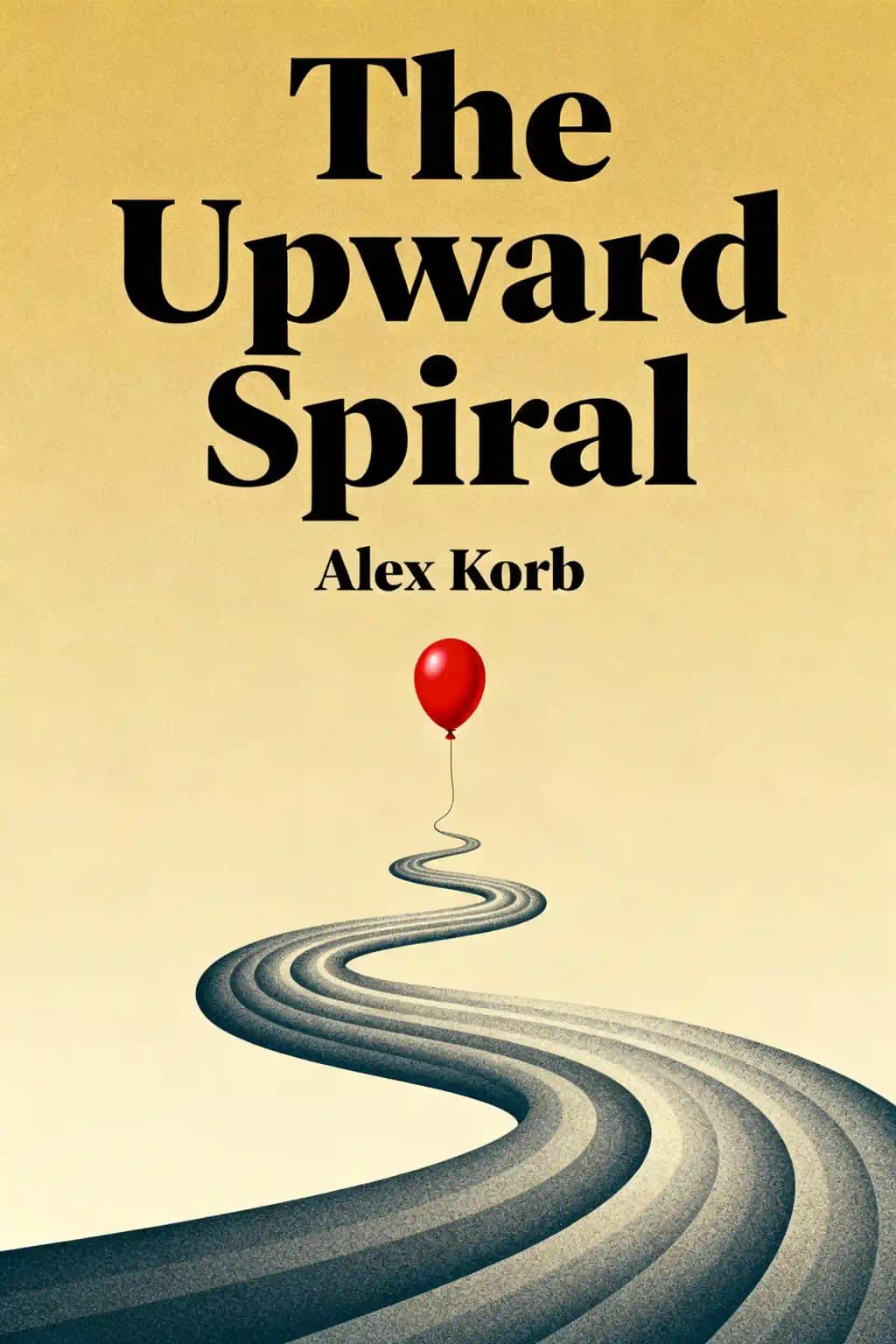
Unlock your brain's power to fight depression with "The Upward Spiral," the neuroscience guide endorsed by bestselling author Daniel J. Siegel. Translated into 12 languages with 175,000+ copies sold, it reveals how small daily choices can rewire your brain toward happiness.
Alex Korb, Ph.D., is the bestselling author of The Upward Spiral: Using Neuroscience to Reverse the Course of Depression, One Small Change at a Time and a leading neuroscientist specializing in mental health and brain behavior.
With over two decades of research experience, including a Ph.D. in neuroscience from UCLA and ongoing work as an adjunct assistant professor in UCLA’s Department of Psychiatry, Korb bridges cutting-edge brain science with actionable strategies for overcoming depression and anxiety. His book, blending self-help and neuroscience, draws from his peer-reviewed studies on depression and neuromodulation, as well as his signature Upward Spiral Method coaching program designed to reprogram stress and unlock human potential.
A sought-after speaker and consultant, Korb contributes to Psychology Today, runs a popular neuroscience blog, and advises organizations on employee wellbeing. His unique approach integrates mindfulness, fitness, and neuroscience—principles he also applies as head coach of UCLA’s Women’s Ultimate Frisbee team. The Upward Spiral has become a trusted resource in mental health circles, praised for transforming complex brain research into practical steps for lasting emotional resilience.
The Upward Spiral explains how depression and anxiety arise from interconnected brain processes, offering neuroscience-backed strategies to reverse these patterns. Dr. Alex Korb emphasizes small, actionable steps—like improving sleep, exercise, and social bonds—to shift the brain from a "downward spiral" of negativity to an "upward spiral" of improved mental health.
This book is ideal for individuals struggling with depression or anxiety, as well as those interested in brain science. It’s also valuable for students, coaches, and mental health professionals seeking evidence-based tools to address mood disorders.
Yes, particularly for its practical, science-driven approach. With over 175,000 copies sold and translations in 12 languages, it distills complex neuroscience into accessible strategies—like mindfulness and habit adjustments—making it a actionable guide for long-term mental health.
Korb explains how the limbic system (emotional brain) and prefrontal cortex (thinking brain) interact. Depression often stems from imbalanced activity in these regions, but small changes—like gratitude practices or physical activity—can recalibrate neural circuits, fostering resilience.
Yes. Strategies include:
It emphasizes neuroplasticity over abstract theories, providing a granular, brain-based roadmap. Unlike generic self-help guides, Korb ties each recommendation to specific neural mechanisms, such as serotonin regulation or amygdala calming.
Some readers may find the neuroscience-heavy sections challenging, though Korb simplifies concepts for laypeople. Others note that severe depression might require professional therapy alongside the book’s strategies.
Yes. The same brain circuits involved in depression (e.g., amygdala hyperactivity) drive anxiety. Techniques like diaphragmatic breathing and mindful decision-making directly target these pathways, reducing overall stress.
Korb holds a PhD in neuroscience from UCLA, has published peer-reviewed research on mood disorders, and developed UCLA courses on brain health. His coaching experience bridges science and practical wellbeing.
As mental health awareness grows, its blend of actionable steps and neuroscience remains timeless. The focus on small, sustainable habits aligns with modern trends in micro-productivity and personalized health strategies.
通过作者的声音感受这本书
将知识转化为引人入胜、富含实例的见解
快速捕捉核心观点,高效学习
以有趣互动的方式享受这本书
Thoughts aren't feelings or actions-they're just thoughts, not who you are.
Intentions alone won't improve depression-actual engagement in activities creates change.
Depression creates a cruel paradox: the things that would help most become hardest to do.
Like wild animals that don't thrive in captivity, our brains suffer when we're sedentary.
The small amount of exercise you actually do is infinitely more beneficial than the large amount you plan but never complete.
将《The Upward Spiral》的核心观点拆解为易于理解的要点,了解创新团队如何创造、协作和成长。
将《The Upward Spiral》提炼为快速记忆要点,突出坦诚、团队合作和创造力的关键原则。

通过生动的故事体验《The Upward Spiral》,将创新经验转化为令人难忘且可应用的精彩时刻。
随心提问,选择声音,共同创造真正与你产生共鸣的见解。

"Instead of endless scrolling, I just hit play on BeFreed. It saves me so much time."
"I never knew where to start with nonfiction—BeFreed’s book lists turned into podcasts gave me a clear path."
"Perfect balance between learning and entertainment. Finished ‘Thinking, Fast and Slow’ on my commute this week."
"Crazy how much I learned while walking the dog. BeFreed = small habits → big gains."
"Reading used to feel like a chore. Now it’s just part of my lifestyle."
"Feels effortless compared to reading. I’ve finished 6 books this month already."
"BeFreed turned my guilty doomscrolling into something that feels productive and inspiring."
"BeFreed turned my commute into learning time. 20-min podcasts are perfect for finishing books I never had time for."
"BeFreed replaced my podcast queue. Imagine Spotify for books — that’s it. 🙌"
"It is great for me to learn something from the book without reading it."
"The themed book list podcasts help me connect ideas across authors—like a guided audio journey."
"Makes me feel smarter every time before going to work"

免费获取《The Upward Spiral》摘要的 PDF 或 EPUB 版本。可打印或随时离线阅读。
What if depression isn't a character flaw but simply your brain's navigation system gone haywire? Consider this: you wake up feeling heavy, unmotivated, trapped in a fog that makes even simple tasks feel insurmountable. You're not broken-your neural circuits are just running an outdated program. Neuroscientist Alex Korb's groundbreaking work reveals something revolutionary: depression operates through identifiable brain patterns that can be systematically reversed. Think of it like a car stuck in mud-the more you spin your wheels, the deeper you sink. But with the right techniques, you can create traction and move forward. This isn't about positive thinking or willpower; it's about understanding the specific brain circuits involved and making small, strategic changes that create momentum. Your brain isn't a single unified organ but rather three interconnected systems that evolved at different times, each with distinct functions. Deep inside sits the striatum-imagine it as a well-trained but somewhat inflexible dog that follows established patterns automatically. It controls your habits and impulsive behaviors, always seeking the path of least resistance. Wrapped around that is your limbic system, functioning like a demanding toddler who feels everything intensely. The amygdala detects danger, the hippocampus processes memories, and the anterior cingulate cortex constantly scans for mistakes and pain. Finally, your prefrontal cortex acts as the responsible adult, planning, deciding, and trying to regulate emotions. When these three systems communicate smoothly, life flows. But in depression, they get stuck in unhelpful feedback loops. Your striatum defaults to avoiding activities, your limbic system amplifies negative emotions, and your prefrontal cortex struggles to override either one. Understanding this architecture isn't just academic-it reveals specific intervention points where small changes create cascading improvements throughout the entire system.