第 1 章
A Garden Where Magic Blooms: The Transformative Power of Nature
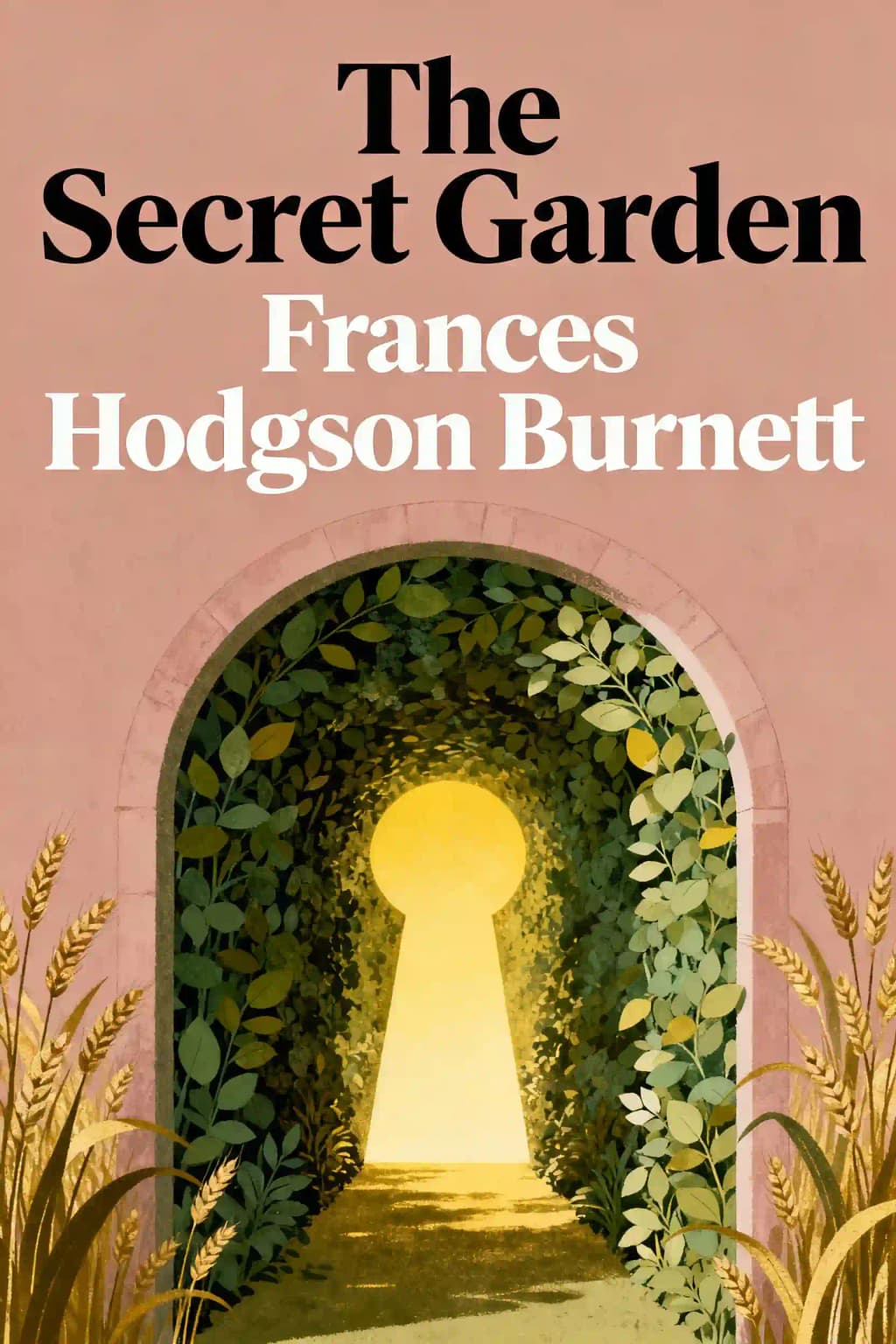
Frances Hodgson Burnett's "The Secret Garden" has captivated readers for over a century with its timeless tale of renewal and transformation. First published in 1911, this beloved classic has sold millions of copies worldwide and continues to enchant new generations. The book has been adapted numerous times for stage, film, and television, most recently in the 2020 film starring Colin Firth. Notable fans include J.K. Rowling, who has cited it as an influence on her Harry Potter series, and Michelle Obama, who included it in her list of favorite childhood books. Beyond its literary significance, the novel pioneered the concept that connecting with nature could heal both physical and emotional ailments-a philosophy increasingly validated by modern psychology and environmental studies.
第 2 章
The Unwanted Child: Mary's Journey from India to Misselthwaite
Mary Lennox begins her story as perhaps one of literature's most disagreeable children-yellow-faced, thin, and perpetually sour. Born in India to wealthy British parents who never wanted her, Mary was raised by servants and kept out of sight. Her beautiful mother cared only for parties and amusements, while her busy father worked for the British government. This neglect cultivated in Mary a tyrannical personality; by age nine, she had driven away multiple governesses with her demanding behavior.
When cholera strikes the household with devastating swiftness, Mary's parents and most of the servants perish. In the chaos, everyone forgets about the unloved child until officers searching the abandoned bungalow discover her. This traumatic abandonment barely registers with Mary, who wonders only whether she'll be sent to "nice people" who will let her have her own way. After a brief stay with an English clergyman's family, where local children nickname her "Mistress Mary Quite Contrary," arrangements are made to send her to her uncle, Mr. Archibald Craven, at Misselthwaite Manor in Yorkshire.
The journey to Misselthwaite reveals a landscape utterly foreign to Mary-the vast, wild Yorkshire moors with their rushing winds and endless expanses of heather and gorse. As the carriage traverses this bleak terrain at night, Mary feels increasingly small and lost. When she finally arrives at the enormous manor house with its dimly lit halls, portraits, and suits of armor, her spirits sink further upon learning that her hunchbacked uncle doesn't wish to see her and will depart for London the next day. Left in the care of the stern housekeeper Mrs. Medlock, Mary feels more contrary and unwanted than ever before.
第 3 章
Awakening to a New World: Mary's First Connections
Mary's first morning at Misselthwaite brings her face-to-face with Martha, a cheerful Yorkshire housemaid whose friendly, casual manner shocks the girl accustomed to servile Indian servants. When Martha innocently admits she'd expected Mary to be "black" coming from India, Mary erupts in fury and humiliation. Yet Martha's good nature prevails, and she soon has Mary dressed in new white wool clothes ordered by Mr. Craven, who had said, "I won't have a child dressed in black wandering about like a lost soul."
The dressing process reveals how helpless Mary is at doing things for herself, having always been dressed "like a doll" by her Ayah. Martha's stories about her eleven siblings living on sixteen shillings a week, playing on the moor, and her brother Dickon's friendship with wild animals spark Mary's first genuine interest in another person. When Martha encourages Mary to go outside and play, the concept puzzles the girl who had expected a companion. Martha explains Mary will have to learn to play alone, mentioning her brother Dickon who befriends animals on the moor-a detail that intrigues Mary enough to venture outdoors.
Before Mary leaves, Martha mentions a locked garden that no one has entered for ten years. Mr. Craven had shut it when his wife died suddenly, burying the key. This mysterious garden immediately captures Mary's imagination, becoming her first real quest at Misselthwaite.
In the grounds, Mary encounters Ben Weatherstaff, a surly old gardener who softens when a friendly robin redbreast appears. The bird seems unafraid, hopping about as Ben speaks to it affectionately. When Mary admits she has no friends, Ben bluntly tells her they're alike-both sour-looking with nasty tempers. This honesty startles Mary, who had never heard such truth about herself. When the robin shows interest in Mary and flies over the wall into what must be the secret garden, her curiosity grows even stronger.
第 4 章
The Secret Garden: Discovery and Rebirth
Mary becomes fixated on finding the secret garden with no visible door. One day, following the robin who seems to be guiding her, she discovers an old rusty key partially buried in freshly turned earth. With trembling hands, she wonders, "Perhaps it is the key to the garden!"
Days later, the robin leads her to the hidden door concealed beneath thick ivy. Her heart thumping with excitement, Mary inserts the key, which fits perfectly. Pushing open the door and slipping inside, she stands breathless with wonder and delight. Though it's winter and the garden appears dormant, Mary finds it enchanting-high walls covered with leafless climbing roses, the ground carpeted with wintry brown grass from which rose bushes grow in clumps. The profound stillness makes her whisper, "I am the first person who has spoken in here for ten years."
As she explores, she discovers tiny pale green points pushing through the soil-possibly crocuses, snowdrops, or daffodils. This sign of life thrills her, and she begins clearing grass and weeds from around these shoots, working so happily she loses track of time. The secret garden becomes her refuge, a place that belongs only to her.
Mary's interest in gardening leads her to request tools and seeds. Martha suggests writing to her brother Dickon, using Mary's pocket money for the purchases. When Dickon finally appears in the woods with the garden supplies, Mary discovers a remarkable boy with a foxcub and crow as companions. He brings seeds that "will grow wherever you cast them" and shows an extraordinary ability to communicate with animals, making sounds almost like the robin's own twitter.
When Mary nervously confesses about finding the secret garden, Dickon follows her to the ivy-covered wall. "It's a secret garden," she declares defiantly, "and I'm the only one in the world who wants it to be alive." Inside, Dickon stands silently taking in everything before whispering that he never thought he'd see this place. He examines the seemingly dead roses and shows Mary a brownish-green shoot from the previous year, explaining, "It's as wick as you or me," using the local word for "alive." Mary is thrilled, declaring she wants them all to be "wick."
第 5 章
The Cry in the Corridor: Colin's Story Unfolds
While Mary's days become filled with the garden, her nights are disturbed by a mysterious crying sound inside the house. Despite Martha's insistence it's just the wind or a scullery maid with toothache, Mary is certain she hears a child crying down one of the corridors.
One night, unable to sleep after hearing the crying again, Mary follows the sound down the long, dark corridors. She discovers a hidden room where a boy about her age lies in bed-her cousin Colin, Mr. Craven's son, whom no one had mentioned to her. Sickly, imperious, and convinced he is going to die young or become a hunchback like his father, Colin has spent his life as an invalid, terrorizing the servants with his tantrums.
The cousins form an unlikely bond. Mary tells Colin about the garden and Dickon, describing the moor through Dickon's eyes until Colin listens intently, "like someone hearing a new sound in the distance." When Mary boldly suggests he might visit the moor someday, Colin is startled. "How could I? I am going to die," he states. Mary responds unsympathetically, questioning who told him so. Colin claims the servants, Dr. Craven, and even his father wish it, but Mary stubbornly disagrees.
Their relationship transforms both children. Colin, who had never been contradicted, finds Mary's blunt honesty refreshing. When he has a terrible tantrum, claiming to have found a lump on his back that proves he'll die, Mary shouts at him to stop screaming, telling him everyone hates him. She forces him to let her examine his back, then declares there isn't a single lump. Her unsympathetic approach shocks Colin into considering whether he might actually be healthy.
第 6 章
The Magic Begins: Healing Through Nature and Belief
Colin's transformation accelerates when he decides to visit the secret garden. The children plan his journey with meticulous care, with Dickon pushing his wheelchair through the grounds. When they finally enter through the ivy-covered door, Colin covers his eyes until they're inside. Opening them, he beholds the transformed spring garden with its green veil of tender leaves, splashes of gold, purple and white, and trees showing pink and snow blossoms.
The garden works an immediate change in Colin. A pink glow of color creeps over his ivory face, neck and hands as he cries out, "I shall get well! I shall get well! Mary! Dickon! I shall get well! And I shall live forever and ever and ever!"
Their secret is nearly discovered when Ben Weatherstaff spots them from atop a ladder. The old gardener stares in shock at the sight of Colin in his wheeled chair. When Ben refers to him as "th' poor cripple," Colin's fury gives him newfound strength. With Dickon's help, he stands up, straight as an arrow, commanding, "Look at me!" Ben's weathered face streams with tears as he exclaims, "Th' lies folk tells! Tha'rt as thin as a lath an' as white as a wraith, but there's not a knob on thee."
Colin develops a ritual he calls "Magic"-a form of meditation and positive thinking. Each morning under the plum tree, he chants rhythmically: "The sun is shining-that is the Magic. The flowers are growing-the roots are stirring. That is the Magic. Being alive is the Magic-being strong is the Magic. The Magic is in me-the Magic is in me." This ritual, followed by walking exercises, strengthens him daily.
The children spend every possible moment in the garden, watching it bloom while Colin grows stronger. Dickon brings knowledge from Bob Haworth, the champion wrestler from Thwaite, teaching Colin gentle but effective muscle-building exercises. Meanwhile, the staff grow increasingly puzzled by the children's improved appearance despite their refusal of meals-they're secretly feasting on treats provided by Dickon's mother, Susan Sowerby, who sends milk, currant buns, and other nourishing food.
第 7 章
Transformation Complete: The Return of the Father
As summer progresses, Colin finds it increasingly difficult to maintain the pretense of being an invalid. His once-waxen skin now shows warm color, his hollowed features have filled out, and his lifeless hair now springs healthily from his forehead. Mary too has transformed, becoming "downright pretty" with healthy hair and bright color.
Colin longs for his father's return, wanting to surprise him with his recovery. Mr. Craven, traveling in Europe to escape his grief, receives a letter from Susan Sowerby urging him to return home. The letter reinforces his dream about hearing his late wife Lilias's voice calling him to "the garden." He decides immediately to return to Misselthwaite.
During his journey to Yorkshire, memories of his son fill his mind-how he had abandoned the sickly infant after his wife's death, providing doctors and nurses but unable to bear the sight of the child whose eyes reminded him painfully of his beloved wife's. For ten years, he has known Colin only as a confirmed invalid with a dangerous temper.
When he arrives at Misselthwaite, Mrs. Medlock reports that Colin has become "peculiar"-his appetite unpredictable, and strangely, he now insists on going outdoors daily with Mary and Dickon. Learning Colin is in the garden, Mr. Craven follows the path to the secret garden's door. Before he can search for the key, he hears surprising sounds from within-running feet, suppressed voices, and children's laughter.
Suddenly the door bursts open and a tall, handsome boy runs directly into his arms. "Father," the boy says, "I'm Colin. You can't believe it. I scarcely can myself."
Colin excitedly explains that the garden has healed him, along with Mary, Dickon, and "the Magic." Mr. Craven is overcome with joy at seeing his healthy, vibrant son who declares, "I'm going to live forever and ever and ever!" Inside the garden, which is alive with autumn colors and late-blooming flowers, Colin tells his father everything-the midnight meeting, the coming of spring, their scientific experiments with Magic.
The novel concludes with Colin announcing he will never use his wheelchair again and will walk back to the house with his father. The servants, gathered at a window overlooking the lawn, are astonished to see Master Colin walking strongly and steadily beside his father, his head held high and his eyes full of laughter.
第 8 章
The Power of Connection: Finding Family in Unexpected Places
Throughout the story, the theme of found family emerges as one of the most powerful elements of healing. Mary, who begins as a child no one wanted - orphaned in India and shipped off to a strange country - gradually builds meaningful connections that transform her entire world. Her first tentative friendship with Martha, the straightforward Yorkshire maid who refuses to coddle her, teaches Mary that honest affection is more valuable than servile attention. The robin in the garden becomes her first true friend, leading her to the buried key and teaching her that trust can bridge even the gap between species. Through Dickon, she learns the pure joy of caring for other living things, while Ben Weatherstaff's gruff kindness shows her that love can wear many faces.
These relationships transform Mary from a sour, disagreeable child into a caring, vibrant girl capable of helping others. Her own healing journey enables her to recognize and reach out to Colin, creating a virtuous circle of recovery and growth. The children's mutual support system expands to include not just people but the natural world itself - from Dickon's wild creatures to the ancient trees of the secret garden.
Susan Sowerby emerges as the ideal maternal figure the children desperately lack in their lives. Her natural wisdom and unconditional acceptance provide a stark contrast to the cold, distant parenting both Mary and Colin have experienced. When she visits the garden, she examines Mary's face in a motherly fashion, telling her she's grown hearty like her daughter Elizabeth Ellen and will someday "be like a blush rose." Her assessment carries special weight because it comes from someone who understands both the moors' wild beauty and children's hearts. She tours their garden with genuine interest, listening to its story and examining every revived bush and tree, validating the children's efforts and achievements in a way no other adult has done.
When Colin makes his poignant confession, "I wish you were my mother-as well as Dickon's!" Susan's response demonstrates the depth of maternal love that can extend beyond biological bonds. Drawing him against her bosom as if he were Dickon's brother, her eyes misting, she says, "Eh! dear lad! Thy own mother's in this 'ere very garden, I do believe. She couldna' keep out of it. Thy father mun come back to thee-he mun!" This moment transcends mere comfort, suggesting that love can bridge even the gap between life and death.
The garden serves as both a physical space for growth and a spiritual connection to Colin's mother, Lilias Craven. By tending her garden, the children have not only restored its physical beauty but have also revived the love and joy that Lilias once brought to Misselthwaite Manor. Their work in the garden becomes a form of active remembrance, healing not just the neglected flowers but the family her death had broken. The garden becomes a living memorial where past and present, death and rebirth, loss and love are woven together in the eternal cycle of nature.
第 9 章
The Garden as Metaphor: Growth, Renewal, and Possibility
At its heart, "The Secret Garden" is about the transformative power of nature and human connection. The garden serves as a perfect metaphor for the children themselves-neglected, locked away, seemingly lifeless, yet containing the potential for extraordinary beauty and vitality when given proper care and attention. This parallel becomes increasingly evident as the story unfolds, with each discovery in the garden mirroring a development in the children's emotional and physical well-being.
Just as Mary discovers that plants thought dead are actually "wick" beneath the surface, she and Colin discover their own capacity for health, happiness, and love. The garden's seasonal cycle from winter dormancy to spring awakening and summer abundance parallels their personal journeys from isolation to connection, from weakness to strength. The first green shoots pushing through the soil echo Mary's initial attempts at friendship, while the gradual blooming of roses reflects Colin's growing confidence and physical recovery.
The novel's enduring appeal lies in this universal message of hope and renewal. It suggests that even in the most neglected spaces-whether gardens, grand houses, or human hearts-the possibility for transformation always exists. The garden becomes a sacred space where healing occurs on multiple levels: physical, emotional, and spiritual. The children's daily rituals of tending to the garden - weeding, planting, watering - become acts of self-care and nurturing that extend beyond the garden walls into their daily lives.
The metaphor extends further through Dickon's character, who embodies the natural world's nurturing qualities. His innate understanding of both animals and plants demonstrates how nature can serve as a gentle teacher and healer. The garden's walls, initially representing imprisonment and secrecy, gradually transform into protective boundaries within which growth can safely occur.
As we close the book, we're left with the powerful image of Colin walking beside his father, heading home through the garden that has healed them all-a testament to nature's power to restore not just individual health but family bonds and the human spirit itself. This final scene encapsulates the garden's role as both witness and catalyst to the transformation of three generations: the past (represented by the garden's history with Colin's mother), the present (in the children's healing), and the future (symbolized by the renewed relationship between father and son).
The garden ultimately teaches us that growth requires both time and tender care, that healing often comes through connecting with others and the natural world, and that even the most seemingly hopeless situations contain seeds of possibility waiting to sprout.
第 10 章
The Legacy of Misselthwaite: Finding Our Own Secret Gardens
"The Secret Garden" continues to resonate with readers because it speaks to our deep human need for connection-to nature, to others, and to the hidden parts of ourselves. In our modern world of technology and constant stimulation, where screen time often replaces outdoor exploration and virtual interactions supersede face-to-face relationships, the novel's message about the healing power of fresh air, physical activity, positive thinking, and genuine human relationships feels more relevant than ever. The story serves as a gentle reminder that true wellness encompasses both body and spirit, much like Mary's transformation through her garden work and newfound friendships.
The story invites us to find our own "secret gardens"-those neglected spaces in our lives that, with attention and care, might bloom into something beautiful. These gardens might be literal, like an abandoned community plot or a neglected backyard, or metaphorical, such as a forgotten hobby, a strained relationship, or an undeveloped talent. It reminds us that transformation often begins with a single act of curiosity or kindness, like Mary following the robin or Dickon bringing his menagerie to visit Colin. These small gestures, the novel suggests, can set in motion profound changes that ripple outward to affect entire communities.
Perhaps most importantly, the novel challenges us to look beyond appearances and preconceptions. Mary and Colin, both initially described as unattractive and disagreeable, contain within themselves the capacity for beauty and goodness. Their transformation illustrates how environment, attitude, and relationships shape character more than inherent nature. Ben Weatherstaff's gruff exterior hides a tender heart, particularly evident in his secret care of the robin and his underlying affection for the garden. Even Misselthwaite Manor itself, with its hundred locked rooms and gloomy corridors, harbors a secret paradise within its walls, teaching us that beauty and life can persist even in seemingly barren places.
In this way, "The Secret Garden" isn't just a children's story but a profound meditation on human potential and the natural world's power to awaken it. The garden serves as both metaphor and catalyst, demonstrating how nurturing something outside ourselves can lead to internal growth. The novel's themes of renewal and rebirth extend beyond the garden walls to touch on universal experiences of grief, healing, and personal transformation. As we turn the final page, we carry with us the hope that, like the garden and the children who tended it, we too might discover unexpected beauty and vitality in the most unlikely places-including within ourselves. This enduring message continues to inspire readers to seek out their own sources of magic and renewal, whether in nature, relationships, or personal growth.