第 1 章
From Prison to Purpose: How Adversity Shapes Greatness
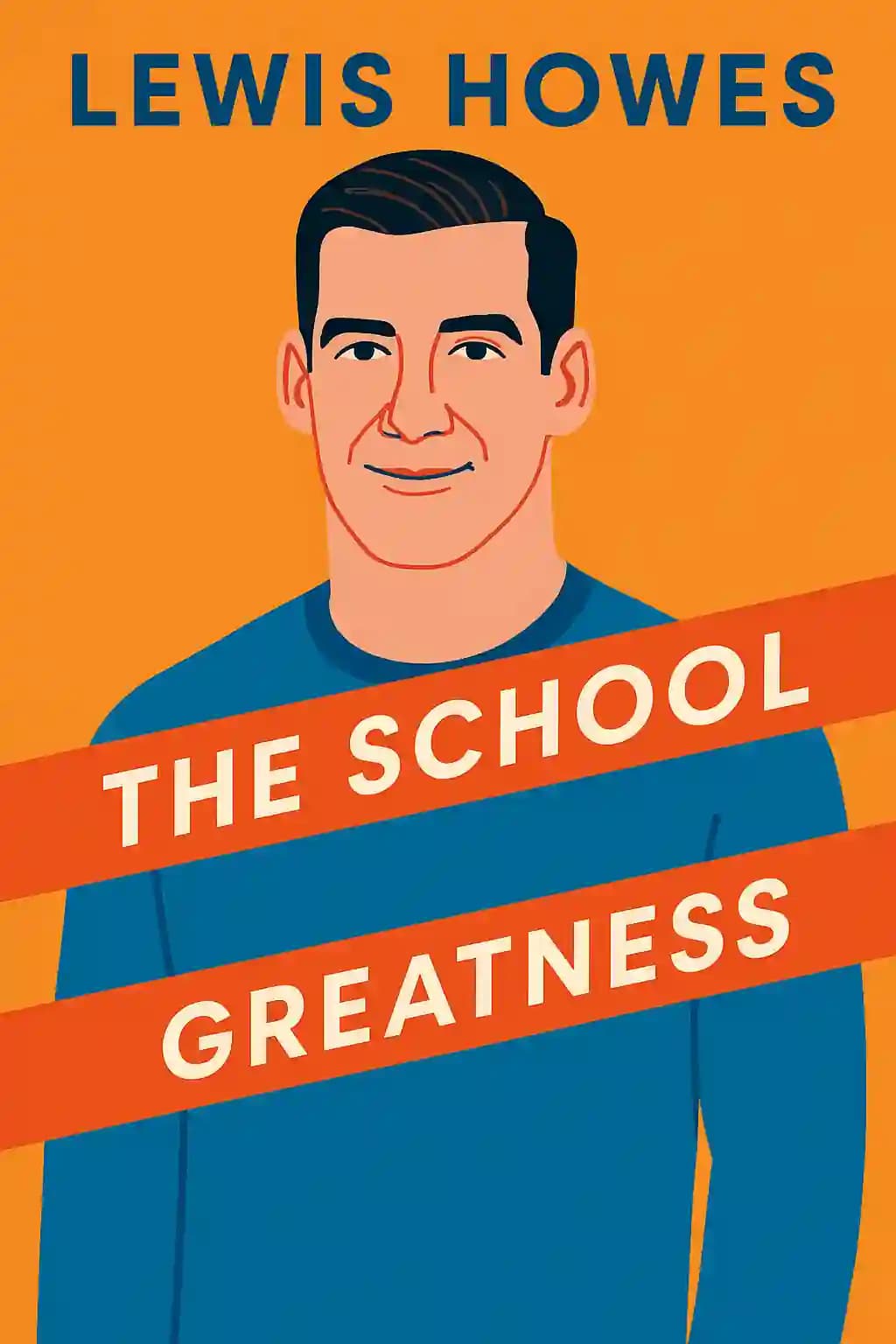
What does it take to transform from sleeping on your sister's couch to hosting one of the world's most successful podcasts? For Lewis Howes, former professional football player turned lifestyle entrepreneur, the journey began with a career-ending injury that left him broke and directionless at age 24. His remarkable comeback story has made "The School of Greatness" a cultural phenomenon, with millions of downloads and endorsements from influencers like Tim Ferriss and Arianna Huffington. The book distills wisdom from Olympic gold medalists, billionaire CEOs, and world-changing humanitarians into an actionable framework for achieving your own version of greatness. Whether you're rebuilding after failure or seeking to maximize your potential, Howes offers a roadmap drawn not from theory but from the trenches of transformation.
第 2 章
Creating a Vision That Pulls You Forward
Vision is the foundation of greatness-not just daydreaming, but crafting a specific, compelling future that becomes your North Star. When physical therapy student Steve told Howes about his "realistic" career goals, he was actually hiding his true desire: a beachside practice working just five hours daily while supporting his family. This self-censorship is what keeps most people from achieving greatness.
The power of specific vision appears throughout the stories of extraordinary achievers. Angel Martinez, CEO of billion-dollar footwear company Deckers Brands (makers of UGG and Teva), traces his success back to a childhood obsession with Converse Chuck Taylor All Stars. As a poor kid from the Bronx, he collected bottles at two cents each until he could afford those specific $6.99 sneakers, walking home on the sides of his feet to keep them clean. This early vision shaped his entire career in the footwear industry.
Similarly, Howes' own path began when his father explained what an "All-American" was while watching Ohio State football. That specific vision guided decades of his life through countless practices, workouts, and challenges. Having a clear vision with a defined endpoint is essential for greatness-all successful people know exactly what they want, why they want it, and when they want it to happen.
Your vision must unify what you want with who you want to be-that's the essence of identity. When you clarify this, like Steve who realized his dream wasn't being a physical therapist but having freedom to be with family, you can develop a real plan for getting there.
Angel Martinez offers a powerful perspective shift: "It's easier to come from a place than to go to a place." At Reebok, he believed they were better than Nike-they just hadn't done it yet. At Deckers, he already saw it as a multi-billion-dollar company because of its people and brands. True vision isn't just a destination but a state of being that makes you jump out of bed each morning. If it doesn't, your dream isn't big enough.
第 3 章
Transforming Adversity Into Your Greatest Asset
When facing life's inevitable challenges, you have two choices: become overwhelmed or embrace the challenge as part of your success story. Kyle Maynard, a congenital amputee born without arms or legs below the elbow and knee, exemplifies this principle. Standing just 3'8" tall, Kyle achieved remarkable feats including championship wrestling, football, MMA fighting, and climbing Mount Kilimanjaro on his elbows.
Kyle's breakthrough came at age 11 when making his first football tackle, shifting from worrying about the future to taking action in the present moment. By repeatedly putting himself in uncomfortable situations until they became comfortable, Kyle transformed from crying himself to sleep to speaking alongside Barack Obama by age 19.
Adversity isn't always external or physical-it can be internal. Nicole Lapin, a finance expert who grew up in an immigrant cash-only household, faced the internal adversity of financial illiteracy. When she couldn't buy a plane ticket online in college because she had no credit card, she decided to take control by treating finance as a new language to learn, taking a job at the Chicago Mercantile Exchange for immersion. This perspective-treating new challenges as languages to be learned-applies universally, whether learning salsa dancing or business skills.
Howes shares his own pivotal moment when breaking three ribs during his senior football season crushed his lifelong dream of becoming an All-American. In his darkest moment, he pivoted to decathlon, calling his former track coach who believed he could succeed with six months of grueling training. Through relentless work, he not only became an All-American in decathlon but earned a fifth year of eligibility and achieved his original dream as a football All-American too. His injury, initially devastating, ultimately doubled his achievement.
Kyle Maynard embodies the Stoic philosophy that "our perspective is always our choice." Despite being born without limbs, Kyle faced doubters in wrestling and MMA with determination, using their negativity as fuel. His approach-asking "what should I not be able to do, and how can I do it?"-demonstrates how the greatest people don't see obstacles as barriers but as the very path to achievement.
The School of Greatness teaches that persistence is non-negotiable: "You can go as slow as you need to go, but you cannot stop." This philosophy applies not just to running but to life's daily challenges. The lesson is clear: adversity happens to everyone, but greatness comes from using it as fuel rather than letting it extinguish your fire.
第 4 章
Developing the Champion's Mindset
Champions like Michael Jordan and Serena Williams seem superhuman because they live in a world of crystal clarity rather than self-doubt. The champion's mindset combines focus, flow, belief, and emotional intelligence-a unique headspace that channels all energy toward success.
Flow is that optimal state of consciousness where performance peaks and time perception shifts. Steven Kotler, author of "The Rise of Superman," describes it as being so focused that everything else vanishes. In flow, self-consciousness disappears while all aspects of performance skyrocket. Howes experienced this during his record-breaking 418-yard football game, where despite triple coverage, he caught everything thrown his way. Research shows executives in flow are 500% more productive, and military studies demonstrate learning rates increase by 230% in this state.
The champion's mindset fundamentally comes down to belief. Champions either believe they're the greatest in the world (like Muhammad Ali or Floyd Mayweather) or that they're guided by a higher power. This absolute confidence makes the difference on the path to greatness. However, this belief must be balanced with humility-as Olympic gold medalist Shawn Johnson explains, belief must be a weapon in your arsenal, not impenetrable armor creating a sense of invincibility.
True champions pursue perfection and excellence independent of external results-Johnson wasn't obsessed with winning medals but with doing her absolute best. Cultivating this mindset requires developed emotional intelligence through visualization, meditation, mindfulness, and a focus on positive beliefs that can help anyone blow past their perceived limitations.
Visualization involves seeing the results you want to create before they happen. Howes practiced this in football by watching Jerry Rice's highlights and imagining himself performing the same moves. Before games, he would mentally review plays and physically walk the field, seeing himself making big plays. He applies this same technique to his personal and business life-visualizing his book in stores, speaking to thousands, and successful outcomes for meetings.
While visualization fills the mind with images of success, meditation clears it of distractions. The 15-Second Centering Breath technique helps combat the tendency to hold breath under pressure-which increases muscle tension and impairs performance. Practicing this breathing exercise for four cycles (one minute total) can provide clarity during overwhelming situations.
Mindfulness practice centers on keeping a gratitude journal to track what's working and what isn't. Each night, write down achievements you're proud of and your commitments to move them forward. Also document situations where you reacted poorly, identifying what was missing (patience, confidence, etc.) and committing to improvement.
第 5 章
The Hustle Advantage: Working Harder and Smarter
Hustle-the burning desire to do what others won't-is essential for greatness. Howes shares how his brother Christian, sentenced to prison at 18 for selling drugs, emerged to become a world-class jazz violinist through relentless hustle. Christian's transformation taught Lewis that greatness requires overcoming adversity with shameless urgency and passion.
After prison, Christian refused to follow the "cool" artist's path of waiting for success to find him. Instead, he hustled shamelessly, performing anywhere possible and aggressively promoting himself. His urgency came from needing to make up for lost time-though in reality, we're all making up for lost time. Since those early days in tiny jazz clubs, Chris has toured worldwide, performed at prestigious venues like Carnegie Hall, collaborated with greats like Les Paul, taught at Berklee College of Music, and established a successful jazz violin camp-all because he understood the importance of hustle.
During Chris's prison years, Lewis was a miserable child-academically struggling, lonely, and suicidal. When Chris was released during Lewis's difficult middle school years, his return transformed Lewis's life. Rather than wallowing in self-pity, Chris hustled relentlessly, showing up at restaurants unannounced until someone let him play.
Watching him define his dream and knock down every obstacle inspired Lewis years later when he was sleeping on his sister's couch after a career-ending football injury. Depressed and directionless with no degree and mounting debt, Lewis realized he wasn't suffering because his vision was dead, but because he hadn't done the work to create a new one. Following Chris's example, he reached out to mentors, discovered LinkedIn, and began connecting with professionals in the sports business. Within a year, he'd made 10,000 connections, becoming what Malcolm Gladwell calls a "connector." This hustle eventually built into a lucrative online business-all because he was willing to work harder than anyone else.
The best hustlers are underdogs-even if they're not, they view themselves that way. Tom Brady, despite his Hall of Fame career and four Super Bowl rings, plays with underdog intensity because he was the 199th pick in the NFL draft. Hustle isn't about working smarter instead of harder-it's about doing both.
Marie Forleo exemplifies this approach. Her extraordinary hustle in every job-from making cappuccinos to teaching hip-hop-opened unexpected doors. She landed a Wall Street job because she made someone's coffee with such care, and became a Nike elite trainer because she taught exceptional fitness classes. When you show up with the attitude of mastery, opportunities emerge that you couldn't predict.
第 6 章
Mastering Your Body as the Foundation of Success
Your body is everything-even being slightly overweight can drain your energy and hold you back from greatness. When your body is in peak condition, your entire life works better. Thomas Jefferson knew this when he said, "If the body be feeble, the mind will not be strong."
Rich Roll was a former NCAA swimmer who became a successful entertainment lawyer with all the trappings of success, yet felt empty inside. Working 80-hour weeks and bingeing on junk food, he gained 50 pounds and one day couldn't climb a flight of stairs without stopping. This wake-up call led him to completely transform his life with a plant-based diet and intense training regimen. Within a relatively short time, he entered his first ultramarathon and placed 11th-a remarkable achievement for a complete novice. Rich's physical transformation led to a complete life reinvention, turning his health journey into a successful lifestyle business that inspires millions worldwide.
Dr. Daniel Amen taught Howes that your brain is involved in everything you do-when it works right, you work right. Poor physical health leads to poor emotional health in a vicious cycle. Howes experienced this himself when he gained weight during his first business success, eating 7,000+ calories daily with sugar after every meal. His friends even nicknamed him "Flewis" (Fat Lewis). The wake-up call came when his underwear waistband rolled under his belly. Seeing 254 pounds on the scale, he eliminated sugar, gluten and dairy for 30 days, losing 28 pounds and feeling better than ever.
Ameer Rosic, Canadian kettlebell champion, transformed his life through proper sleep. He discovered sleep was the pivotal factor in optimal health-even ahead of diet and exercise. "We are like batteries," he explained. "Sleep recharges you, balances hormones, strengthens your immune system, gives you clarity and focus." Beyond physical benefits, quality sleep helped him raise his IQ, become a champion, and build a health-focused business.
When you take ownership of your health, everything transforms. Fitness coach Chalene Johnson witnesses this regularly through thousands of students who've improved their family lives, careers, and relationships through her training. Many people fail to achieve greatness simply because they lack energy from poor self-care. Your greatness problem might actually be a health problem. But it's never too late to start-Rich was 40 when he got serious.
第 7 章
The Power of Positive Habits
Our habits shape who we become and the results we create. The most successful people attribute much of their success to daily rituals and habits. True greatness comes from intentionally doing positive actions repeatedly.
Poor practice habits-or "preparation problems"-affect us in sports, work, and relationships. We do the bare minimum, rush to complete tasks at the last minute, or forget important dates because we've gotten away with it before. Howes' college football teammate Graham Holmberg wasted his tremendous athletic potential through bad habits like partying and skipping practice. After college, he stagnated until his cousin's death in a car crash sparked a transformation. He gave up his vices, developed positive habits, became intensely spiritual, and eventually won the CrossFit Games as "the world's fittest man."
Aristotle's wisdom that "excellence is not an act but a habit" frames Howes' approach to greatness. Through examining his own habits after watching Graham's transformation, he discovered how positive routines build strength and belief. His journey involved identifying destructive patterns like self-criticism, poor sleep habits, and disorganization, then gradually replacing them with positive practices like expressing gratitude, making his bed daily, eating clean, and investing in personal growth.
Something as simple as making your bed each morning can transform your life. Admiral William McRaven highlighted this in his famous 2014 commencement address, explaining that this small act starts your day with accomplishment and reinforces that "little things in life matter." Happiness expert Gretchen Rubin found that among all habits, making your bed had the biggest impact on her readers' happiness-creating outer order that contributes to inner calm while building satisfaction through commitment.
The specific habits you practice matter less than your commitment to beneficial routines that work for you. Wealthy individuals share common habits like maintaining to-do lists, waking early, continuous learning through reading and audiobooks, regular networking, consistent exercise, minimal junk food and TV, teaching success habits to children, volunteering, goal-setting, and believing in self-improvement.
Every decision carries both a price and a reward-good habits yield growth while bad ones offer instant gratification. Unfortunately, these prices are disproportionate, and bad habits can ultimately cost you your vision. Connect deeply with your vision and recognize that instant gratification from poor habits isn't worth sacrificing your goals.
第 8 章
Building Your Winning Team
Building a powerful team is essential for achieving greatness. Whether in sports, business, or life, we must learn to flow with changing roles-sometimes as the star, other times in support. Trying to accomplish everything alone is emotionally draining and stressful. Opening yourself to support from others makes life flow with greater ease.
The foundation of greatness lies in cultivating strong relationships. Like Scooter Braun, who discovered Justin Bieber and built one of music's most influential companies, creating the perfect winning team requires bringing people together with shared direction. In dysfunctional workplaces and families, people survive by keeping their heads down, while the best organizations function as cohesive teams where talents are nurtured.
You will never outperform your inner circle. If you want outer success, improve who surrounds you. Our capacity for greatness is embodied by those we spend time with. This means carefully evaluating who belongs in your circle, potentially adjusting time spent with those who don't elevate you-even family members. As John Wooden said, "You show me your friends, and I'll show you your future."
The first person to add to your winning team should be a mentor-someone who guides your trajectory like a self-adjusting missile system. Without proper mentorship, we're unguided missiles hoping to reach our targets by chance. Scooter Braun credits multiple mentors including his father, Jeffrey Katzenberg, Lucian Grainge, and David Geffen for his success. Even the greatest athletes have coaches when they're at their peak-Michael Jordan had Phil Jackson.
Beyond talent and intelligence, positive energy is crucial for team success. Scooter values heart and hustle over raw talent accompanied by entitlement or selfishness. The challenge is balancing natural competitiveness with team cohesion-showing talented individuals how everyone wins when the team succeeds. This explains how teams of "average" players often defeat All-Stars by working together with clearly defined roles.
For Scooter, teams transcend business-they're family. His tattoo reading "Family" symbolizes what truly matters to him. Howes has learned that rather than having people work for him, he should be in service to his team-supporting them while holding them accountable, ensuring they have what they need to succeed.
第 9 章
The Ultimate Achievement: A Life of Service
One family. Two sons. Two different paths to greatness. While Scooter taught us about assembling winning teams, his brother Adam Braun embodied the importance of giving back. Adam founded Pencils of Promise, a "for purpose" organization that has built over 300 schools, changing hundreds of thousands of children's lives worldwide.
Adam's path to greatness began when his family took in two young athletes from Mozambique, expanding his worldview beyond his Connecticut bubble. His life-changing moment came when he asked a begging boy in India what he wanted most in the world. The answer: "I want a pencil." The boy simply wanted to learn, believing a pencil was his gateway to education.
Rather than immediately becoming a humanitarian, Adam took a strategic approach. He joined Bain & Company to learn business skills, build relationships, and earn money needed for real change. After realizing "I wanted to be somebody who builds schools internationally for children in rural communities," Adam utilized Bain's "social impact externship" program. Inspired after attending the New York Philharmonic, the name "Pencils of Promise" popped into his head. He went home, wrote a mission statement and manifesto, and later launched the organization with just $25, dedicating the first school to his Holocaust-survivor grandmother.
Adam's organization blended for-profit business acumen with nonprofit idealism-a model that attracted Howes. Pencils of Promise requires local communities to build their own schools, creating ownership and pride. Adam approaches every decision asking "Will this provide long-term ROI?"-not for himself, but for maximizing service value.
Beyond achieving greatness, service might extend your life. James Clear referenced research showing people who contribute to their communities tend to live longer than those who merely consume. Service doesn't require working in soup kitchens or taking vows of poverty-it has many forms. Ron Finley plants vegetable gardens across South Central Los Angeles as random acts of kindness. Kyle Maynard serves veterans through inspiration despite not being one himself. Shawn Johnson supports the Women's Sports Foundation, paying forward her Olympic success to inspire young girls.
Whether through time, talent, or treasure, service should become as natural as breathing-not an extra task but part of your identity. As Adam Braun puts it, greatness means "living a life full of purpose, love, and dignity"-for yourself and others.
第 10 章
The Journey Continues: Finding Your Own Path to Greatness
The School of Greatness podcast emerged during one of the darkest periods in Howes' life. After relocating to Los Angeles to pursue a relationship that crumbled almost immediately upon arrival, he found himself emotionally devastated and professionally directionless in an unfamiliar city. Living on his sister's couch and struggling to find his footing, this period of uncertainty became the catalyst for profound transformation. During this time, a pivotal incident occurred during a recreational basketball game where Howes experienced an uncharacteristic violent outburst, unleashing years of suppressed anger and pain. This emotional eruption served as a wake-up call, signaling deeper unresolved issues from his childhood.
At the suggestion of a close friend, Howes attended an intensive leadership workshop that would prove life-changing. There, in a room full of strangers, he finally found the courage to confront the sexual abuse he had endured at age 5 - a traumatic secret he had carried silently for 25 years. This act of vulnerability, though terrifying, created a dramatic breakthrough in his healing journey. By sharing his story publicly, he not only began to process his own trauma but also discovered the powerful impact of authentic connection and vulnerability.
His podcast journey began with an interview with Robert Greene, the renowned author of The 48 Laws of Power, discussing his book Mastery. This conversation proved prophetic, as Greene's insights about the importance of apprenticeship and learning from masters became the foundation for Howes' approach to personal development. Taking these lessons to heart, he methodically designed his own curriculum for growth, seeking out mentors and experiences that would challenge and transform him. The early days of the podcast were marked by technical challenges and awkward interviews as he learned the craft, but his commitment to improvement never wavered.
Following his emotional breakthrough, regular listeners noticed a remarkable evolution in his interviewing style. Gone was the need to prove himself or dominate conversations; instead, he developed a genuine curiosity and empathy that allowed him to connect deeply with guests. The podcast transformed from a simple interview show into a platform for exploring human potential and healing. Each conversation became an opportunity not only to learn from accomplished individuals but also to understand the universal struggles and triumphs of the human experience.
The journey to greatness, Howes discovered, is not a destination but an endless evolution of growth, service, and transformation. It requires creating a compelling vision that extends beyond personal achievement to impact others positively. This path demands embracing adversity as a teacher, cultivating a champion's mindset that perseveres through challenges, and developing the hustle necessary to turn dreams into reality. Physical mastery, positive habits, and surrounding oneself with a supportive team are crucial elements, but the ultimate measure of greatness lies in service to others. Through his own journey from trauma to triumph, Howes demonstrates that true greatness isn't found in external achievements or material success, but in the depth of impact we have on others' lives and the lasting legacy we create through our actions and influence.