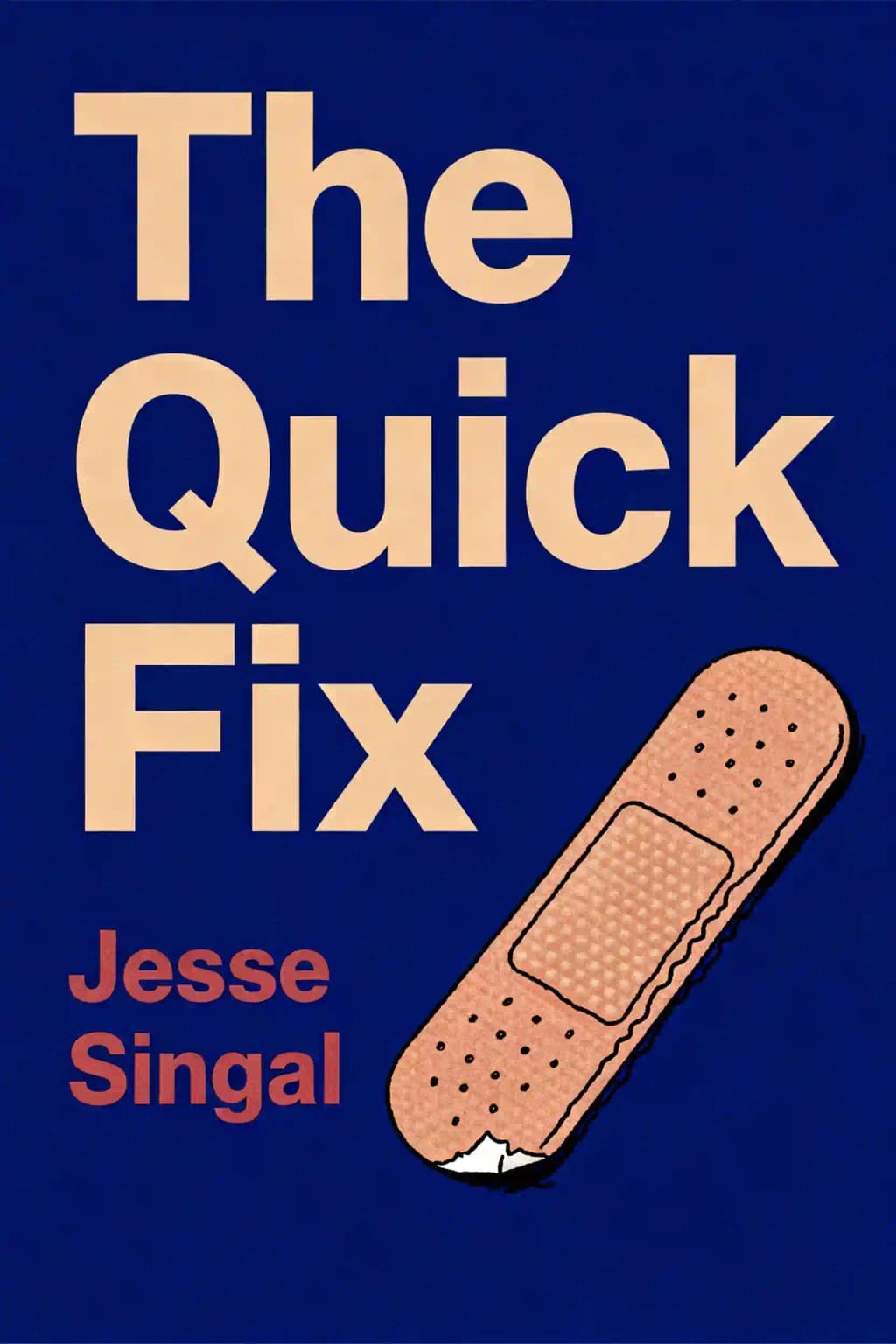
In "The Quick Fix," Jesse Singal masterfully debunks trendy psychology fads - from self-esteem movements to implicit bias tests - that promise simple solutions to complex social problems. Why are educators increasingly skeptical of these appealing but unproven theories reshaping our schools and society?
Jesse Singal is an award-winning journalist and social science commentator, author of The Quick Fix: Why Fad Psychology Can’t Cure Our Social Ills. With a Master’s in Public Affairs from Princeton University and a background as the founding editor of New York magazine’s Science of Us vertical, Singal combines investigative rigor with a critical eye toward behavioral science trends. His work, spanning The Atlantic, The New York Times, and his Singal-Minded newsletter, dissects societal challenges through evidence-based analysis.
The Quick Fix (2021), a psychology and critical analysis bestseller, critiques the allure of simplistic solutions to complex issues like diet culture and criminal justice reform. Singal’s expertise in debunking pseudoscientific claims stems from his decade-long career interrogating flawed research and media hype. He co-hosts the popular podcast Blocked and Reported, exploring controversies at the intersection of culture and science.
A trusted voice in media, Singal’s insights have shaped public discourse on topics from addiction to gender dysphoria. His upcoming book on youth gender medicine continues his commitment to rigorous, compassionate journalism. The Quick Fix has been widely cited in academic and mainstream circles, cementing Singal’s reputation as a leading skeptic of pop psychology.
The Quick Fix critiques trendy psychology trends like implicit bias training, power posing, and positive thinking, arguing they oversimplify complex societal issues. Jesse Singal examines how these "half-baked" ideas, often popularized via TED Talks, lack robust evidence and divert attention from systemic solutions to problems like inequality and crime.
This book is ideal for skeptics of pop psychology, readers interested in social justice, and anyone curious about the science-behind-the-hype. It’s particularly valuable for those seeking a critical analysis of why quick fixes fail to address structural issues like poverty or education gaps.
Yes. Singal’s investigative rigor and engaging storytelling remain relevant, especially as society grapples with AI-driven self-help trends and persistent social inequities. The book provides timeless insights into distinguishing evidence-based strategies from manipulative pseudoscience.
Some reviewers argue Singal overly focuses on debunking fads without offering concrete alternatives. Publishers Weekly noted the critique can feel repetitive, though others praise its accessible dismantling of flawed research methods and corporate-driven psychology trends.
"Half-baked" refers to interventions with superficial evidence, such as implicit bias workshops or grit-based education reforms. Singal highlights how these concepts gain traction through media hype and charismatic speakers, despite weak statistical backing or replication failures.
Singal argues TED Talks often prioritize compelling narratives over scientific rigor, amplifying oversimplified solutions like "mindset shifts" for poverty. These talks, while inspiring, sidestep deeper structural reforms needed for meaningful change.
The book attributes their popularity to societal desire for easy answers and corporations capitalizing on low-cost fixes. For example, companies adopt bias training to signal progressiveness without addressing pay equity or hiring practices.
As a science journalist and co-host of the Blocked and Reported podcast, Singal combines investigative depth with skepticism toward internet-driven trends. His prior work on flawed research, like the implicit association test, informs the book’s critical lens.
While Daniel Kahneman explores cognitive biases, Singal focuses on how those biases fuel pseudoscientific trends. The Quick Fix is more polemical, targeting specific fads rather than overarching theories of human behavior.
Many companies use personality tests or bias workshops to avoid costly diversity initiatives. Singal’s analysis helps HR teams identify ineffective programs and invest in equitable hiring/promotion practices instead.
通过作者的声音感受这本书
将知识转化为引人入胜、富含实例的见解
快速捕捉核心观点,高效学习
以有趣互动的方式享受这本书
Politicians considered the idea self-evident.
The movement's residue remains in state laws across America.
America's justice system is not racist, not anymore.
The superpredator theory proved catastrophically wrong.
将《The Quick Fix》的核心观点拆解为易于理解的要点,了解创新团队如何创造、协作和成长。
将《The Quick Fix》提炼为快速记忆要点,突出坦诚、团队合作和创造力的关键原则。

通过生动的故事体验《The Quick Fix》,将创新经验转化为令人难忘且可应用的精彩时刻。
随心提问,选择声音,共同创造真正与你产生共鸣的见解。

"Instead of endless scrolling, I just hit play on BeFreed. It saves me so much time."
"I never knew where to start with nonfiction—BeFreed’s book lists turned into podcasts gave me a clear path."
"Perfect balance between learning and entertainment. Finished ‘Thinking, Fast and Slow’ on my commute this week."
"Crazy how much I learned while walking the dog. BeFreed = small habits → big gains."
"Reading used to feel like a chore. Now it’s just part of my lifestyle."
"Feels effortless compared to reading. I’ve finished 6 books this month already."
"BeFreed turned my guilty doomscrolling into something that feels productive and inspiring."
"BeFreed turned my commute into learning time. 20-min podcasts are perfect for finishing books I never had time for."
"BeFreed replaced my podcast queue. Imagine Spotify for books — that’s it. 🙌"
"It is great for me to learn something from the book without reading it."
"The themed book list podcasts help me connect ideas across authors—like a guided audio journey."
"Makes me feel smarter every time before going to work"

免费获取《The Quick Fix》摘要的 PDF 或 EPUB 版本。可打印或随时离线阅读。
A California legislator with anger management issues once convinced an entire state that boosting self-esteem could end crime, poverty, and teen pregnancy. A Princeton professor warned America about a coming wave of remorseless "superpredators" that never materialized. A Harvard researcher's two-minute "power pose" became a cultural phenomenon despite resting on statistical quicksand. These aren't isolated mistakes-they're symptoms of how half-baked psychological ideas become national obsessions, shaping everything from classroom policies to military spending. What makes us fall so hard for these appealing but scientifically shaky concepts? And what happens when institutions bet billions on research that can't withstand scrutiny?